New Doors · Langton
New-Construction Garage Door Installation in Langton
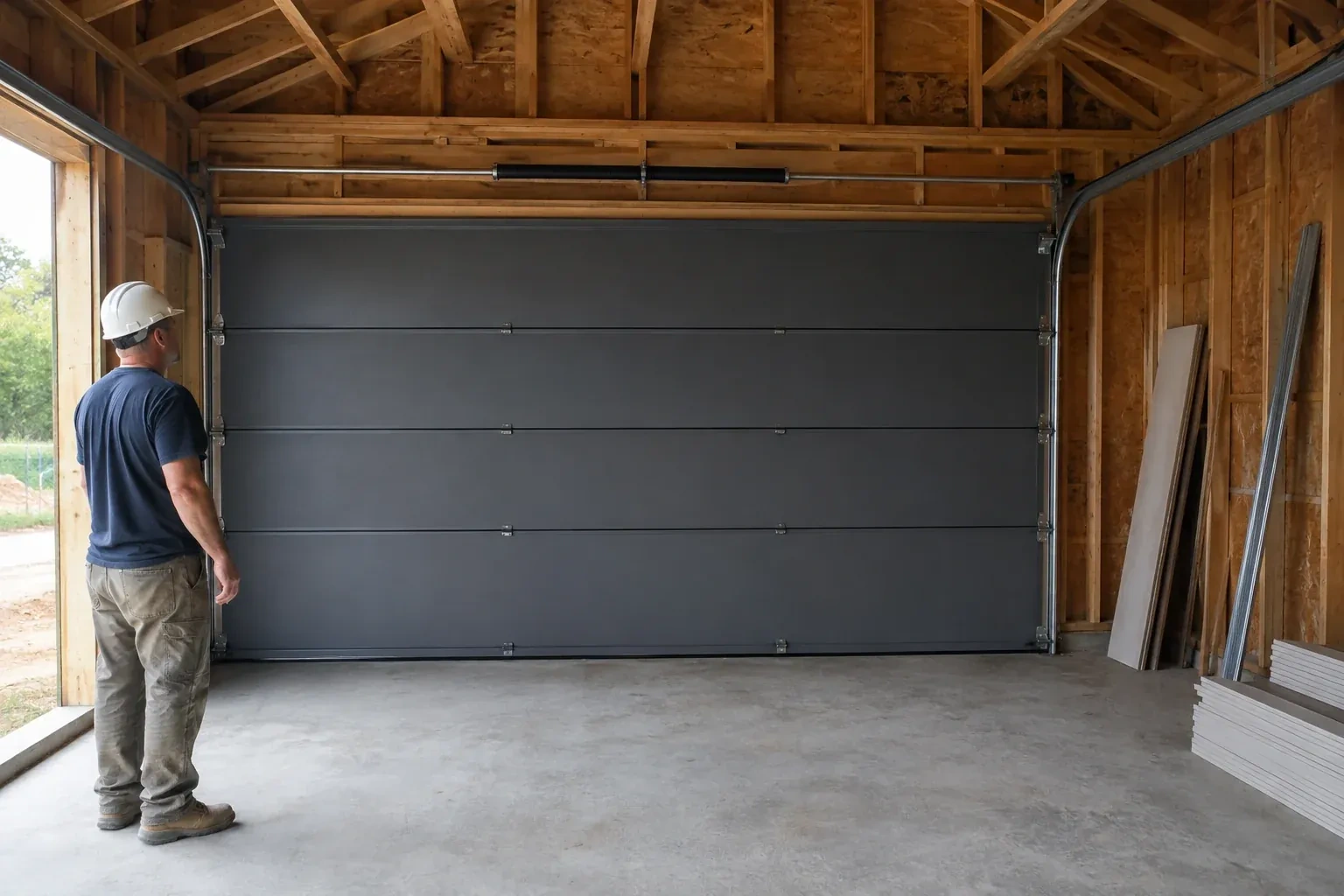
This garage will be heated and used beyond parking, so the opening needs more than a basic closure.
In plain words
The practical goal is a garage door that feels manageable even though the assembly is large and heavy. Correct springs counterbalance the section weight, rollers guide the door through aligned tracks and structural bracing holds the system in its intended position. The installer tunes those relationships before connecting any operator. Handover includes a manual balance check, complete travel cycles, control tests, care guidance and the information needed to identify the installed door and operator later.
How the visit goesA beam, sloped ceiling or duct crosses the space above the new opening. The door still needs a clear path, which makes headroom, backroom and the right track arrangement central to the plan.
New-Construction Garage Door Installation
How the visit goes
Planning power and controls
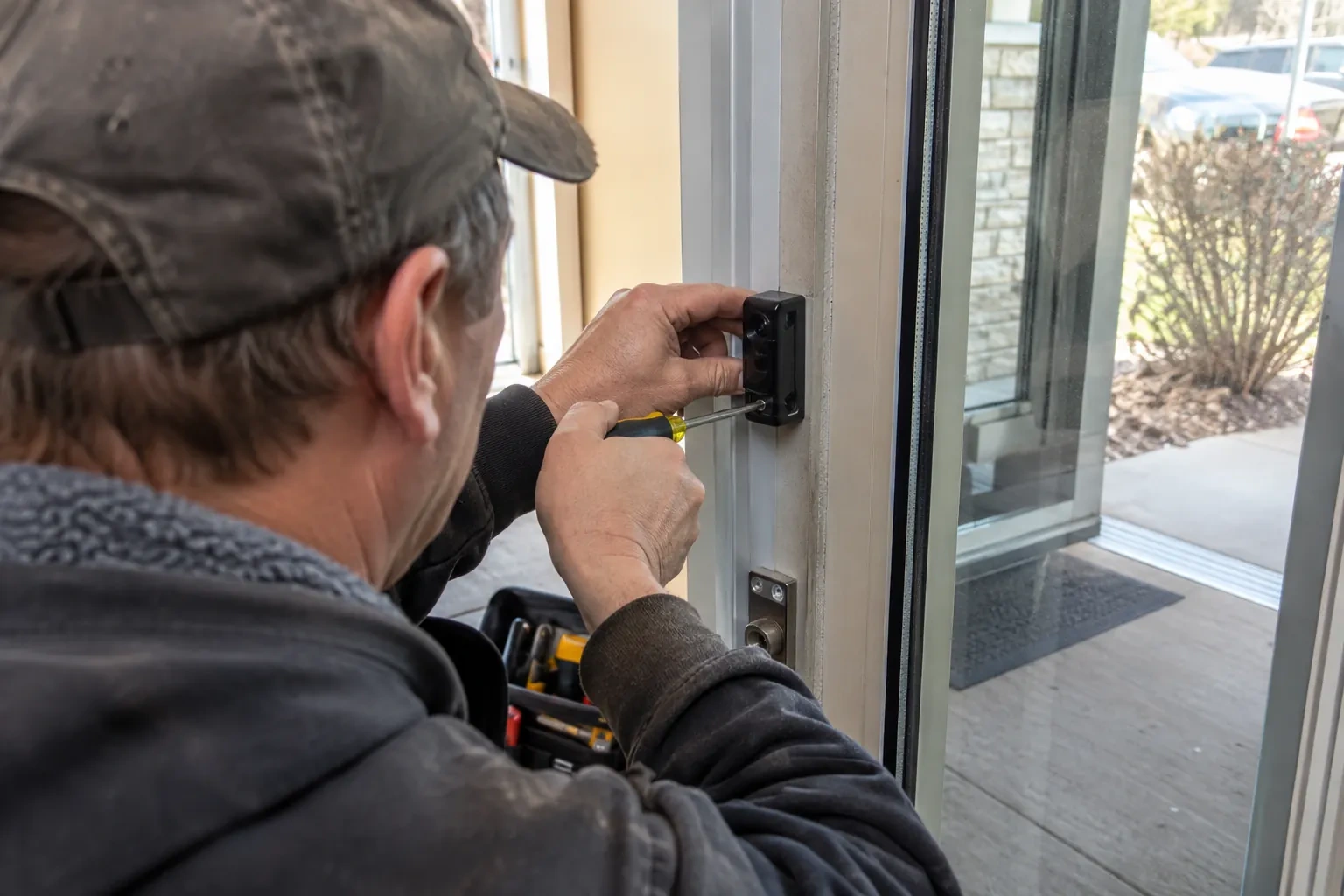
Where powered operation is selected, the check follows the full control path. The installer locates the ceiling receptacle, suitable operator support, wall station, photoelectric sensors and any exterior access control included in the scope. Wire routes and finished-wall conditions are reviewed with the electrical plan so cables emerge where the equipment belongs. Door height, top-section reinforcement and track arrangement are compared with the operator type and rail position. This coordination gives both systems the clear mounting space they need before ceilings and walls receive their final finishes.
Closing the weather gaps
Weather sealing is fitted after the door sits correctly in the opening. The bottom retainer and compressible seal meet the finished floor, while perimeter stop moulding contacts the exterior face without squeezing the sections so tightly that movement binds. Section-joint seals and glazed openings are checked as part of the selected door construction. The installer views the closed door from inside for visible gaps and adjusts the seal position where the building surfaces allow. Trim, caulking or cladding work assigned to another trade is identified separately for project closeout.
A defined closeout for the build team
For the builder, completion means the opening, installed door and remaining trade responsibilities are clearly separated. The garage door has been assembled, supported, balanced, sealed and tested within its agreed scope. Items such as final electrical connection, exterior caulking, cladding touch-ups or floor finishing are listed only when they remain elsewhere in the project. This closeout gives the next trade a clean starting point and gives the owner a system that has already been demonstrated. It also keeps later cosmetic work from being mistaken for incomplete door installation.
New-Construction Garage Door Installation
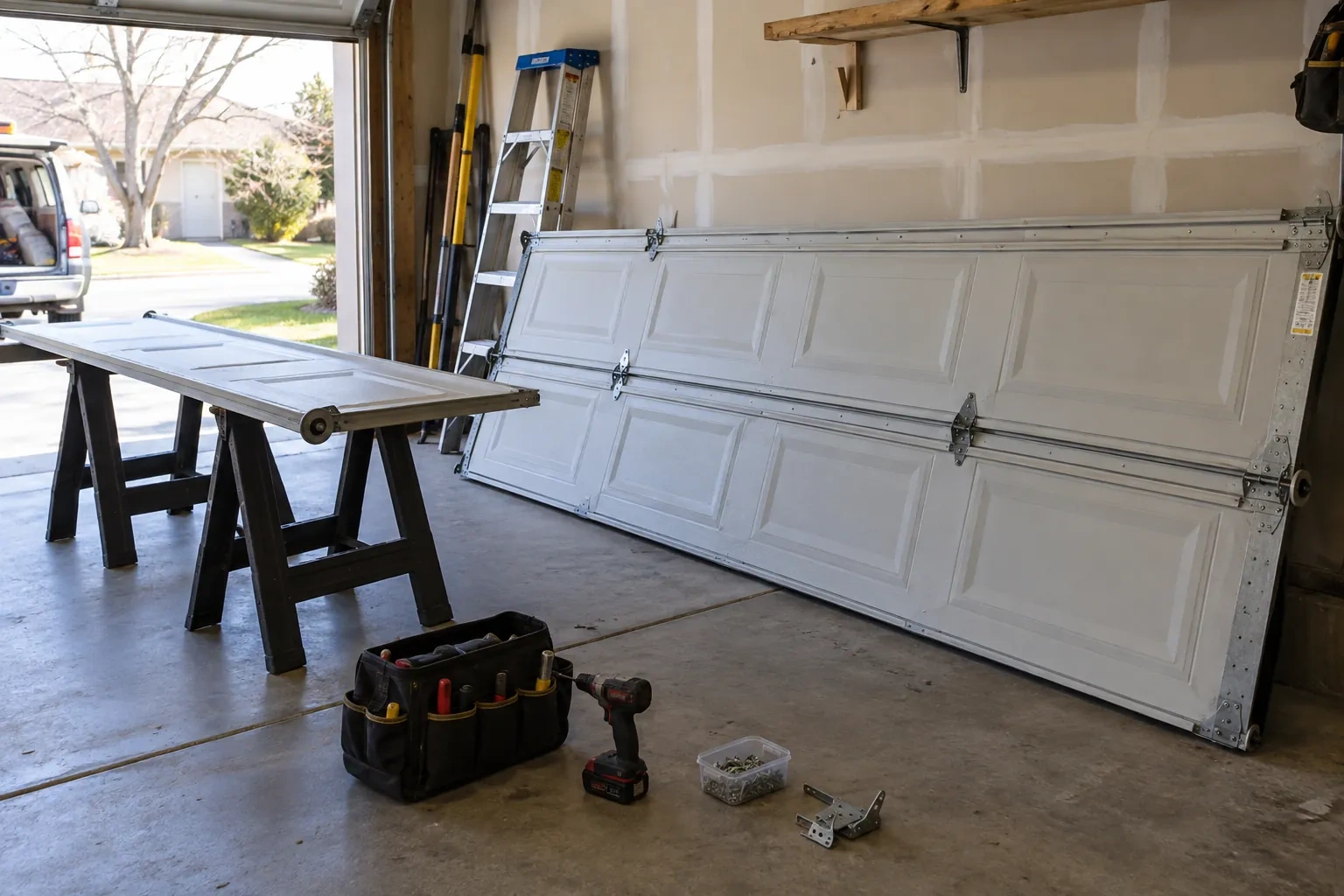
In the van
Bottom brackets
Bottom and perimeter seals
Graduated hinges
Sectional door panels
Door reinforcement struts
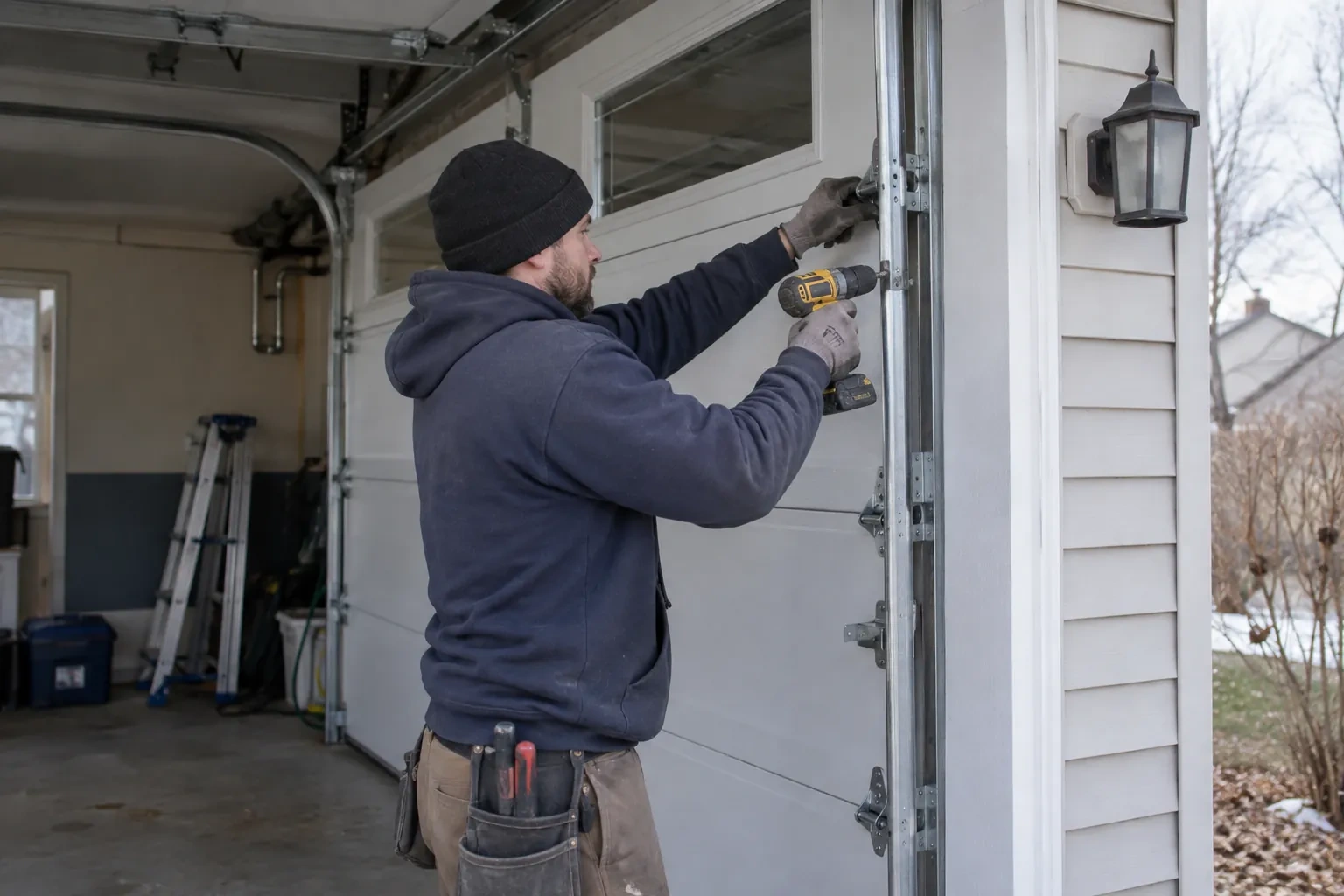
New-Construction Garage Door Installation
What affects the quote
Operator and drive type
Manual operation and powered operation are different scopes. A selected ceiling-mounted or shaft-mounted operator adds equipment, supports, connection hardware, setup and commissioning to the project.
Available overhead clearance
Tight space around beams, trusses, ducts or lighting increases measurement and coordination needs. Clear headroom and backroom allow a more direct layout than a crowded ceiling zone.
Commissioning and owner handover
Manual balance checks, powered safety tests, control setup, demonstrations and closeout records complete the system. The level of documentation and orientation should be visible in the quoted scope.
What to have ready
- Are the jambs, header, spring support and ceiling attachments complete?
- Which trade is completing exterior trim, caulking and final electrical work?
- Are any beams, ducts, lights or storage systems in the door path?
New-Construction Garage Door Installation: questions
QuestionsWhat regular care does a newly installed door need?
Follow the door and operator manuals for inspection and product-specific lubrication. Owners can keep the opening and sensor path clear, clean the section finish gently and watch visible cables, rollers, hinges and seals for change. Tracks are guides, so adding heavy grease can collect dirt. Any shift in balance, smooth movement or cable condition is useful reason to arrange a professional system assessment.
What happens if the opening dimensions change during the build?
The revised finished width, height and surrounding clearances are measured and compared with the selected door package. A small framing change can affect section size, track position, seals or spring specification, so compatibility is confirmed before installation proceeds. The responsible project party decides how the building work is corrected or the selection is revised. Recording the accepted dimensions gives the builder, supplier and installer one shared basis for the next step.
How can the installed door be protected during remaining construction?
Keep masonry, paint, plaster, floor coatings and abrasive dust away from sections, seals, tracks and rollers. Other trades should avoid leaning materials against the door or using horizontal tracks for storage or support. Controls can be managed so the system is operated only by authorized project personnel before handover. If protective covering is used, it should avoid trapping moisture or adhesive against the finished surface.
Related services
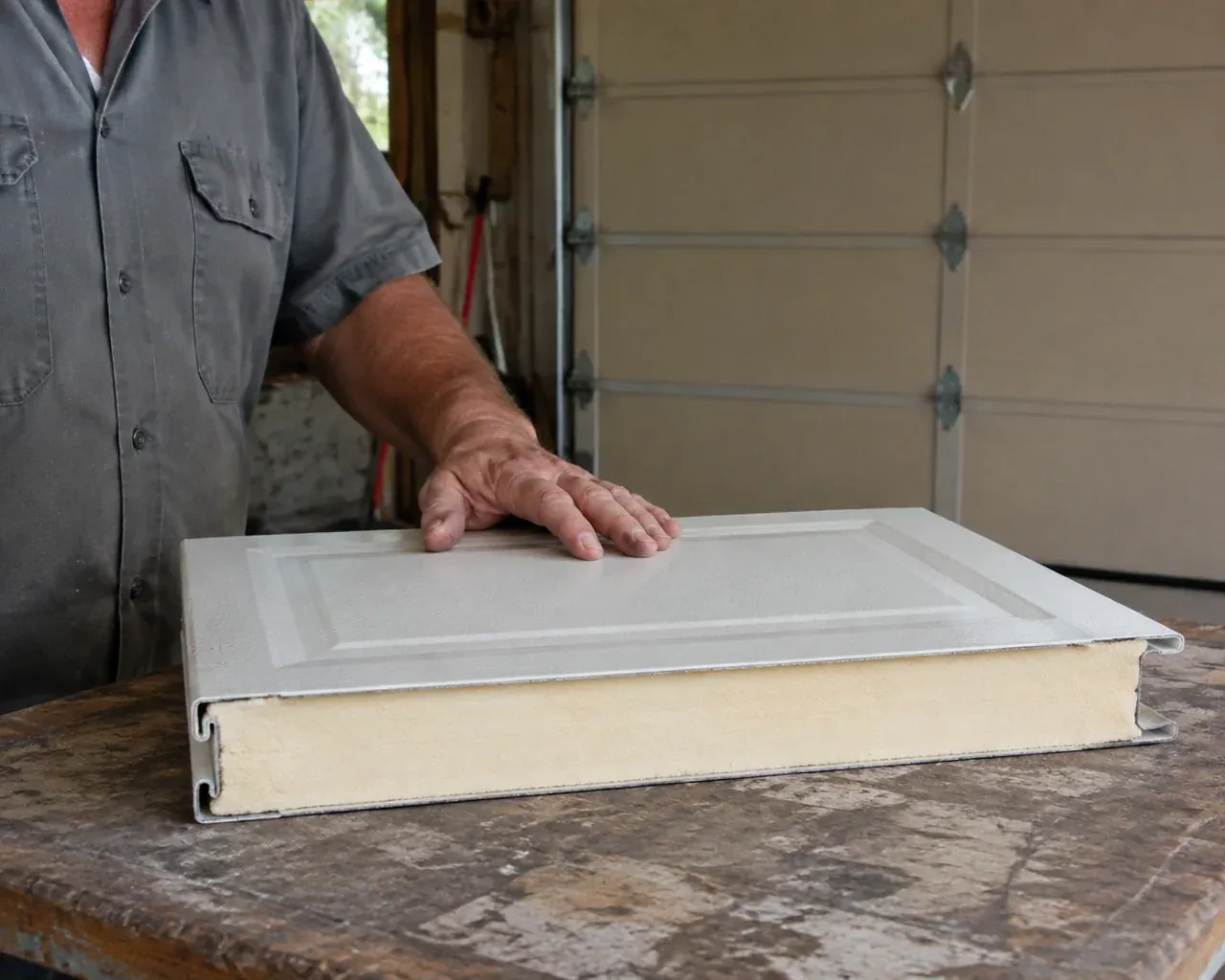
- Insulated Steel Garage Door InstallationSeveral sections are dented and the bottom edge has begun to rust.
- Wind-Rated Garage Door ReplacementNew windows would improve the door's appearance, but they also change the section layout and reinforcement pattern.
- Carriage-House Garage Door InstallationThe existing door has reached the point where panels, rollers and finish all look tired.