Repairs · Norfolk County
Garage Door Manual Lock Repair
On the old wooden door out back, one lock bar hangs loose from a rusted guide and the other is bent at an angle, so the handle turns but the door can still be lifted a hand's width from outside.
In plain words
When an automatic opener is on the door, the manual lock and the motor have to be kept from meeting. Opener makers ask for the lock to be disabled or removed when the machine is installed, and the door industry's own guidance says the same, because a motor pulling against an engaged bar bends the bar, loosens the lock and strains the opener. Lock repair on a powered door therefore includes a decision: keep the lock removed or disabled and rely on the opener's own lock-out feature, or fit a manufacturer-approved interlock if the household wants the lock available when the power is off.
How the visit goesOn the old wooden door out back, one lock bar hangs loose from a rusted guide and the other is bent at an angle, so the handle turns but the door can still be lifted a hand's width from outside.
Garage Door Manual Lock Repair
How the visit goes
Closing the door by hand first
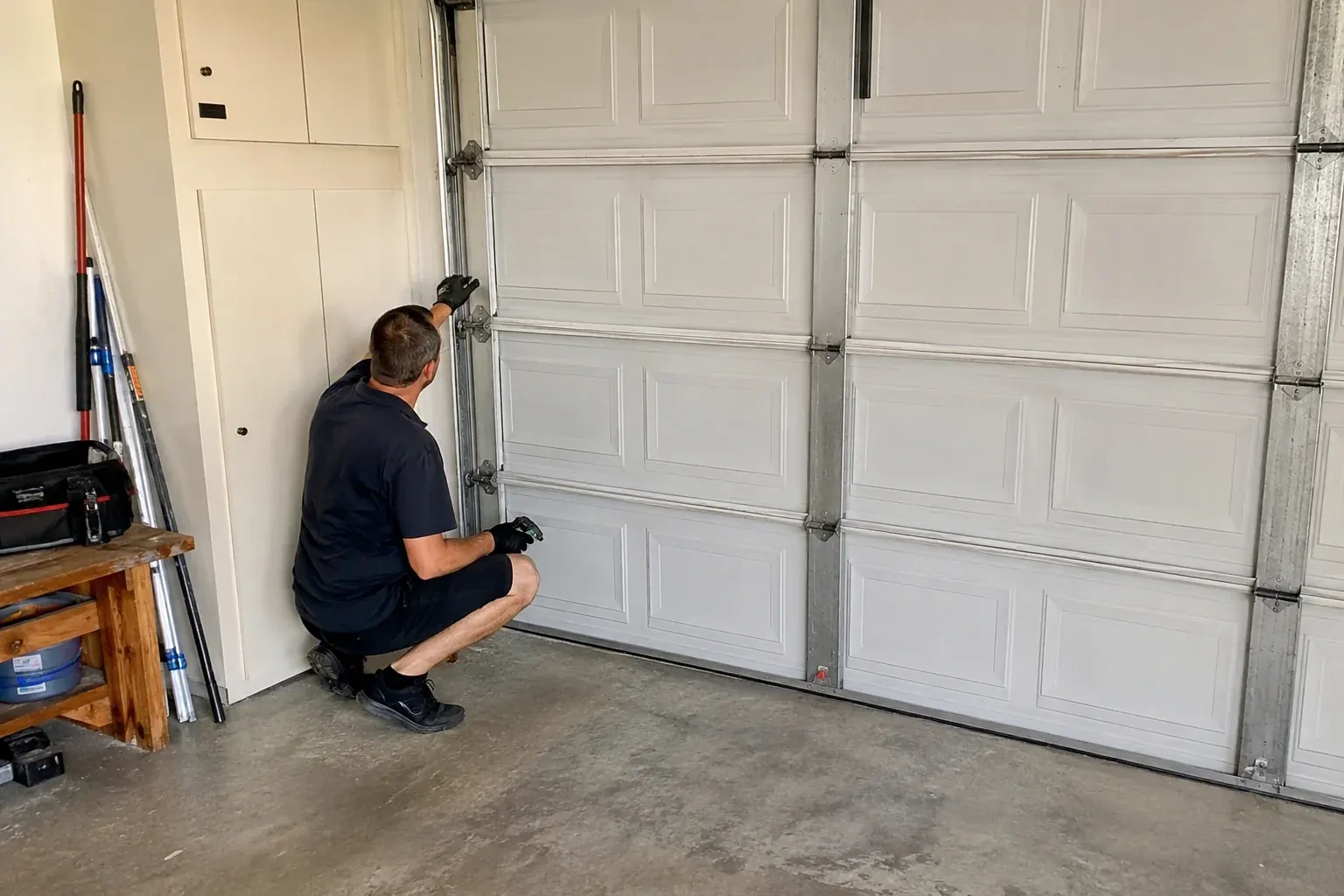
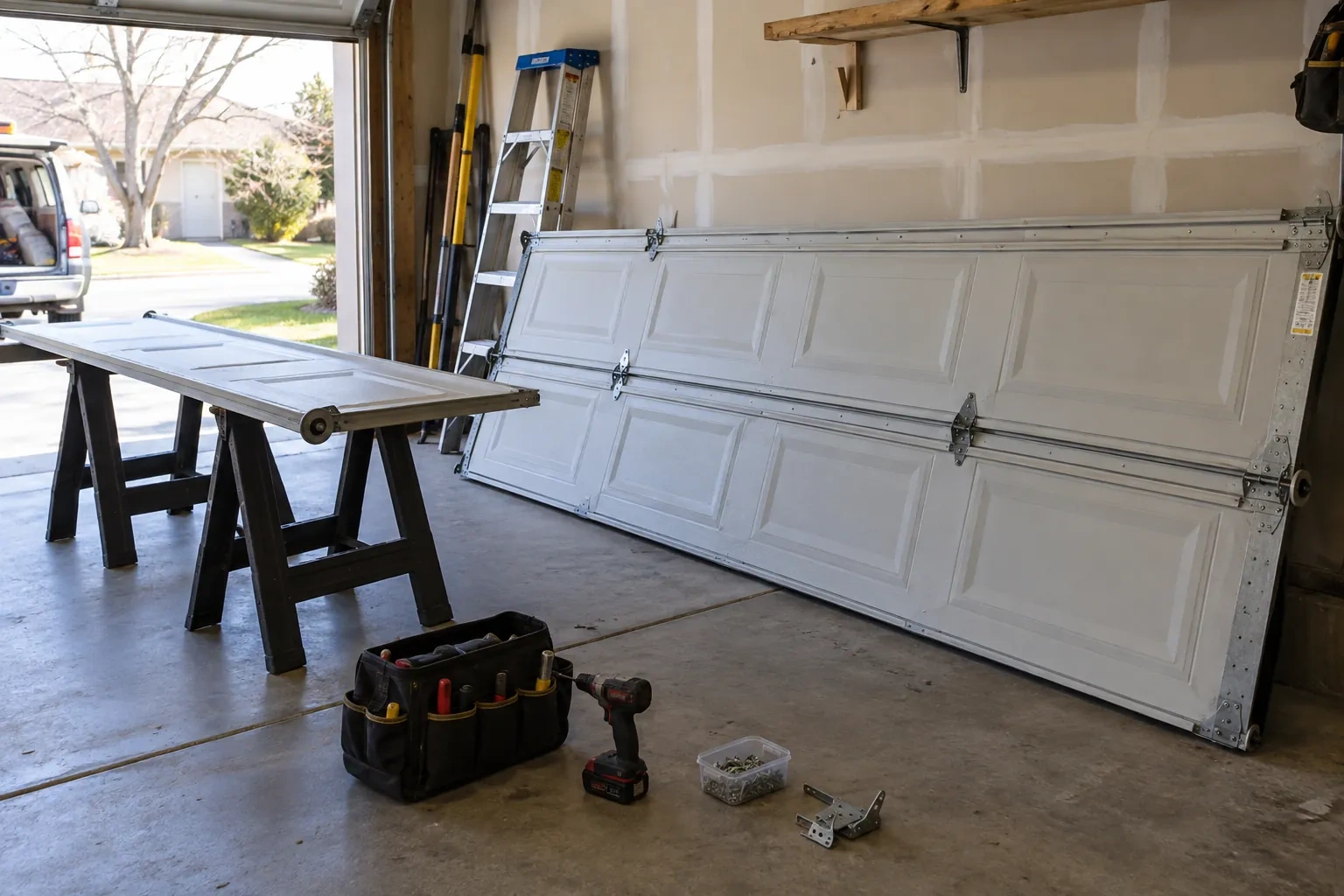
Before the lock is touched, the opener is disconnected and the door is lowered by hand until it rests on the floor. The technician checks that both bottom corners meet the concrete, that the top section sits flat against the header, and that the door is level across its width. Then the bar is sighted against its slot. If the two are out of step, the reason is looked for in the door: a settled slab, a loosened track bracket, a compressed bottom seal, snow or ice at the threshold, or an opener limit set to stop the door short. Sorting the door out first keeps a good lock from being replaced for a fault that lives elsewhere.
Fitting a new keyed handle set
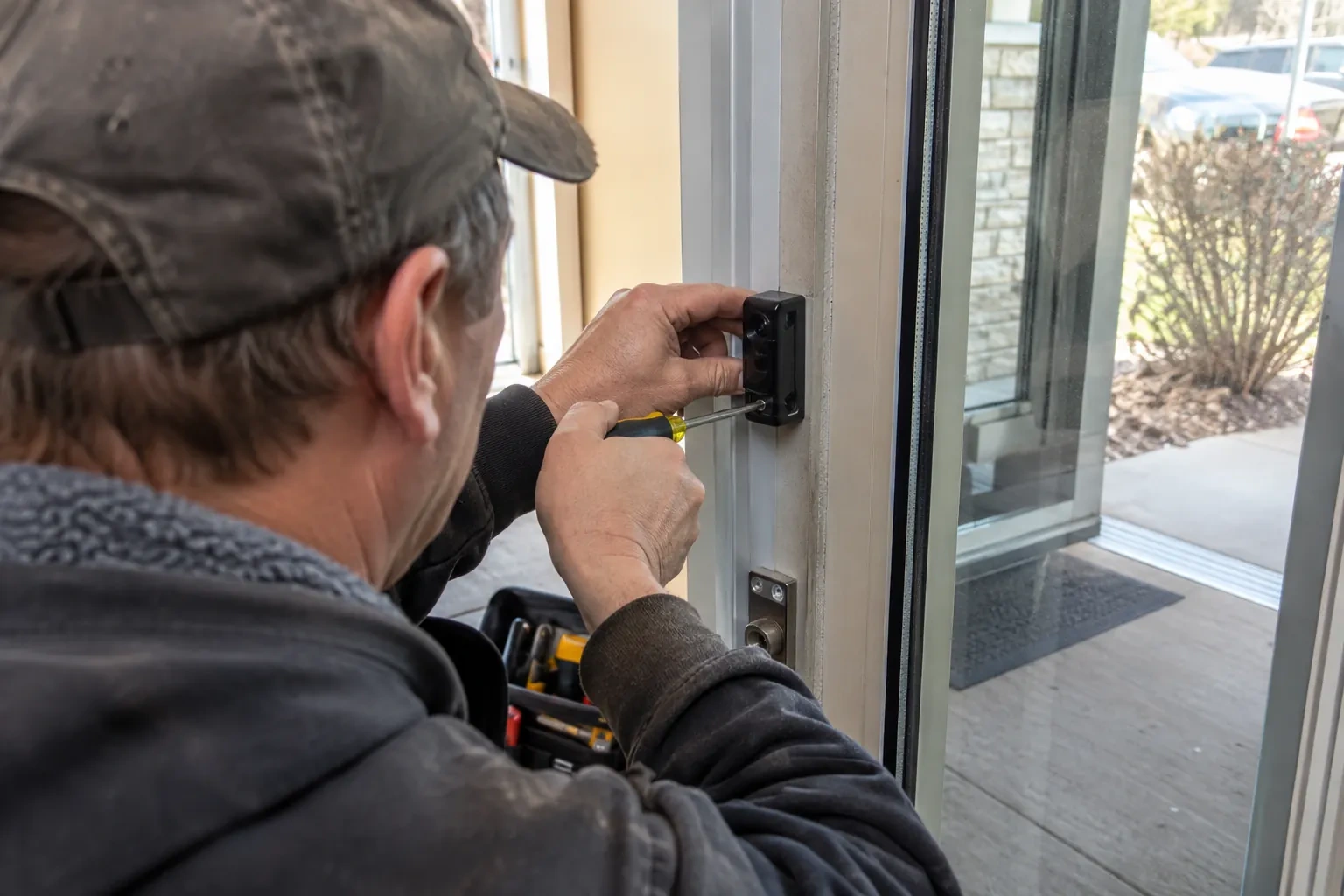
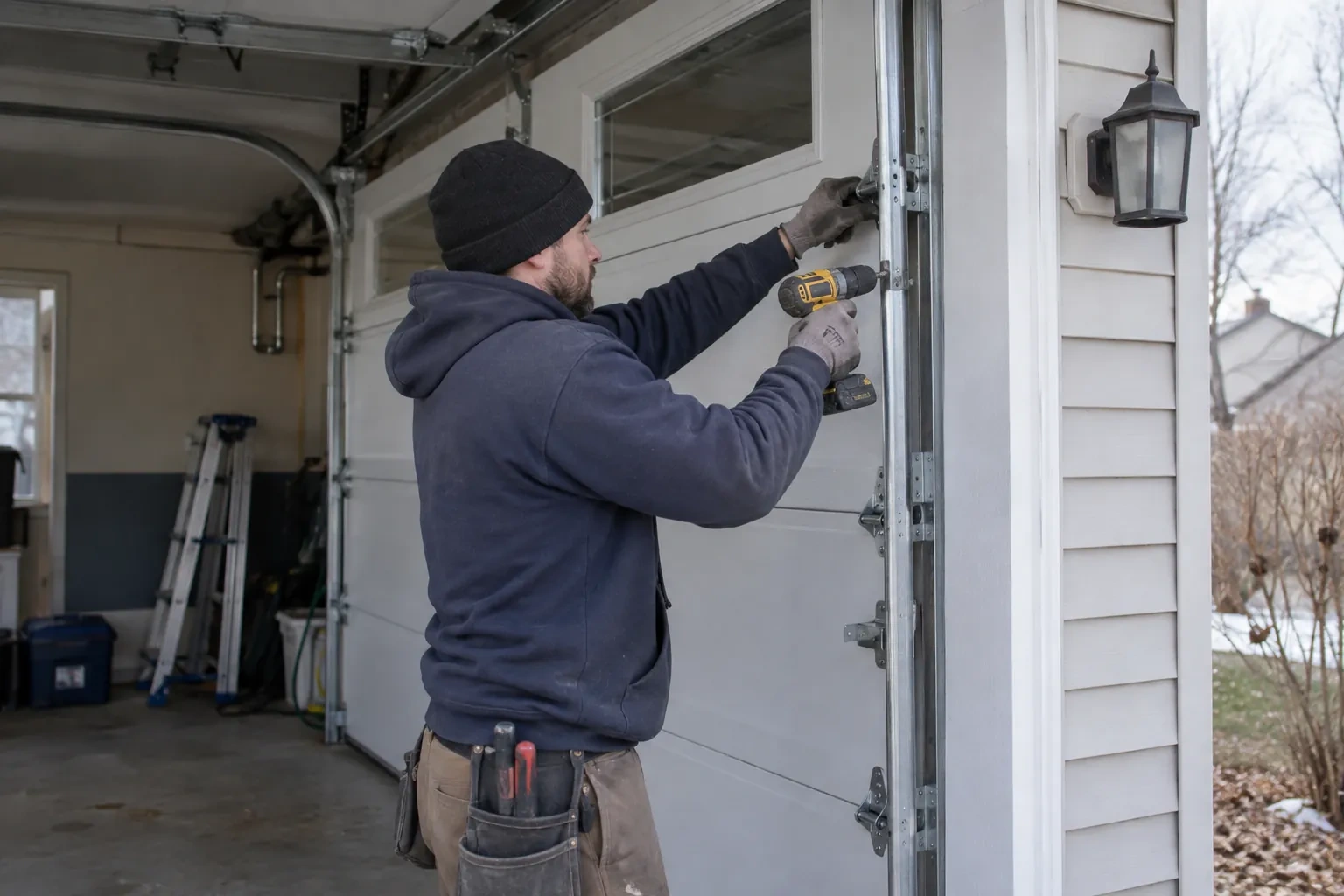
When the outside handle is cracked, corroded through or of a pattern that no longer has parts, a complete T-handle set is fitted: exterior handle with cylinder, spindle, inside turn handle and the mounting hardware. The technician measures door thickness to choose spindle length and bolt length, and checks that the new handle's mounting holes match the existing cutout or dresses the opening to suit. On insulated doors a sleeve keeps the spindle centred through the foam. The set is tightened evenly so the handle turns without rubbing the door face, the cylinder is tested with its keys, and the connection to the bars is set so lock and release positions are definite.
A lock with a clean throw and a clear release
The finished lock feels definite. The slide bolt or handle moves with light effort, stops with a click as the bar seats in the track, and comes back just as readily. With the door shut and locked, a push from outside meets solid resistance at both sides rather than a wobble on one. Released, both bars sit back behind the track edge so the door rises with nothing to catch. The outside handle turns without rocking and the key goes in and out without a wiggle. Before leaving, the technician has you operate the lock yourself from inside and out, so the action is familiar and any stiffness is dealt with while the tools are still on the floor.
Garage Door Manual Lock Repair
In the van
Dry graphite or PTFE lubricant
Lock cylinder with tailpiece
Spring-steel lock bars
Centre lock body and return spring
Lock bar guides
Garage Door Manual Lock Repair
What affects the quote
Related hardware noticed on the way
Worn rollers, a loose track bracket or a tired bottom seal seen while the door is being aligned are pointed out and offered as optional items, since they are easy to do in the same visit.
Corrosion and seized hardware
Screws rusted solid, a cylinder seized in its handle or bars welded into their guides take time to free or cut out, and corroded parts are replaced rather than reused.
Rekeying the lock to match your other doors
Some households want the garage's manual lock to turn with the same key as the house, rather than carrying a separate one. Matching a cylinder to an existing key, or cutting a fresh set for both, is arranged once the existing hardware has been looked at.
What to have ready
- Would you like the garage lock keyed to match your house key?
- Do you have a key for the lock, and how many keys would you like?
- Is the door steel, wood or aluminum, and roughly how old is it?
Garage Door Manual Lock Repair: questions
QuestionsCan a bent lock bar be straightened?
It is better replaced. Lock bars are spring steel, and once one has been bent by an opener pulling against it, it takes a set and tends to bind in its guide or kink again under load. New bar stock is cut to the door's width so the bar reaches through the track with a margin and pulls fully back when released. Both bars are set to the same throw.
Can the garage handle be keyed to my house key?
Often, yes. The cylinder in a T-handle is a small pin-tumbler lock, and if it shares a keyway with your house locks it can be pinned to the same combination. Where the keyways differ, a compatible cylinder can usually be fitted to the handle so the match is possible. Bring a house key to the visit and the technician will tell you on the spot.
What kinds of manual locks are found on garage doors?
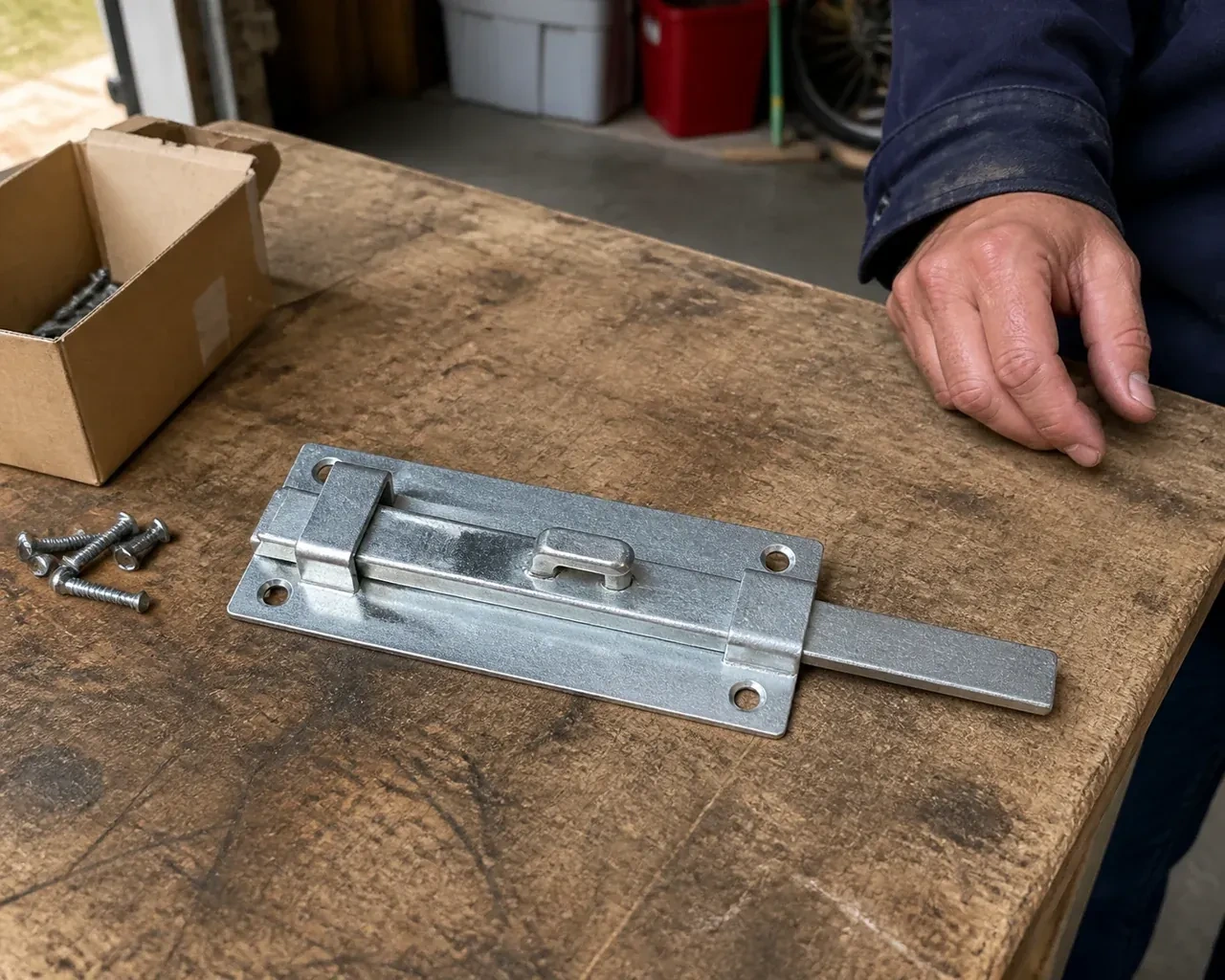
Two are common on sectional doors. An inside slide bolt sits on the door's edge and shoots sideways into a slot in the vertical track; some are spring-loaded snap latches that lock on their own when the door closes. An outside keyed T-handle turns a centre mechanism that throws a bar into each track, though some models pull a cable to release a spring latch instead. Some doors add a keyed cylinder on the side to work the slide bolt from outside.
Related services
- Garage Door Tune-UpThe door lands with a thud you can feel through the kitchen floor, and sometimes it bounces back up a few centimetres before settling.
- Off-Track Garage Door ResetThe door came down fine but with a scraping noise, and now the vertical track on one side is bowed away from the wall.
- Garage Door Panel ReplacementYears of slap shots have peppered the lower two sections with dents.