Openers · Norfolk County
Chain-Drive Opener Repair
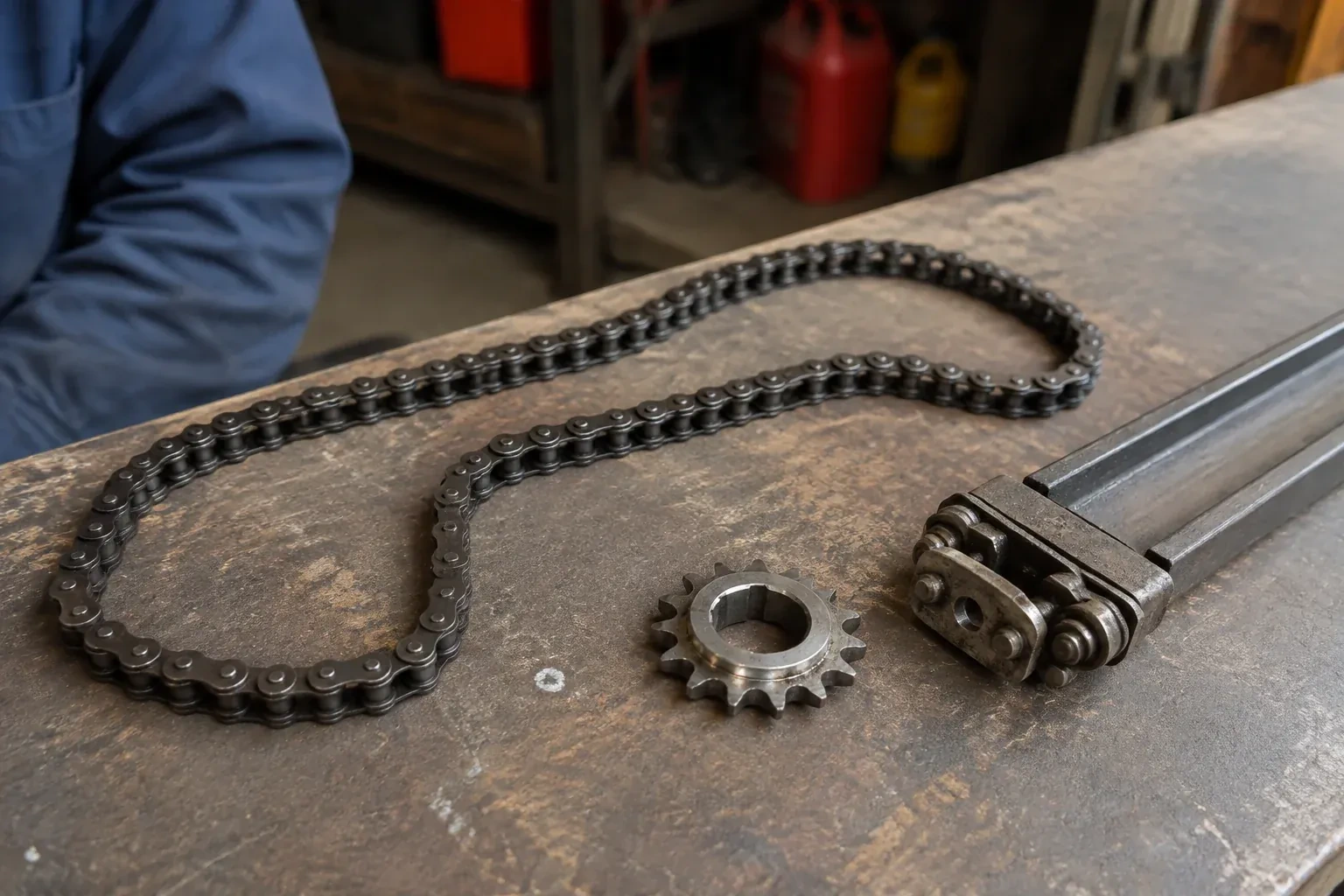
The chain hangs in a loop under the rail and slaps against it on every cycle.
In plain words
Chain tension is set by measurement, not by feel. With the door closed and disconnected from the trolley, a correctly tensioned chain sits at the height the opener's own manual specifies for its rail shape, measured at the middle of the rail, since the figure differs between makes and rail types. Two nuts on the trolley do the work: the outer one raises or lowers the chain and the inner one locks the setting. A chain that hangs lower slaps and skips; one pulled tighter than that wears the sprocket and loads the motor bearings. The technician checks the manual, sets the chain, locks it and runs the safety tests.
How the visit goesThe chain hangs in a loop under the rail and slaps against it on every cycle. It used to sit snug. Now the whole house hears the door leave, and the sound has a metallic clatter it never had before.
Chain-Drive Opener Repair
How the visit goes
Sensors, controls and the garage around them
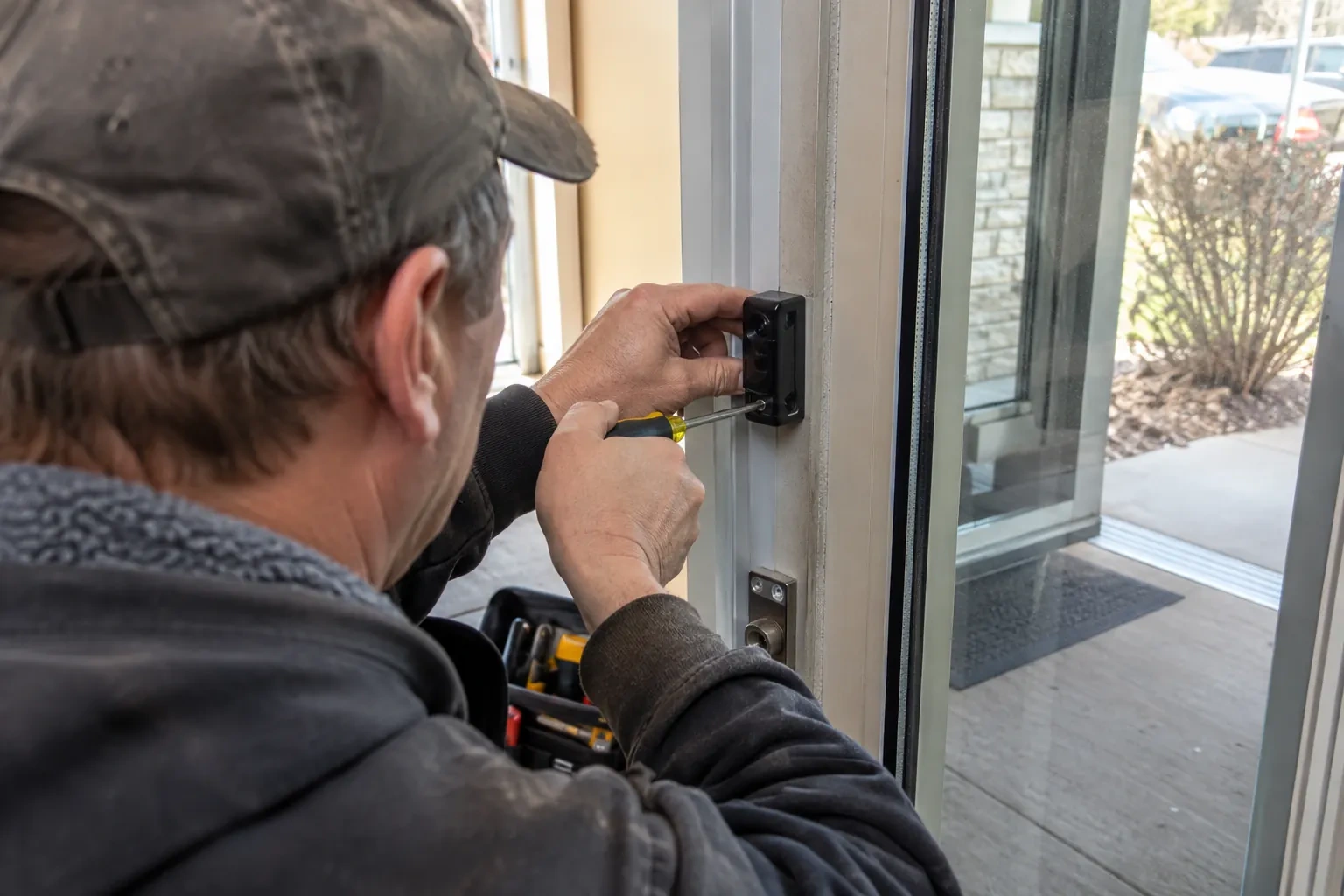
Before the repair begins, the technician confirms the parts that will be tested at the end are in place. The photo eyes should sit no higher than about 15 cm off the floor with steady indicator lights; the wall control at least 1.5 m up and in sight of the door; the red release handle no more than about 1.8 m above the floor; the manual slide lock on the door disabled. The garage itself is noted: whether it is heated, whether the chain shows salt corrosion from vehicles, and whether the head plugs into a nearby receptacle or a draped extension cord. These points shape the repair and the advice that follows it.
Setting the tension by the numbers
With the door closed and disconnected, the two nuts on the tensioner shaft at the trolley are used in order. The outer nut, nearest the door, is loosened until the chain droops below the rail, the inner nut is backed off to make room, and then the outer nut is turned to raise the chain until it sits at the height the opener's own manual calls for on that rail shape, measured at the rail's midpoint. The inner nut is tightened against it to lock the setting. Once the door is reconnected and closed some droop appears in the chain; that is normal provided the measurement returns with the door open.
A record of the drive as it is now
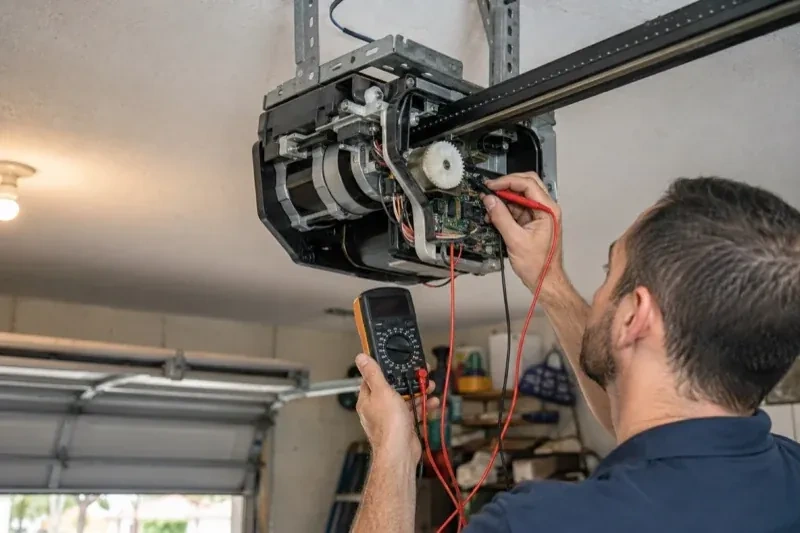
Before leaving, the technician writes down what was found and what was fitted: the operator's model and age, whether the gear kit, sprocket, chain, trolley or rail hardware was replaced, the tension figure set, the limit and force positions, and the results of the reversal tests. The manual is hung near the wall control so the model's own instructions are at hand for the monthly tests. This note makes any future call a short conversation, tells a home inspector what has been done, and gives whoever owns the house next a clear picture of what is hanging over the car.
Chain-Drive Opener Repair
In the van
RPM sensor
Cold-rated garage door lubricant
Inner and outer trolley
Drive gear and worm gear kit
Idler sprocket or pulley
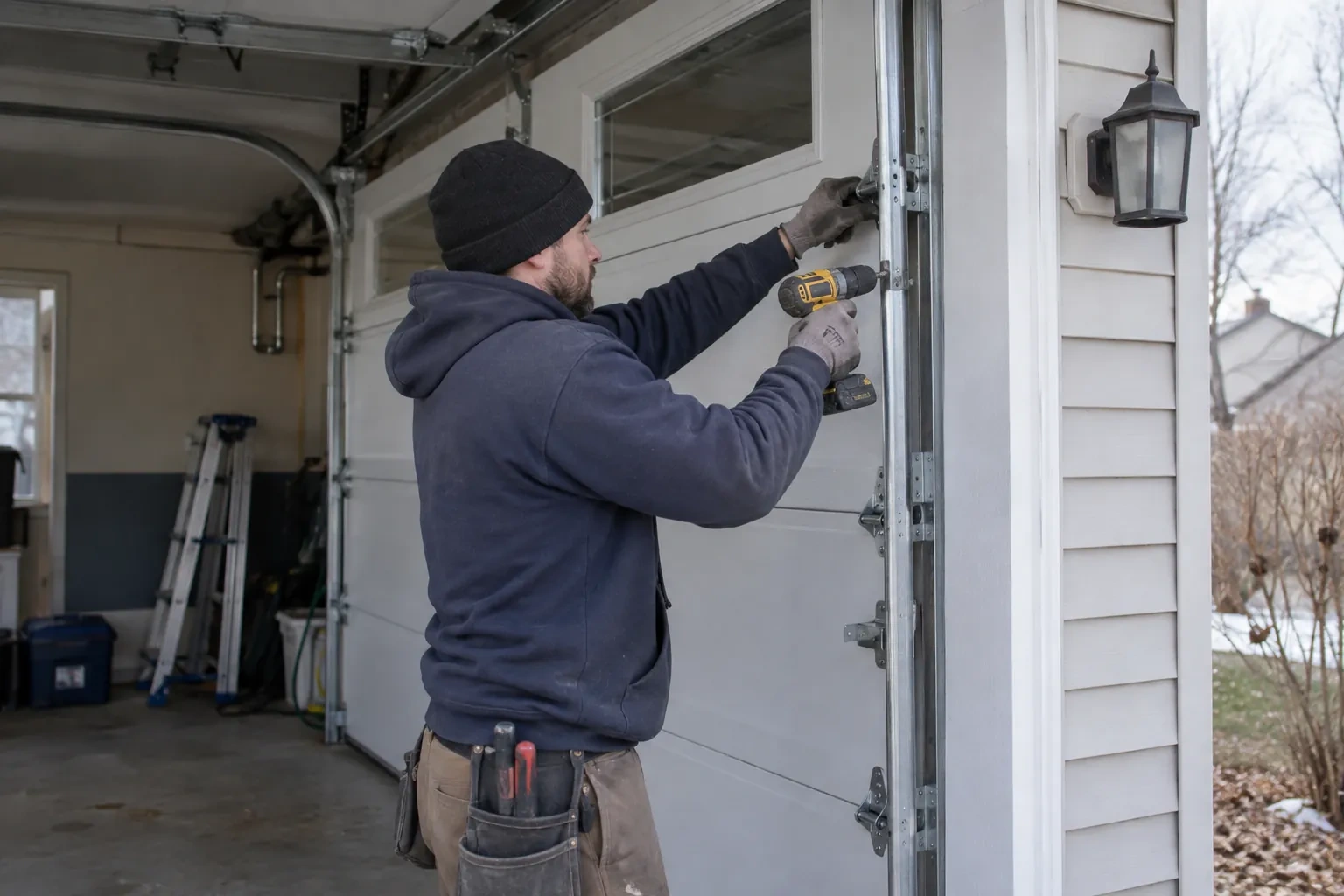
Chain-Drive Opener Repair
What affects the quote
Two operators in one visit
A double garage with two chain drives, or a house and a detached workshop, share the travel and setup and are quoted as one visit with two repairs.
Sensors and controls that fail the check
Photo eyes that are misaligned, mounted too high or dead, or a wall control that has stopped responding, are put right before the reversal can be proven and are itemised where parts are involved.
Which parts of the drive have worn
A chain that only needs tensioning, a chain that must be replaced, and a stripped gear and sprocket assembly are three different jobs, and the inspection under the head cover decides which one the quote describes.
What to have ready
- Is the chain hanging loose under the rail, or is it rusty or stiff?
- Can you send a photo of the motor head, the rail and the chain?
- Is the noise a rattle along the rail, a clack at one spot, or a grinding from the head?
Chain-Drive Opener Repair: questions
QuestionsWhat does it mean when the drive is out of phase?
The motor keeps track of the door's position by counting its own turns, and the trolley is meant to be at the closed end of the rail when the motor is at its closed position. If the operator has been run with the chain off the sprocket, or a chain was refitted at random, the two no longer agree and the door travels partway however the limits are set. Re-phasing means finding the motor's closed position and refitting the chain with the trolley closed.
What is the trolley, and why would it get stuck?
The trolley is the carriage that rides along the rail, pulled by the chain, with the door arm hooked to it. It gets stuck when the travel limits creep and it is driven onto the stop bolt at the head end or the stop tab at the door end, where the motor hums but nothing moves. The technician slackens the chain, runs the trolley off the stop under power, and pulls the limit back so it stops short in future.
How long does a chain-drive repair take?
A tension and limit adjustment with the reversal tests is generally a short visit. Replacing a gear and sprocket assembly or fitting a new chain, phasing it, tensioning and re-setting the limits takes longer, usually a good part of a morning or afternoon. If the balance check shows spring or roller work is needed first, or a part for an older model has to be ordered, the technician will say so and plan a second visit.
Related services
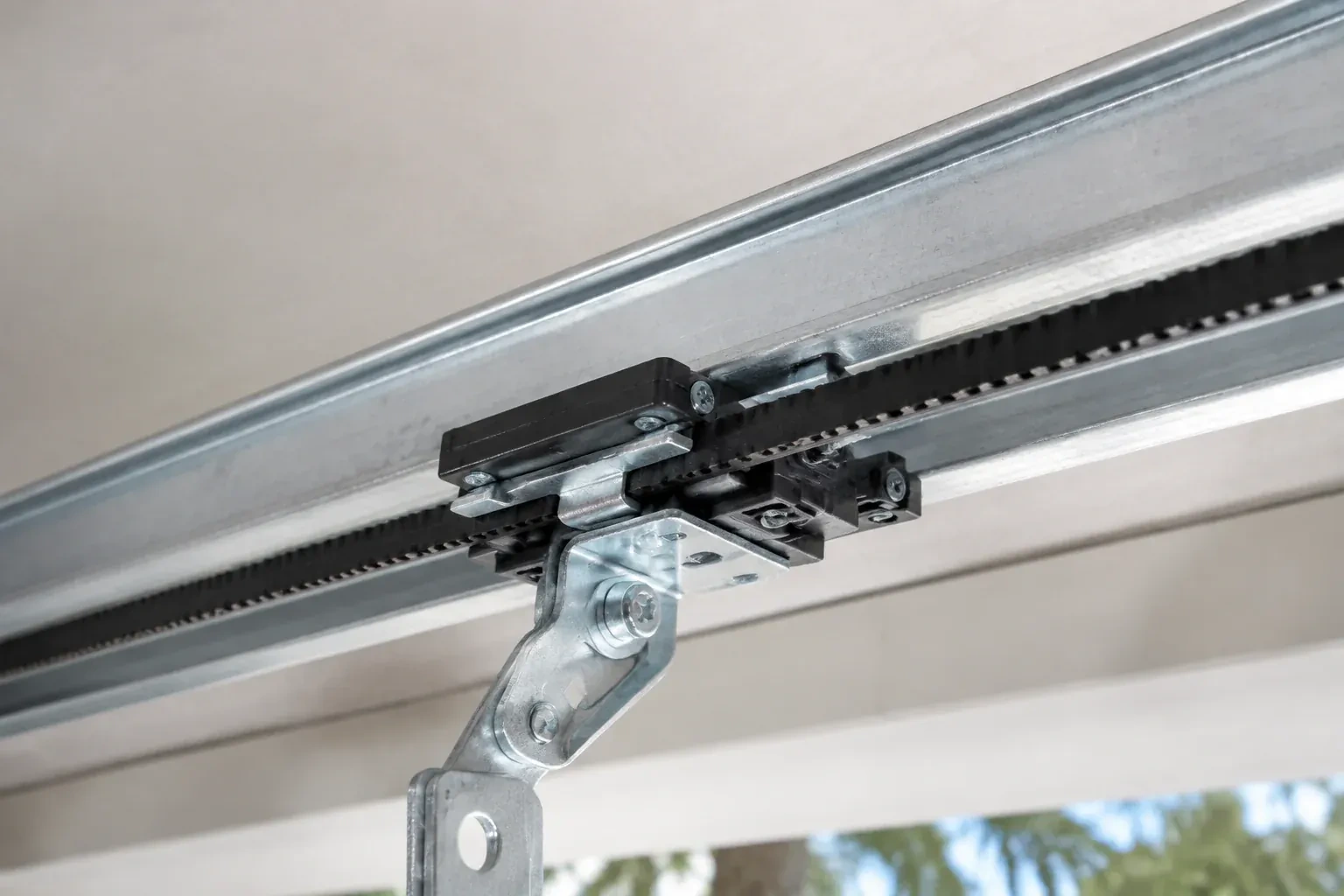
- Belt-Drive Opener RepairHalfway up, every single time, the door hesitates and there is a ratcheting sound from the motor head, then it carries on.
- Garage Door Opener ReplacementThe bedroom above the garage shakes every morning at six when the chain drive fires up.
- Photo-Eye Sensor Alignment or ReplacementAfter a cold night the door stays open until the garage warms up.