Springs · Norfolk County
Garage Door Hinge Replacement
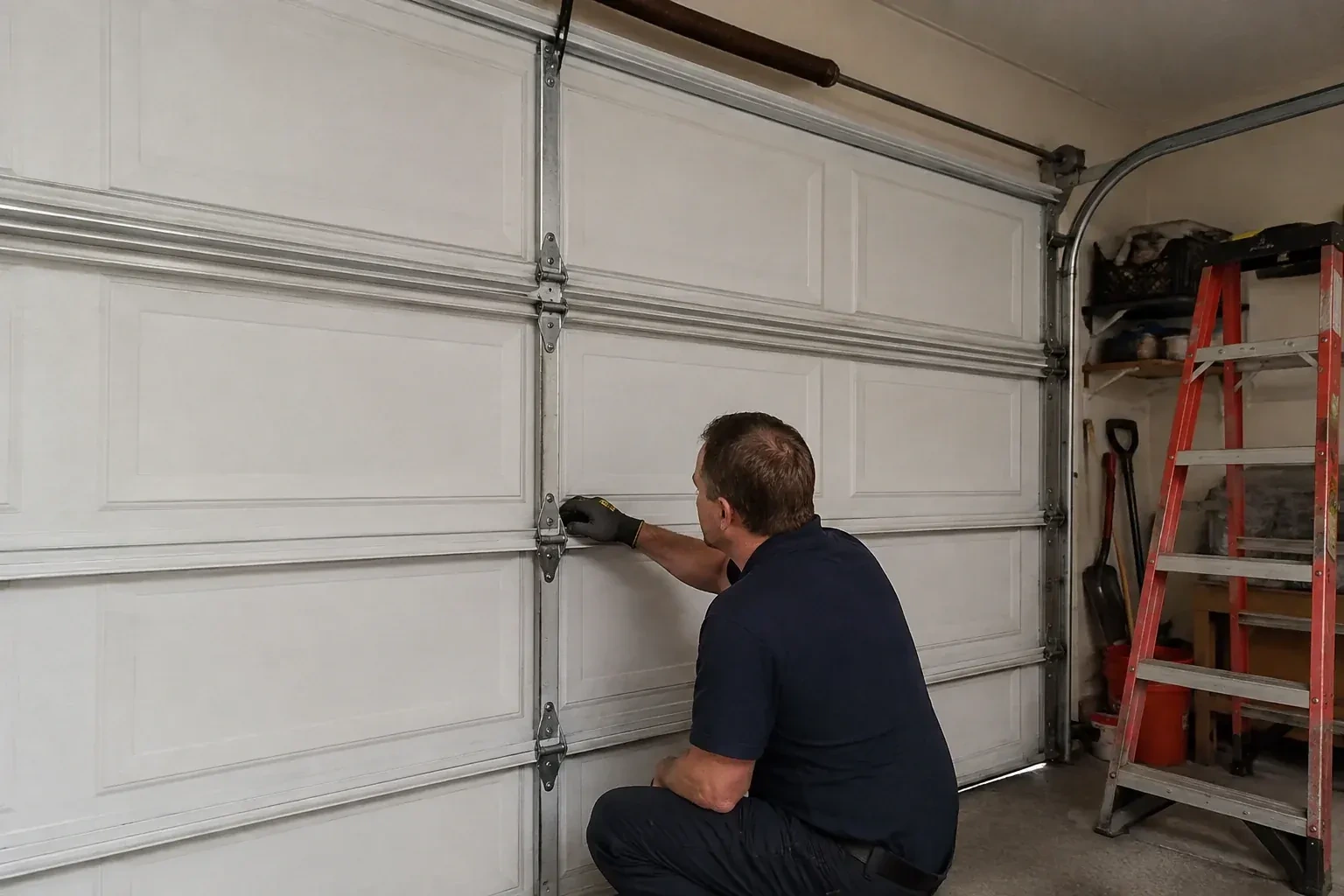
Pressing a hand against one of the middle hinges makes it rock on the panel.
In plain words
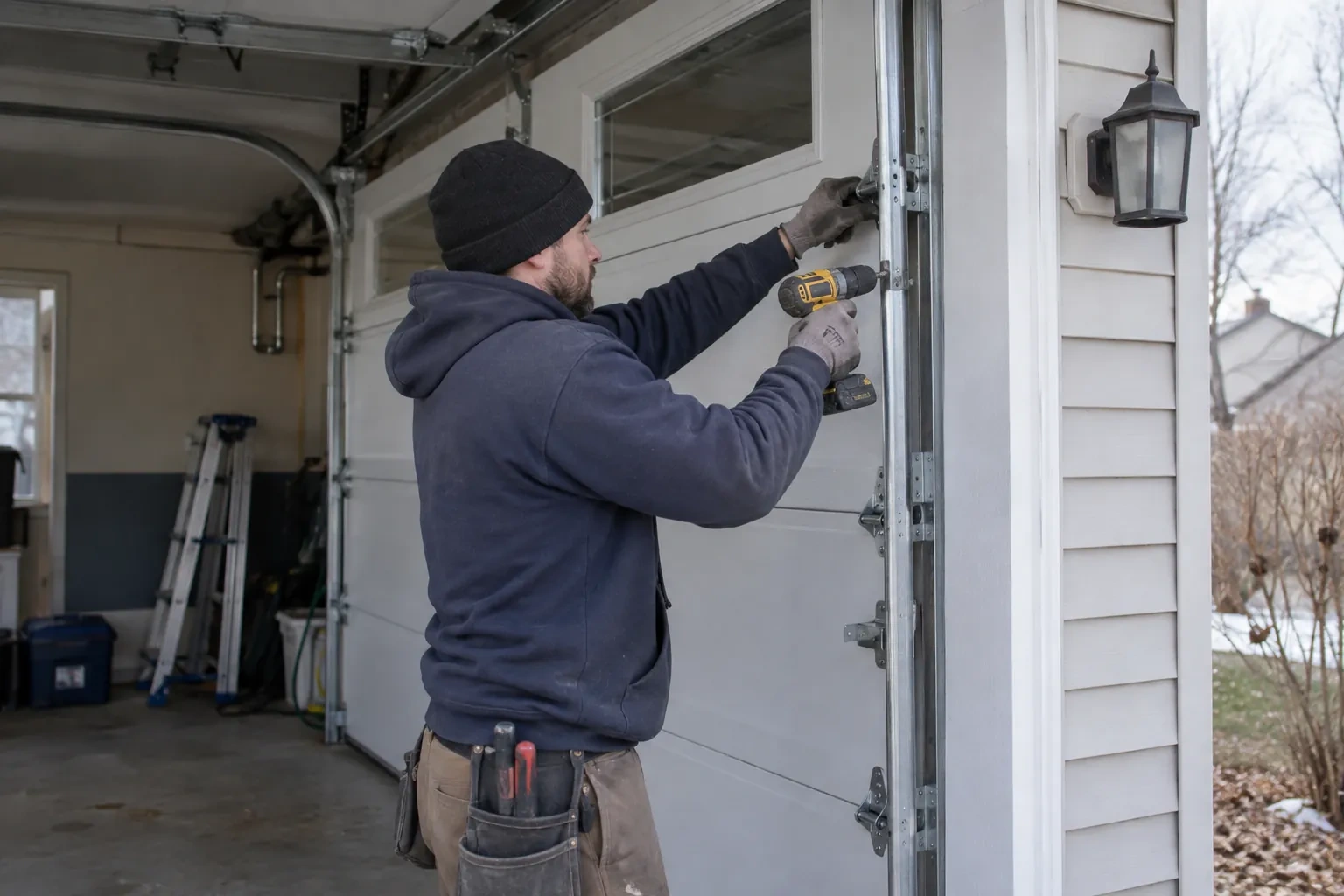
Hinges are the joints of a sectional garage door. Each pair of panels is connected by two hinges at the edges, which also hold the rollers, and by one or more centre hinges along the middle. Hinge replacement removes a hinge that has cracked, bent, worn loose at the pin or lost its grip on the panel and fits a matching one in its place. The technician keeps the door closed and the opener disconnected, changes each hinge on its own, checks the panels line up and the rollers sit true, and runs the door to confirm it folds around the curve as one piece.
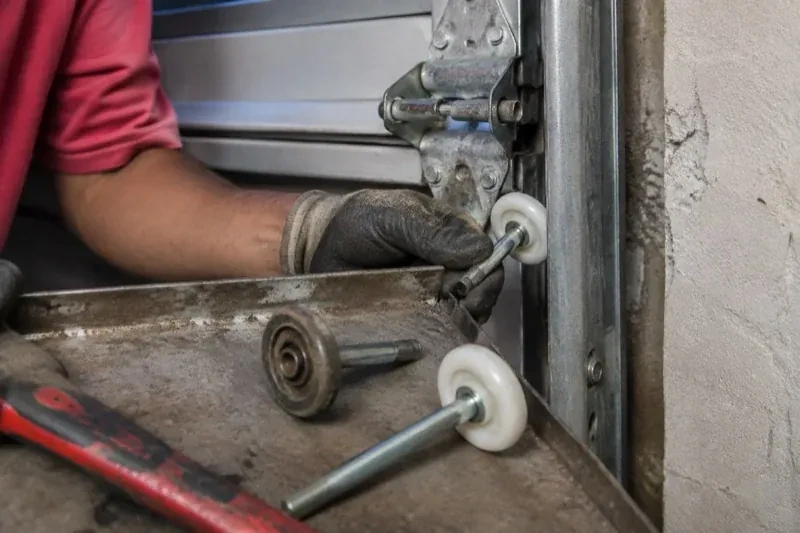
How the visit goesThe roller at the top of the second panel is leaning outward and only half of the wheel is still in the track. Behind it, the hinge that should hold it flat against the door has a screw missing and another hanging by a thread.
Garage Door Hinge Replacement
How the visit goes
Panel stiffness, struts and the hinge count
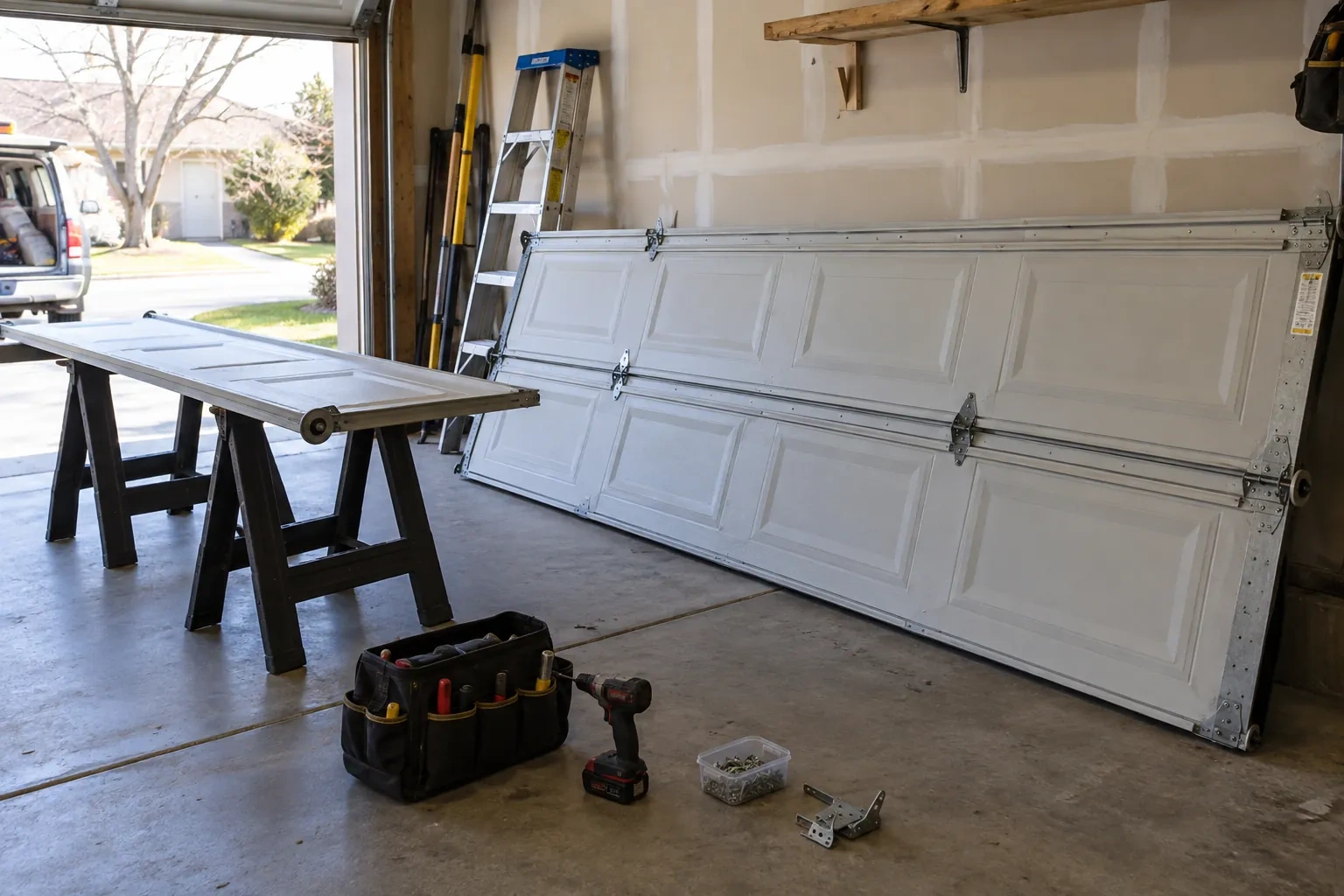
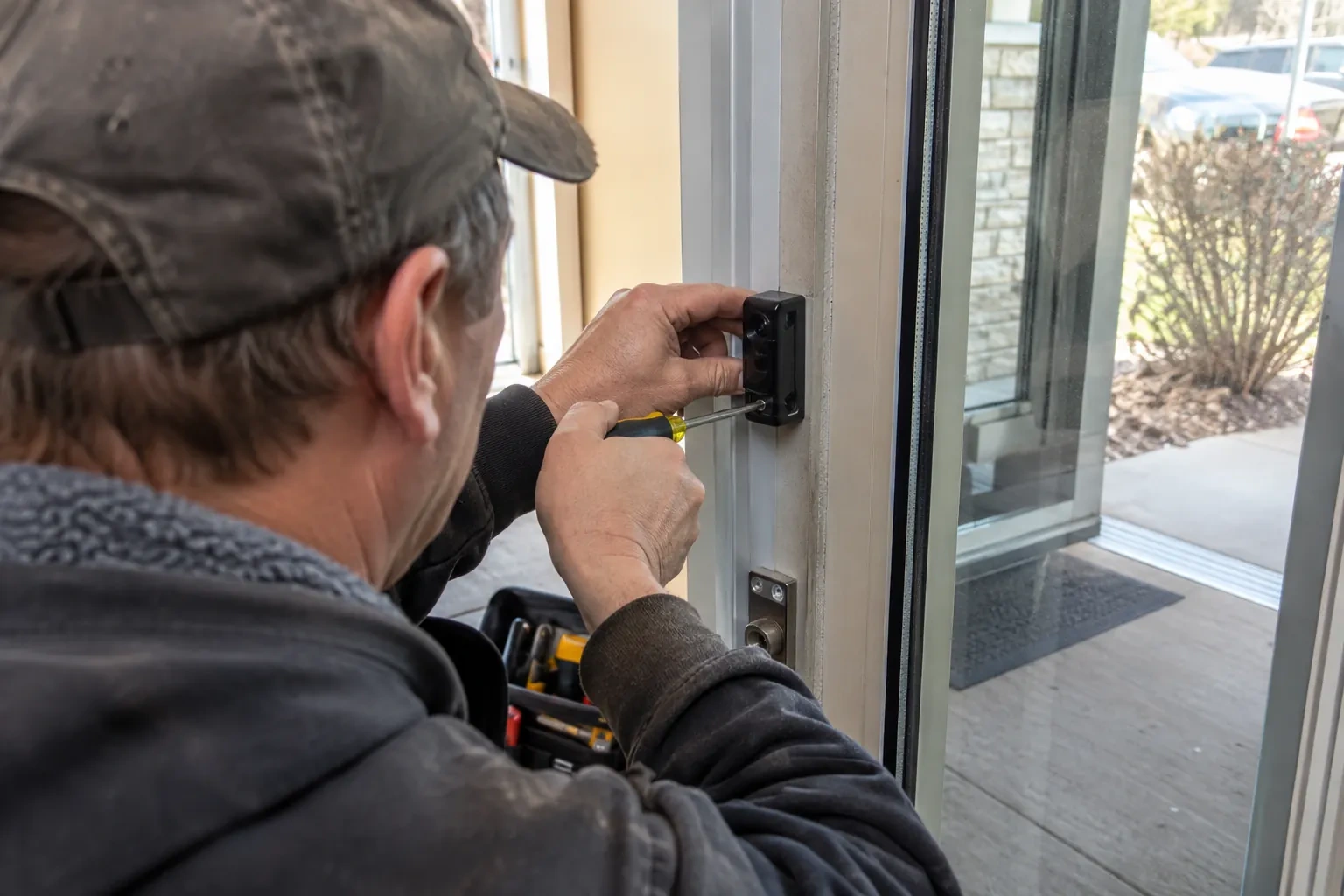
Wide doors depend on their centre hinges and struts to keep each panel flat. The technician counts the hinges on each joint against the door's width, since a double door with only one centre hinge, or a wide panel with no strut, flexes on every cycle and pulls at its hinge screws. The steel around each hinge is checked for hairline cracks or oil-canning, and a wood door for splits along the grain near the fasteners. Where a strut is missing or a joint is short a hinge, adding one is discussed as part of the plan, because stiffening the panel is what keeps the new hinges tight.
Travel, fit, balance and the opener
Once every hinge is on, the door is run by hand. The technician watches each joint turn the curve, listening for the pop that started the call and looking for a gap opening between panels. The door is closed and checked for an even fit against both jambs, then raised to waist height and let go: a balanced door stays put, which confirms the hinge work has not disturbed the springs' job. Rollers are watched for staying flat in the track. Then the opener is reconnected, its travel limits confirmed, and the reversing test and photo-eye check carried out while you watch.
A monthly look from the inside
The maintenance checklist the door industry publishes asks homeowners to check hinges, brackets and fasteners visually from inside with the door closed, once a month. Stand where you can see both ends of the door and follow each joint with a flashlight: a screw head that stands proud, a hinge leaf lifted off the panel, a fresh crack spreading from a hole, or a rust stain running down from a knuckle. Then watch the door open and confirm the rollers stay in the track. Anything you spot is a small job at that stage. The whole check takes about a minute.
Garage Door Hinge Replacement
In the van
Silicone or lithium hinge lubricant
Panel strut
Flashlight and level
Hex-head self-drilling screws
Track clamps or locking pliers
Garage Door Hinge Replacement
What affects the quote
Supporting the panel while hinges are changed
A heavy insulated panel needs to be braced while its hinges are off, so it does not sag or twist out of place mid-repair. Lighter steel or wood panels usually need no extra support, and the technician decides which applies once the panel is in front of them.
Rollers renewed at the same time
Where a roller is cracked, seized or flat-spotted, replacing it while the hinge is off is efficient, and the roller set is listed as an optional item you can accept or decline.
Manufacturer-specific hinge patterns
Hinge width and hole spacing differ between door makers. A door that needs a maker-specific hinge rather than a standard one may involve ordering, which the quote notes.
What to have ready
- Did the door feel heavy, jerky or noisy before the hinge failed?
- Where does the pop, click or gap appear, and roughly how high up?
- Can you see a hinge that is cracked, bent or hanging loose?
Garage Door Hinge Replacement: questions
QuestionsWhat information helps when I book the visit?
Whether the door is closed, open or stuck; where the noise or the gap appears and roughly how high; whether you can see a cracked, bent or loose hinge and whether it is at the edge or the middle; whether the door is a single or a double, steel or wood, and how many panels it has; and whether anything hit the door lately. A photo of the hinge and its stamped number is useful.
What do the numbers stamped on garage door hinges mean?
They mark the joint the hinge belongs to, counted from the bottom. A 1 goes at the joint above the bottom panel, a 2 at the next one up, then 3, with 4 and 5 on taller doors. Each higher number stands the roller a little further off the door face, so the door leans into the jambs when closed and follows the track as it climbs. Centre hinges use the geometry of a 1.
The screws spin in their holes. Can the hinge still be fitted securely?
Yes. A stripped hole is common on older steel doors and on wood doors where the timber has softened. The technician either shifts the hinge to fresh metal within the stile, uses a larger self-drilling screw that cuts new threads, or drills through and fits a bolt with a nut and washer or a backer plate on the inside. Any of these gives the new hinge a firmer anchor than the original screws had.
Related services
- Garage Door Track Repair or ReplacementThe garage floor has settled at one corner, and the door now scrapes the concrete on that side while daylight shows at the other.
- Garage Door Cable ReplacementStanding inside with the door closed, you notice the cable on the right side near the floor has gone fuzzy.
- Torsion Spring ReplacementAfter pulling the red release cord, you tried lifting the door yourself and it would barely leave the floor.