Garage Doors in Normandale, OntarioA frayed cableis a warning.
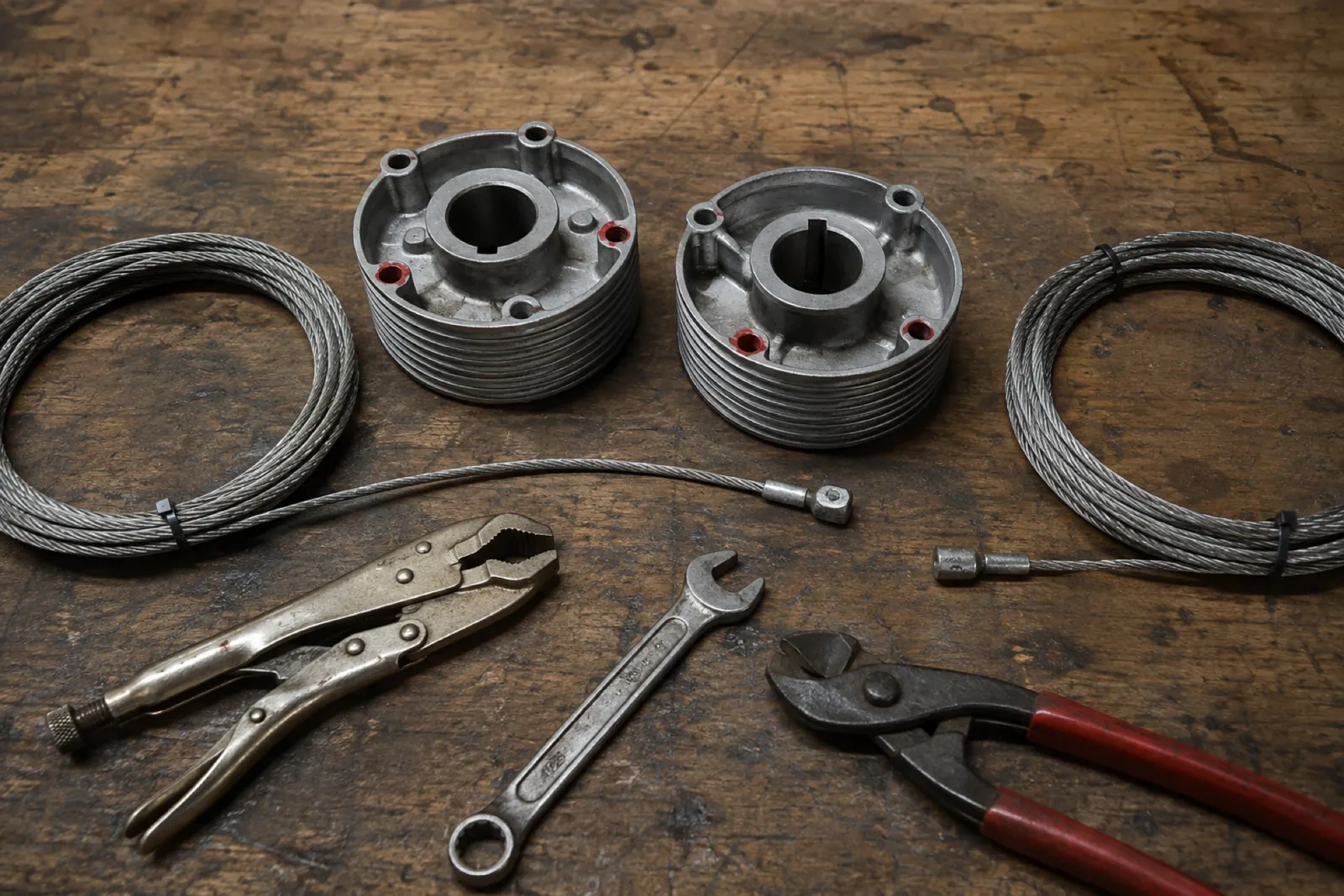
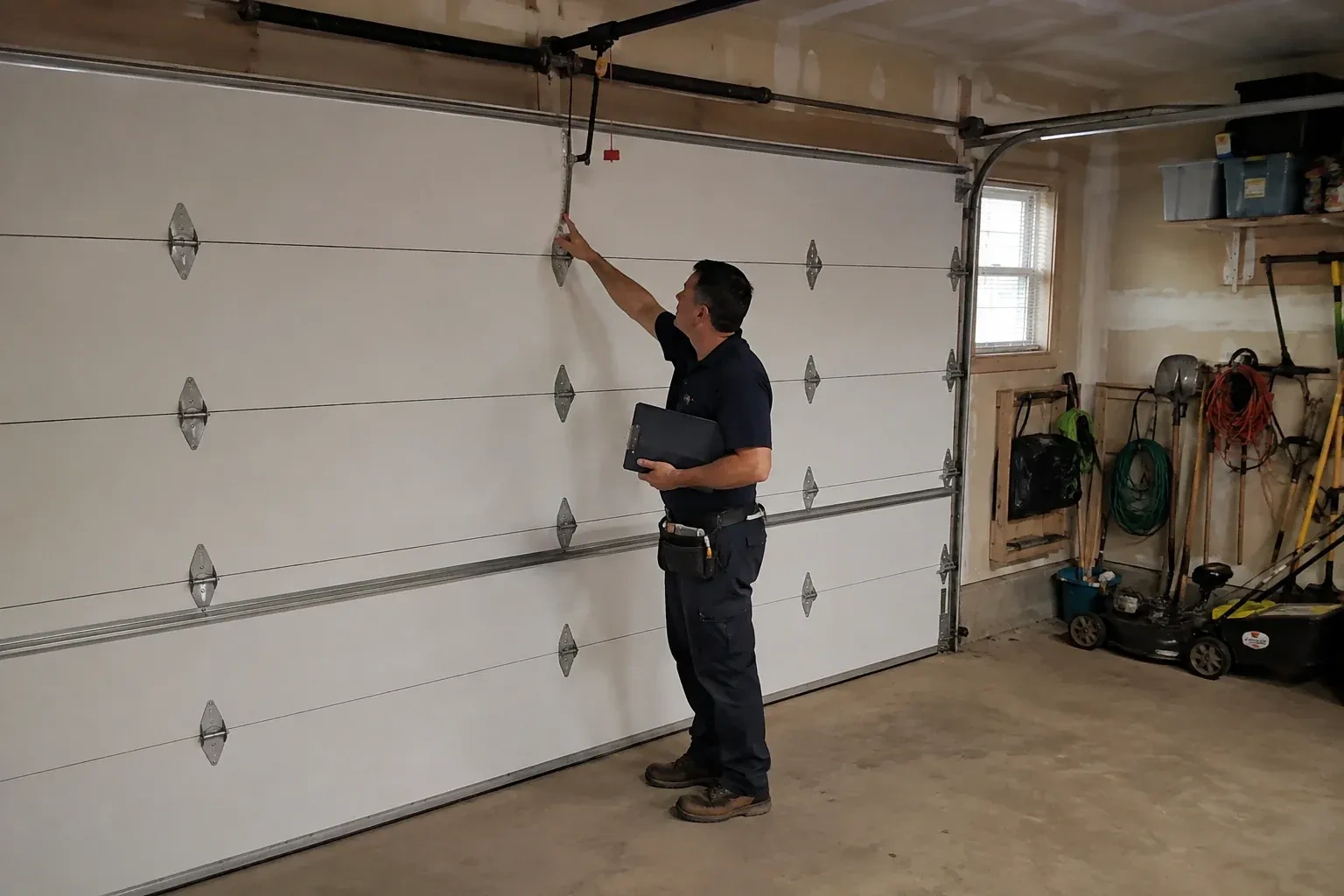
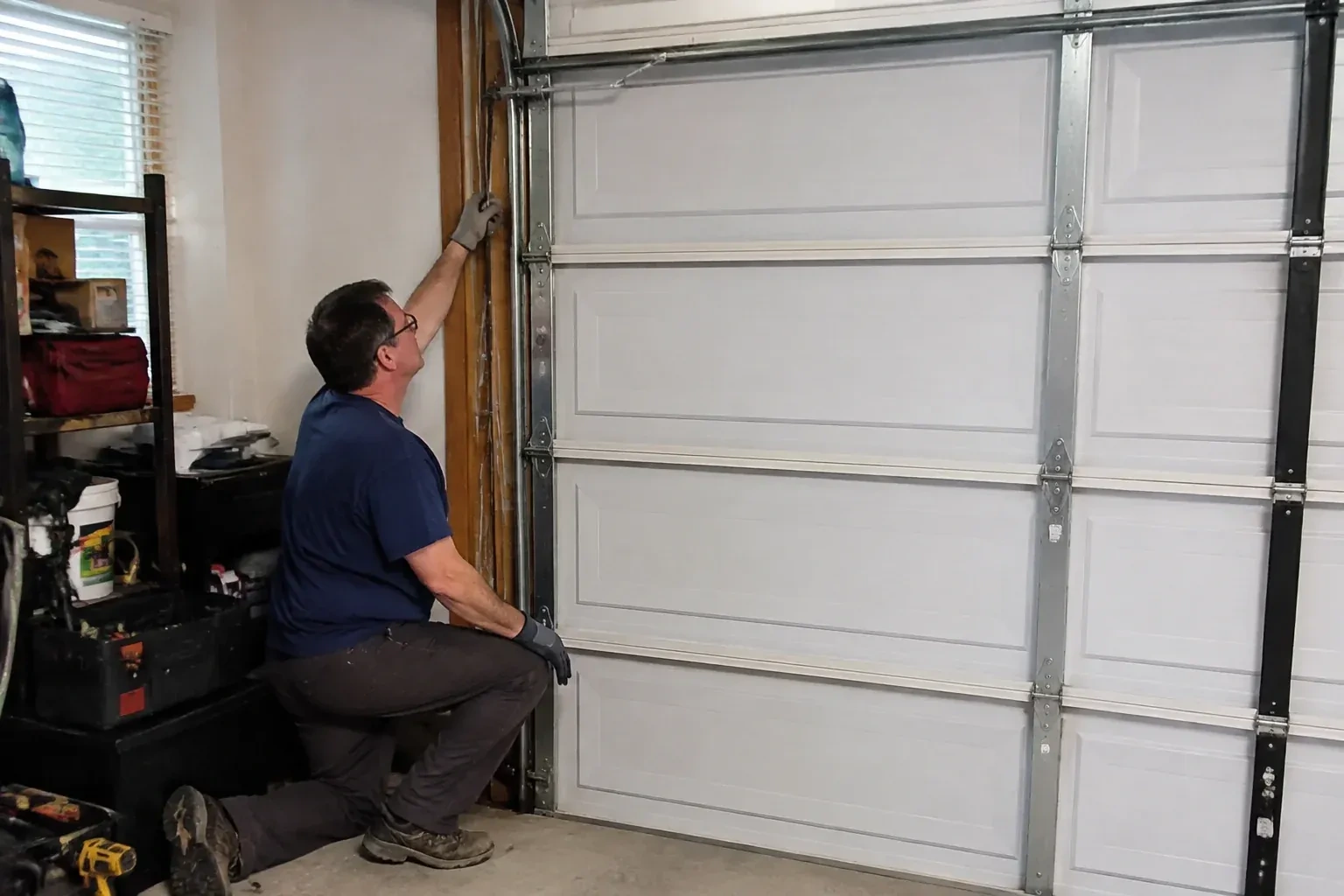
Lifting cables on a door in Normandale show their age as a few broken strands near the bottom bracket, long before they snap. We inspect them on every visit, replace both cables together with new bottom fixtures, and check the drums and bearings that wear alongside them so the door lifts evenly. Nearby, we also work in Fishers Glen.
Lifting cables on a door in Normandale show their age as a few broken strands near the bottom bracket, long before they snap. We inspect them on every visit, replace both cables together with new bottom fixtures, and check the drums and bearings that wear alongside them so the door lifts evenly. Nearby, we also work in Fishers Glen.
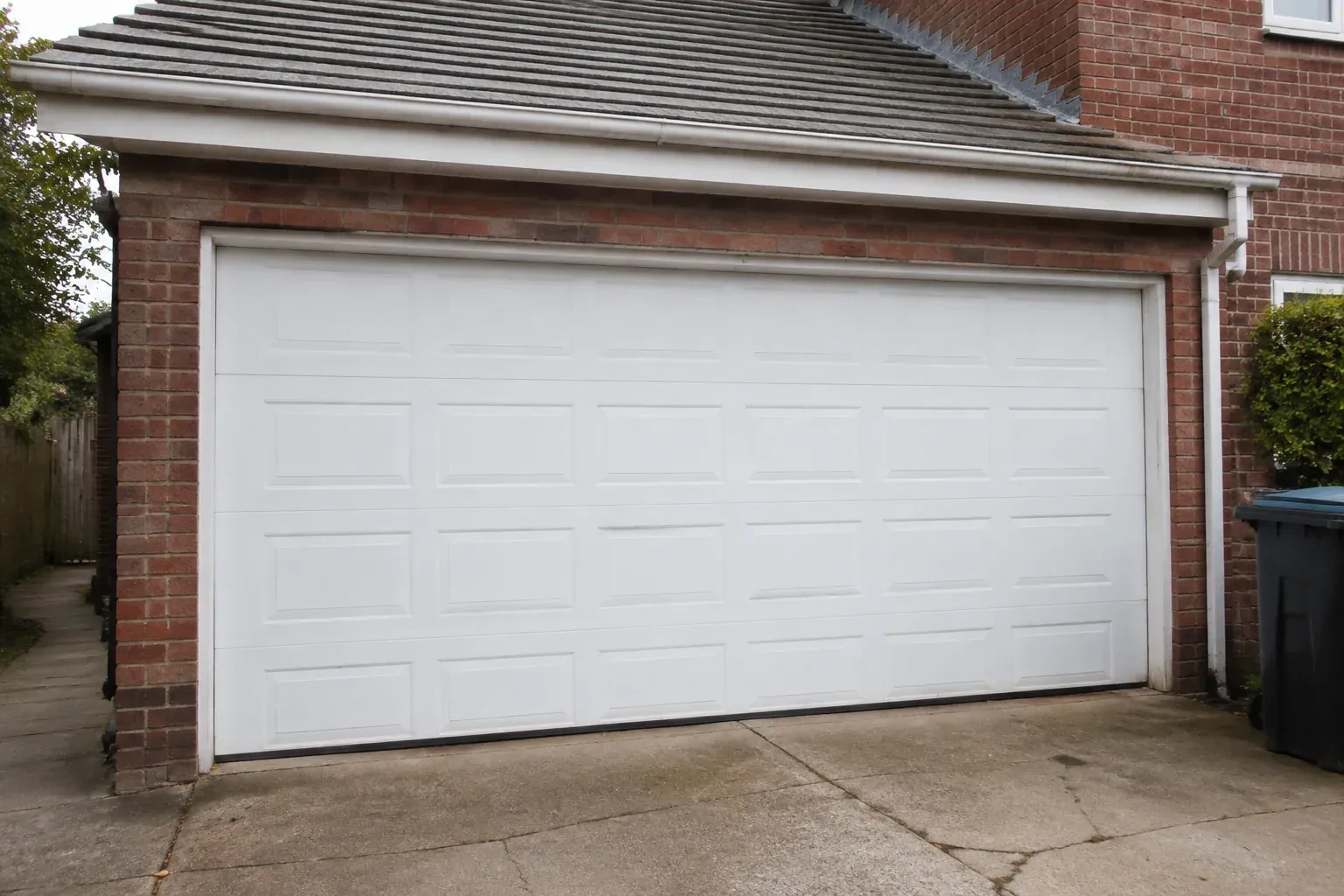
The biggest door in the house, done right.
We work in Normandale the way a good tradesman works on his own house: replace parts in matched pairs so wear stays even, use the spring size the door actually needs rather than the closest one on the shelf, and tidy the garage before leaving. Small habits like these are why doors stay fixed.
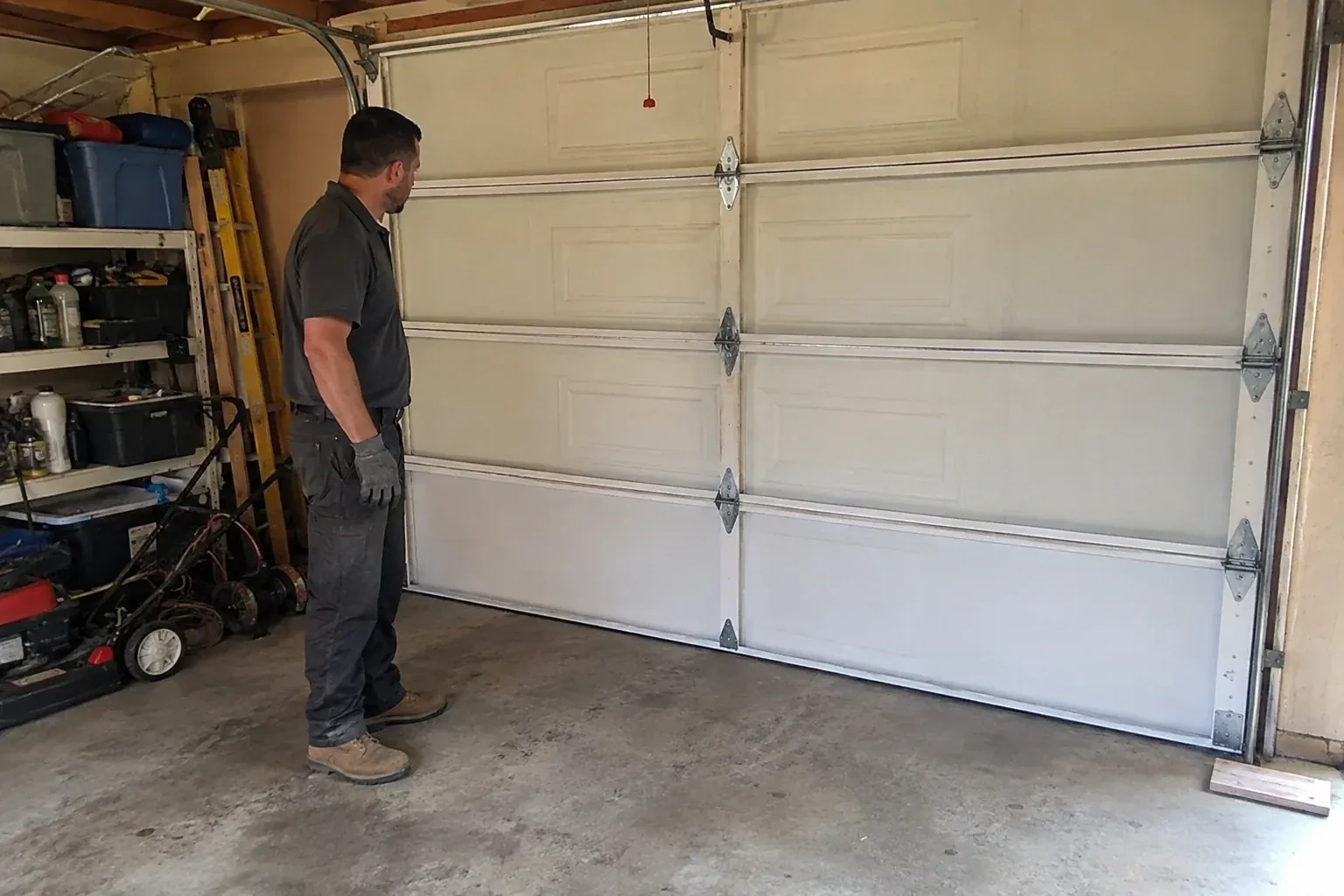
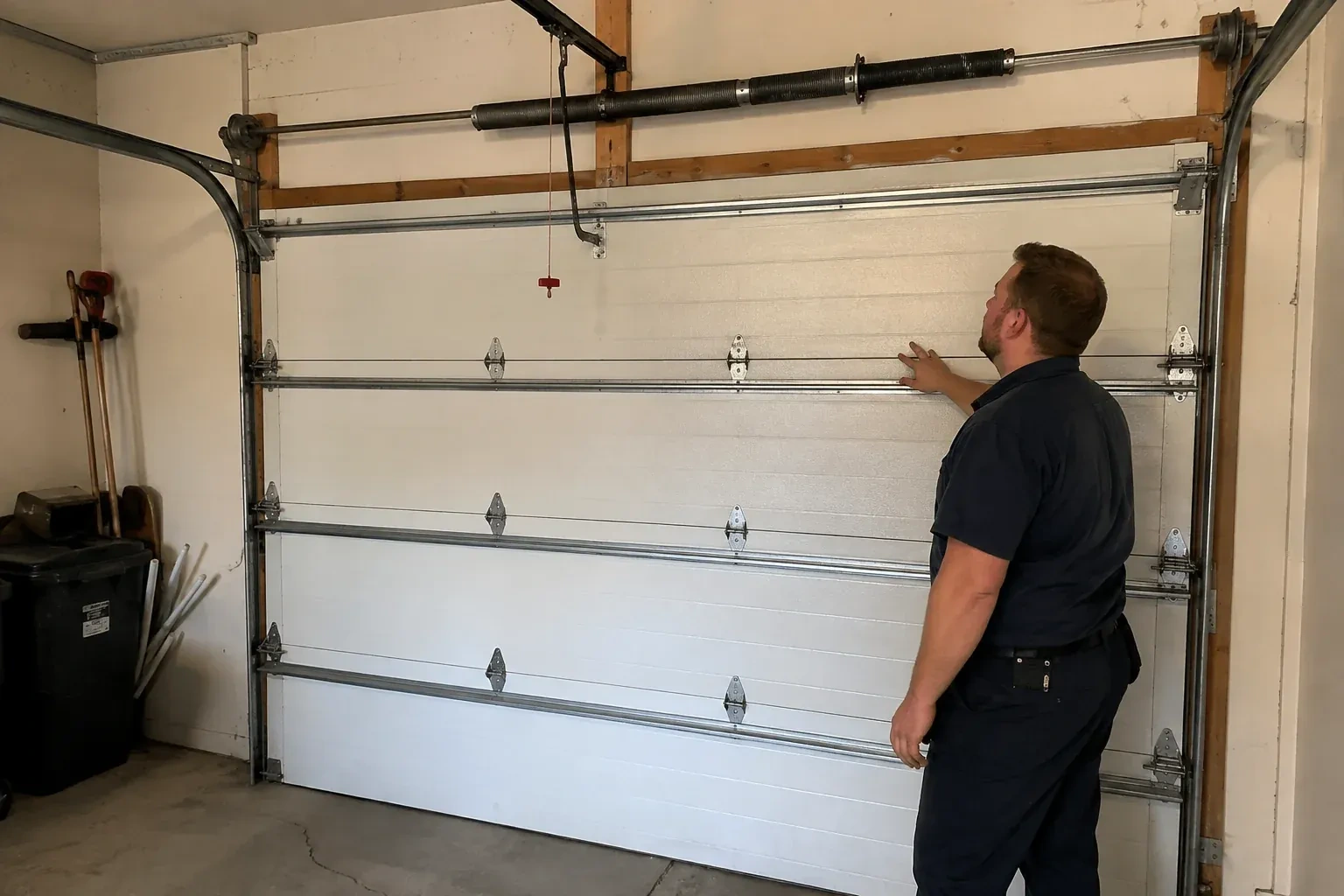
Garage doors in Normandale see the same hard winters as the rest of the region, and our technicians visit the neighbourhood often enough to know what that does to springs, seals and rollers. Whether your door has stopped lifting, started making a new noise or is due for a replacement, we come out with a stocked van, look at the whole door, and explain what we find before any work begins.
18years in business
24/7open every day
Questions welcome. Ask why a spring broke, what a roller does, whether the opener is worth keeping. Clear answers are part of the service.
Leaving it as we found it. Vehicles moved back, packaging removed, floor cleaned. The only change you notice is a door that runs properly.
Decisions made with the facts. We show you the wear, describe the choices and their consequences, and support whichever route you pick.
Get in touch about your garage door in Normandale.
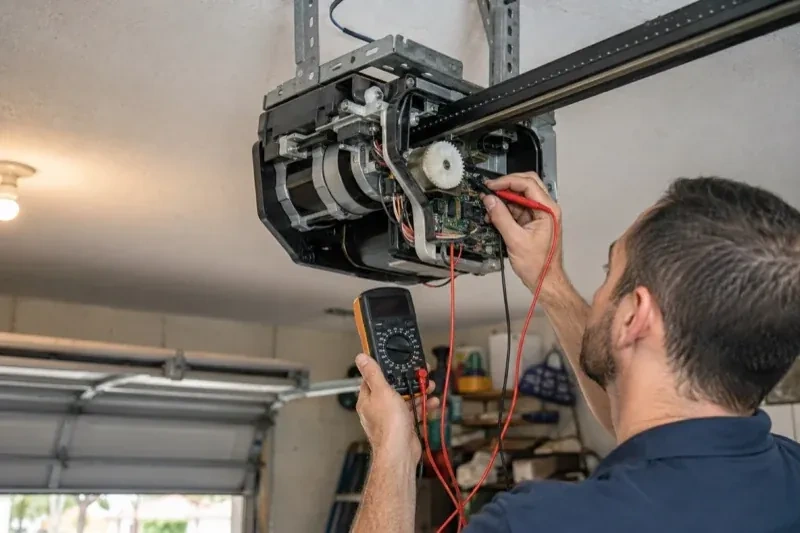
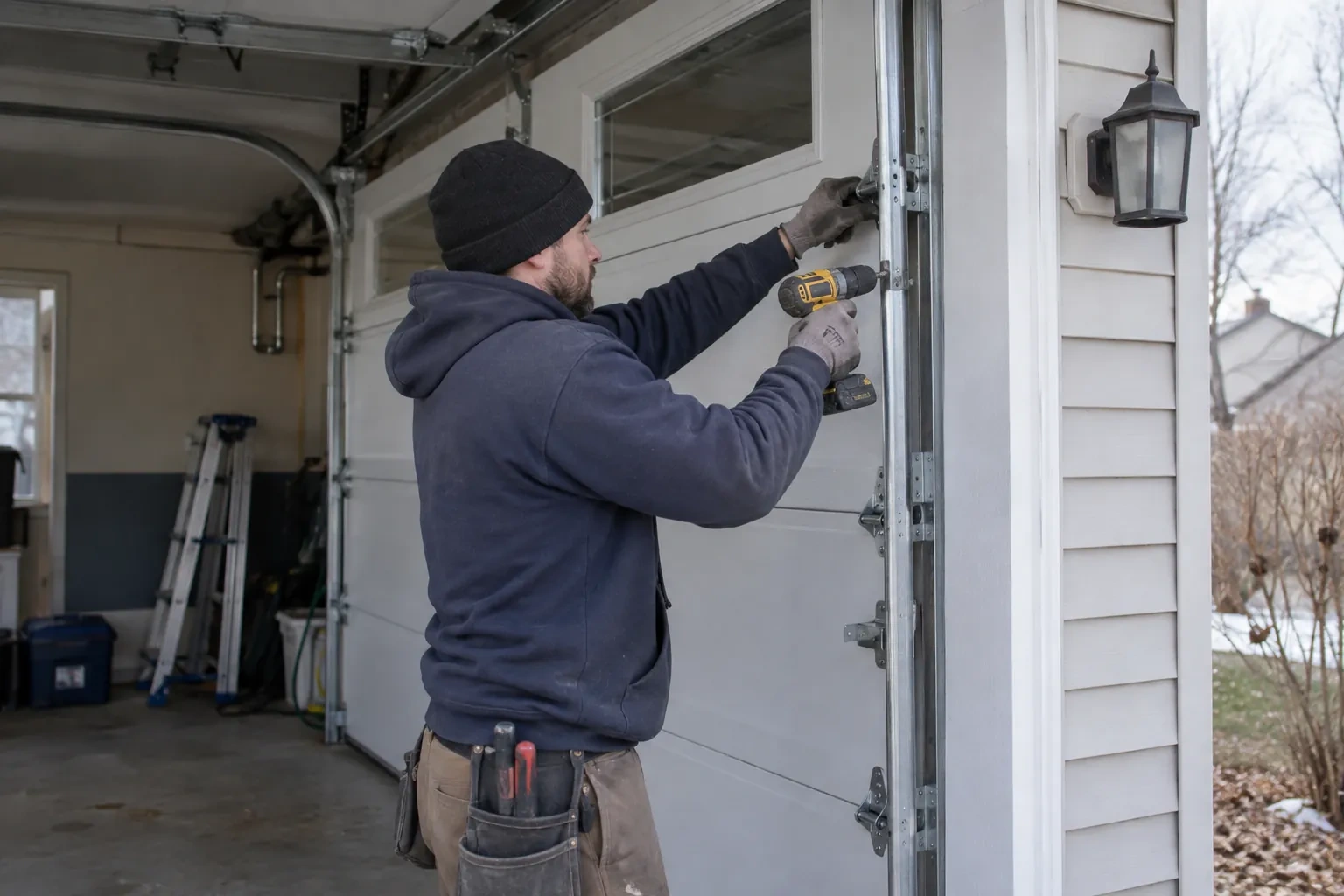
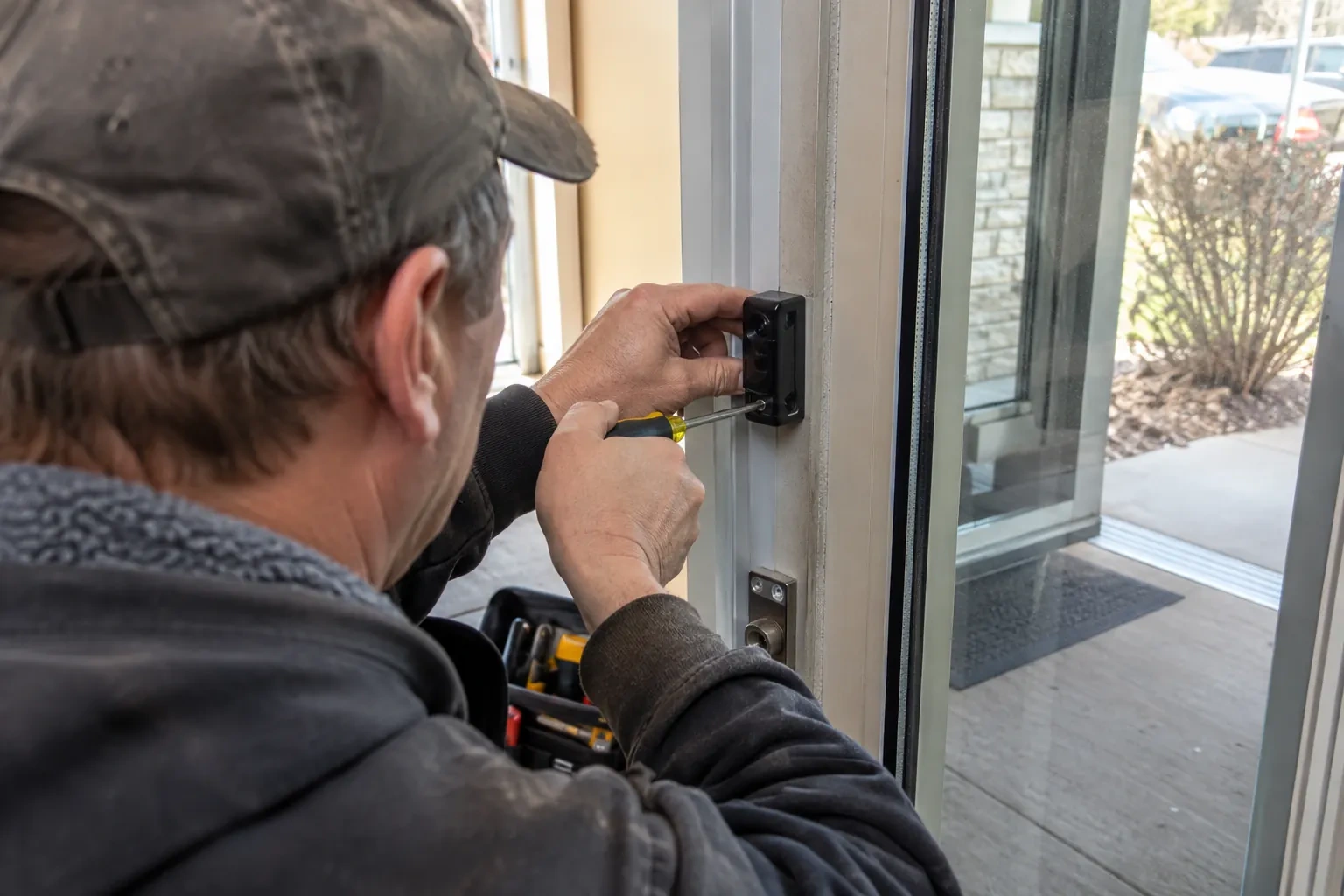
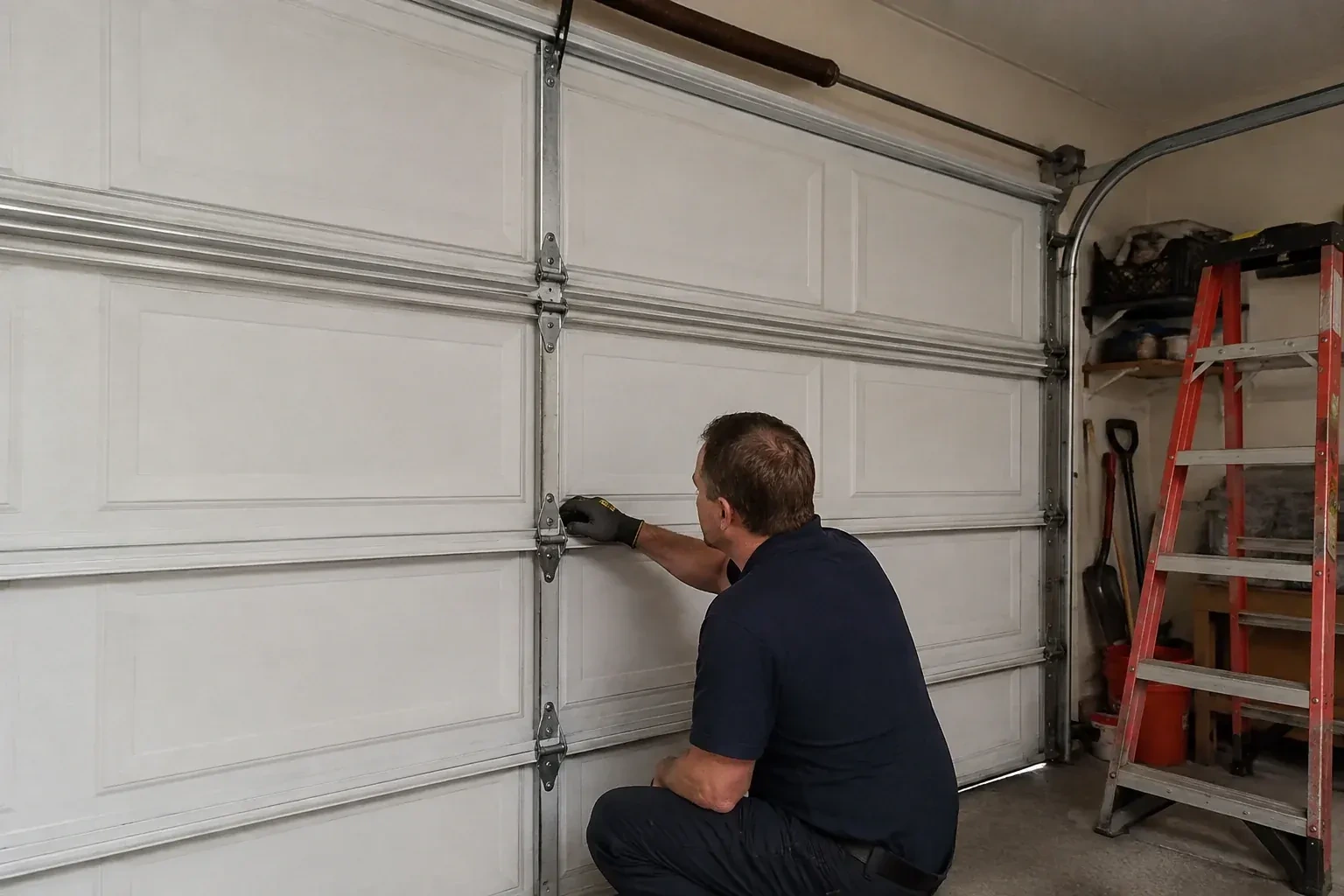
Our garage door services for Normandale are written up one by one so you can read exactly what happens during the visit. Spring and cable replacement, off-track repair, opener diagnosis, remote programming, weatherstripping, tune-ups, panel replacement and full door installation are all described in plain words.
About 62% of homes in Norfolk County were built in 1980 or earlier, according to the 2021 Census.
Older homes
Extension springs are common on older doors, and they should carry a safety cable through the middle so a broken spring is held rather than flung. Adding those cables is a small job the technician checks for and offers on any older door he services.
Single-detached houses make up about 83% of homes in Norfolk County (2021 Census).
Mostly houses
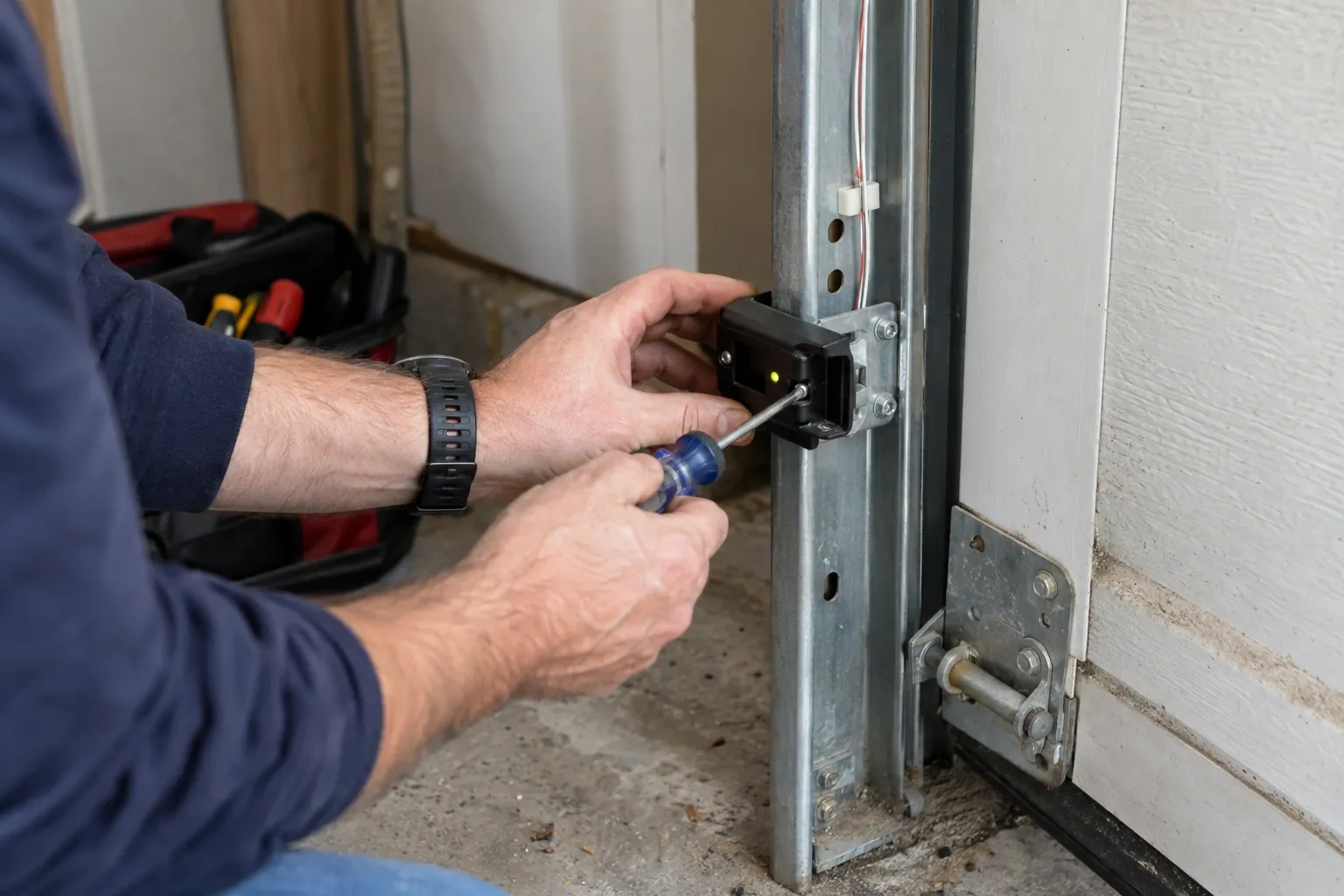
Where homes are detached, the garage is frequently a workshop or storage room as well as parking, and the door may be opened dozens of times on a Saturday. Sealed-bearing rollers, protected sensors and a regular tune-up keep a hard-working door running smoothly.
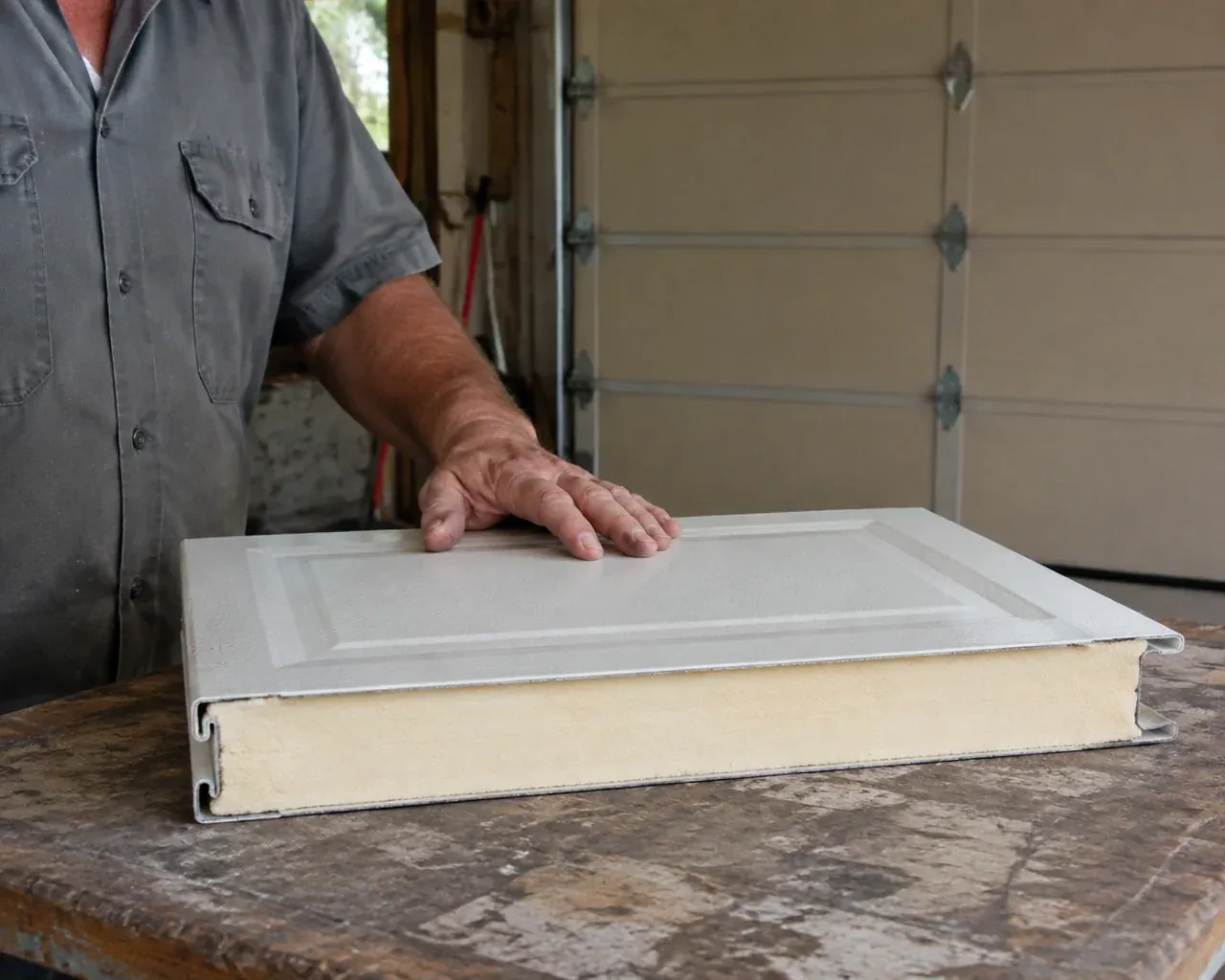
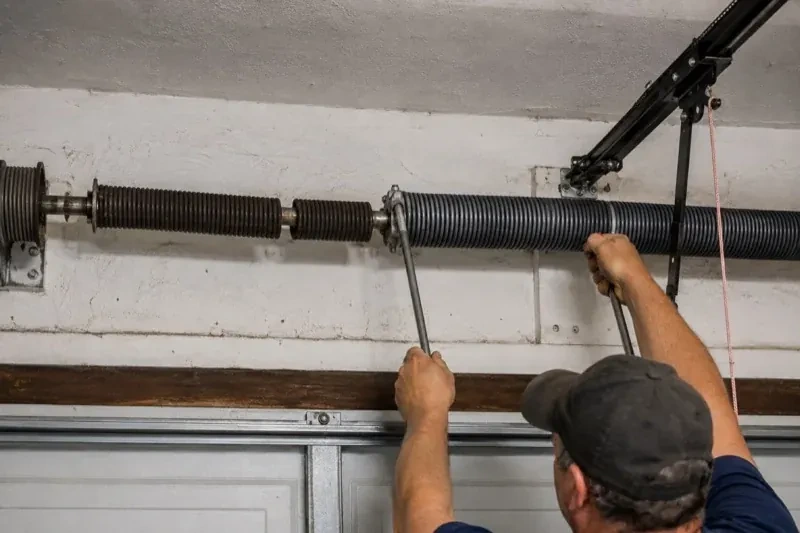
Heavier doors, such as insulated steel or wood, need springs with more capacity, and a door that has been reskinned or insulated since its springs were fitted may be undersprung without anyone knowing. We check the match and correct it.
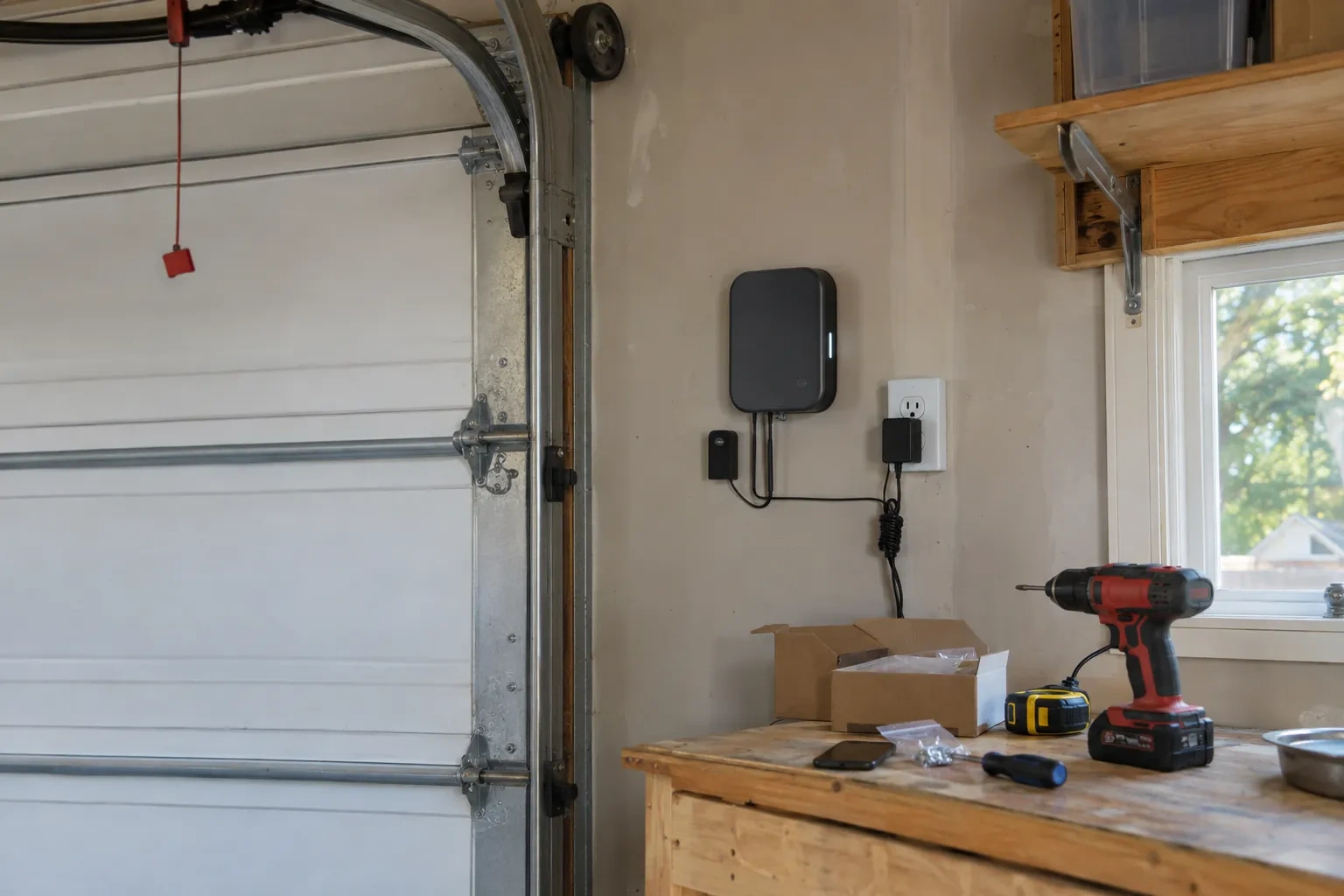
Halfway up, every single time, the door hesitates and there is a ratcheting sound from the motor head, then it carries on. A closer look shows a stretch of the belt where the teeth are worn almost flat.
The bedroom above the garage shakes every morning at six when the chain drive fires up. Everyone in the house knows the moment someone leaves for work.
After a cold night the door stays open until the garage warms up. There is frost on the sensor lenses and a ridge of salty slush piled against the brackets where the snow blower was parked.
The new car has three buttons in the mirror for garage doors. You held the old remote up to it as the manual said, the light in the car changed, and yet the door ignores it completely.
Halfway up, the door lets go of the opener with a clunk and sinks back to the floor while the trolley carries on to the top alone. It has happened three times this month, and each time the release lever is found half-cocked.
Which fix fits?
Your car is inside and the door is stuck crooked across the opening.
Every morning the door announces itself: a rattle on the way up, a grinding squeal on the way down, loud enough that the neighbours know when you leave.
WhyThe bottom foot of a garage door track has a hard life in this climate.
One of the springs beside the track is hanging loose at the front end, its pulley dangling, and a length of cable lies slack along the top of the door.
WhyThe operator standard for residential openers in this country asks for a manual release that is coloured red, easy to tell apart from the rest of the mechanism, and reachable from the floor, with the handle no more than about 1.8 metres up.
The door shakes through the curved track, hinges have loosened in worn mounting points, and repairs now involve several parts at once.
WhyWhen a door is stuck closed, the first goal is to understand what is holding it rather than adding force.
An entrance. Not an afterthought.
1/10Off-Track Garage Door Reset
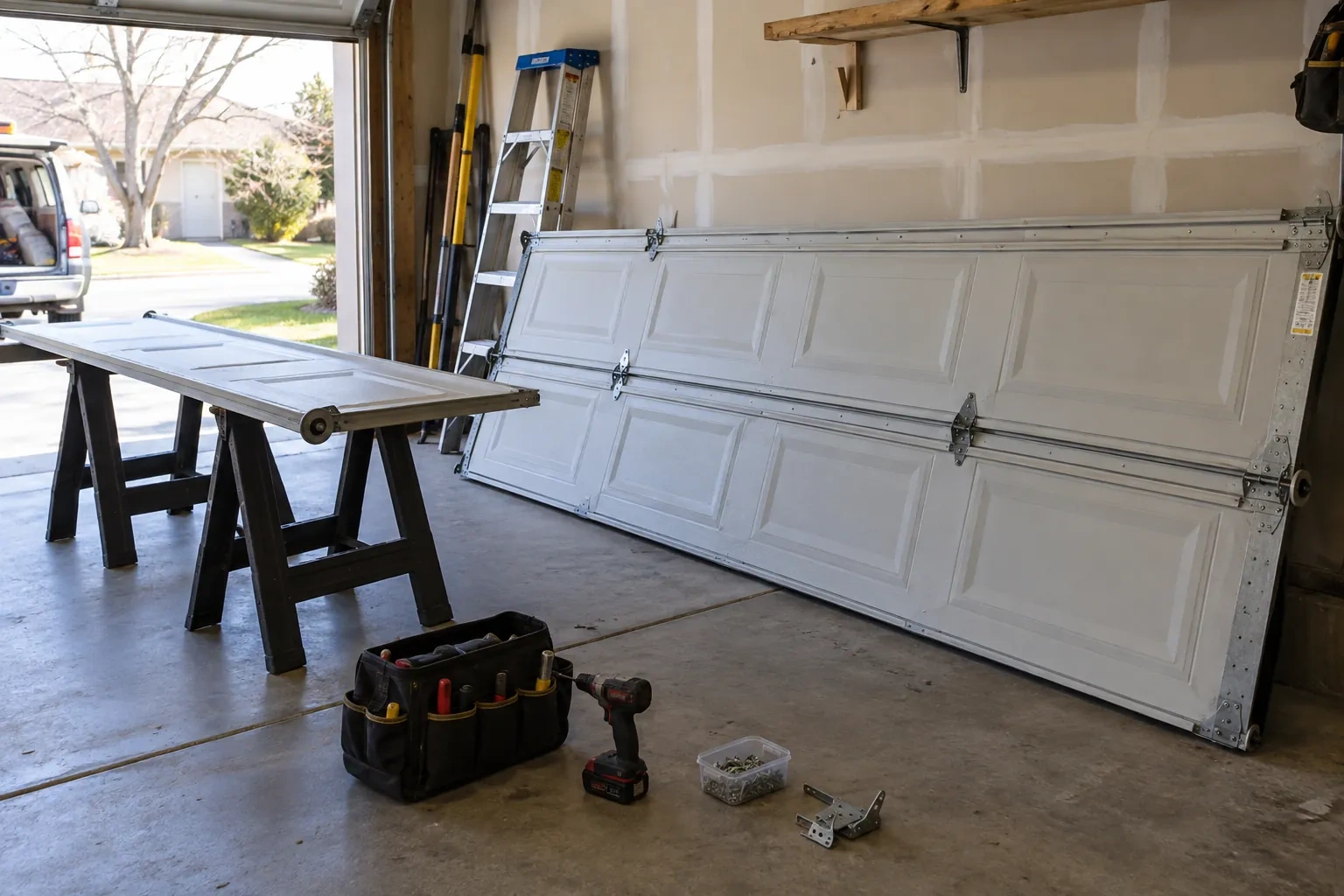
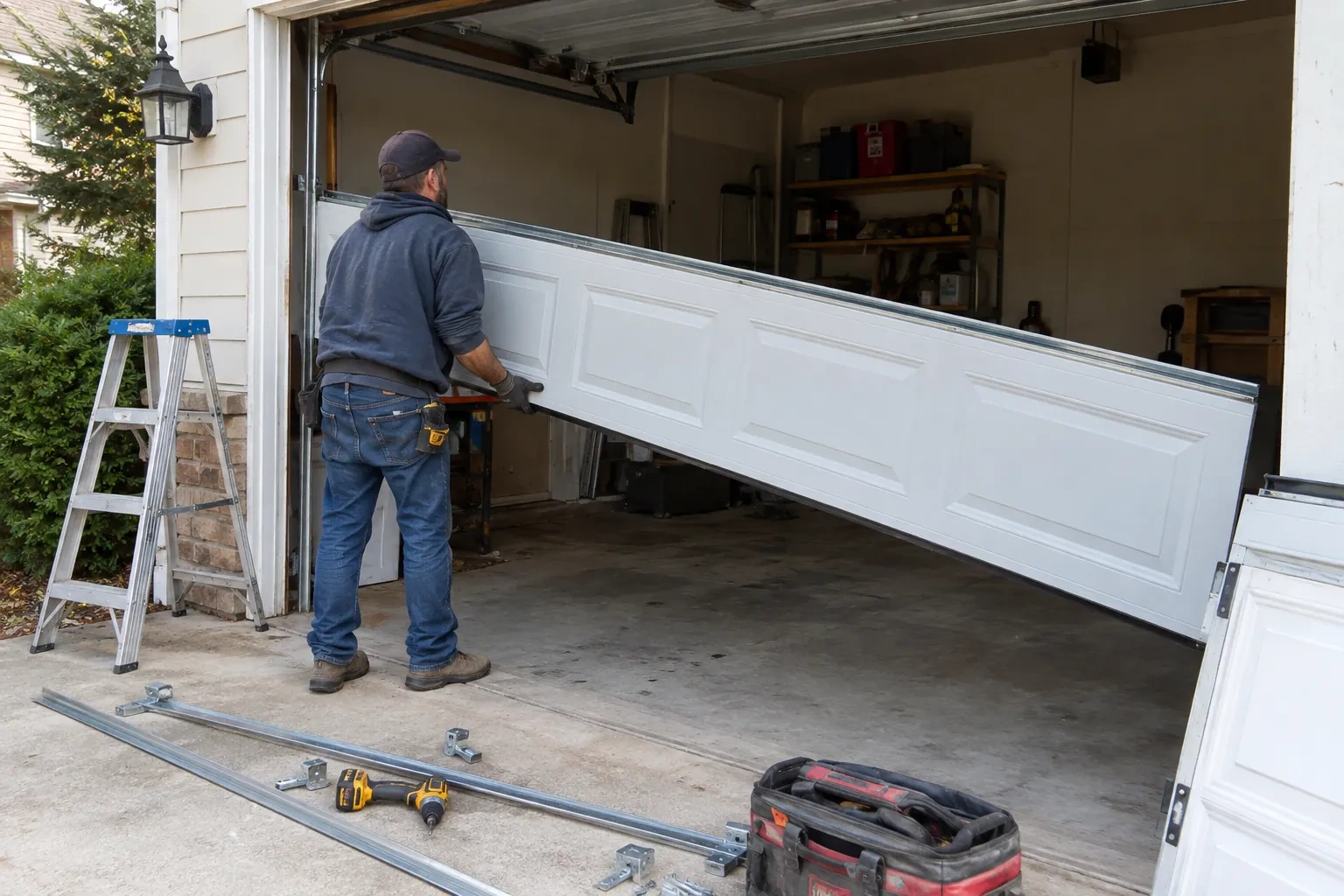
Your car is inside and the door is stuck crooked across the opening. Pushing the wall button just makes the motor hum, and one section is bent where a roller has climbed out of the curve at the top of the track.
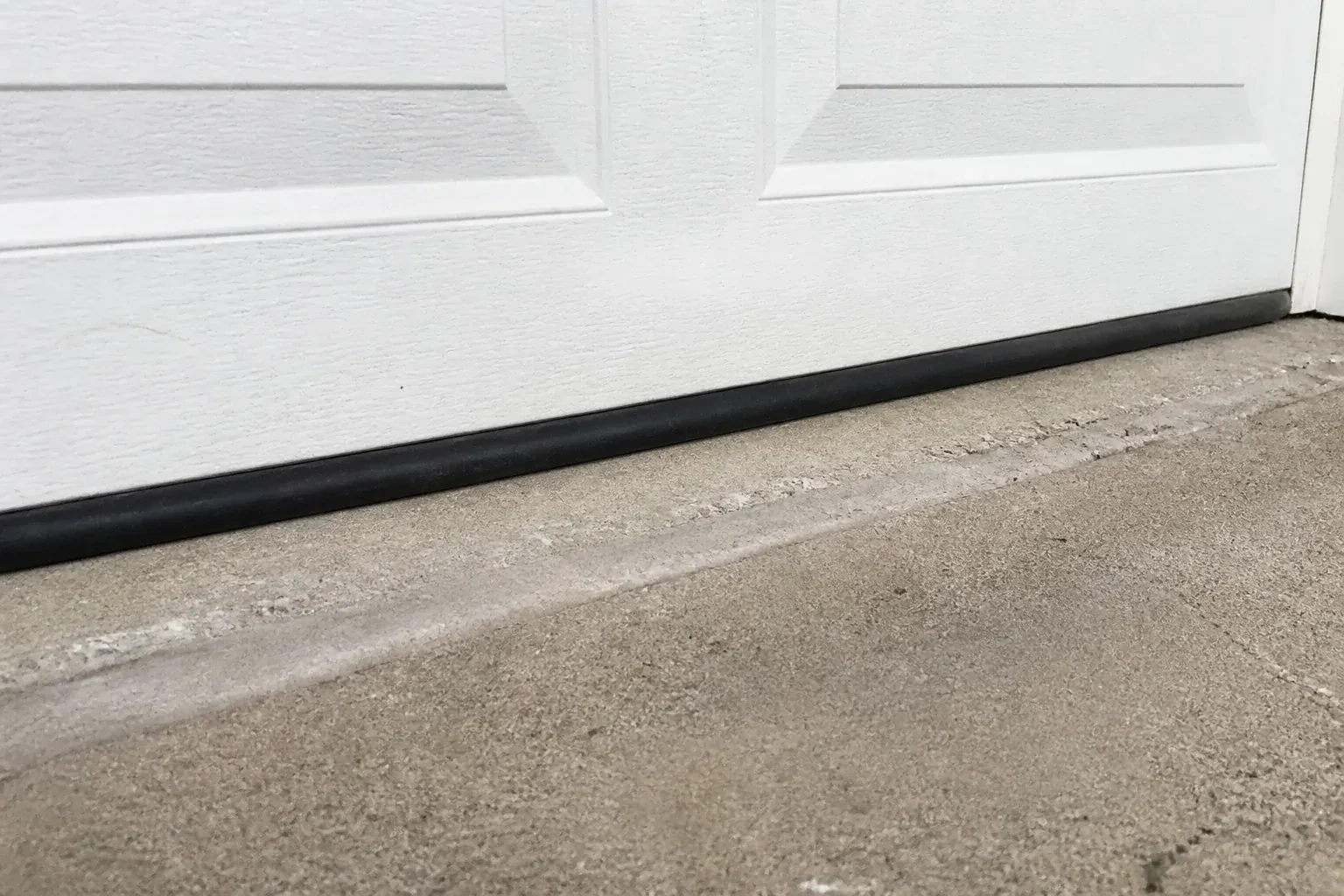
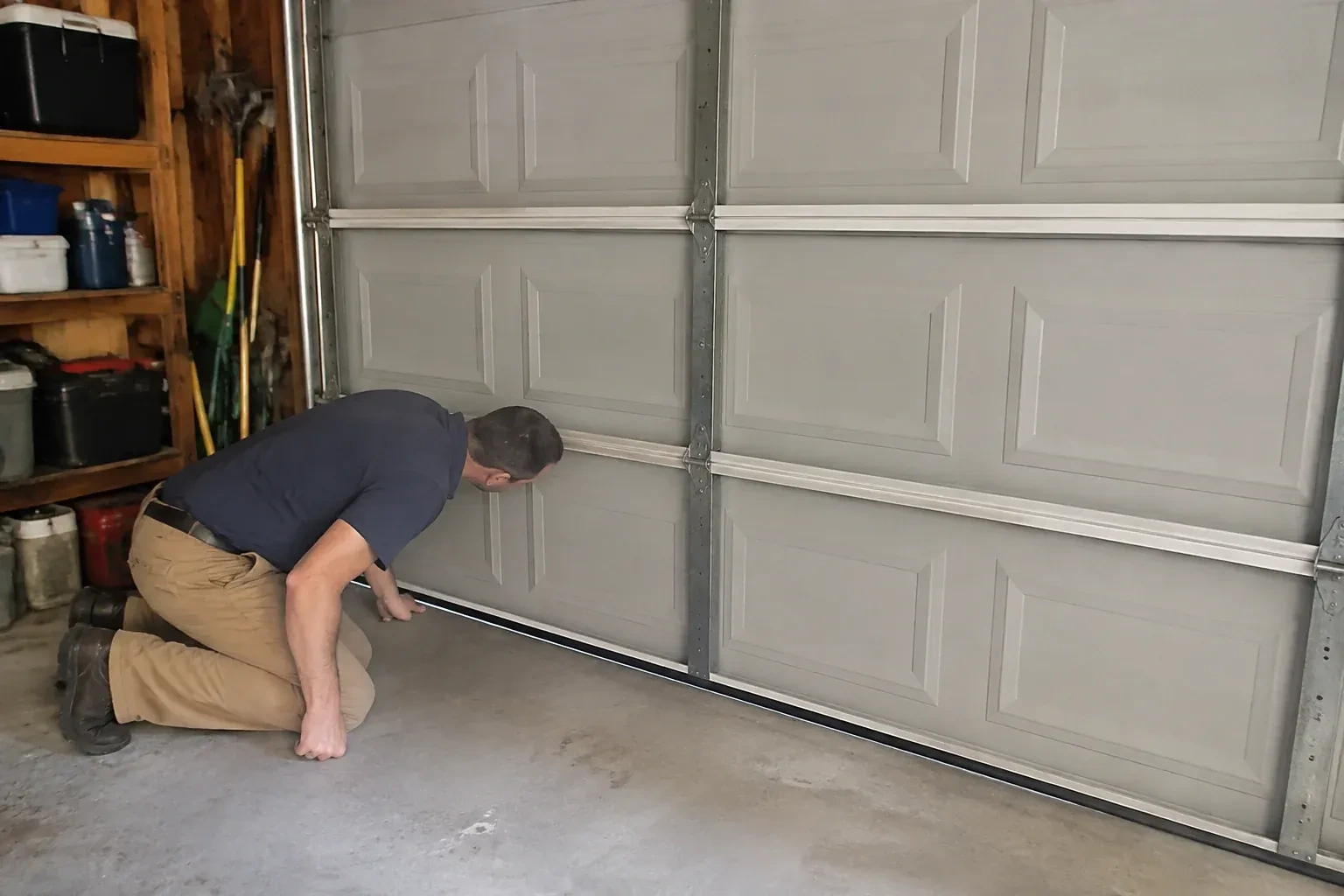
Every mild afternoon the snow melts off the car, runs to the door, and by morning the rubber strip along the bottom is frozen to the concrete. Last week the opener lifted the door and left half the seal on the floor.
Every morning the door announces itself: a rattle on the way up, a grinding squeal on the way down, loud enough that the neighbours know when you leave. A spray of lubricant settled it for a day or two, then the racket came back.
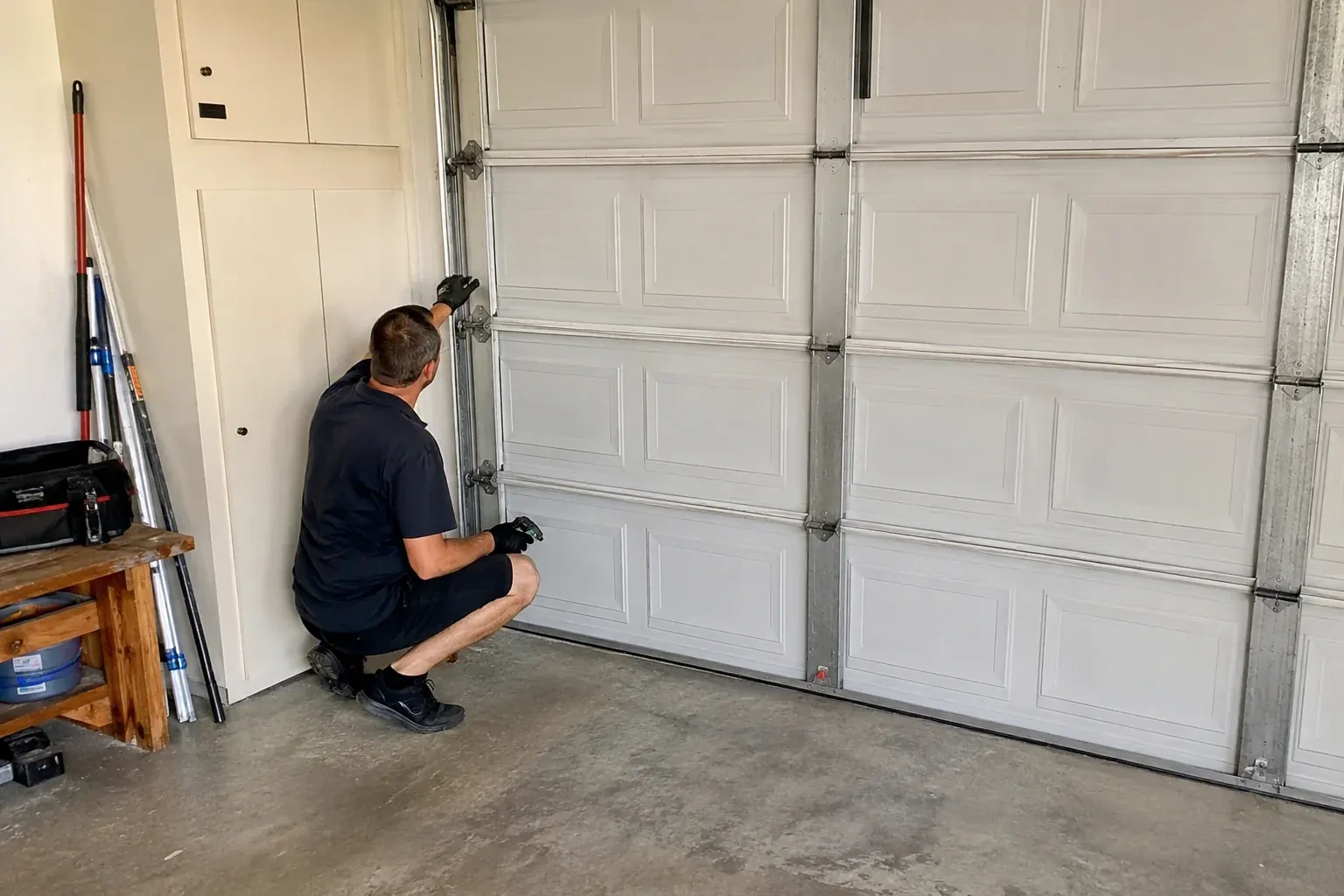
You bought the house with a door that sticks near the top of its travel. The vertical track was screwed tight against the jamb, so the door drags along its stop moulding on every trip instead of swinging clear.
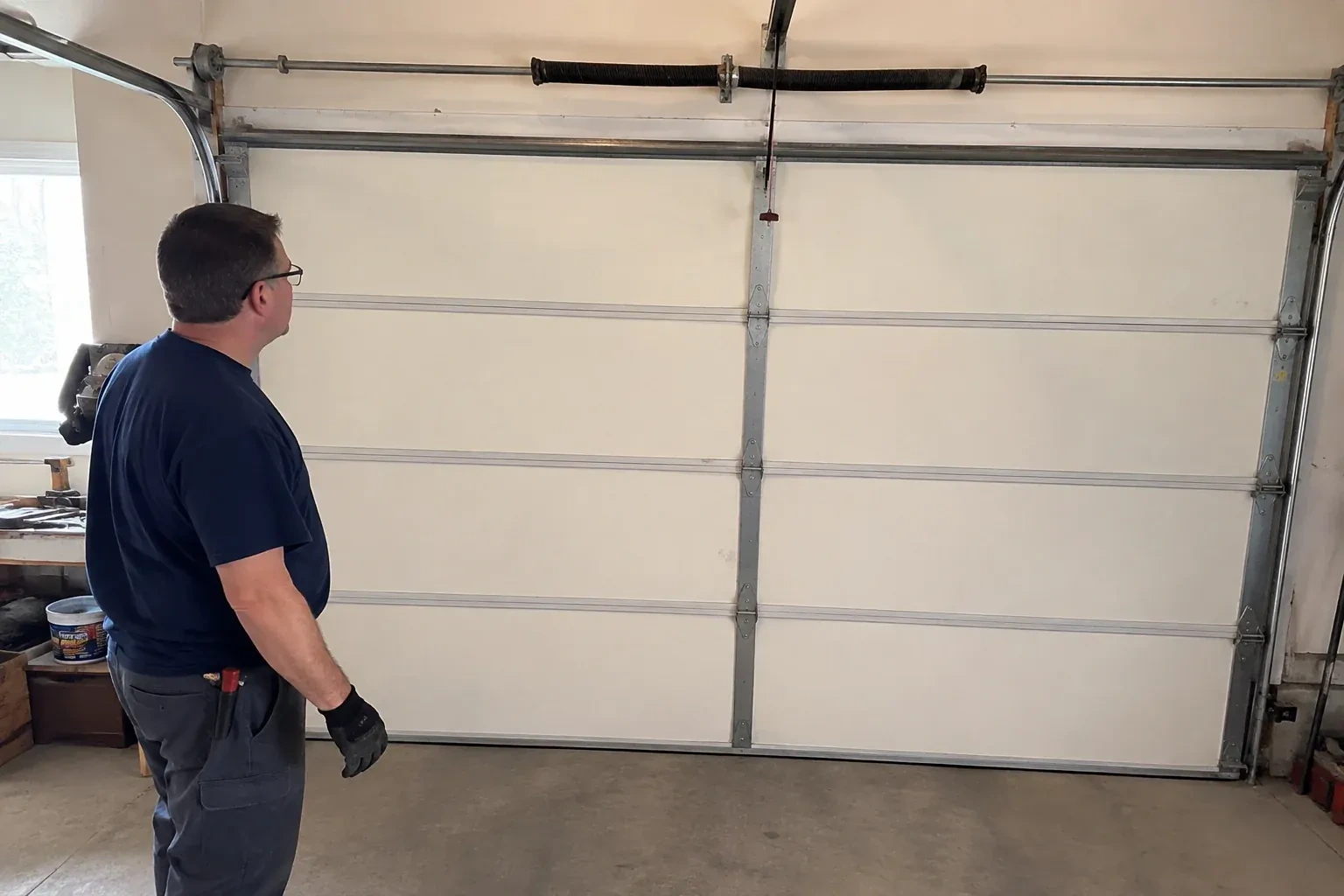
One of the springs beside the track is hanging loose at the front end, its pulley dangling, and a length of cable lies slack along the top of the door. The door sits slightly crooked and the opener reverses whenever it tries to close.
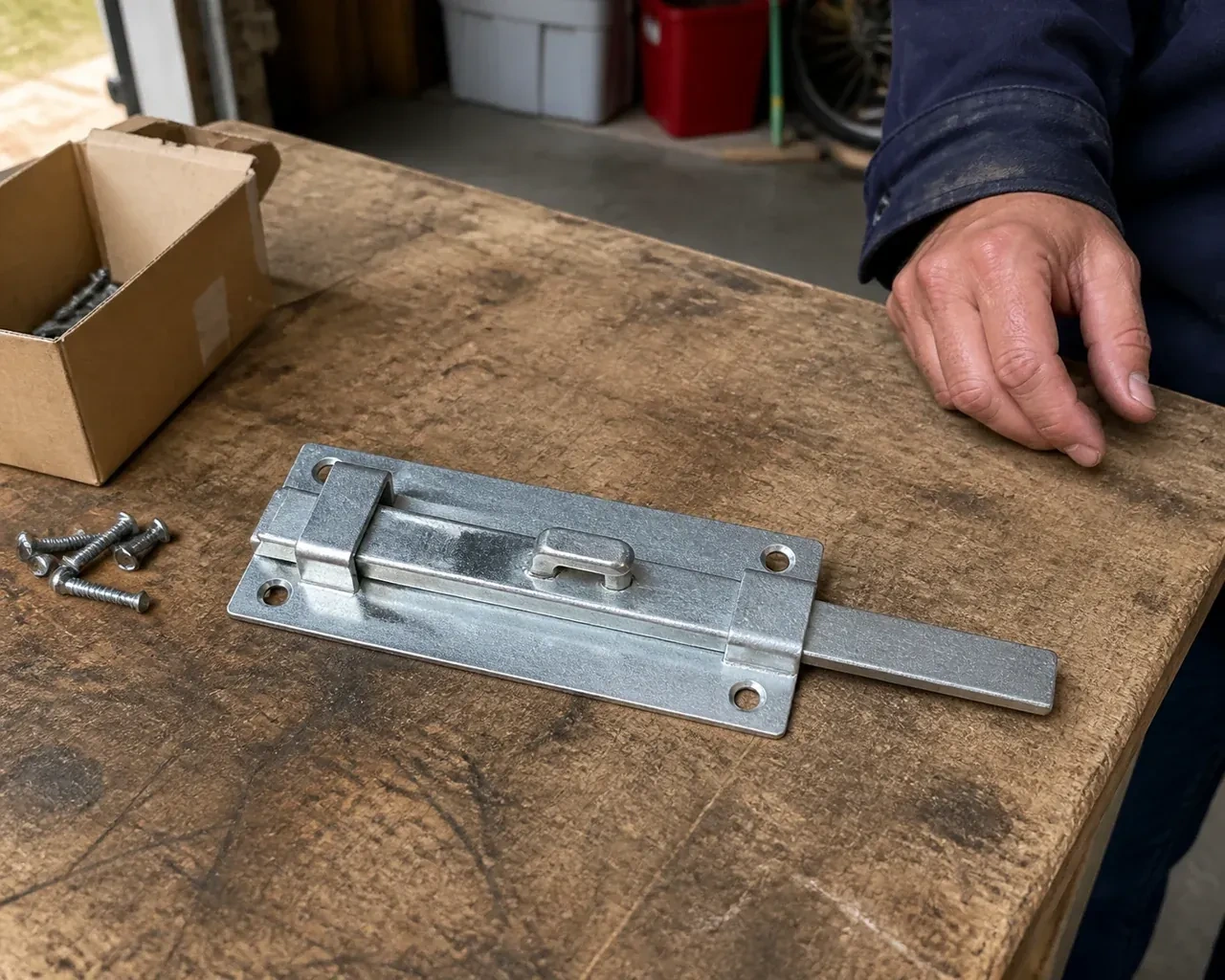
Your garage is detached and has no side door. The remote is dead, the keypad is dead, and the small round lock in the top panel is meant to be your way in. The key goes in and turns, but nothing on the other side lets go.
The door shakes through the curved track, hinges have loosened in worn mounting points, and repairs now involve several parts at once. A coordinated new system offers a cleaner path than chasing wear across the assembly.
Your garage is becoming a workshop, but the thin single-skin door rattles, sweats and lets outdoor temperatures shape the whole room. You want a stronger sectional assembly suited to the way the space is now used.
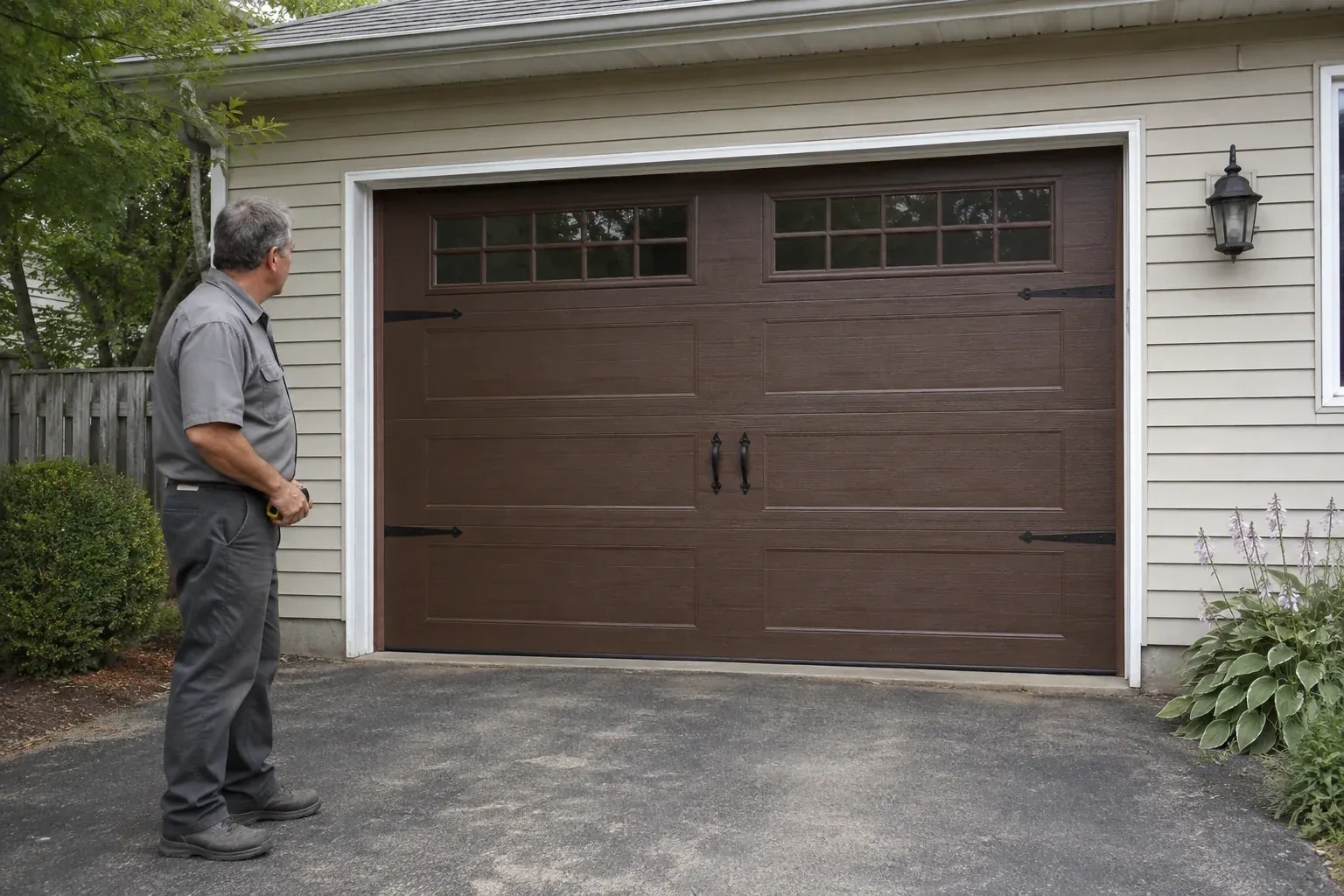
Cold air is noticeable around the current door, especially near the floor and section joints. This replacement is an opportunity to combine carriage-house styling with insulation and properly fitted perimeter seals.
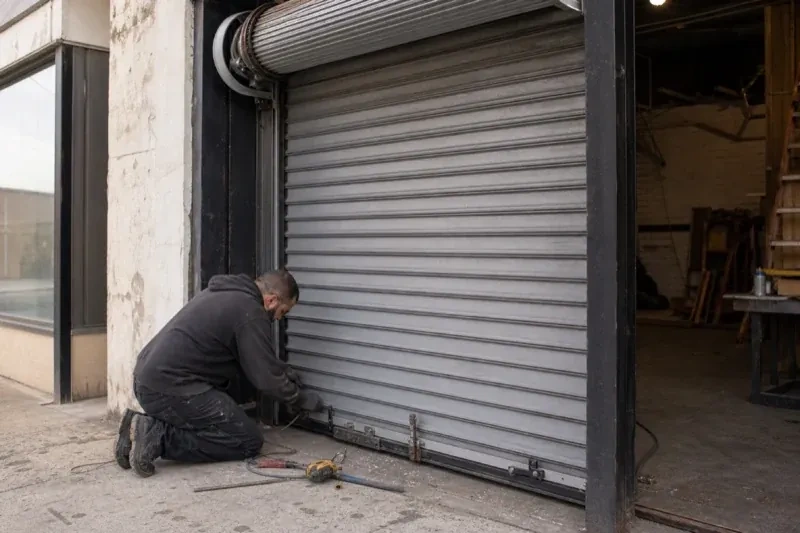
A lift truck clipped the lower curtain during unloading. Now two slats are bowed, an endlock catches halfway up, and each attempt to cycle the door pulls the damaged section farther toward one guide.
A single escaped roller on a sound door with no cable trouble is usually done in well under an hour once the door is secured. A door that has racked with slack cables, several rollers out and a bent hinge takes longer because the springs are unwound, cables rewound and hardware replaced before the rollers go back. A vehicle strike that needs new track is the longest version. You get an estimate of time on arrival.
Is this something I can do myself?
Many homeowners do, and a technician's value lies in the parts that go wrong: identifying the exact profile so the seal seats, freeing a strip that has fused into its channel, spotting a retainer or door-level problem behind the gap, and resetting the opener's limit and force so the door lands gently and still reverses on an obstruction. If you would rather have it measured, fitted and tested in one go, that is what the visit is for.
Can I replace just the one roller that looks bad?
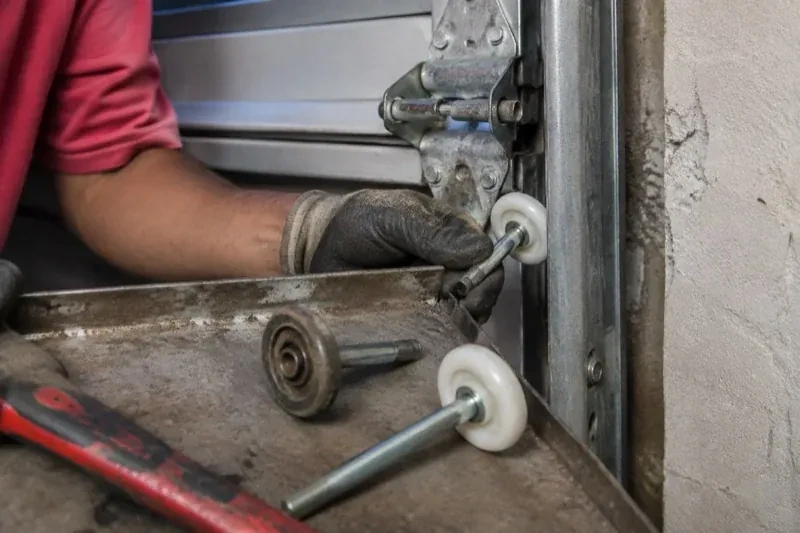
One roller can be changed on its own, and sometimes that is the sensible stopgap after a wheel breaks. The better result comes from a full set, because the other wheels have done the same number of cycles and are close behind, and mixing new with old, or nylon with steel, leaves the door running unevenly and sounding different on each side. A matched set also lets the technician set every top fixture and check every hinge in one pass.
Does a heavy insulated door need heavier track?
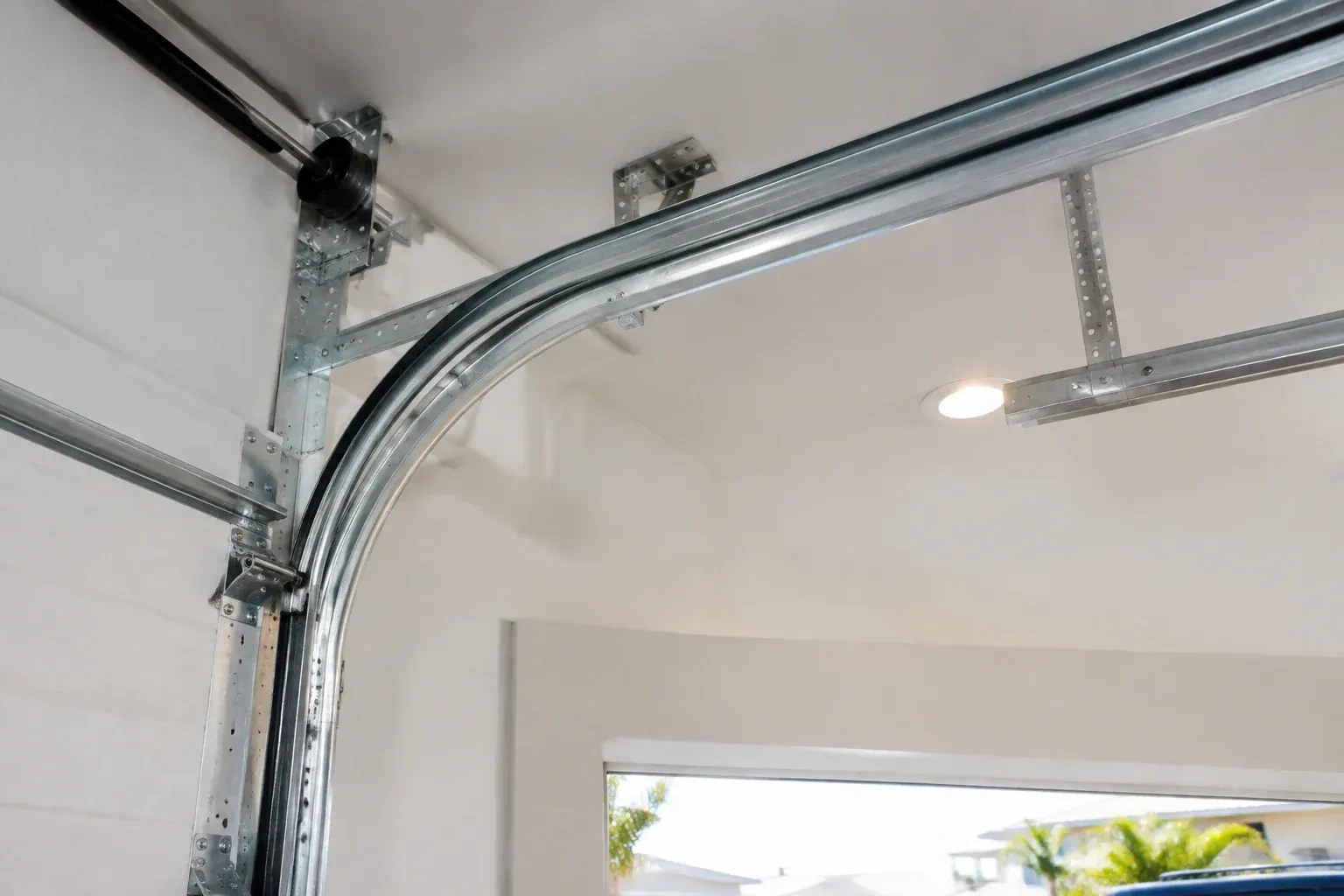
Usually the standard two-inch track handles a residential insulated door well, provided the gauge matches what the door maker specified and the brackets and hangers are properly fixed. Very heavy or oversized doors, and some carriage-style wood doors, are set up on three-inch track or on heavier-gauge two-inch. If a heavier door was hung on the light track from an earlier door, flexing and spreading follow, and the technician will say so.
Why does the opener get adjusted after new springs?
Because the door is now much lighter for the opener to move. Over the years, as the old springs weakened, the opener's force setting may have been turned up to keep the door going, and its travel limits were set against a door that sat differently on the floor. Left alone, that extra force would push the newly balanced door too hard. Resetting force and travel, then repeating the reversal tests, matches the opener to the door it now has.
I pulled the release and the door was very heavy. Is the release broken?
The release did its job; the weight is the door telling you its springs are no longer carrying it. A balanced door lifts with modest effort and holds still at about a metre. A heavy one needs the counterbalance looked at, which is work with winding bars for a technician trained for tensioned hardware. During the visit the door side is corrected first, then the release is put back into use on a door that lifts as it should.
Can the existing tracks stay with the new door?
A replacement is planned with track designed for the selected sections and hardware. Door thickness, completed weight, roller position, available headroom and operator location can all affect compatibility. Using the matched track package lets the sections and counterbalance operate as the system was designed, with geometry that can be checked during installation.
Why are new springs selected for the replacement door?
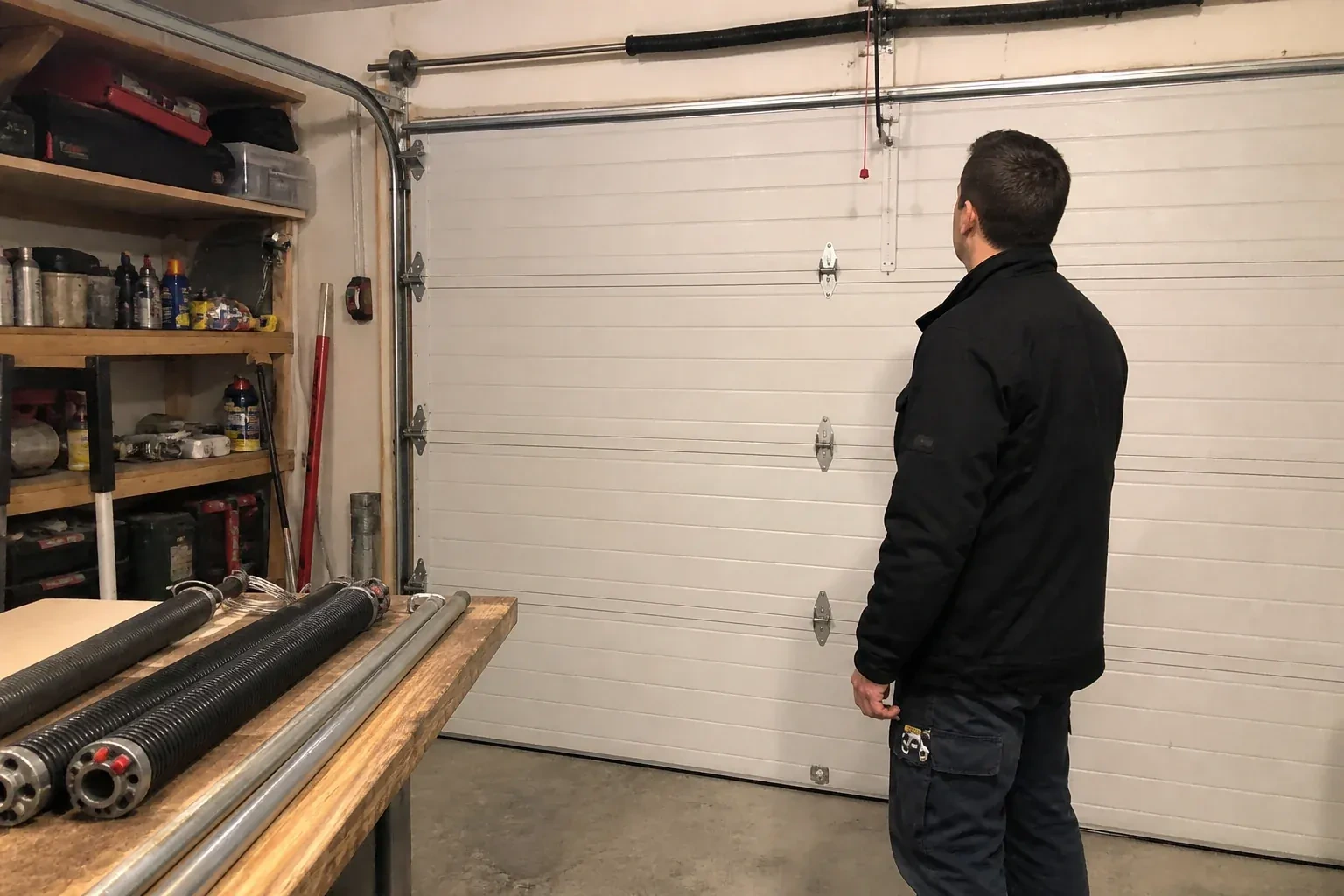
Counterbalance springs are chosen around the completed door's weight, height, track arrangement and intended travel. Insulation, steel skins, windows and reinforcement all contribute to that load. A spring combination from a different assembly may provide unsuitable torque even when it physically fits. Matching the counterbalance to the ordered door supports manageable manual movement and orderly cable travel.
Can I get the traditional look and still use an automatic opener?
Yes. The traditional effect is created by section design, overlays, windows and decorative accents; the working door can still travel overhead under automatic control. The opener is matched or reviewed for the door's dimensions, finished weight and track geometry. Its arm attaches to a reinforced point, and travel, photo eyes and reversal are set after the door is balanced.
Why is the bottom bar rising crooked?
An angled bottom bar can point to a shifted curtain, damaged slats, unequal guide friction, a moved barrel, impact at one guide or a counterbalance issue. Measurements at the sill, guides and brackets help separate those causes. Cycling is kept controlled because repeated powered movement can pull a minor tracking problem farther sideways.
Request a visit
We work in Normandale the way a good tradesman works on his own house: replace parts in matched pairs so wear stays even, use the spring size the door actually needs rather than the closest one on the shelf, and tidy the garage before leaving. Small habits like these are why doors stay fixed.