Repairs · Norfolk County
Garage Door Panel Replacement
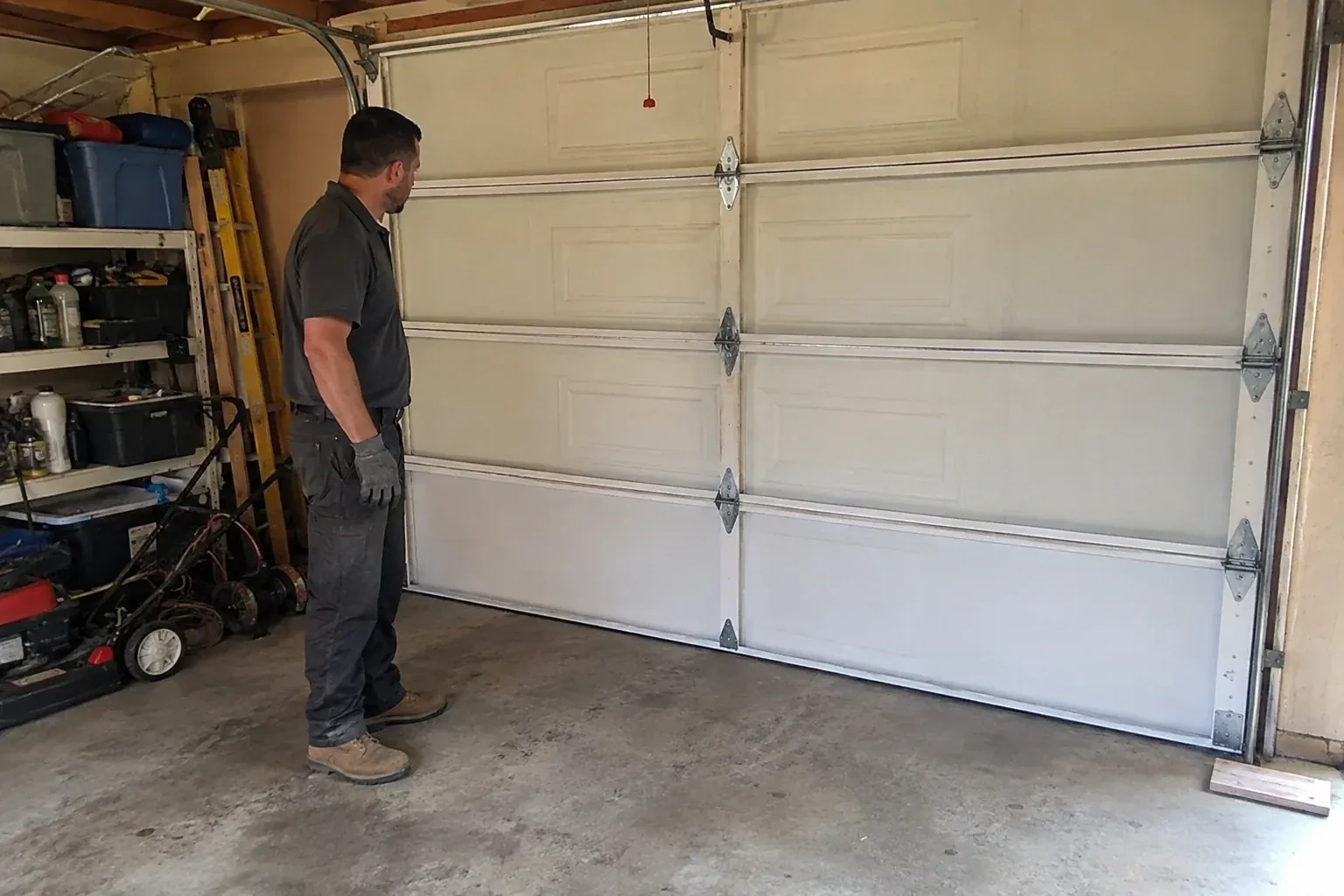
Years of slap shots have peppered the lower two sections with dents.
In plain words
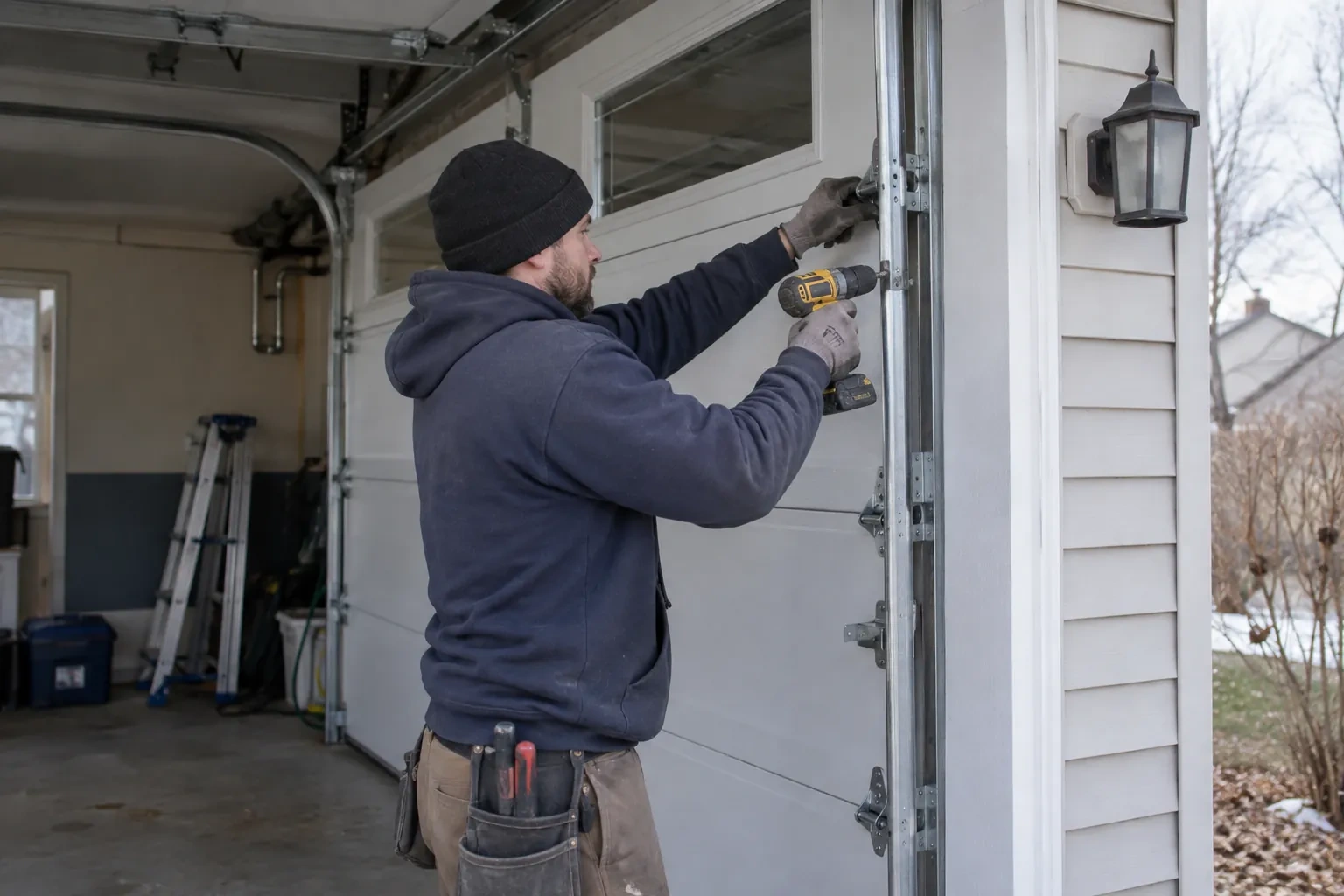
Winter is hard on the bottom section. Meltwater collects under the seal and freezes the door to the slab; the opener then pulls on a door that is anchored at the floor, and the bottom section bows or a hinge tears out of its stile. Road salt and slush finish the job by rusting the lower edge. Replacing that section restores a flat, sealed bottom edge and gives the door a new set of bottom brackets and seal retainer. Because the lift cables attach at the bottom, the springs are unloaded first, then reloaded and balanced once the new section is in, so the door runs as it should.
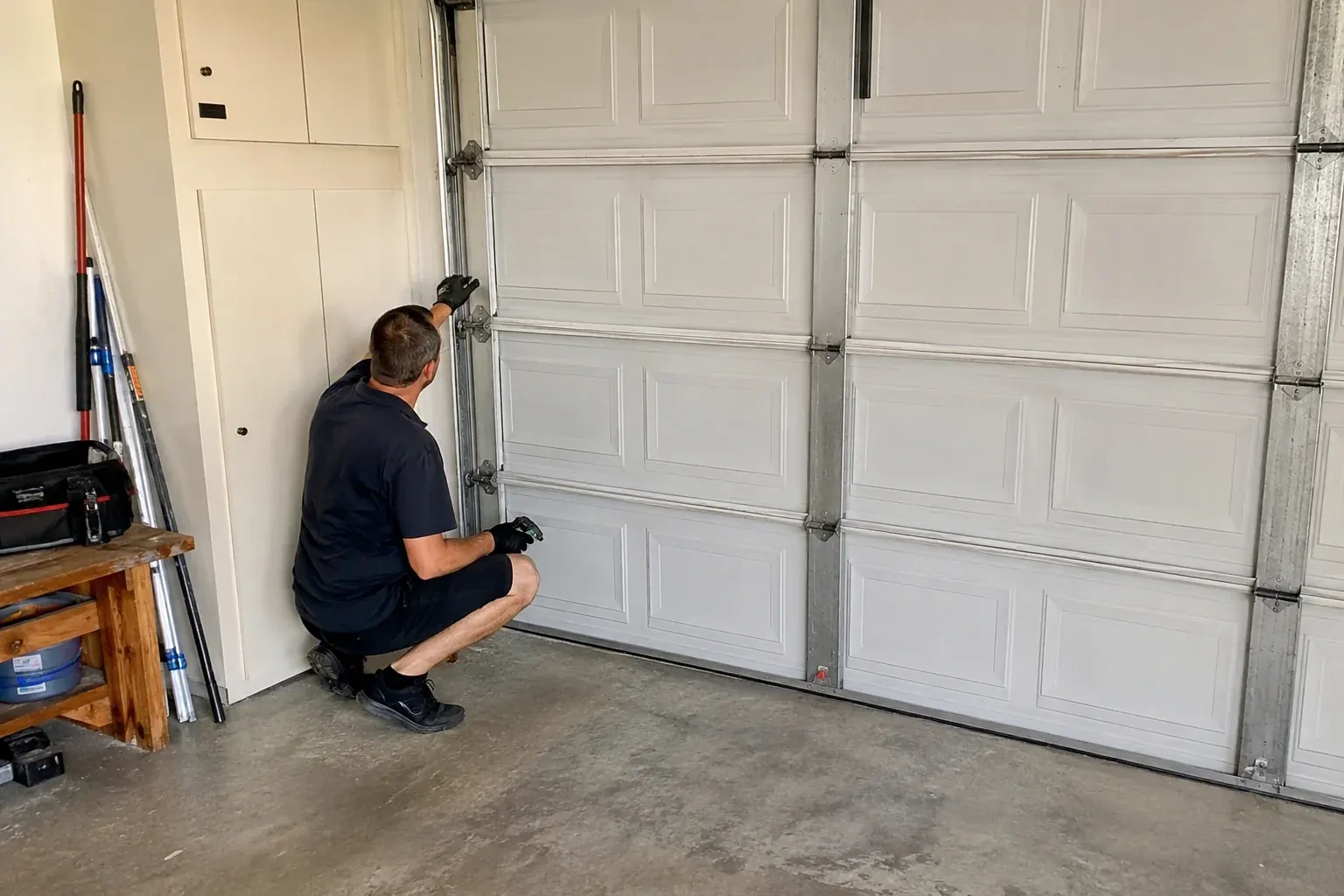
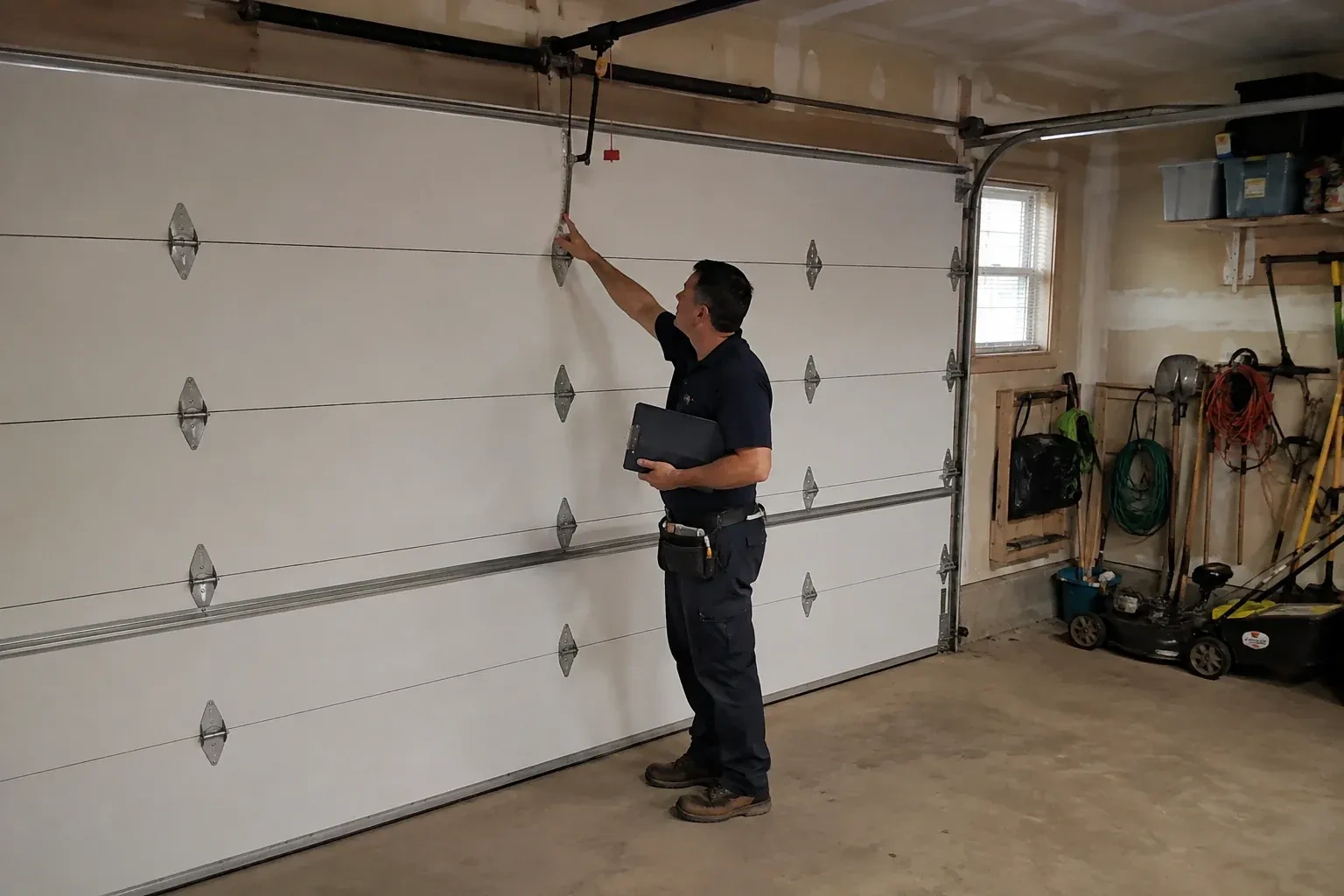
How the visit goesThe top section has developed a bend where the opener arm pulls on it. On the way up it flexes visibly, the door hesitates near the top of its travel, and daylight shows through the joint below it when the door is closed.
Garage Door Panel Replacement
How the visit goes
Windows, struts and other details on the section
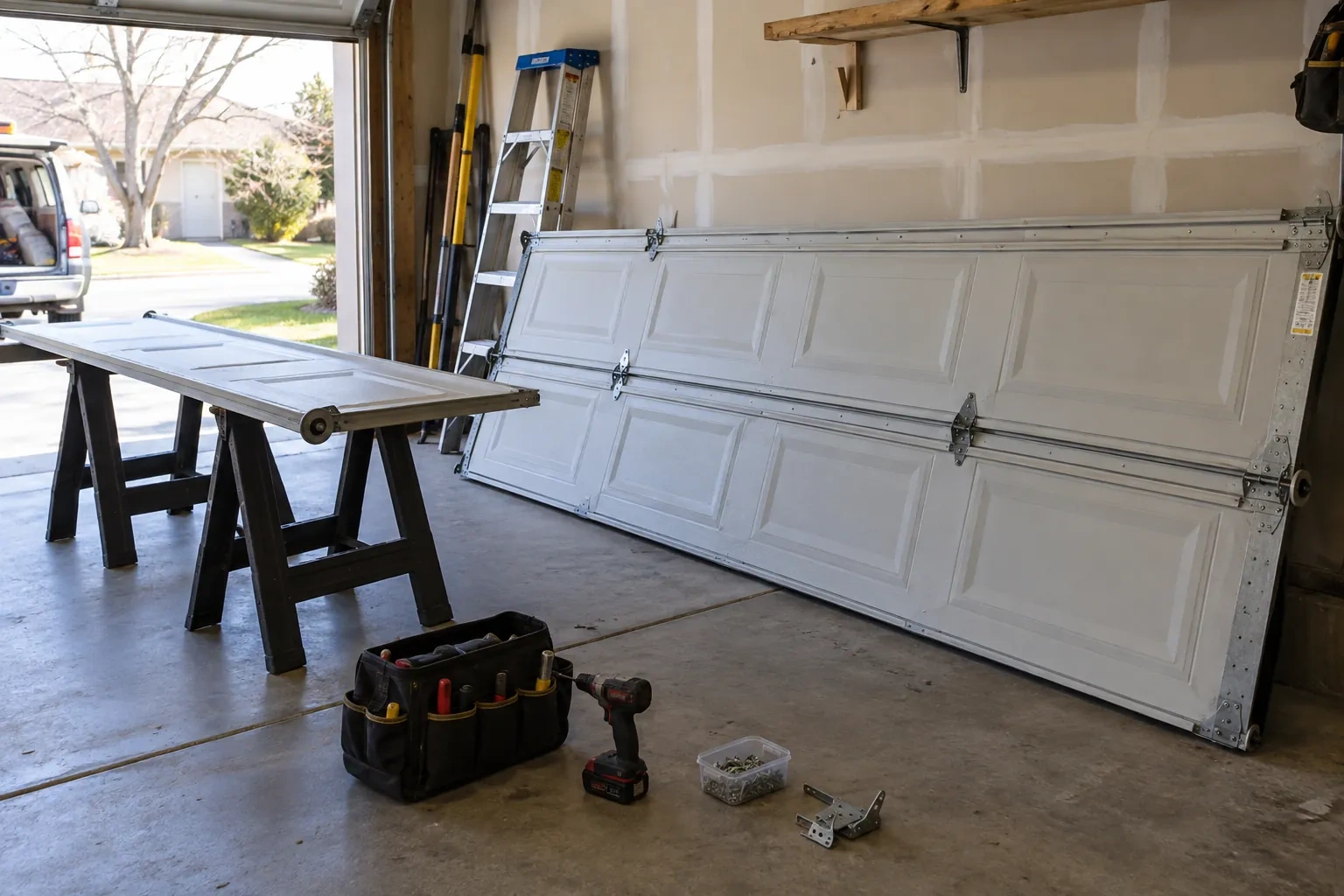
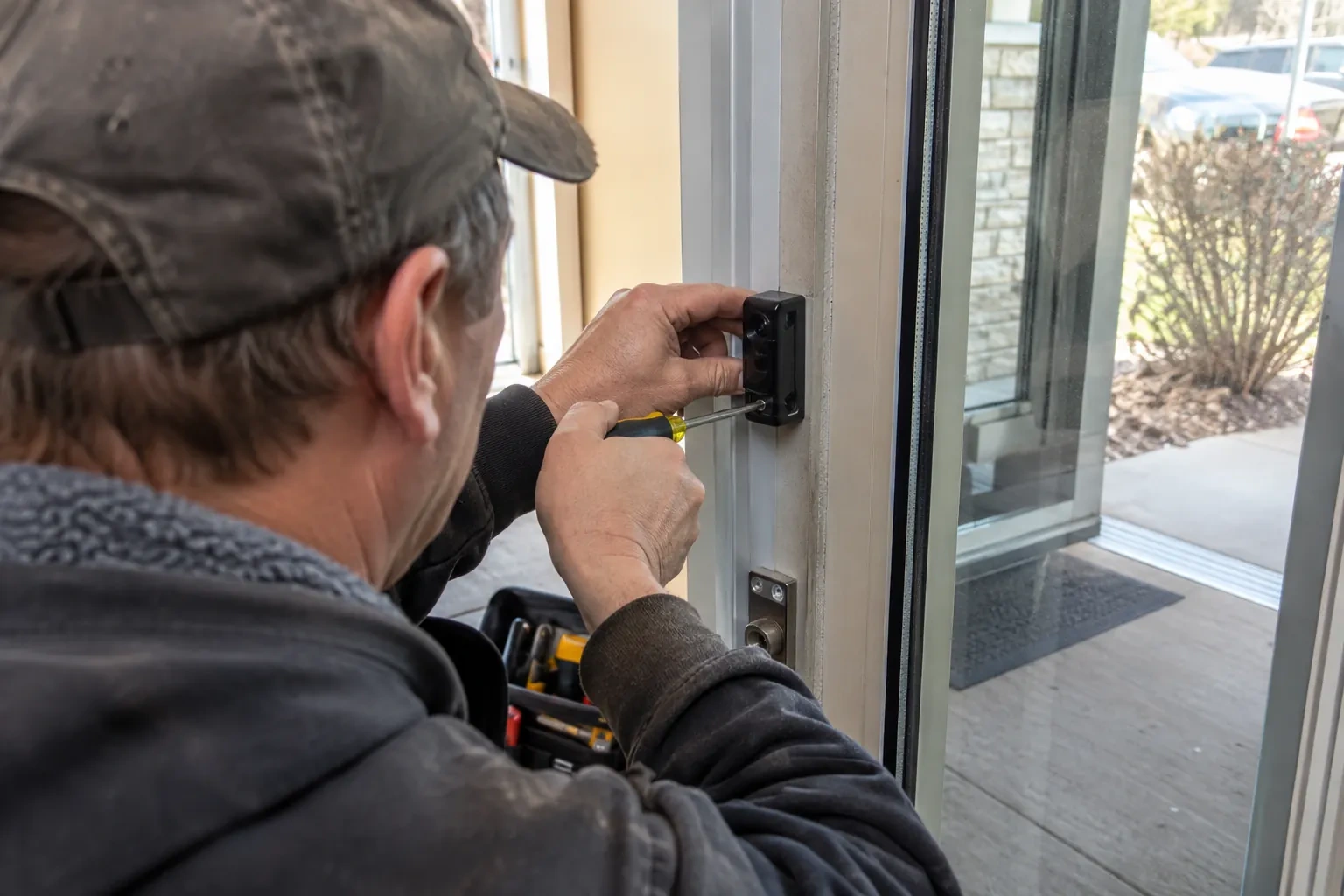
Some sections carry more than a skin and two stiles. Glazed sections have frames, panes and sometimes decorative inserts that have to be specified with the section. Wide doors and top sections often have a horizontal strut riveted or bolted across the inside, and the technician notes whether the damaged section had one and whether it is reusable. Insulated sections have a core type and a backer skin that need to match the rest of the door for weight and thickness. Decorative handles, hinges or a bottom seal retainer of a particular style are recorded too, so the new section arrives with everything needed to make it look like it belongs.
Re-tensioning and balancing the door
A replaced section can weigh a little more or less than the one that came out, especially when insulation or glazing differs, and the springs are set to the door as it now is. With the opener still disconnected, the technician winds the torsion spring to specification or rehangs the extension springs, then lifts the door by hand. A balanced door stays put around waist height, drifts neither up nor down, and moves through its travel with steady, even effort. Adjustments are made a quarter turn at a time until that is true, and the cables are checked for equal tension on both drums.
Checking balance and reversal yourself
Two simple checks tell you the door is still healthy after the repair. With the door closed, pull the release cord and lift it by hand; it should rise smoothly and stay put around waist height. A little slow drift is normal, but a door that rises or sinks on its own, or feels heavy, is asking for a spring adjustment before anything wears. Reconnect the opener, then lay a piece of wood flat on the floor under the door and close it; the opener should touch the wood and reverse. Pass a carton through the photo-eye beam while standing clear of the door as it closes, and watch it stop and return. Trade associations recommend running these checks monthly.
Garage Door Panel Replacement
In the van
Matching replacement section
Garage-door lubricant
Window frame insert and glazing
Bottom brackets with cable tabs
Numbered section hinges
Garage Door Panel Replacement
What affects the quote
Reinforcement struts
If the section had a strut that bent, or if a top or wide section is to gain one it never had, the strut and its fasteners appear as their own line on the quote.
Which position the section sits in
A bottom section includes releasing and resetting spring tension and fitting brackets and seal; a top section involves the opener bracket and top fixtures; a middle section is the plainest exchange. The position shapes the labour.
Access and working room
A section is wider than the door opening and is carried in and manoeuvred by two people. A cluttered garage, a low ceiling around the spring, or a tight driveway adds handling time.
What to have ready
- Are any other sections dented, rusted or out of line?
- Roughly how wide and how tall is the door?
- Is the door insulated, and how thick are the sections?
Garage Door Panel Replacement: questions
QuestionsDo the hinges and rollers get replaced at the same time?
Hinges and rollers that are bent, cracked or worn are replaced with the section, and the technician checks each one on the affected joints. Sound hinges can be transferred, always by their stamped number, since each position in the door uses a different offset. Rollers that have flat spots, wobbly stems or dried bearings are swapped, often for nylon rollers that run quietly. Fasteners are always new, driven into fresh holes in the new stiles.
What is a strut, and does a new section need one?
A strut is a horizontal steel stiffener fastened across the inside of a section to keep it from bowing. Wide doors, top sections where the opener arm pulls, and bottom sections that take knocks are the usual places for them. If your damaged section had a strut, the new one gets a straight strut refitted or replaced. If a top section bowed because it never had one, adding a strut is part of putting it right.
What happens to the opener during the work?
It is disconnected at the release cord and unplugged before any hardware comes off, so the motor cannot pull on a door that is missing a section. After the new section is in and the door has been balanced by hand, the opener is reconnected and tested: its reversal against a board on the floor and its photo-eyes are checked every time, and the open and close limits or the force setting are reset only if that check shows they need it.
Related services
- Garage Door Tune-UpThe door lands with a thud you can feel through the kitchen floor, and sometimes it bounces back up a few centimetres before settling.
- Off-Track Garage Door ResetThe door came down fine but with a scraping noise, and now the vertical track on one side is bowed away from the wall.
- Garage Door Bottom Seal ReplacementAfter a spring rain there is a puddle inside the door that reaches the tires.