Springs · Norfolk County
Garage Door Roller Replacement
Halfway up, the door hesitates and the opener strains before it carries on.
In plain words
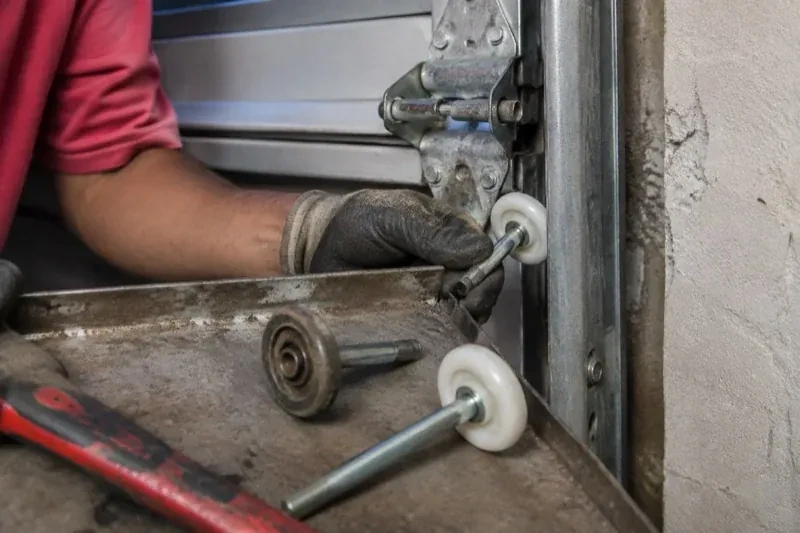
Roller replacement changes the small wheels that guide each section of your garage door along its track. A four-section residential door usually has ten of them: one at each end of the three hinge lines, one in each top fixture and one in each bottom bracket. Each is a wheel on a steel stem, commonly on ball bearings though some nylon rollers run bearingless, carrying a share of the door's weight more than a thousand times a year. When they wear, the door turns loud and rough. Fitting a matched set of new rollers, then checking the track and hinges they run in, brings back smooth and even travel.
How the visit goesNew springs went in last year and the door balances well, yet it still clicks along the ceiling track like a train over rail joints. The wheels are the originals, worn to an oval, and the noise follows them from one end of the travel to the other.
Garage Door Roller Replacement
How the visit goes
Track straightness and roller clearance
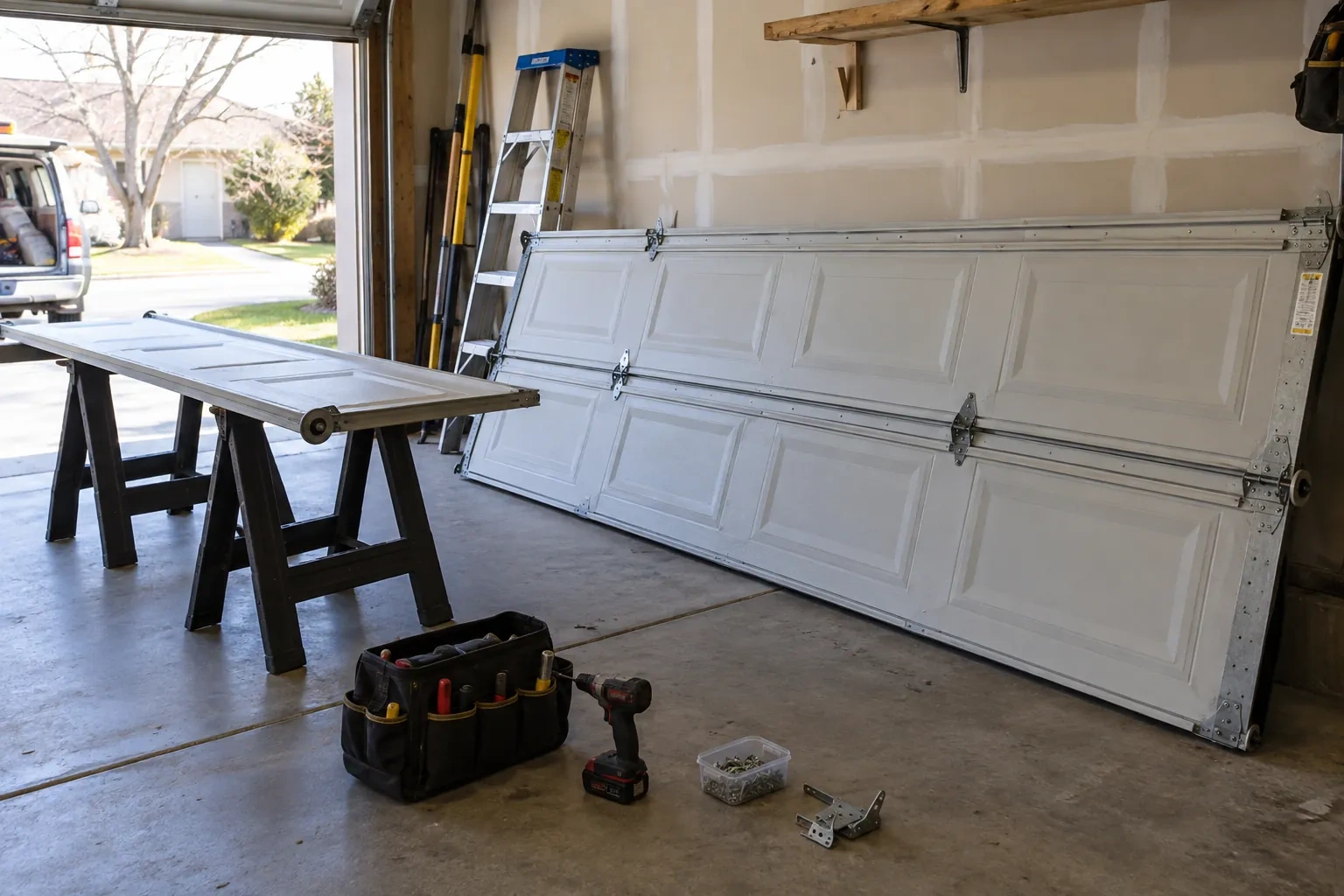
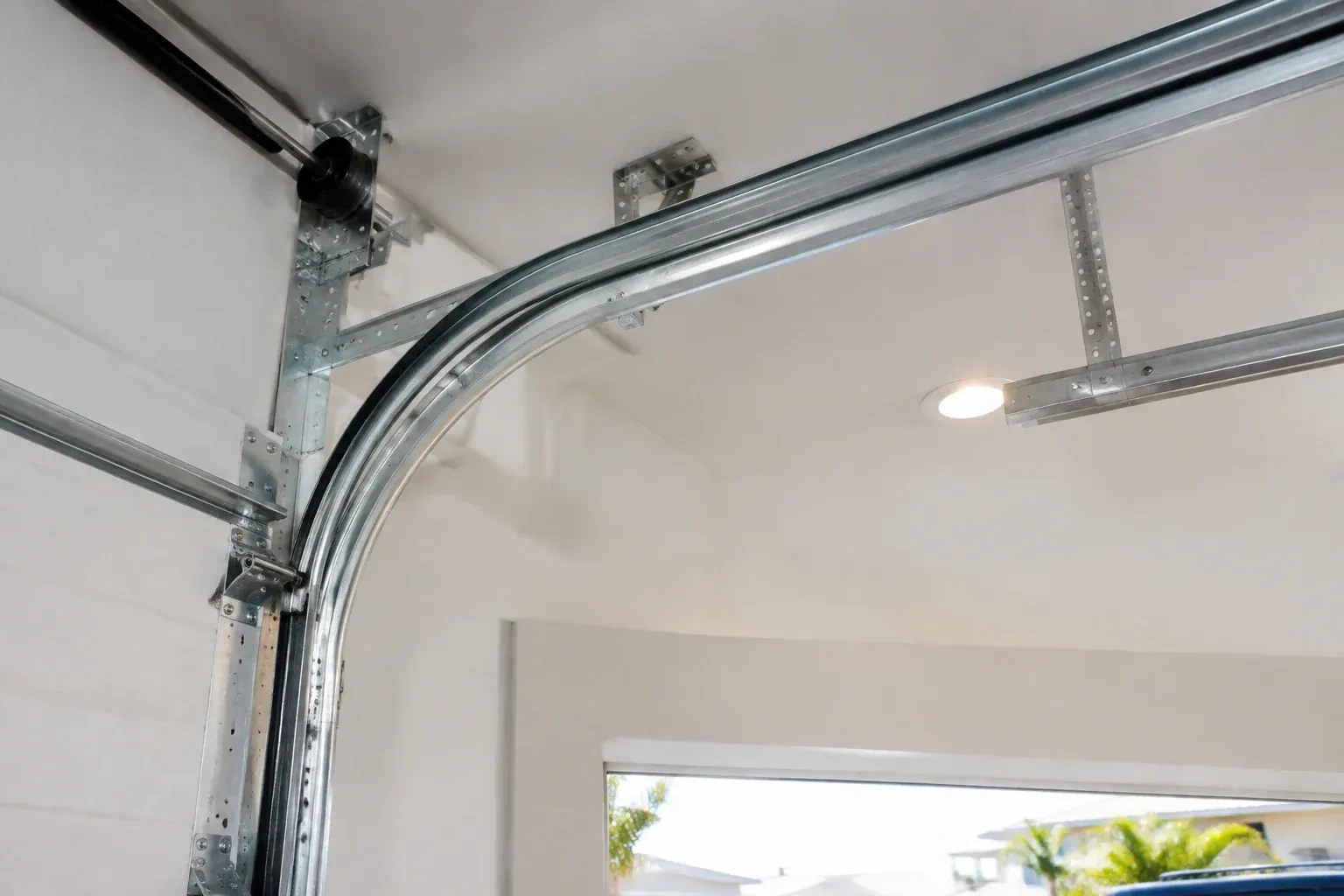
The vertical tracks are checked for plumb and the horizontal tracks for level and for sag at the rear hangers. The technician sights along each track for dents, spread or pinched edges, rust scale and the debris that collects in the bottom few inches. Clearance matters too: a wheel should turn freely with a little side play, neither squeezed by a track pulled too close to the door nor so loose that the door can lean. Where the track has drifted, the jamb brackets are adjusted before new rollers go in, because fitting fresh wheels to a crooked track simply wears them the same way the old ones went.
Cleaning and squaring the track
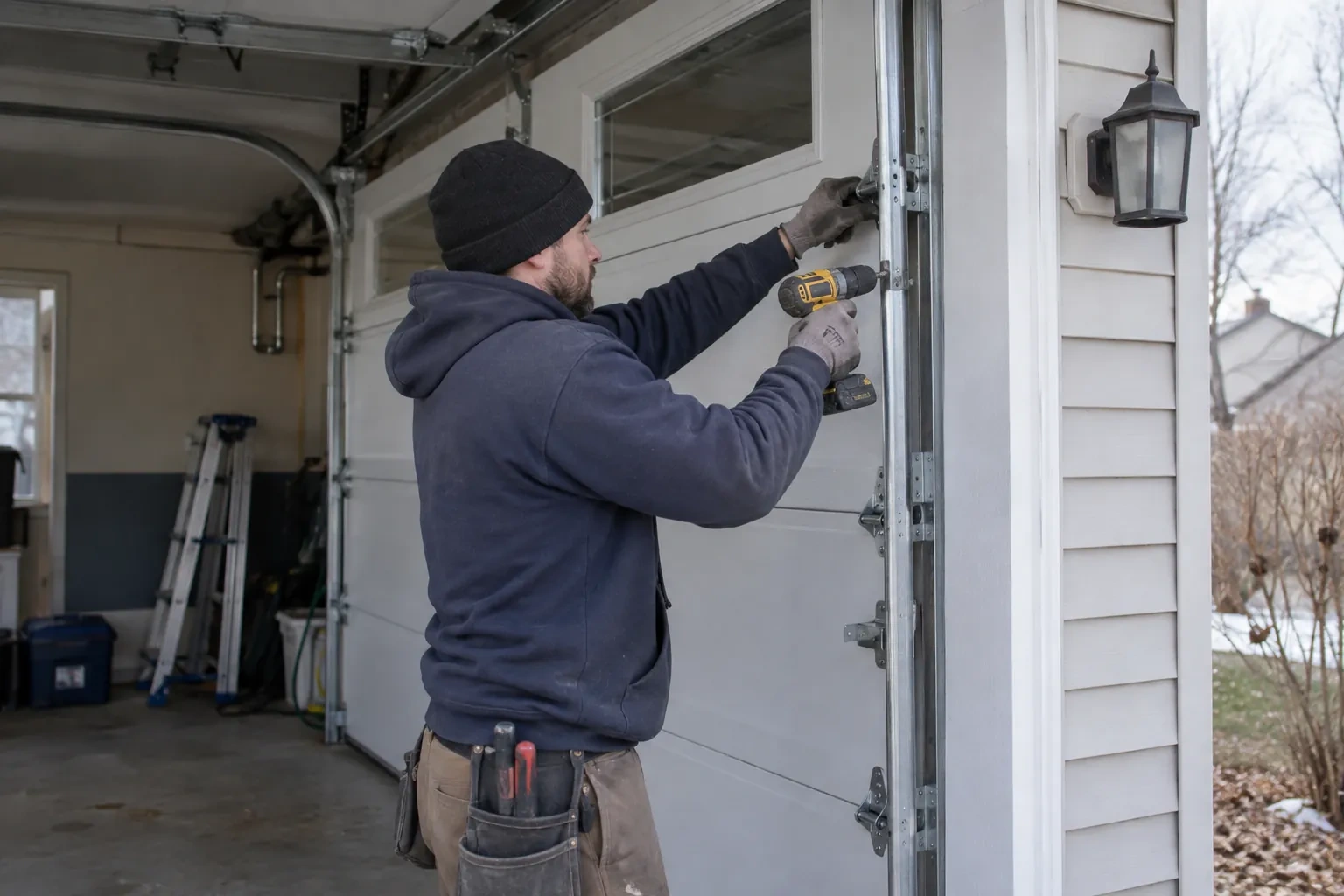
With the rollers changed, attention turns to the channel they run in. The technician clears grit, salt residue, old grease and any ice from the lower track, wipes the raceway clean, and checks each vertical track for plumb and each horizontal track for level and secure hangers. Jamb brackets and flag brackets are tightened or shifted so the track sits at the correct distance from the door, giving each new wheel a small amount of side play and a clear path around the curve. A dented lip is straightened where the metal allows, and a badly damaged length of track is pointed out for replacement.
Hardware tightened along with the wheels
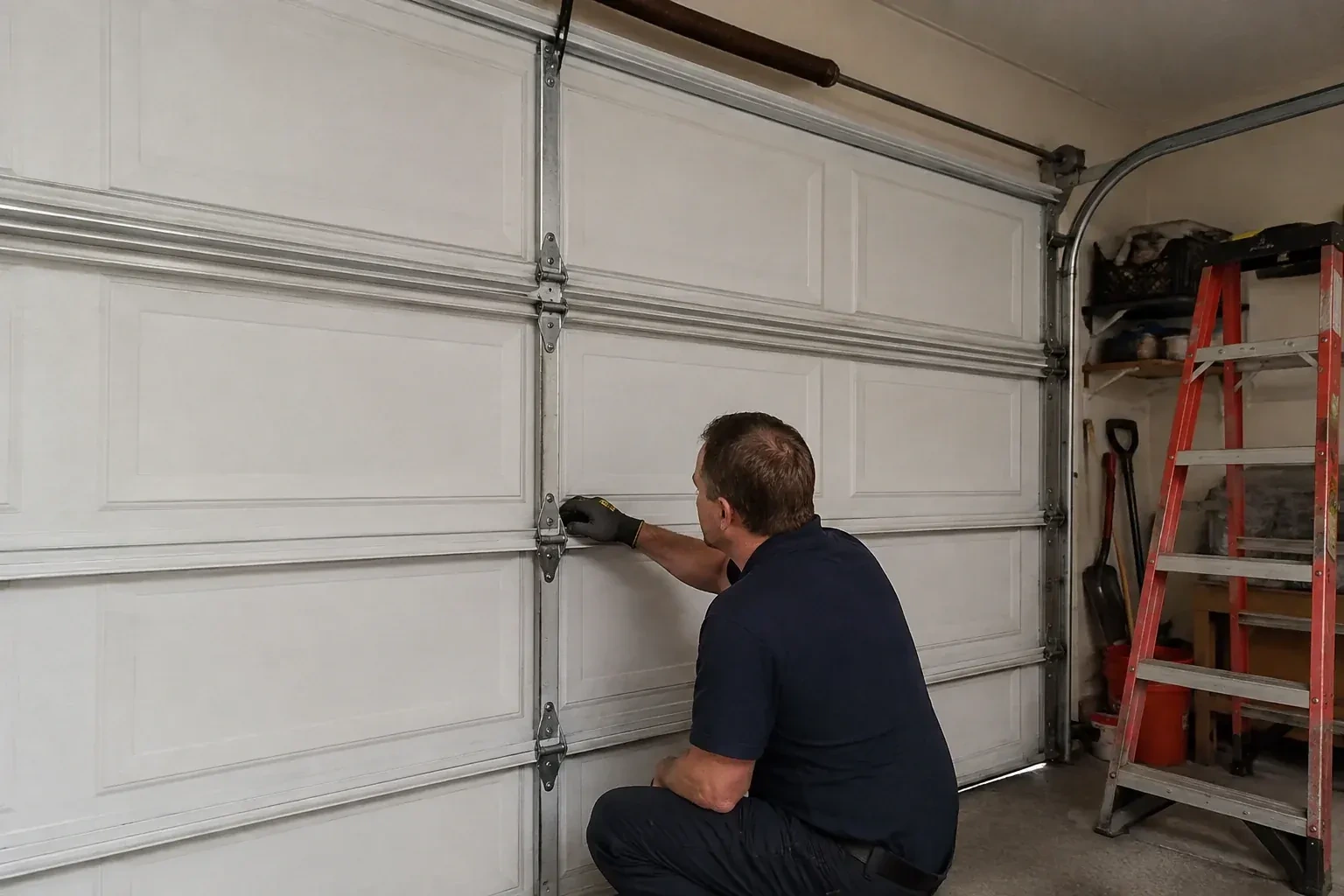
Roller replacement is a natural moment to go over the rest of the door, and you leave with more than new wheels. Every hinge fastener has been checked and snugged, loose jamb brackets have been tightened, worn hinges have been replaced with the correct numbered ones, and the top fixtures and bottom brackets have been inspected and, where corroded or bent, changed. The track has been cleared of salt and grit and squared to the door. This kind of once-over is what industry guidance means by regular service, and it is much of the reason a door feels solid again after the visit.
Garage Door Roller Replacement
In the van
Adjustable top fixtures
Bottom brackets
Steel ball-bearing rollers
1-1/2 inch reversal test block
Jamb bracket fasteners
Garage Door Roller Replacement
What affects the quote
Relieving spring tension for the bottom rollers
When the bottom brackets have to be unbolted, the technician takes the spring load off first with winding bars, skilled extra work that is included in the figure for that position.
Residential or commercial track
Three-inch commercial track takes larger, heavier rollers and usually a heavier door behind them, and both the parts and the method of securing the door differ from a residential job.
Balance adjustment first
If the door drifts when released at halfway, the spring system needs adjusting before new rollers are fitted so they do not wear early; that adjustment is quoted as its own line.
What to have ready
- Are there two hinges stacked at the ends of each section, or one?
- Is the track the two-inch residential size or a wider commercial track?
- Has the door ever come off its track or been hit by a vehicle?
Garage Door Roller Replacement: questions
QuestionsHow long do garage door rollers last?
It depends on what they are made of and how often the door moves. Builder-grade plastic wheels with no bearings often show wear after only a few years. Steel and nylon rollers with seven to thirteen ball bearings are typically rated for ten to fifteen thousand cycles, roughly the life of a torsion spring, which for many households means seven to ten years. Sealed-bearing nylon rollers are rated far higher. A door used many times a day, or one living with salt and slush, shortens all of those.
Can I replace just the one roller that looks bad?
One roller can be changed on its own, and sometimes that is the sensible stopgap after a wheel breaks. The better result comes from a full set, because the other wheels have done the same number of cycles and are close behind, and mixing new with old, or nylon with steel, leaves the door running unevenly and sounding different on each side. A matched set also lets the technician set every top fixture and check every hinge in one pass.
Are the bottom rollers different from the rest?
The wheels themselves are usually the same, but their home is not. The bottom rollers sit in the bottom brackets, which also anchor the lifting cables and therefore carry the counterbalance load whenever the door is closed. That is why manufacturers put warning labels there and why this position is handled by a trained technician who either exchanges the roller without disturbing the bracket or relieves the spring tension first. It is also the position most exposed to salt and slush, so it is inspected with extra care.
Related services
- Garage Door Track Repair or ReplacementThe garage floor has settled at one corner, and the door now scrapes the concrete on that side while daylight shows at the other.
- Garage Door Cable ReplacementStanding inside with the door closed, you notice the cable on the right side near the floor has gone fuzzy.
- Torsion Spring ReplacementAfter pulling the red release cord, you tried lifting the door yourself and it would barely leave the floor.