Springs · Norfolk County
Garage Door Track Repair or Replacement
The garage floor has settled at one corner, and the door now scrapes the concrete on that side while daylight shows at the other.
In plain words
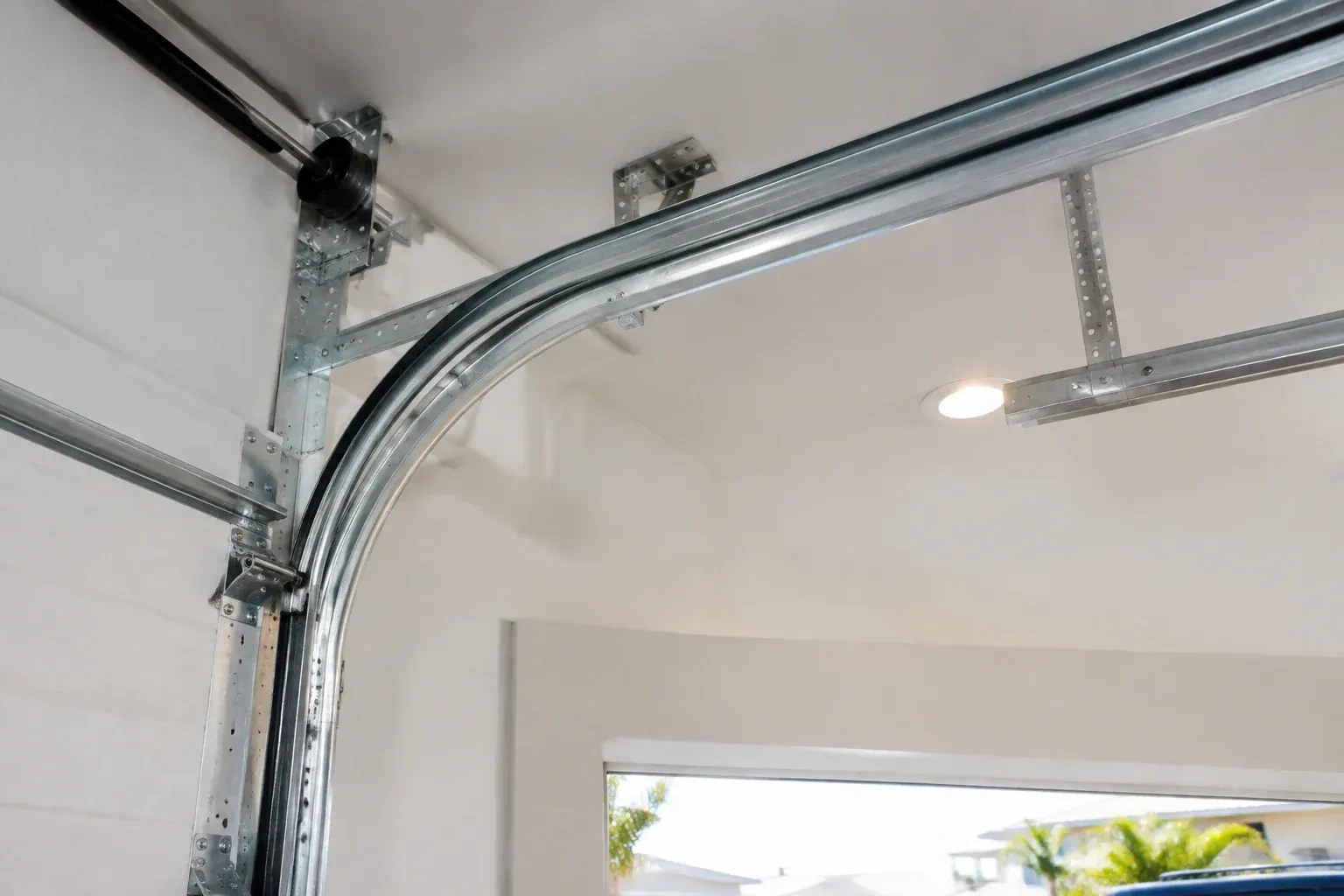
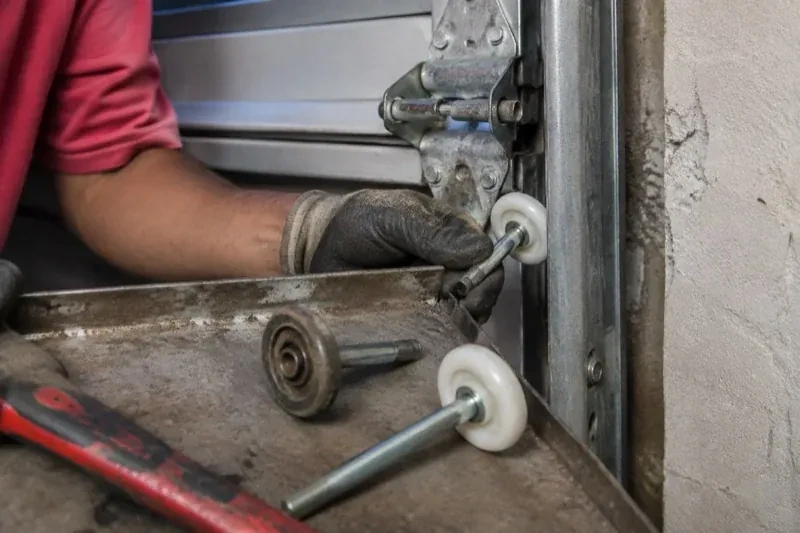
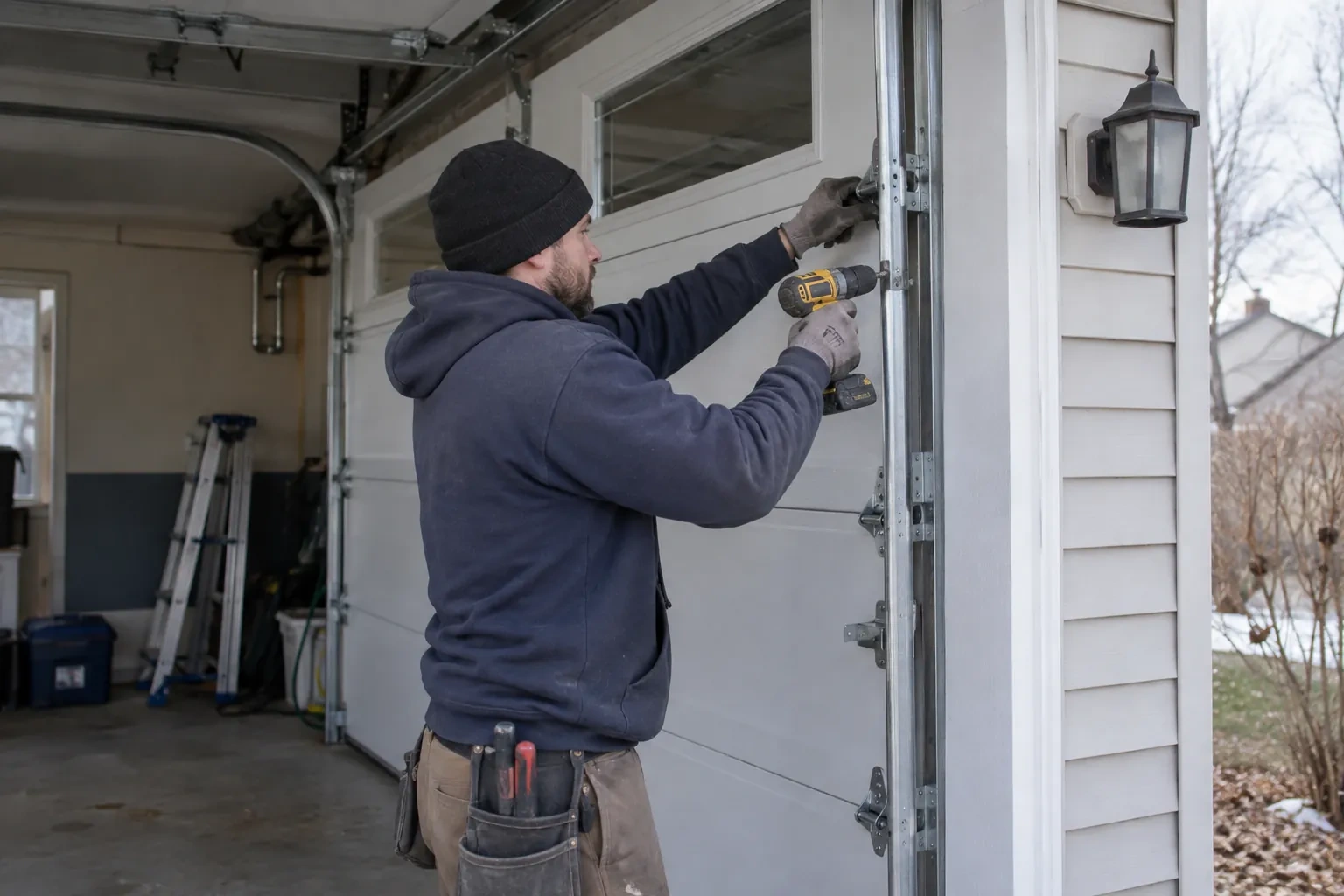
Track rarely fails on its own; something moves it. A bumper creases the vertical run, vibration works lag screws out of the jamb, slush and salt eat the bottom foot of the channel, worn rollers slowly spread the lip, and a hanger pulling from the ceiling lets the horizontal run sag. Track repair treats the cause with the symptom: the jamb is repaired if it has gone soft, rollers are renewed if they did the spreading, hangers are refixed into joists, and the threshold is checked for ice ridges. Correcting the reason is what keeps the straightened track straight for years.
How the visit goesBacking out this morning, the mirror caught the track beside the door. Now there is a crease in the steel at about knee height, and the door stops with a bang every time a roller reaches it.
Garage Door Track Repair or Replacement
How the visit goes
Plumb, spacing and taper of each vertical run
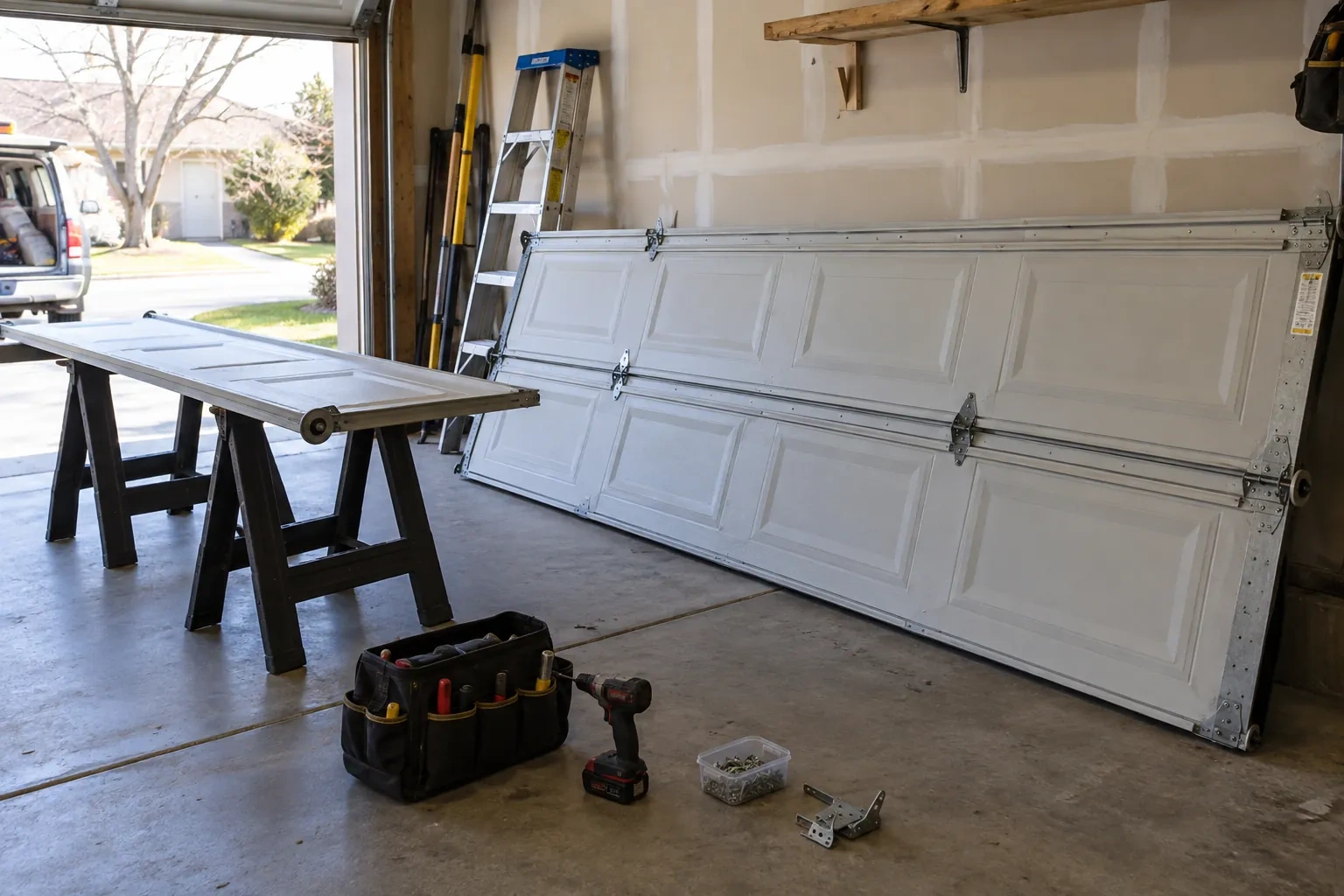
A level goes on each vertical track, and a tape measures the gap between the track and the edge of the door at the top and the bottom. The run should be plumb, and the two sides should sit the same distance from the door so both columns of rollers carry evenly. There is also a deliberate detail: the top of the vertical track stands a little further from the jamb than the bottom, so the closed door presses into its stop moulding for a seal and swings clear the moment it starts to rise. A track pushed flat to the jamb makes the door drag; one standing too far out lets it rattle.
Dressing a dent back to profile
A shallow crease in the vertical run, clear of the curve, is repaired in place. With the door clamped and the nearest roller moved out of the way, the technician works the steel back to shape with track pliers, or with a hardwood block held inside the channel and a dead-blow hammer on the outside, taking small bites rather than one heavy blow so the metal returns without stretching. A spare roller is passed through the repaired length as a gauge: it should run freely with no tight spot and no rattle. If the crease has cracked the steel or left a ridge the roller still feels, the piece is scheduled for replacement instead.
The record of the track profile and layout
Before leaving, the technician tells you what the door runs on: two-inch or three-inch track, the radius of the curve, whether the layout is standard, low-headroom or high lift, and which pieces were straightened or replaced. Write it inside the cover of the door manual or on a card by the opener. Any future part, a roller, a hinge, a section of track, is then ordered to match rather than measured from scratch, and a technician years from now can read at a glance how the door was set up. If the jamb was repaired or a hanger moved to a joist, that goes on the same note.
Garage Door Track Repair or Replacement
In the van
Jamb brackets or continuous angle
Replacement rollers and hinges
Perforated angle back hangs
Vertical track, two-inch or three-inch
Flag brackets
Garage Door Track Repair or Replacement
What affects the quote
Snow or ice around the track needing clearing first
A track buried under snow or glazed with ice has to be cleared before the technician can see what is actually bent or worn underneath. That extra step is common in winter and is worked into the visit rather than treated as a separate call.
Low-headroom or high-lift hardware
Changing the layout, rather than repairing the existing one, brings new horizontal track, curve pieces, top fixtures and often drums and spring adjustment, and is quoted as a separate scope.
Springs that have to be unloaded
Work at the flag bracket or on the curve means winding the torsion springs down and back up. That adds time, and the quote says whether it applies to your repair.
What to have ready
- Does the door rub the frame or catch at the same spot every time?
- Is it a single or a double door, and roughly how tall?
- Do you have the door's manual or a label with its model?
Garage Door Track Repair or Replacement: questions
QuestionsHow do I keep road salt from rusting the track?
Salt does its work in the bottom foot of each vertical track, where slush drips off the car and sits. Push slush clear of the door's inside edge rather than letting it pool, and on a mild day wipe or rinse the brackets and the lower channel. A little silicone spray on the bracket fasteners in autumn helps them shed water. Keeping the threshold free of ice also stops the door being pulled against a stuck bottom section.
Does a heavy insulated door need heavier track?
Usually the standard two-inch track handles a residential insulated door well, provided the gauge matches what the door maker specified and the brackets and hangers are properly fixed. Very heavy or oversized doors, and some carriage-style wood doors, are set up on three-inch track or on heavier-gauge two-inch. If a heavier door was hung on the light track from an earlier door, flexing and spreading follow, and the technician will say so.
What is the track made of, and what sizes are there?
It is galvanized steel folded into a channel that the roller wheels ride in. Residential doors almost always use two-inch track, with three-inch reserved for heavier or wider doors. The curved piece comes in a radius, commonly 12 or 15 inches, that sets how much headroom the door uses. Replacement pieces are ordered to the same profile, gauge and radius as the rest of the set.
Related services
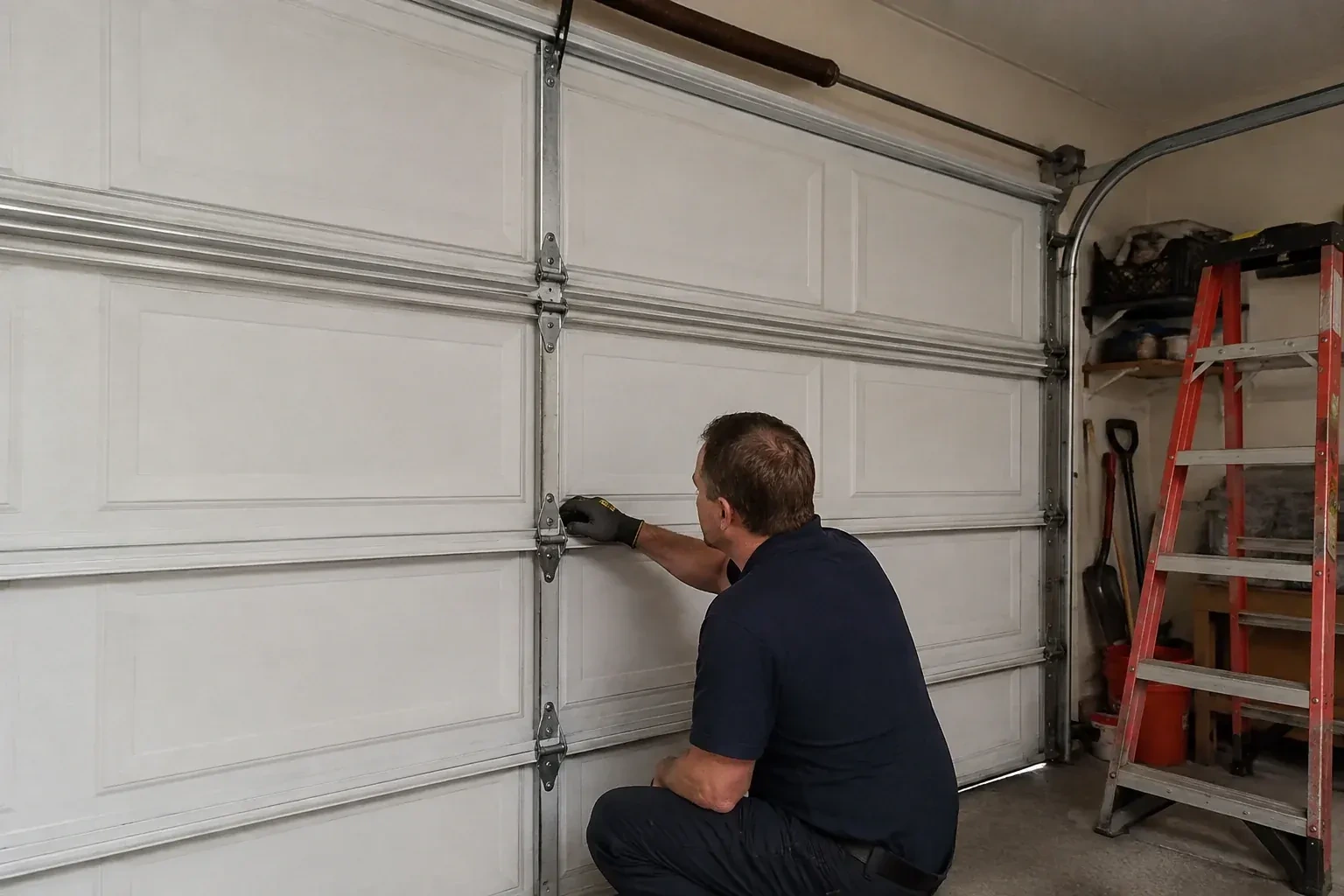
- Garage Door Hinge ReplacementPressing a hand against one of the middle hinges makes it rock on the panel.
- Garage Door Cable ReplacementStanding inside with the door closed, you notice the cable on the right side near the floor has gone fuzzy.
- Torsion Spring ReplacementAfter pulling the red release cord, you tried lifting the door yourself and it would barely leave the floor.