Springs · Glenridge
Garage Door Track Repair or Replacement in Glenridge
The garage floor has settled at one corner, and the door now scrapes the concrete on that side while daylight shows at the other.
In plain words
The bottom foot of a garage door track has a hard life in this climate. Slush and salt drip off the car and pool exactly where the bottom rollers sit, the jamb brackets and channel rust and thin, and a ridge of ice at the threshold can stop the door short while the opener keeps pulling. Winter track repair often means replacing the lowest section of vertical track and its brackets, sistering a jamb that has gone soft at the floor, and refixing everything into sound wood. A clear threshold and a look at the brackets each spring keep the new steel in good shape.
How the visit goesThe door climbs crooked, one side clearly ahead of the other. Nothing looks broken, but the two tracks sit different distances from the door, and one leans in toward the opening near the top.
Garage Door Track Repair or Replacement
How the visit goes
Jamb brackets, lag screws and the wood behind them
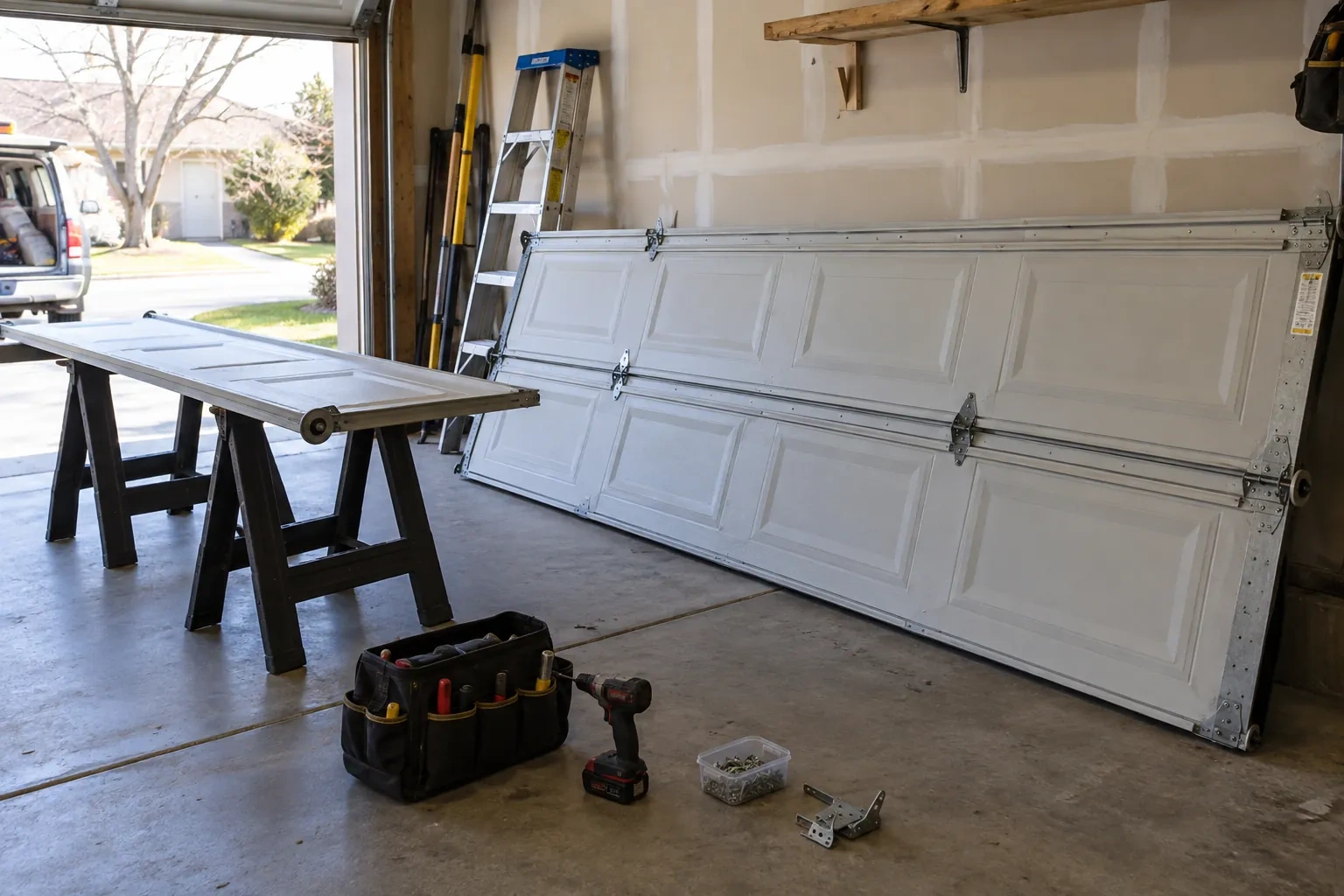
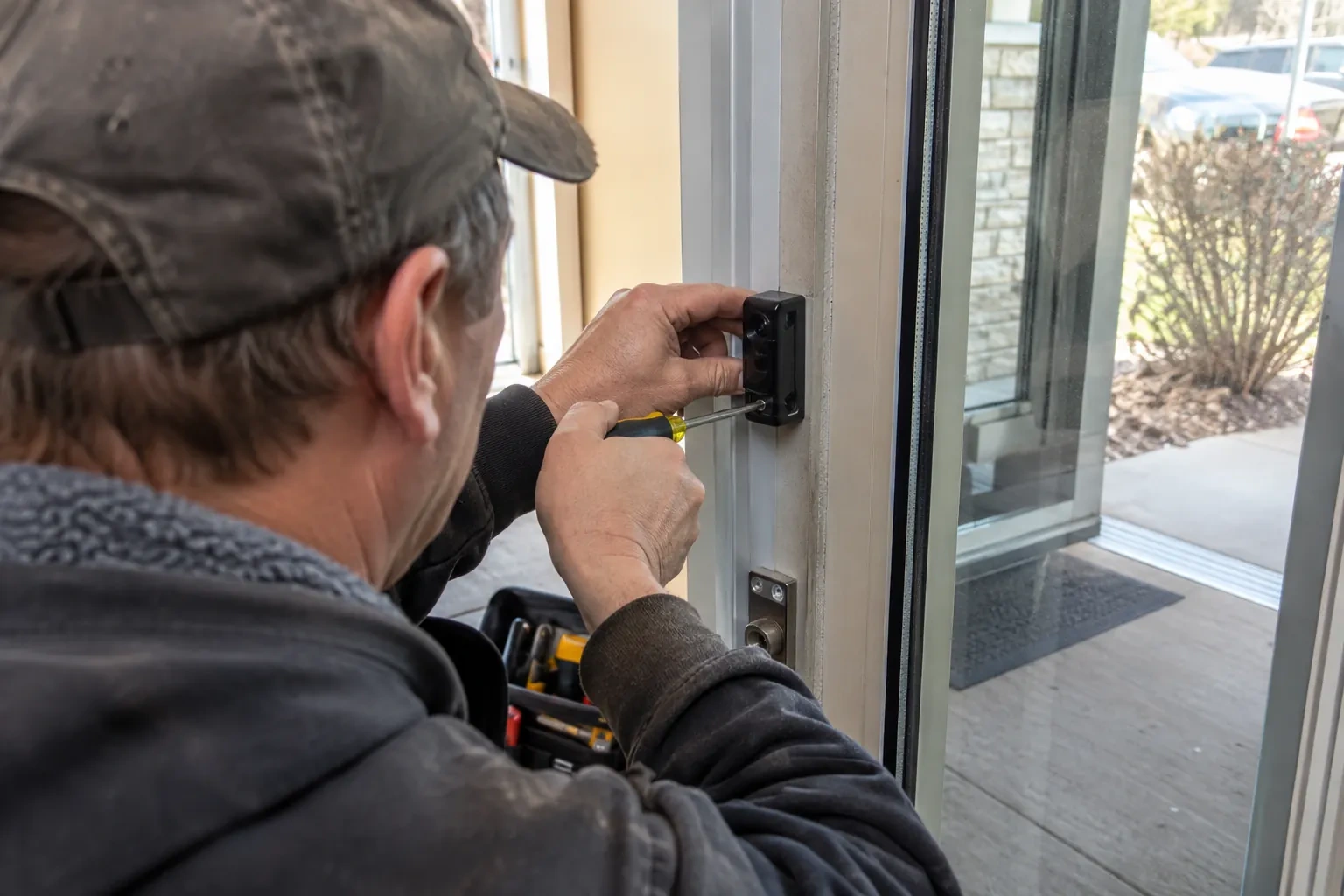
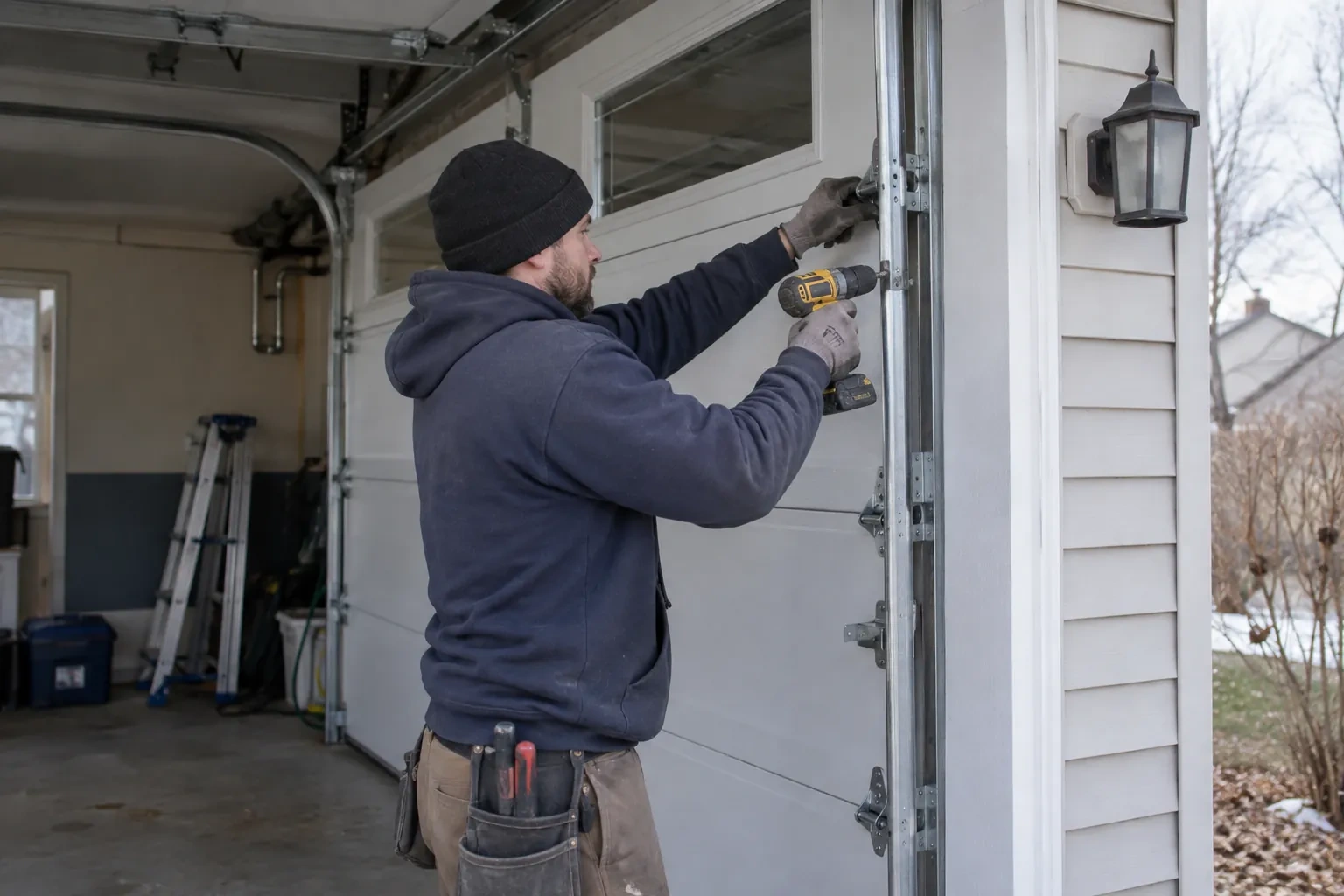
Every fixing along the vertical track is tested by hand and by eye. Jamb brackets that rock, lag screws that turn without tightening, and a continuous angle standing off the wood all mean the track has been free to move. The technician then looks at the jamb itself, probing the bottom foot for softness where splash and salt have soaked in, and checking for splits around the screw holes. In an older garage the wood is often the real fault, and no amount of tightening holds a screw in punky timber. Where that is the case, sistering or replacing the lower jamb goes onto the plan alongside the track.
Rollers, hinges and fixtures damaged when the door bound
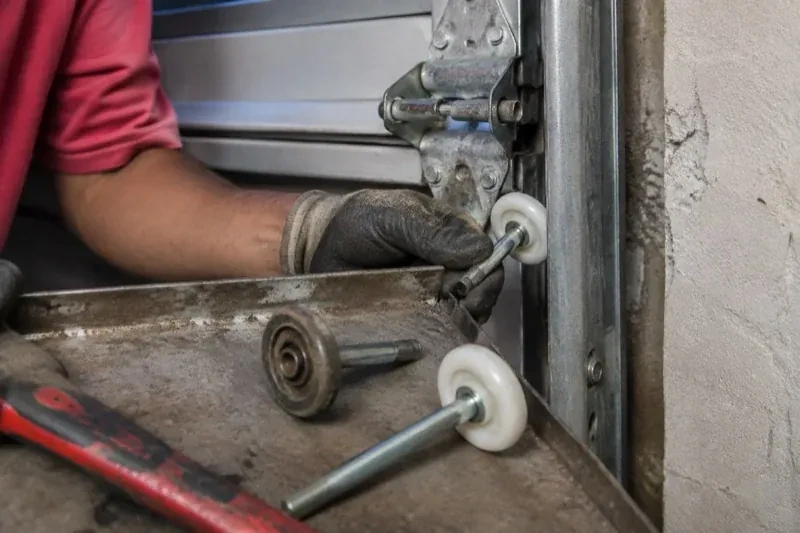
A door that has been catching on bad track usually has a few parts that suffered with it. Rollers with flat spots or bent stems are replaced, hinges that split when the door twisted are renewed, and top fixtures knocked out of line are reset so the top roller sits at the right depth. Each roller is confirmed to turn and slide freely. The channel is wiped clean of grit and old grease, and the moving parts are lubricated to the door's own manual, since track advice varies by maker. Attending to these pieces while the door is held and the track is fresh saves a second visit and stops the new alignment being chewed up by the old damage.
Protecting the bottom of the track from salt and slush
The lowest foot of vertical track and the bracket beside it are where winter does its damage, so a little attention there pays off. Push slush away from the inside edge of the door rather than letting it pool against the track, and when a mild day comes, rinse or wipe the road salt off the bottom brackets and the channel. A dab of silicone spray on the jamb bracket fasteners in late autumn helps them shed meltwater. Keep the threshold clear of packed ice so the door meets the floor, not a ridge, and the opener never pulls against a stuck door. Those habits are what keep replacement track from meeting the fate of the last set.
Garage Door Track Repair or Replacement
In the van
Jamb brackets or continuous angle
Replacement rollers and hinges
Perforated angle back hangs
Vertical track, two-inch or three-inch
Flag brackets
Garage Door Track Repair or Replacement
What affects the quote
Access and storage around the track
Shelving, a workbench or a ceiling full of stored goods around the horizontal run slows the work. Clearing the area beforehand changes the time quoted.
Low-headroom or high-lift hardware
Changing the layout, rather than repairing the existing one, brings new horizontal track, curve pieces, top fixtures and often drums and spring adjustment, and is quoted as a separate scope.
Condition of the jamb wood
Where the jamb is soft or split at the floor, sistering or replacing the lower length is carpentry added to the track work, and the lumber and fasteners are listed on their own line.
What to have ready
- Do you know what caused it, such as a car, a ladder or stored items?
- Where is the damage: near the floor, at the curve, or on the overhead run?
- Does the door rub the frame or catch at the same spot every time?
Garage Door Track Repair or Replacement: questions
QuestionsHow do I keep road salt from rusting the track?
Salt does its work in the bottom foot of each vertical track, where slush drips off the car and sits. Push slush clear of the door's inside edge rather than letting it pool, and on a mild day wipe or rinse the brackets and the lower channel. A little silicone spray on the bracket fasteners in autumn helps them shed water. Keeping the threshold free of ice also stops the door being pulled against a stuck bottom section.
Does a heavy insulated door need heavier track?
Usually the standard two-inch track handles a residential insulated door well, provided the gauge matches what the door maker specified and the brackets and hangers are properly fixed. Very heavy or oversized doors, and some carriage-style wood doors, are set up on three-inch track or on heavier-gauge two-inch. If a heavier door was hung on the light track from an earlier door, flexing and spreading follow, and the technician will say so.
What is the track made of, and what sizes are there?
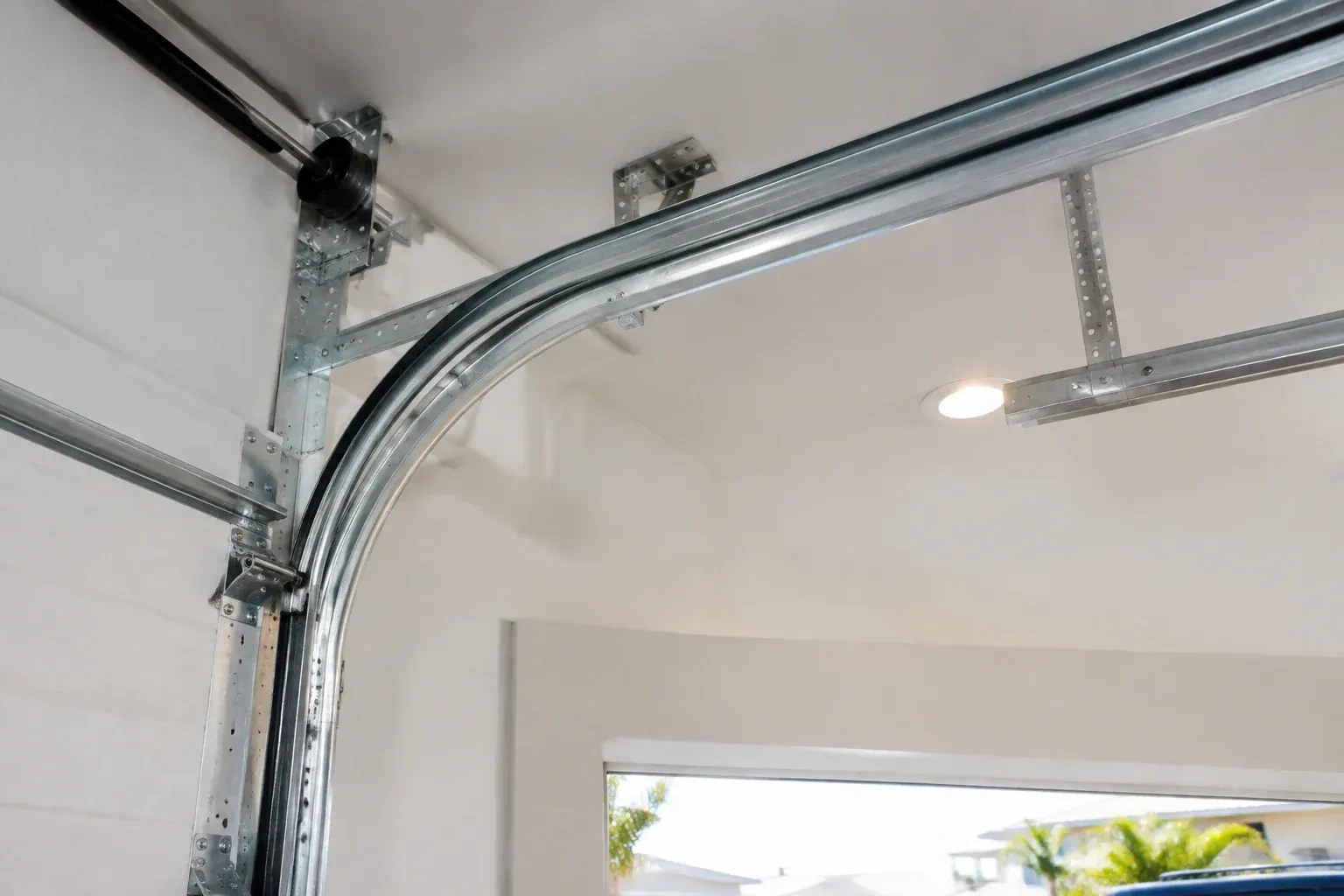
It is galvanized steel folded into a channel that the roller wheels ride in. Residential doors almost always use two-inch track, with three-inch reserved for heavier or wider doors. The curved piece comes in a radius, commonly 12 or 15 inches, that sets how much headroom the door uses. Replacement pieces are ordered to the same profile, gauge and radius as the rest of the set.
Related services
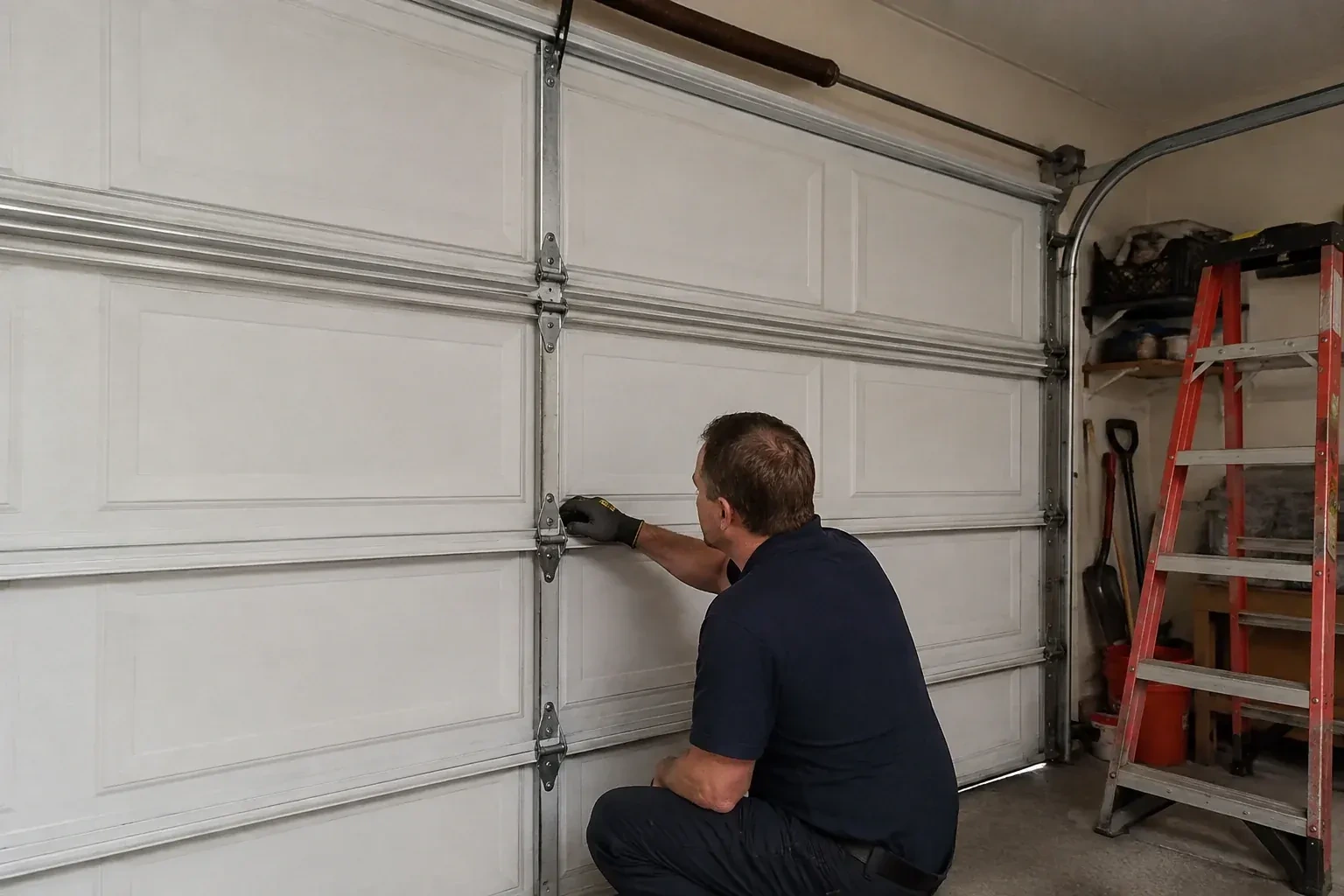
- Garage Door Hinge ReplacementPressing a hand against one of the middle hinges makes it rock on the panel.
- Garage Door Cable ReplacementStanding inside with the door closed, you notice the cable on the right side near the floor has gone fuzzy.
- Torsion Spring ReplacementAfter pulling the red release cord, you tried lifting the door yourself and it would barely leave the floor.