Springs · Norfolk County
Extension Spring Replacement
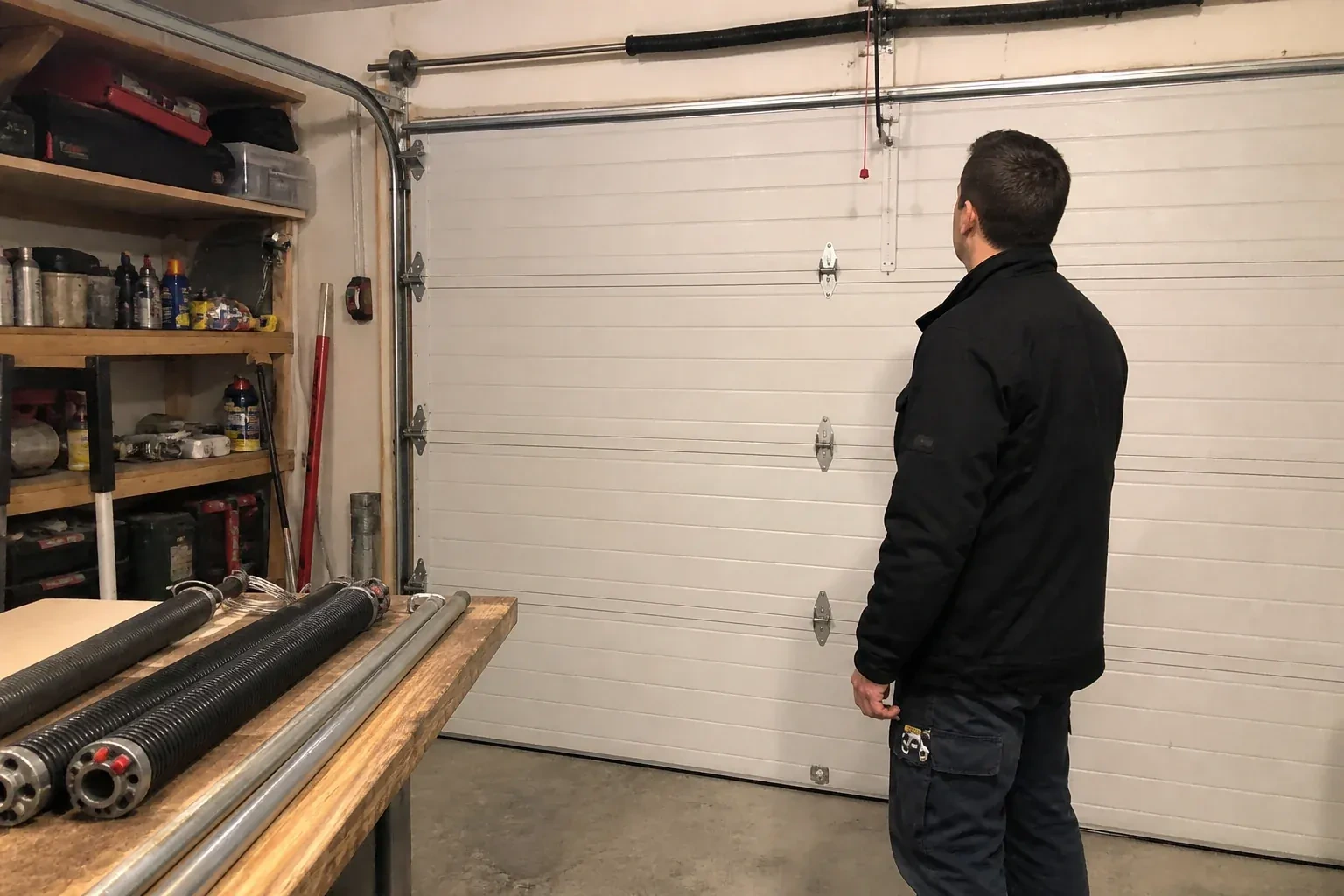
The home inspector's report on the house you are buying flags the garage door: extension springs with no safety cable running through them, coils showing rust, and a door that sank when he lifted it partway.
In plain words
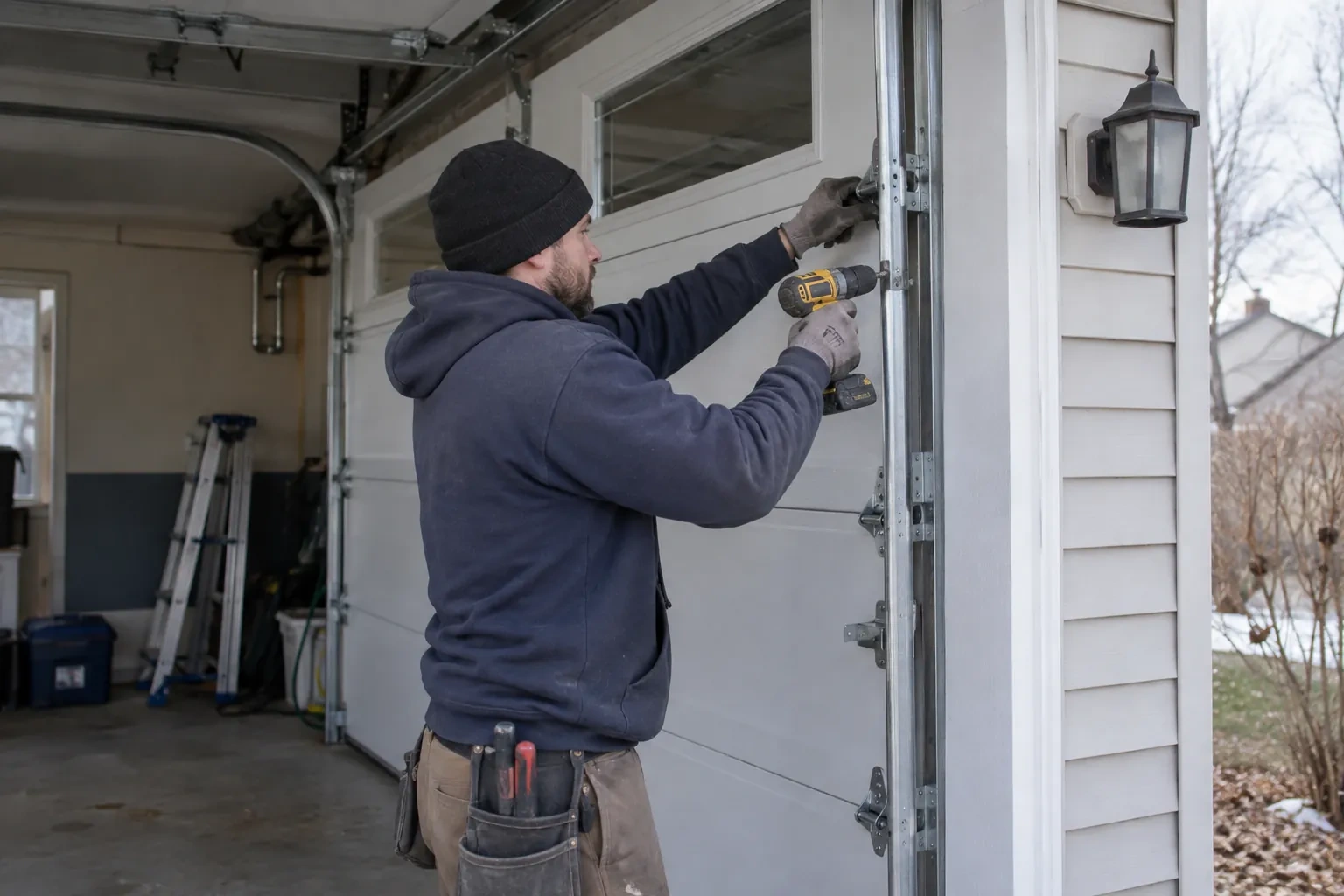
Garage doors are balanced by one of two spring systems, and the extension kind is the one you find on many single-car doors and older detached garages. Instead of a spring wound on a shaft above the opening, an extension system uses two springs stretched along the horizontal tracks, working through pulleys and cables. It needs less headroom, which is why it suits garages with a low ceiling. Replacing these springs is its own service with its own parts: springs chosen by door weight, pulleys, S-hooks and containment cables. A technician confirms which system is on your door before any part is chosen.
How the visit goesThe home inspector's report on the house you are buying flags the garage door: extension springs with no safety cable running through them, coils showing rust, and a door that sank when he lifted it partway. The seller has never had it looked at.
Extension Spring Replacement
How the visit goes
The rest of the door, and why the spring went
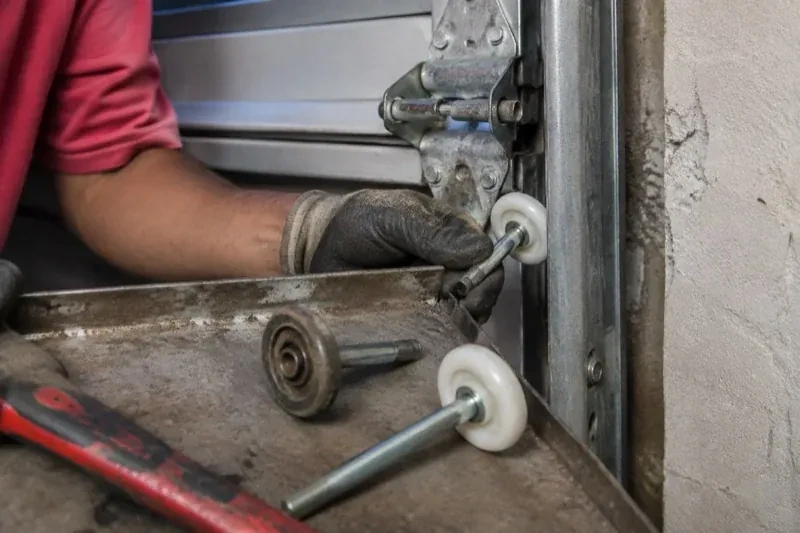
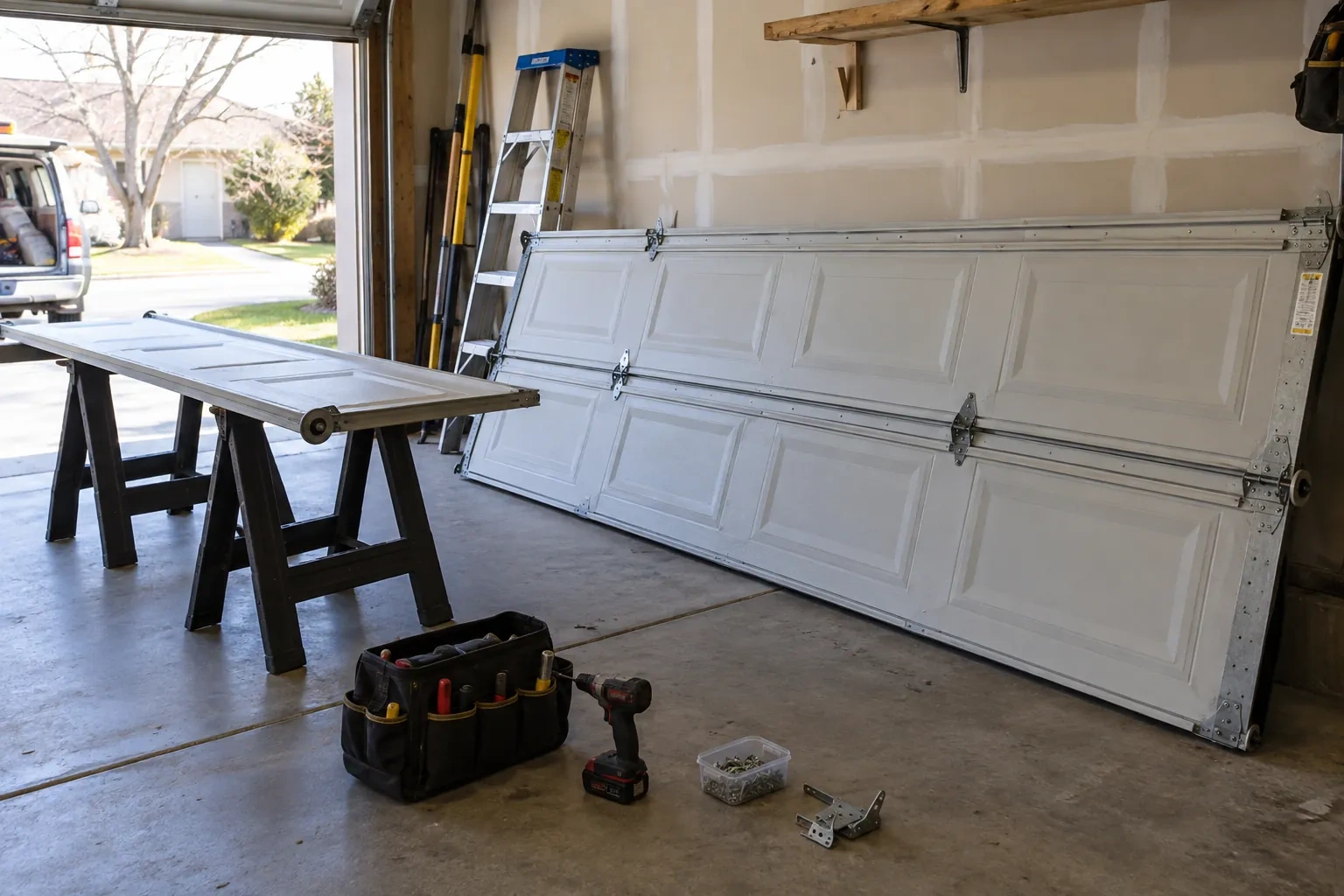
A spring rarely fails on its own, so the first look ends with the door it was lifting. The technician checks the rollers for cracked wheels and bent stems, the hinges for splits, the track for a bend or a bracket pulled off the jamb, and the bottom section for a dent that catches. The opener's force setting is noted, since an opener turned up to compensate for tired springs will overpower the new ones. And the history matters: a door recently fitted with insulation panels or windows weighs more than the springs were chosen for, and a door that has been closed onto snow or a bin has had its cables jolted.
Running the lift cables
Each lift cable starts at the bottom bracket, where its loop goes over the pin or is secured with a clevis pin. From there it runs up the vertical track, over the fixed pulley at the front of the horizontal track, back along the track to the pulley on the end of the spring, around it, and forward again to the S-hook or adjusting clip at the front hanger. The technician keeps the cable seated in each pulley groove and makes sure it passes on the correct side of the containment cable and the track. Cables are renewed if the old ones showed any fraying or rust, and always as a pair of the same length.
The numbers that stay with the door
Before leaving, the technician tells you what the door weighed, which spring rating and length went on, whether the pulleys and cables were renewed, and which hook position the cables were set to. Write it on a card by the opener or inside the door's manual. Extension springs are sold by rating and length, so the next set can be ordered from that card without weighing the door again, and a technician arriving later can see at a glance whether the door has been altered since. Add the date and roughly how many times a day the door is used; together those two facts give a fair idea of when the springs will be due again.
Extension Spring Replacement
In the van
Lift cables
S-hooks and adjusting clips
Door-weighing scale
Garage-door spray lubricant
Containment (safety) cables
Extension Spring Replacement
What affects the quote
Pulleys that need renewing
Each side has two pulleys, and a wheel worn to a groove or a bearing that has stiffened is replaced with the springs. The quote names how many and which type.
Opener adjustment and testing
Resetting the opener's force and travel to the newly balanced door and running the reversal tests is a short task that the quote names when it applies.
Getting the van to the garage
A detached garage down a shared laneway, a rural property or a building with the bay behind a gate takes more time to reach and set up in, and the quote allows for that.
What to have ready
- Does one corner of the door hang lower than the other?
- Is the door closed, fully open, or stuck partway?
- Is a spring broken in two, hanging loose, or just looking stretched?
Extension Spring Replacement: questions
QuestionsWhat if the spring hanger has pulled loose from the ceiling?
It is put right as part of the job. The rear hanger takes the full pull of the spring on every cycle, and lag screws driven into thin plywood, a split joist or drywall work loose over the years, which is often why a door slowly goes out of balance. The technician re-fixes the hanger with fresh lag screws into solid framing, or adds a length of angle iron to reach it, before the new springs are hung.
Why does the opener get adjusted after new springs?
Because the door is now much lighter for the opener to move. Over the years, as the old springs weakened, the opener's force setting may have been turned up to keep the door going, and its travel limits were set against a door that sat differently on the floor. Left alone, that extra force would push the newly balanced door too hard. Resetting force and travel, then repeating the reversal tests, matches the opener to the door it now has.
The door creeps open on its own. Is that a spring problem?
Usually, yes. A door that rises from the floor or from halfway without help has springs pulling harder than the door weighs, which happens when a heavier-rated pair was fitted, when the hooks were set with too much stretch, or when a door has been made lighter by a panel change. It also puts strain on the opener, which has to hold the door down. Weighing the door and fitting the correct rating, set evenly, settles it.
Related services
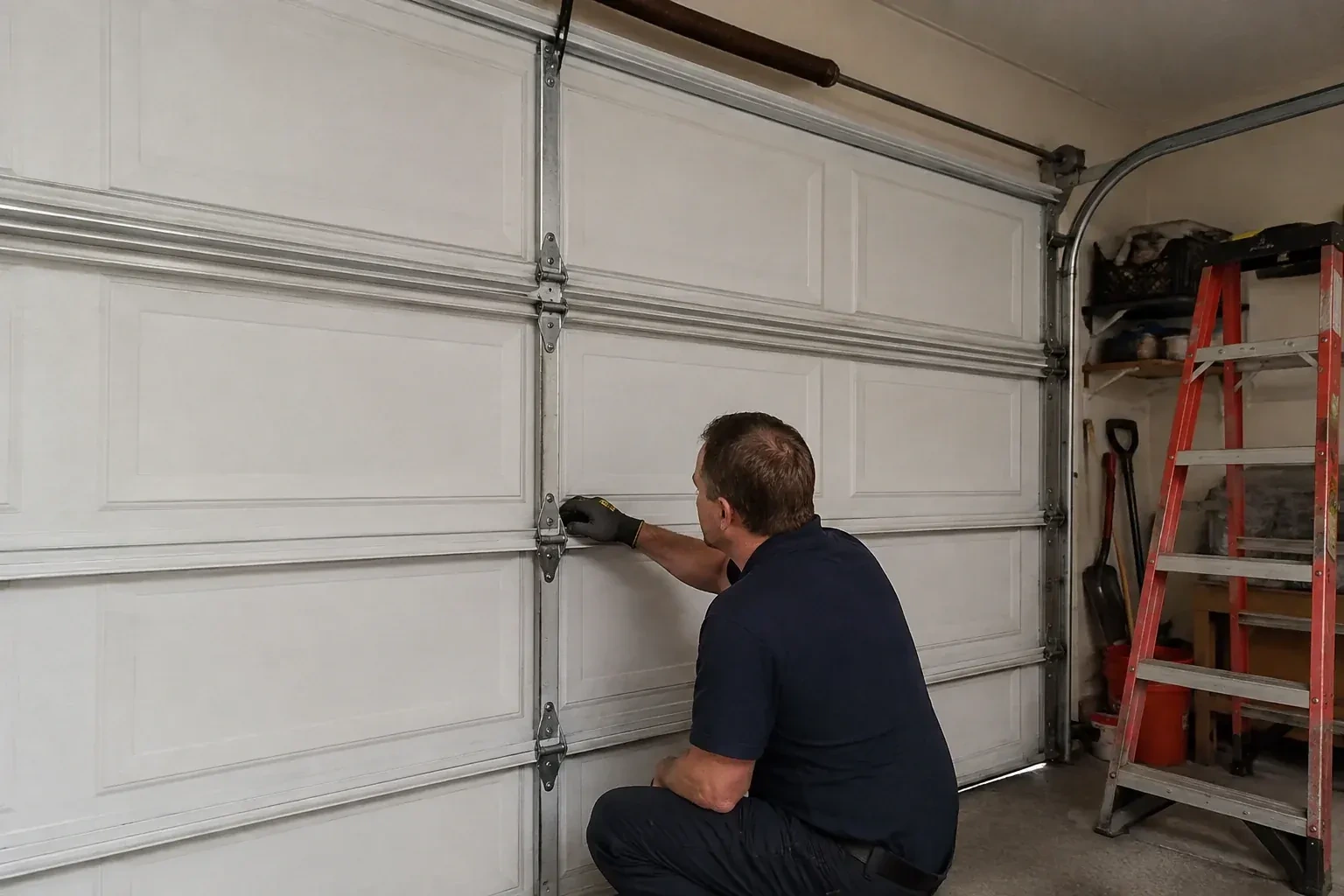
- Garage Door Hinge ReplacementPressing a hand against one of the middle hinges makes it rock on the panel.
- Garage Door Track Repair or ReplacementThe garage floor has settled at one corner, and the door now scrapes the concrete on that side while daylight shows at the other.
- Garage Door Cable ReplacementStanding inside with the door closed, you notice the cable on the right side near the floor has gone fuzzy.