Garage Doors in Otterville, OntarioA frayed cableis a warning.
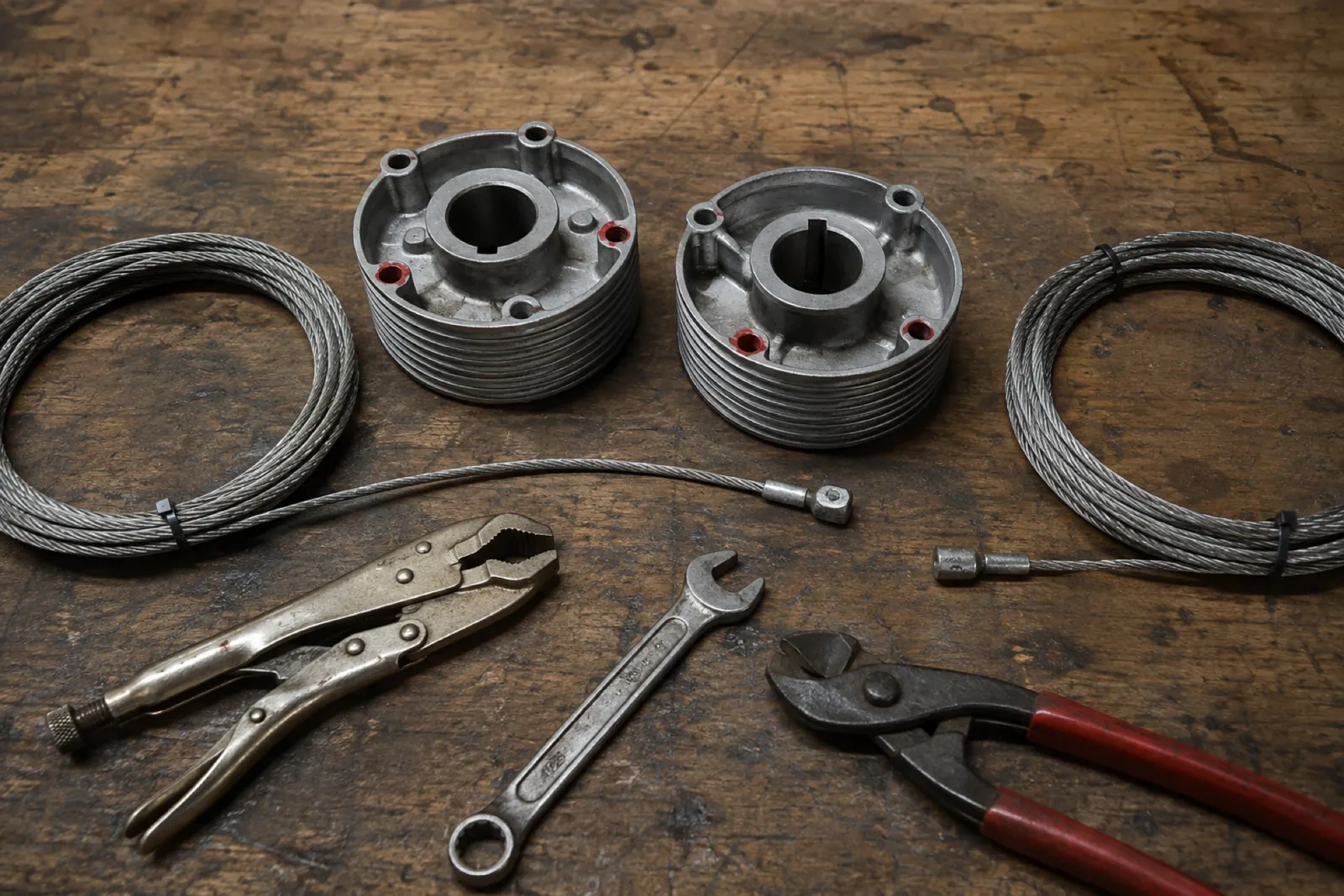
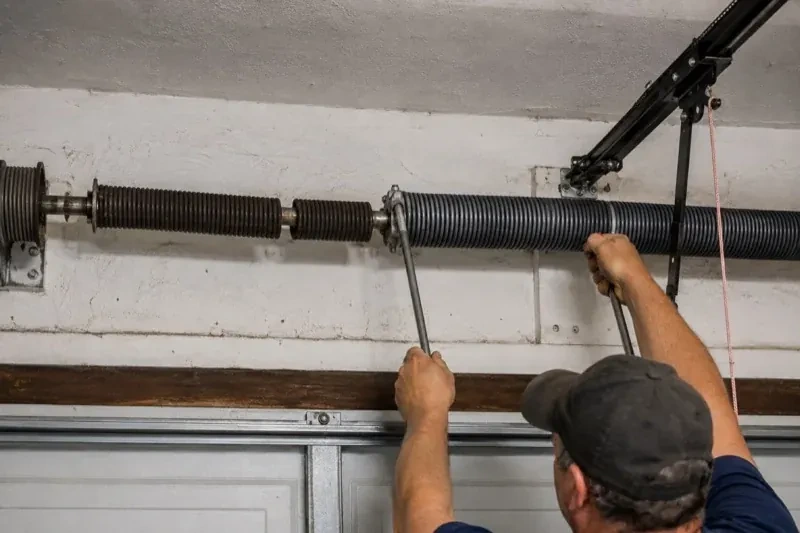
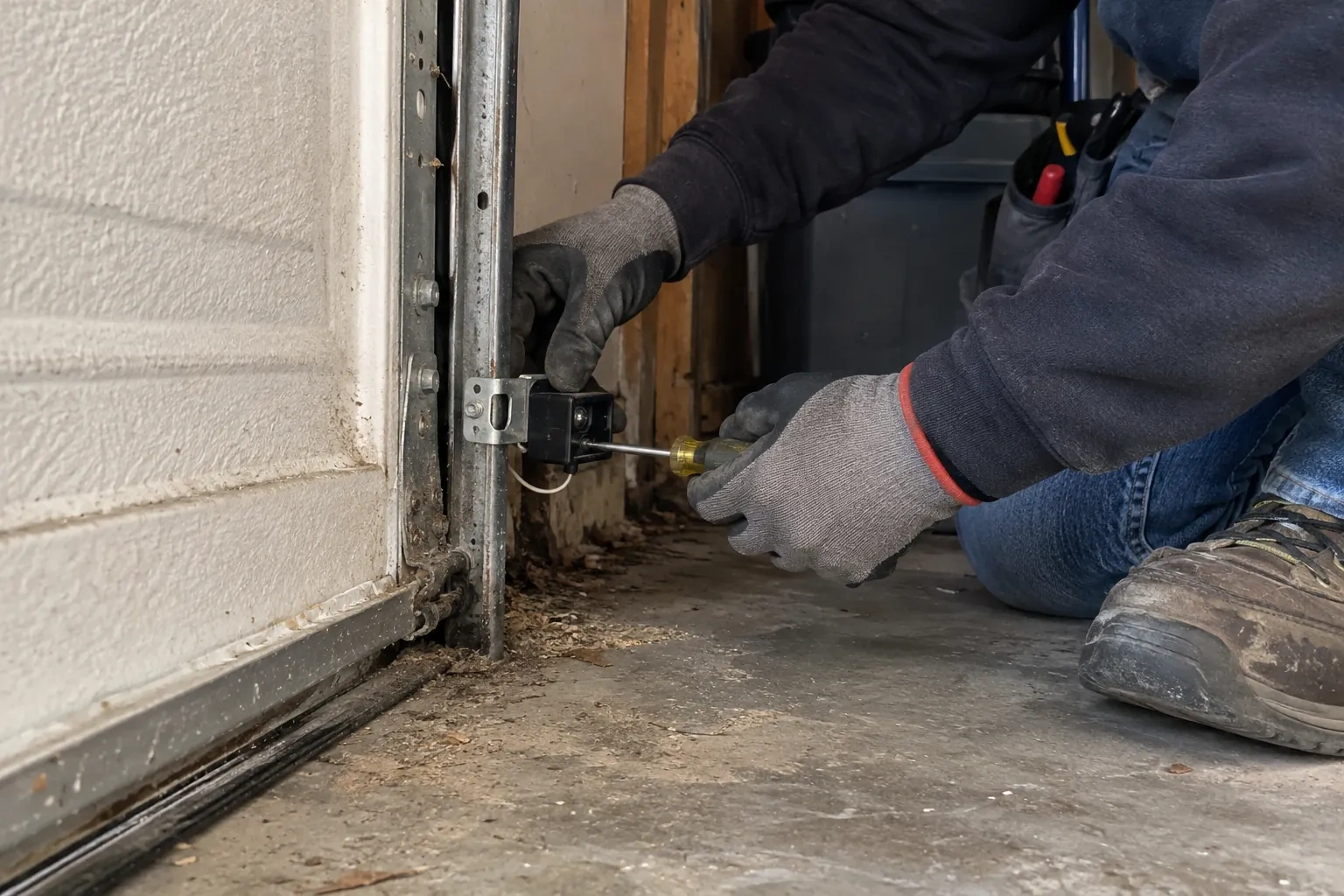
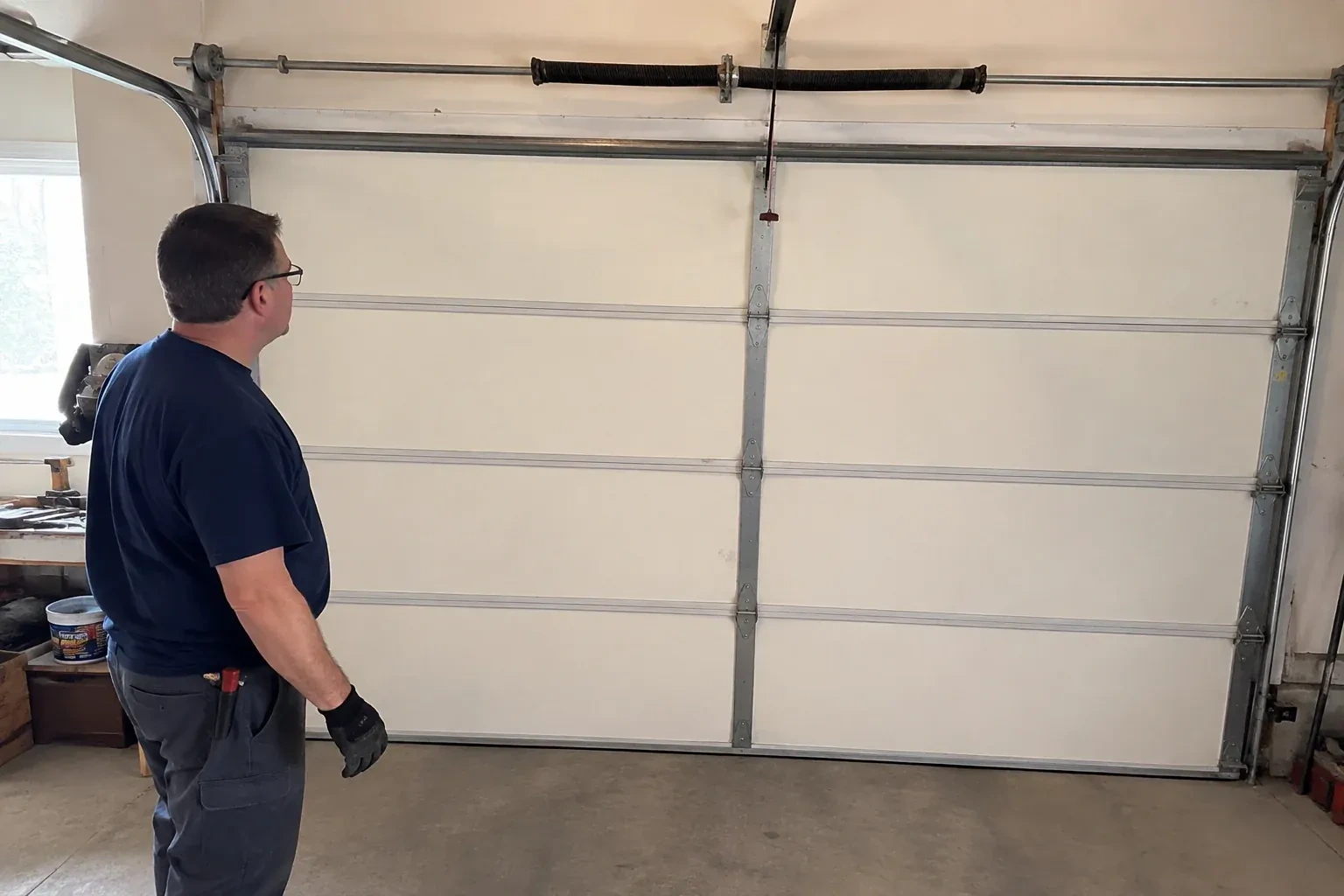
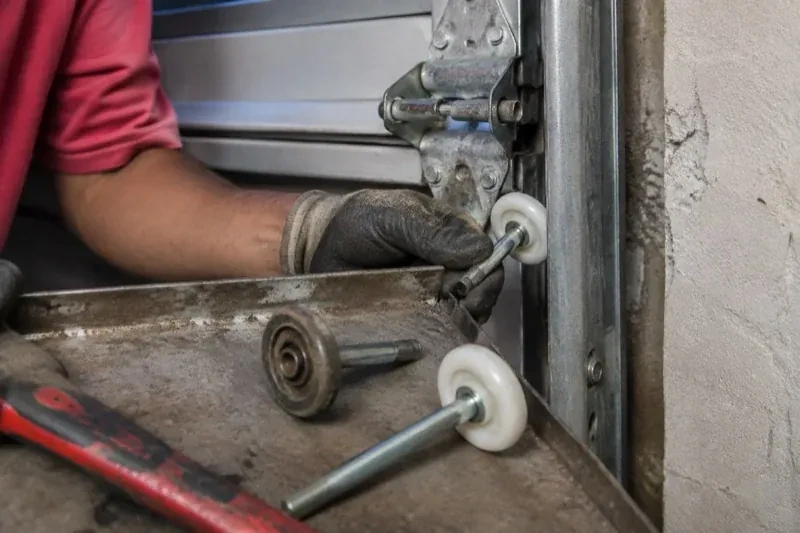
Lifting cables on a door in Otterville show their age as a few broken strands near the bottom bracket, long before they snap. We inspect them on every visit, replace both cables together with new bottom fixtures, and check the drums and bearings that wear alongside them so the door lifts evenly. This page also covers Arthur's Corners, Cornell, Rock's Mills and Rosanna.
Lifting cables on a door in Otterville show their age as a few broken strands near the bottom bracket, long before they snap. We inspect them on every visit, replace both cables together with new bottom fixtures, and check the drums and bearings that wear alongside them so the door lifts evenly. This page also covers Arthur's Corners, Cornell, Rock's Mills and Rosanna.
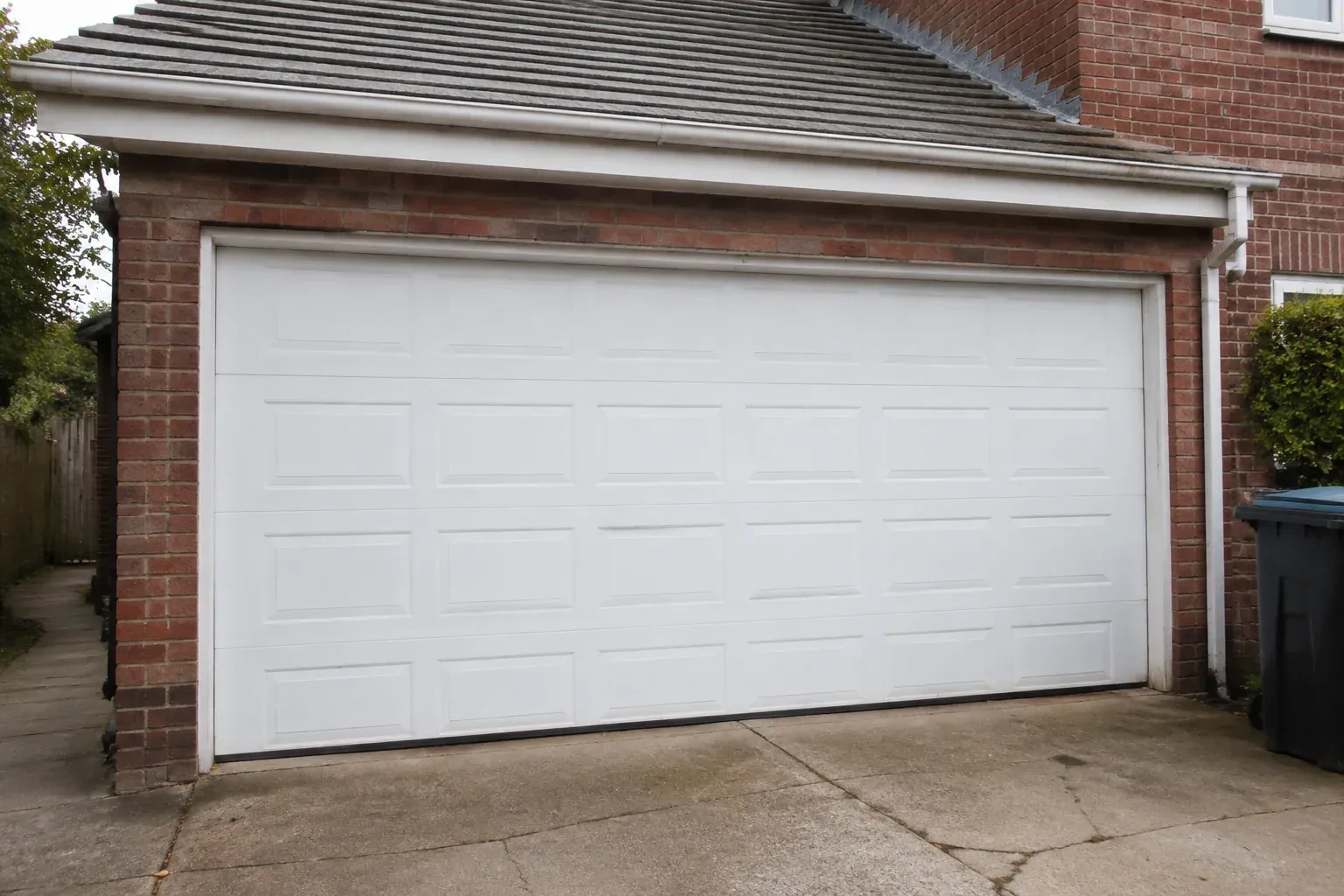
The biggest door in the house, done right.
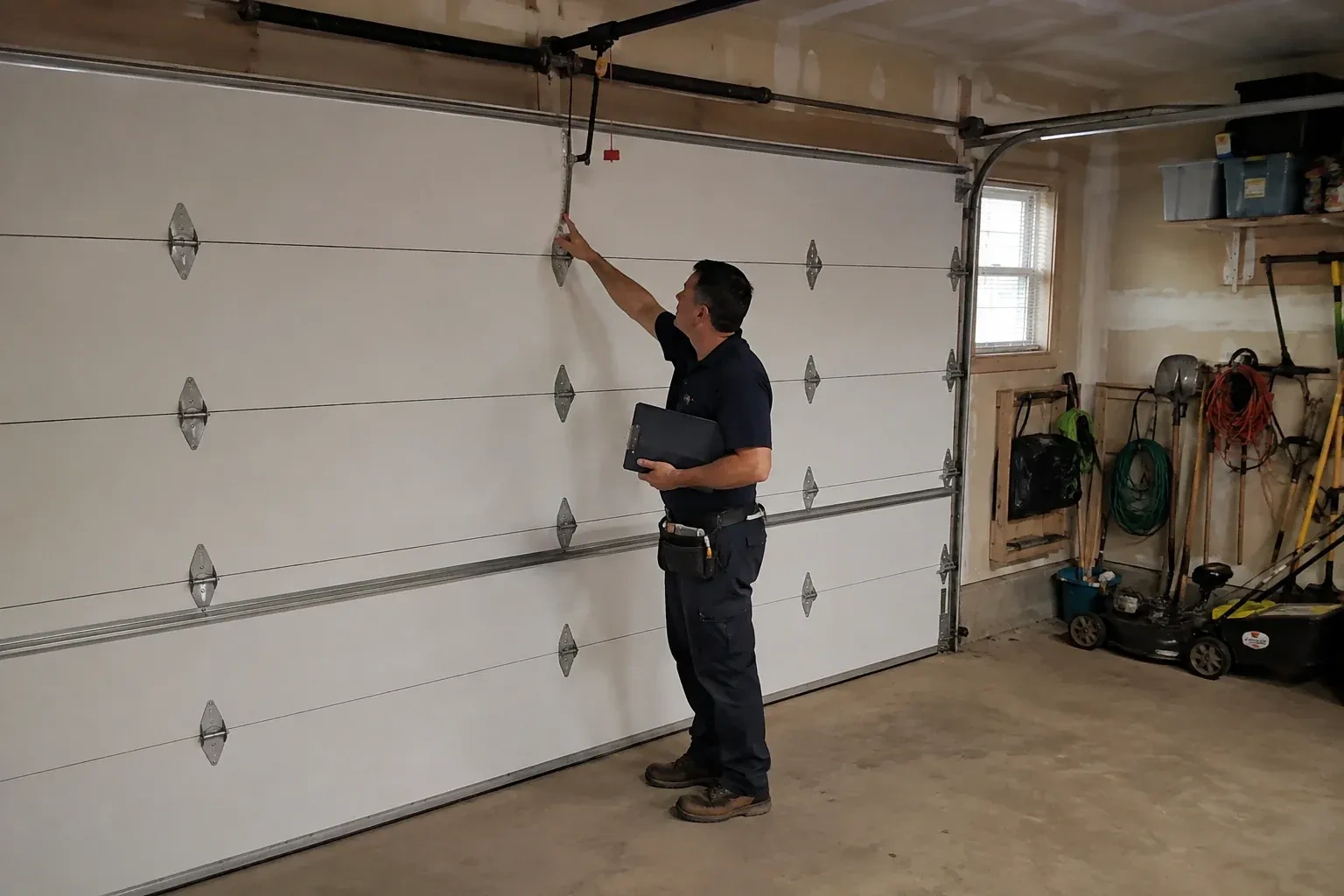
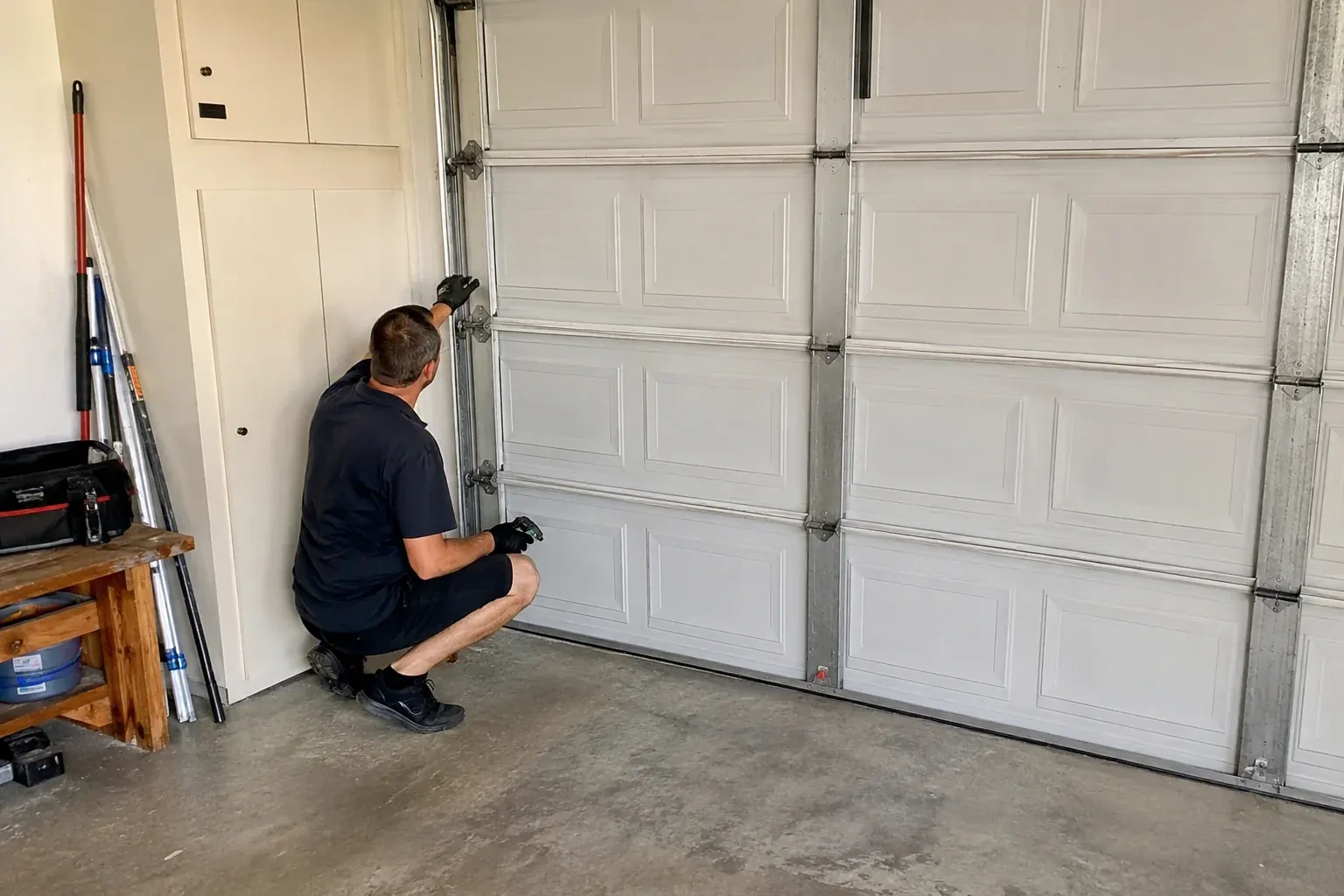
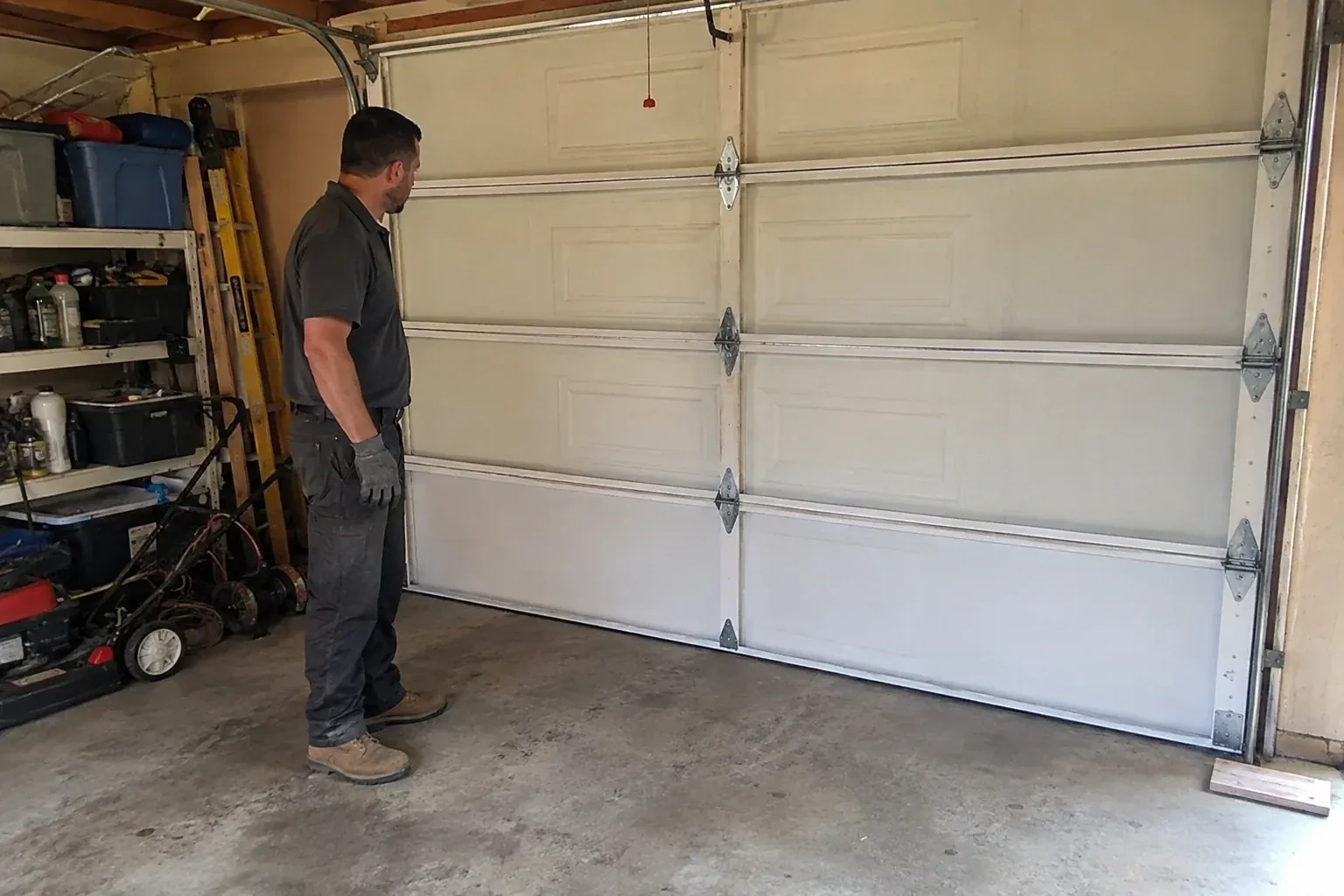
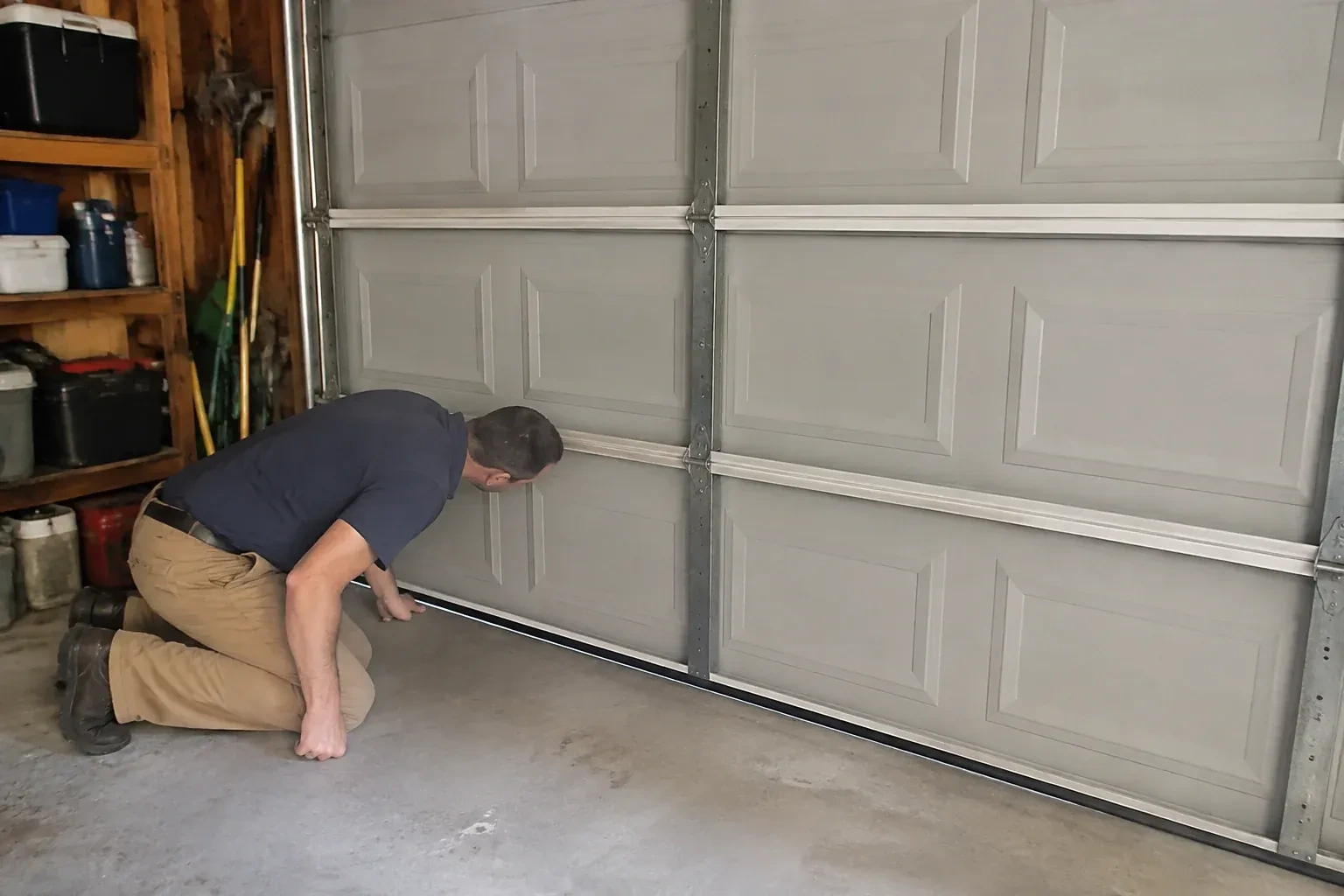
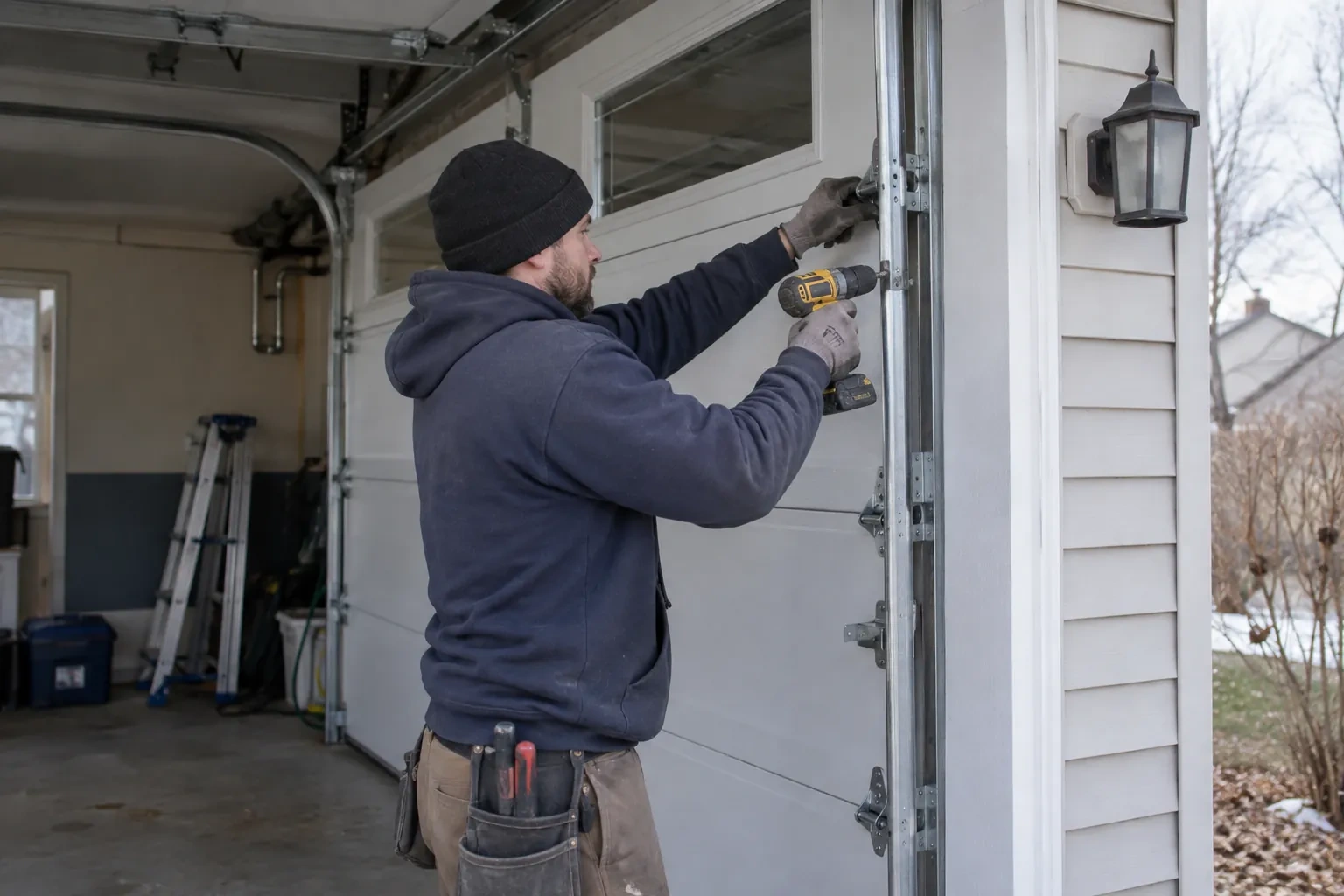
When you call about a garage door in Otterville, a technician comes to the house, looks at the whole door and tells you what he found before anything is taken apart. The cost is worked out on site from that assessment rather than guessed from a description, and the fee is the same whatever hour the visit happens to fall in.
Maintenance is a quiet part of our work in Otterville, and we like it that way. A yearly look at the door, with the balance tested, hardware tightened, rollers and hinges lubricated and sensors checked, keeps small wear from becoming a snapped spring in January. We remind households when the season comes around and handle any repair that turns up along the way.
18years in business
24/7open every day
Questions welcome. Ask why a spring broke, what a roller does, whether the opener is worth keeping. Clear answers are part of the service.
Leaving it as we found it. Vehicles moved back, packaging removed, floor cleaned. The only change you notice is a door that runs properly.
Decisions made with the facts. We show you the wear, describe the choices and their consequences, and support whichever route you pick.
Broken spring, snapped cable, door off the track, opener humming but not lifting, remote lost, seal cracked, panel dented, door too loud for the bedroom above: those are the calls we take from Otterville, and each has its own service page explaining how we handle it.
About 64% of homes in Norwich were built in 1980 or earlier, according to the 2021 Census.
Older homes
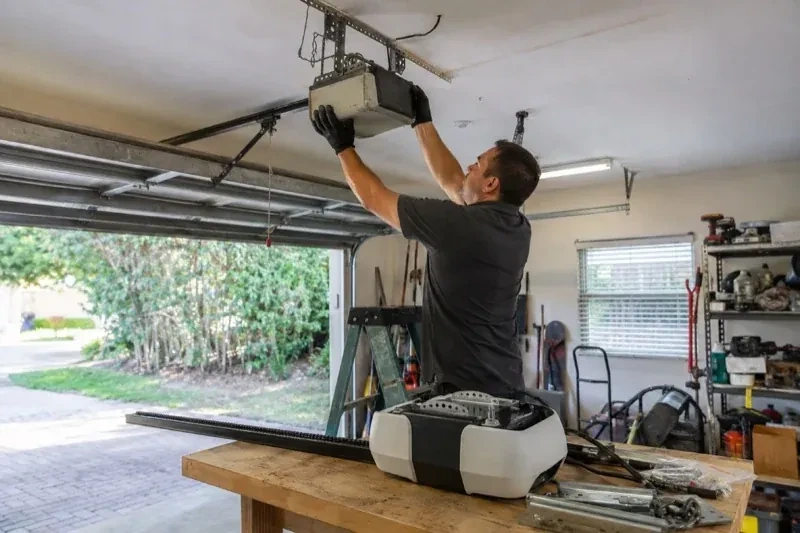
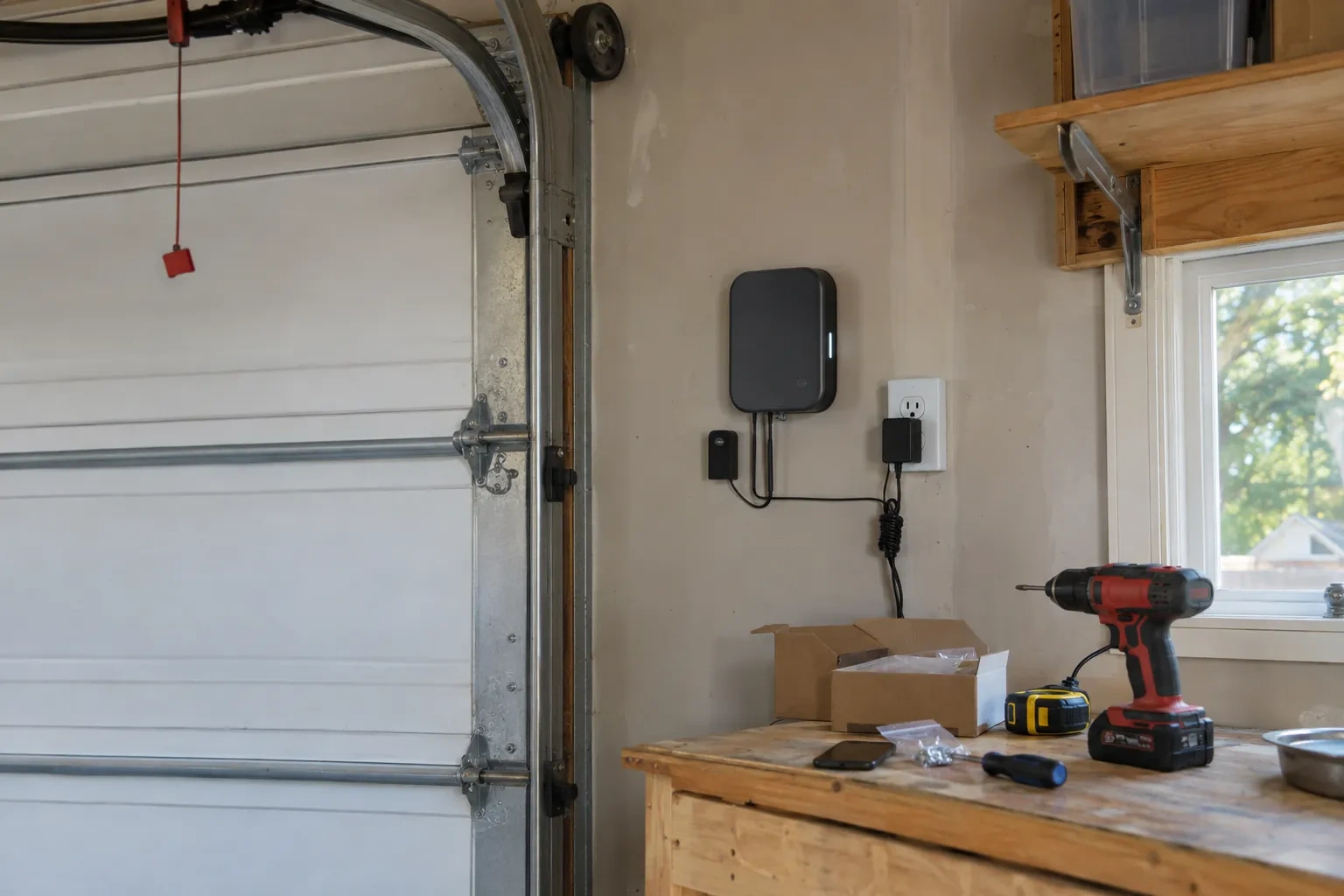
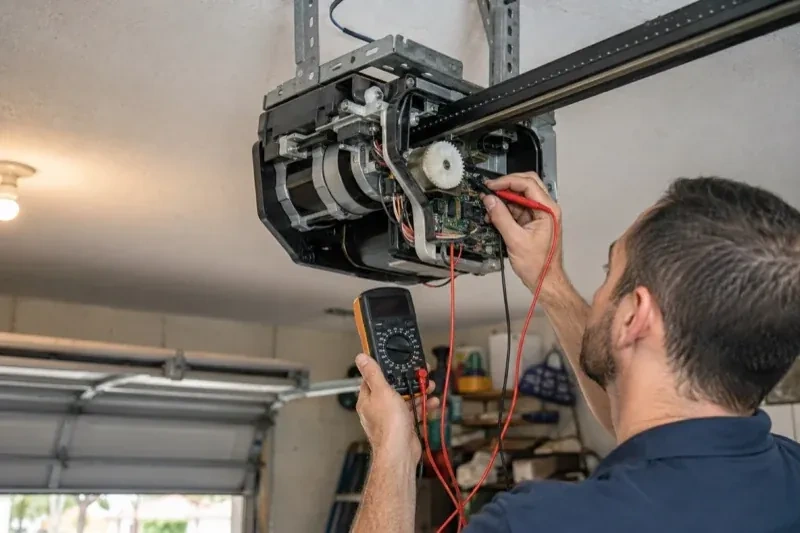
Original openers in older neighbourhoods often predate photo-eye sensors and rolling-code remotes. Bringing one up to date means a quieter motor, sensors that stop the door for a child or pet, and remotes that cannot be copied from the driveway, all installed in a single visit.
Single-detached houses make up about 92% of homes in Norwich (2021 Census).
Mostly houses
In neighbourhoods of detached homes the garage door usually faces the street and takes up much of the front of the house, so its condition shapes how the whole property looks. A straight, quiet, well-finished door is as much a part of the curb appeal as the front door.
Heavier doors, such as insulated steel or wood, need springs with more capacity, and a door that has been reskinned or insulated since its springs were fitted may be undersprung without anyone knowing. We check the match and correct it.
Halfway up, every single time, the door hesitates and there is a ratcheting sound from the motor head, then it carries on. A closer look shows a stretch of the belt where the teeth are worn almost flat.
The bedroom above the garage shakes every morning at six when the chain drive fires up. Everyone in the house knows the moment someone leaves for work.
After a cold night the door stays open until the garage warms up. There is frost on the sensor lenses and a ridge of salty slush piled against the brackets where the snow blower was parked.
The new car has three buttons in the mirror for garage doors. You held the old remote up to it as the manual said, the light in the car changed, and yet the door ignores it completely.
Halfway up, the door lets go of the opener with a clunk and sinks back to the floor while the trolley carries on to the top alone. It has happened three times this month, and each time the release lever is found half-cocked.
Which fix fits?
Every morning the door announces itself to the whole street: a long metallic squeal as it climbs, a rattle at the top, and a groan on the way back down.
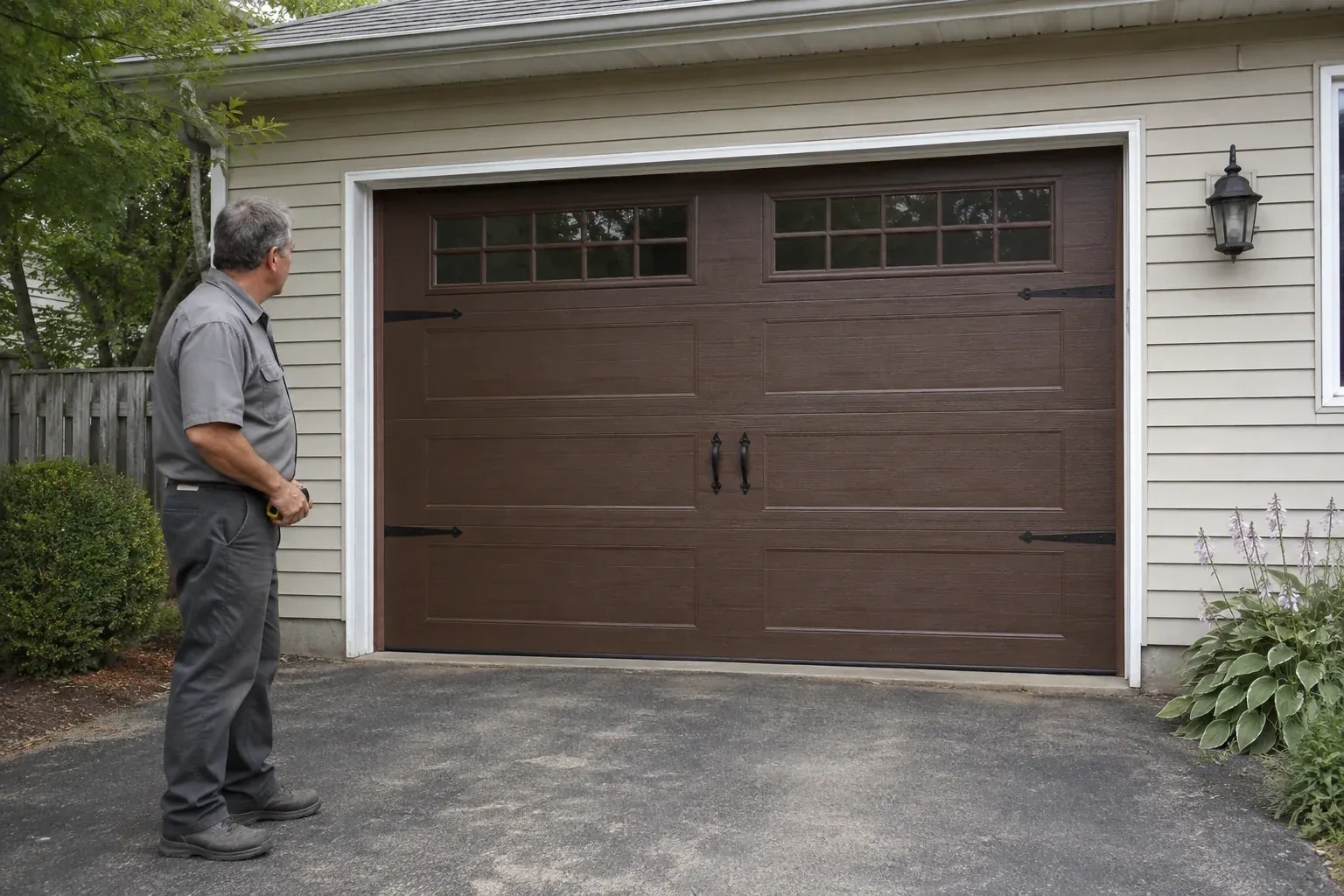
WhyA carriage look can be created with several constructions, including embossed steel, insulated steel with composite overlays, or wood components intended for sectional-door use.
You like the brightness of clear glazing but not a direct view of everything stored inside.
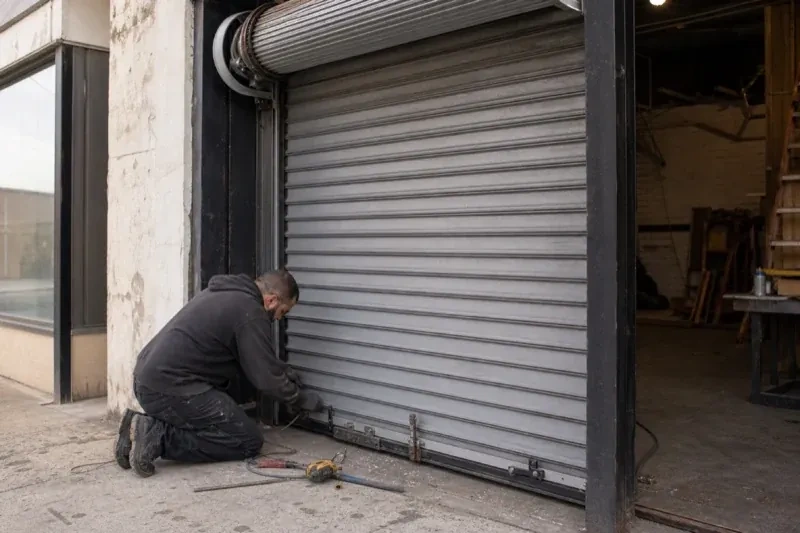
WhyExterior rolling doors work at the boundary between indoor operations and winter weather.
How a visit goes
Describe the property, the hardware and what has changed, and the visit starts from what you have seen.
01
Your call, your words
There is no wrong way to describe a garage door problem. Tell us what you saw and heard; we ask the follow-up questions.
02
Finding the real cause
A door that stops halfway can be a sensor, a spring or a stripped gear. We test each possibility rather than assuming the obvious one.
03
Putting it right
The technician fits the correct parts, adjusts the opener to the door, and shows you the result running through full cycles.
An entrance. Not an afterthought.
1/10Garage Door Tune-Up
Every morning the door announces itself to the whole street: a long metallic squeal as it climbs, a rattle at the top, and a groan on the way back down. It still opens and closes, but it never used to sound like this.
The door climbs crooked, one side clearly ahead of the other. Nothing looks broken, but the two tracks sit different distances from the door, and one leans in toward the opening near the top.
After pulling the red release cord, you tried lifting the door yourself and it would barely leave the floor. A door that used to glide up with one hand now takes real effort, which points to the counterbalance rather than the opener.
The rail shakes when the door runs. The steel straps holding it to the ceiling have worked loose, the chain rattles the length of the garage, and a bolt has already dropped onto the hood of the car.
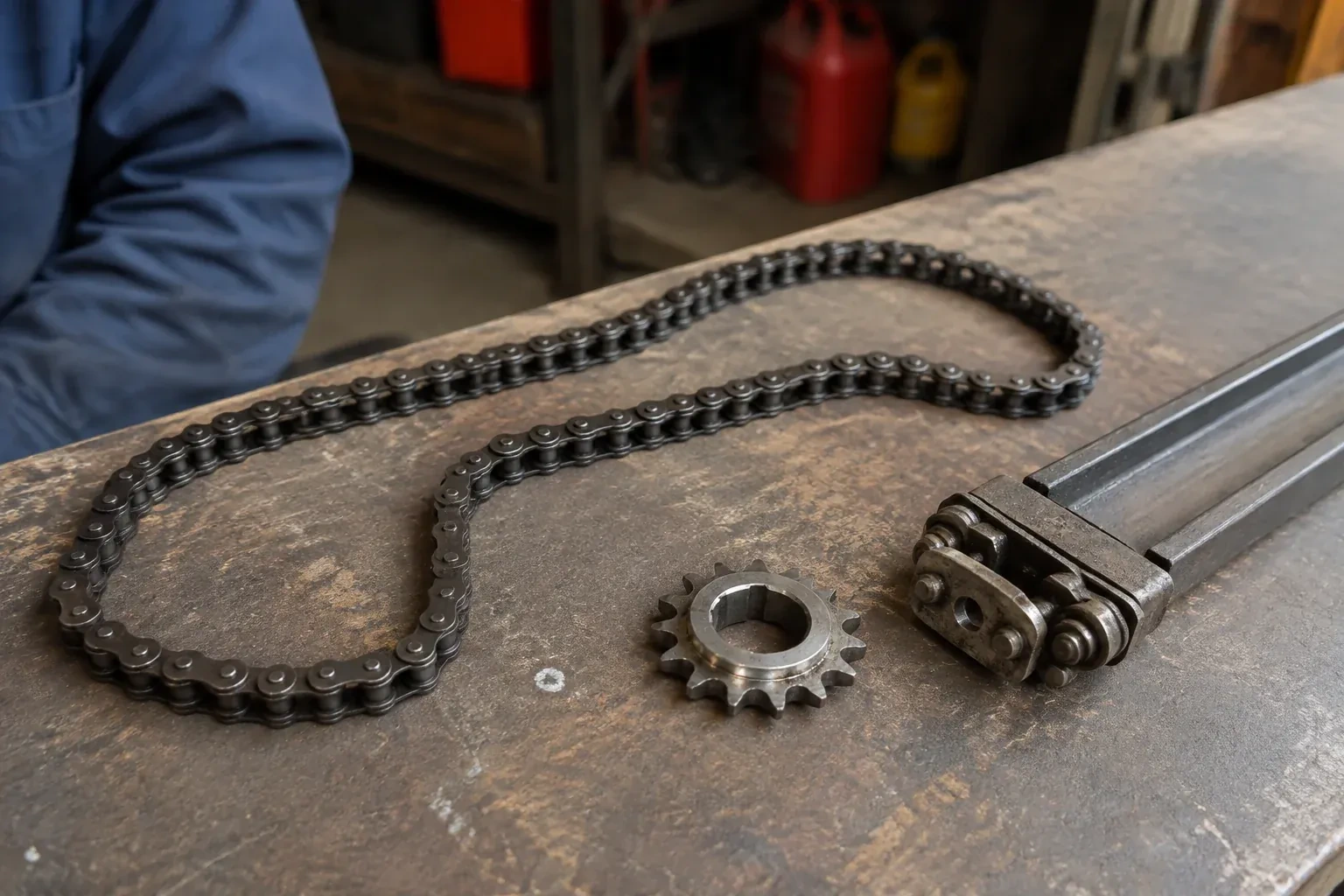
The bedroom above the garage shakes every morning at six when the chain drive fires up. Everyone in the house knows the moment someone leaves for work. The door itself is fine; the racket comes from the operator and its steel chain.
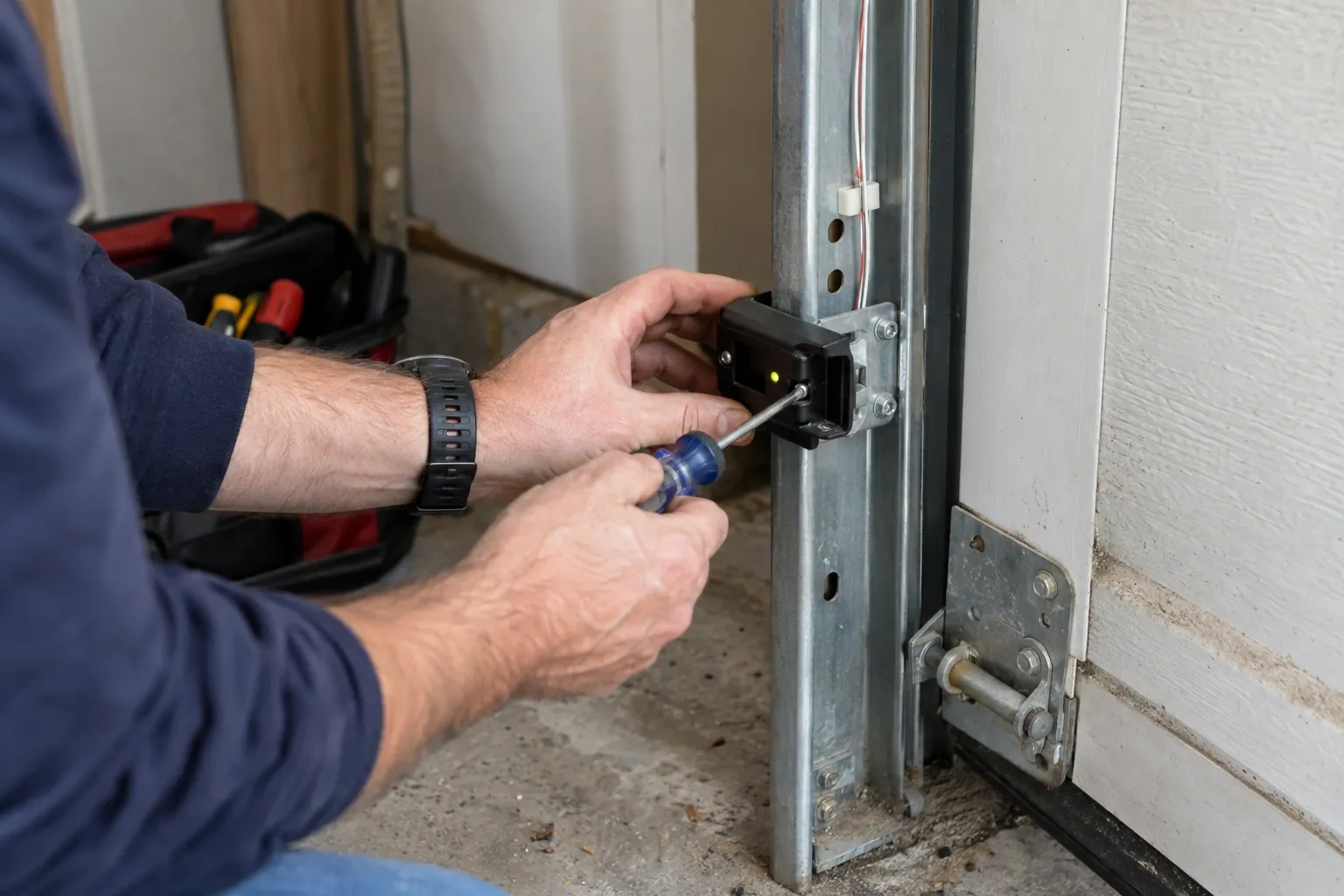
The small light on one of the sensors near the floor has gone dark, or it flickers when someone walks past the track. The other one glows steadily. The door refuses to close from the car.
Several sections are rusting along their lower edges, and one has begun to bow. The door still travels, but its tired panels, widening gaps and uneven finish now make the whole entrance look overdue for renewal.
Two garage openings sit side by side, and small differences in window spacing or decorative hardware would be obvious. You are looking for a measured installation with aligned panels and balanced proportions.
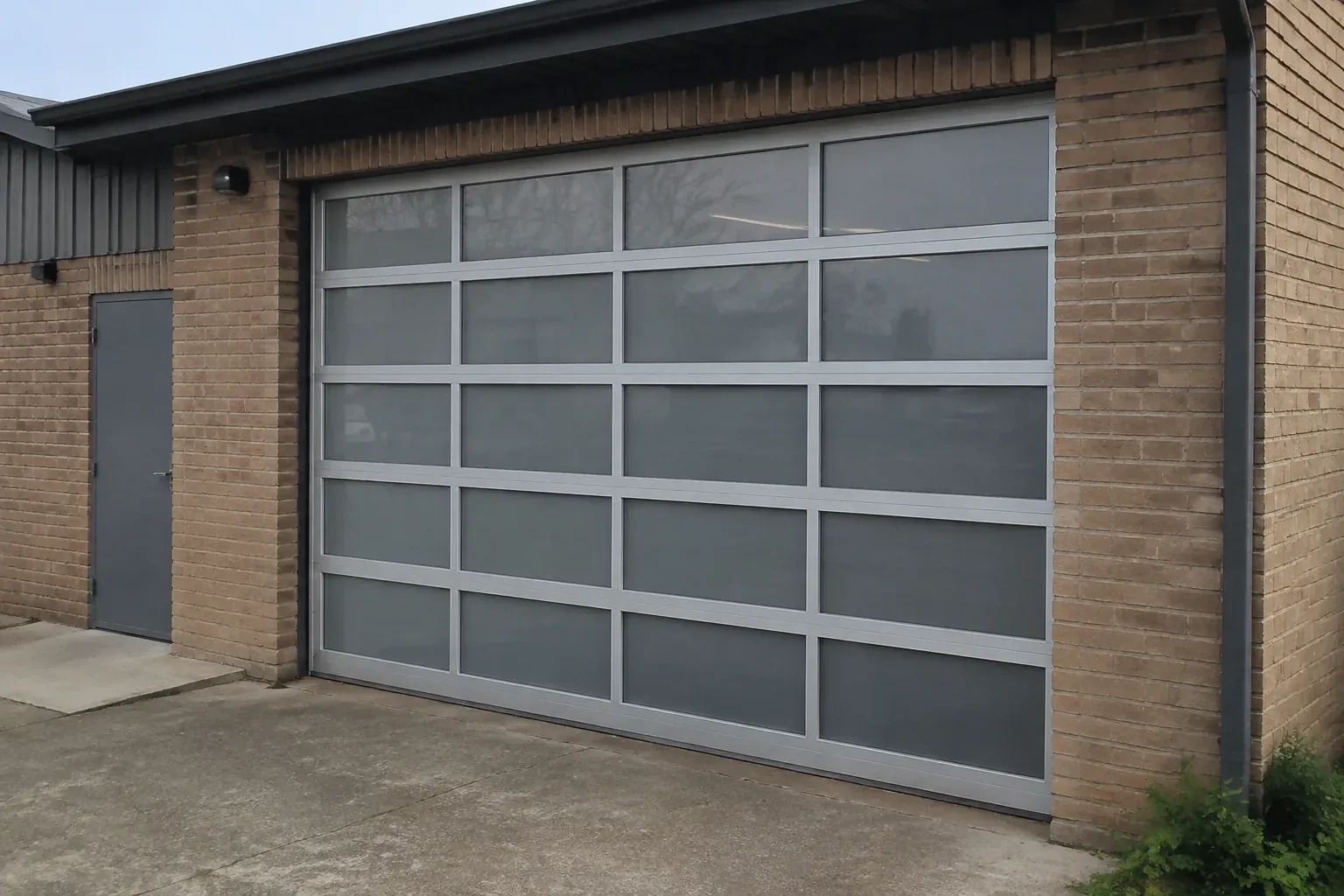
You like the brightness of clear glazing but not a direct view of everything stored inside. Frosted, tinted or obscure panels would let the new door share light while providing practical privacy.
A metallic clatter now comes from inside the hood whenever the curtain coils. The sound follows each revolution, the travel has become jerky, and fine metal dust is visible near one bracket and bearing.
What should I do if the bottom seal freezes to the floor?
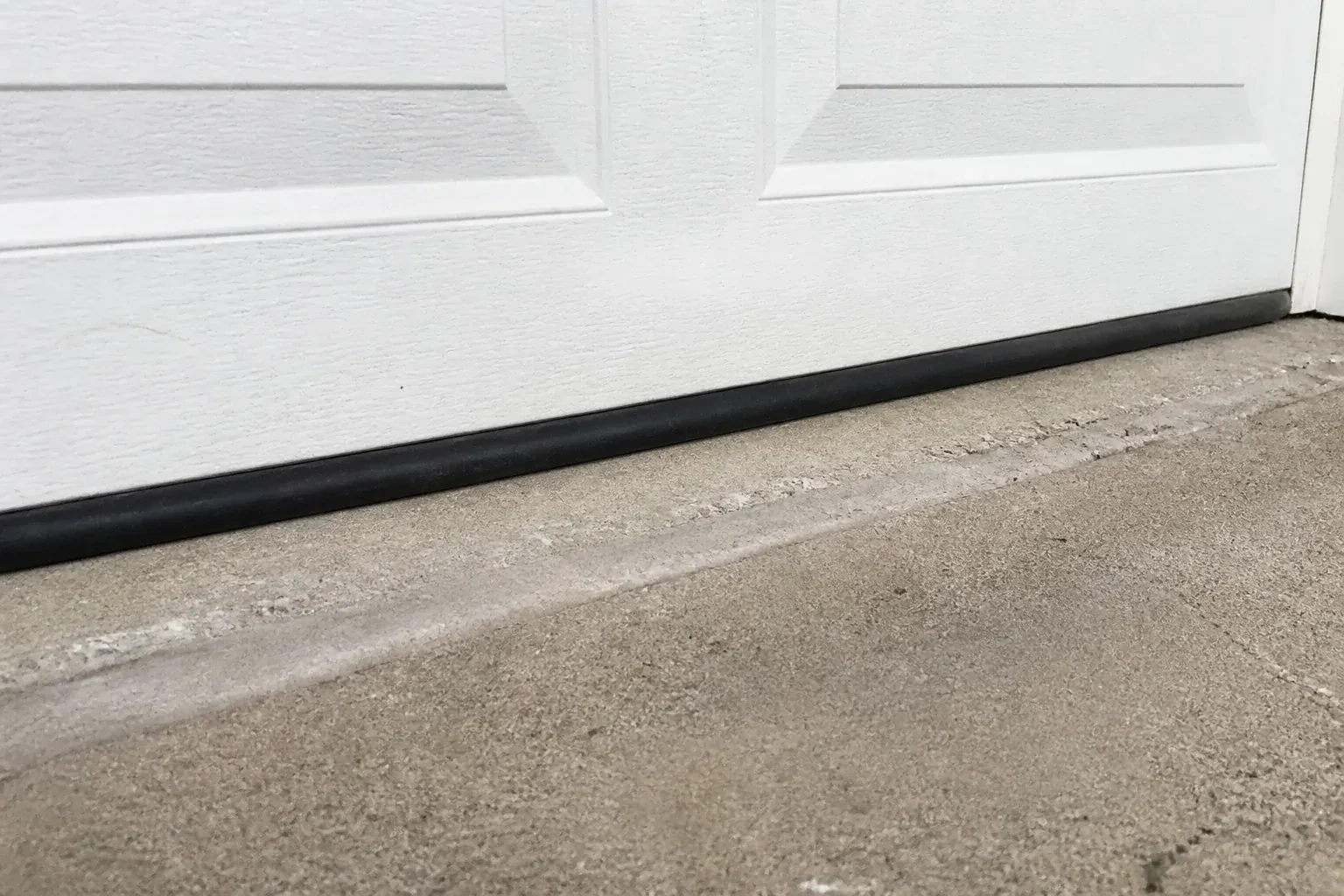
Do not keep pressing the button; the opener can tear the seal or pull the top section out of shape. Free the seal by clearing the ice along the threshold, with warm water poured on the concrete rather than the door, or by working a plastic scraper along the seal. Then treat the seal with a silicone spray. Keeping snow and meltwater cleared from the threshold and keeping the seal flexible with silicone prevents most repeats.
Does a heavy insulated door need heavier track?
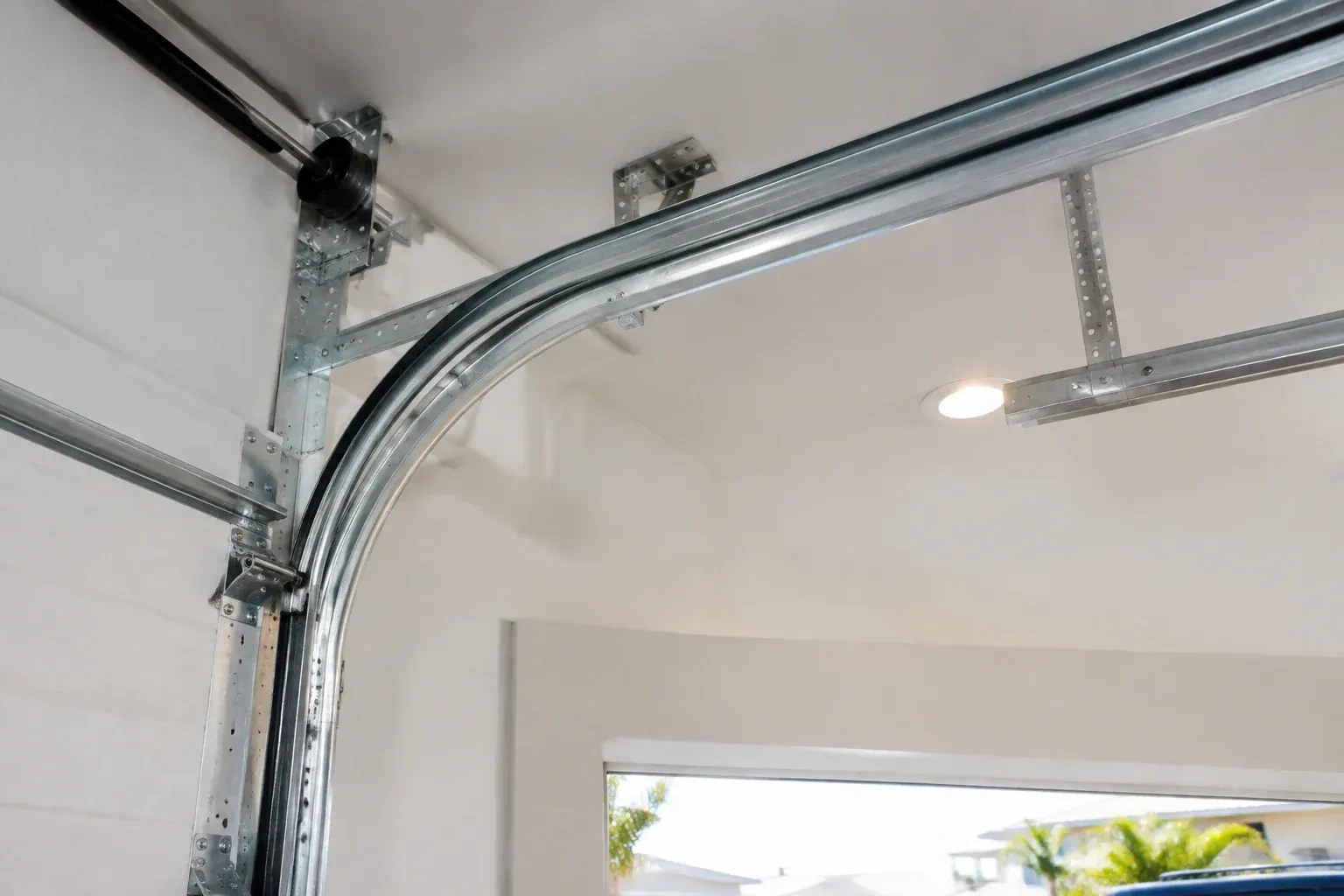
Usually the standard two-inch track handles a residential insulated door well, provided the gauge matches what the door maker specified and the brackets and hangers are properly fixed. Very heavy or oversized doors, and some carriage-style wood doors, are set up on three-inch track or on heavier-gauge two-inch. If a heavier door was hung on the light track from an earlier door, flexing and spreading follow, and the technician will say so.
What should I do before the technician arrives?
Keep the door closed and leave it alone, move any vehicle you can reach out of the way or at least clear the space in front of the door inside the garage, and make sure there is room for a ladder beneath the shaft. Note whether there is one spring or two and whether a cable is loose. A photo of the spring area, the drums and the opener helps the technician bring the right parts.
What is the trolley, and why would it get stuck?
The trolley is the carriage that rides along the rail, pulled by the chain, with the door arm hooked to it. It gets stuck when the travel limits creep and it is driven onto the stop bolt at the head end or the stop tab at the door end, where the motor hums but nothing moves. The technician slackens the chain, runs the trolley off the stop under power, and pulls the limit back so it stops short in future.
Chain or belt: which should I choose?
Both move the same doors, so the choice is about sound and setting. Chain is the sturdy, simple workhorse and a fine fit for a detached garage or a workshop where a little noise is nobody's concern. Belt is the pick when a bedroom, nursery or office shares a wall or floor with the garage, because it starts and stops softly and hums rather than rattles. If the ceiling is crowded, a wall-mounted unit beside the spring shaft removes the rail altogether.
The door closes if I hold the wall button. Is that a fix?
It is a built-in stopgap, not a repair. When the sensor circuit is not satisfied, many openers allow a close from the wall control only while the button is held, on the idea that a person standing there can see the doorway. Newer units drop that behaviour altogether and simply hold the door open. Either way the door is telling you the beam has failed, and a sensor visit puts remote closing back.
Can the existing tracks stay with the new door?
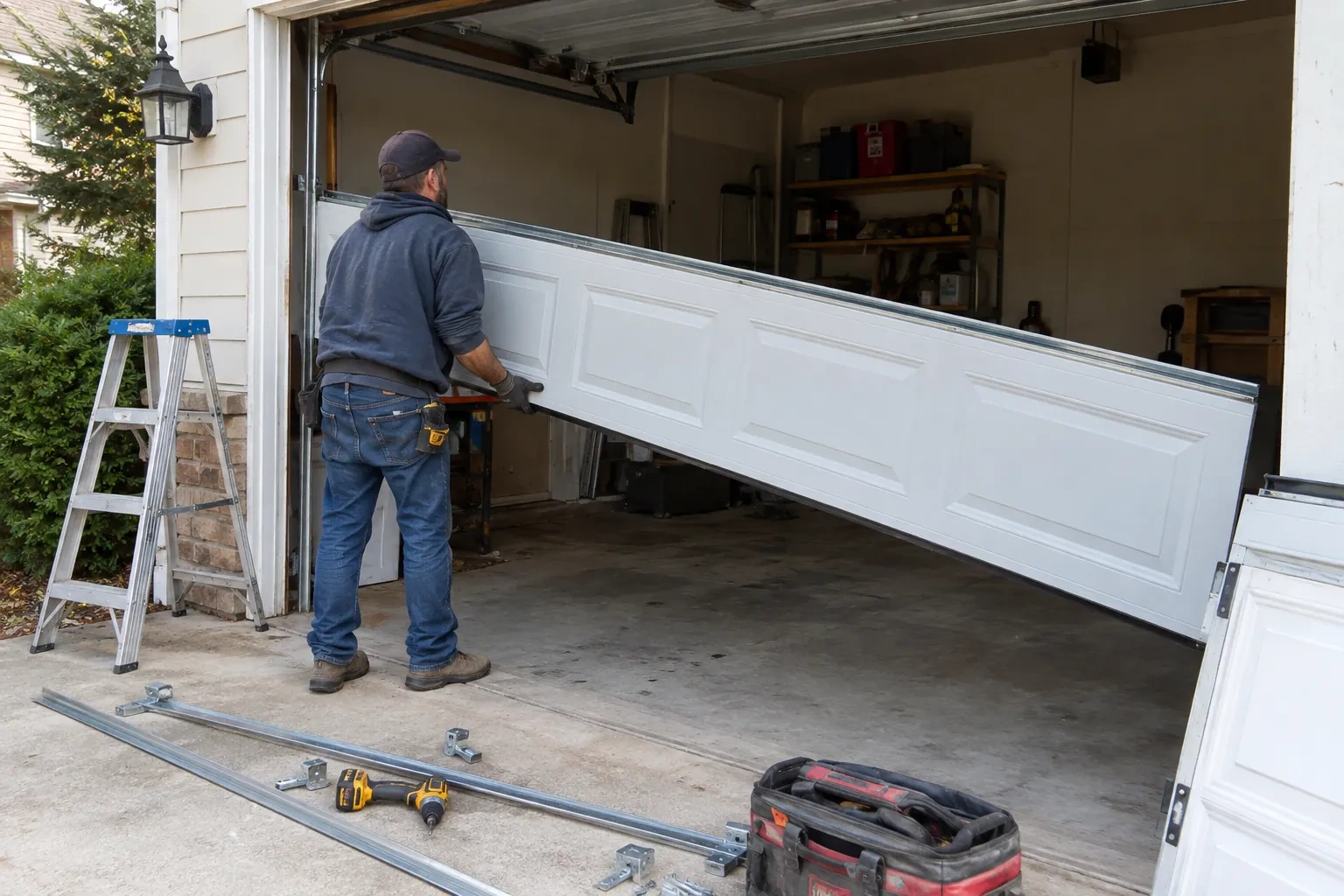
A replacement is planned with track designed for the selected sections and hardware. Door thickness, completed weight, roller position, available headroom and operator location can all affect compatibility. Using the matched track package lets the sections and counterbalance operate as the system was designed, with geometry that can be checked during installation.
Can I get the traditional look and still use an automatic opener?
Yes. The traditional effect is created by section design, overlays, windows and decorative accents; the working door can still travel overhead under automatic control. The opener is matched or reviewed for the door's dimensions, finished weight and track geometry. Its arm attaches to a reinforced point, and travel, photo eyes and reversal are set after the door is balanced.
What maintenance does a full-view door need?
Routine care combines gentle surface cleaning with observation of the moving system. Watch complete cycles, keep sensor paths clear, inspect seals and glazing gaskets, and note new rubbing or uneven movement. Use the operator manual for reversal checks. Springs, cables, drums and bottom brackets store substantial tension, so trained personnel handle adjustments involving those components.
Why is the bottom bar rising crooked?
An angled bottom bar can point to a shifted curtain, damaged slats, unequal guide friction, a moved barrel, impact at one guide or a counterbalance issue. Measurements at the sill, guides and brackets help separate those causes. Cycling is kept controlled because repeated powered movement can pull a minor tracking problem farther sideways.
Request a visit
When you call about a garage door in Otterville, a technician comes to the house, looks at the whole door and tells you what he found before anything is taken apart. The cost is worked out on site from that assessment rather than guessed from a description, and the fee is the same whatever hour the visit happens to fall in.