Garage Doors in Long Point, OntarioEvery remote,on the same page.
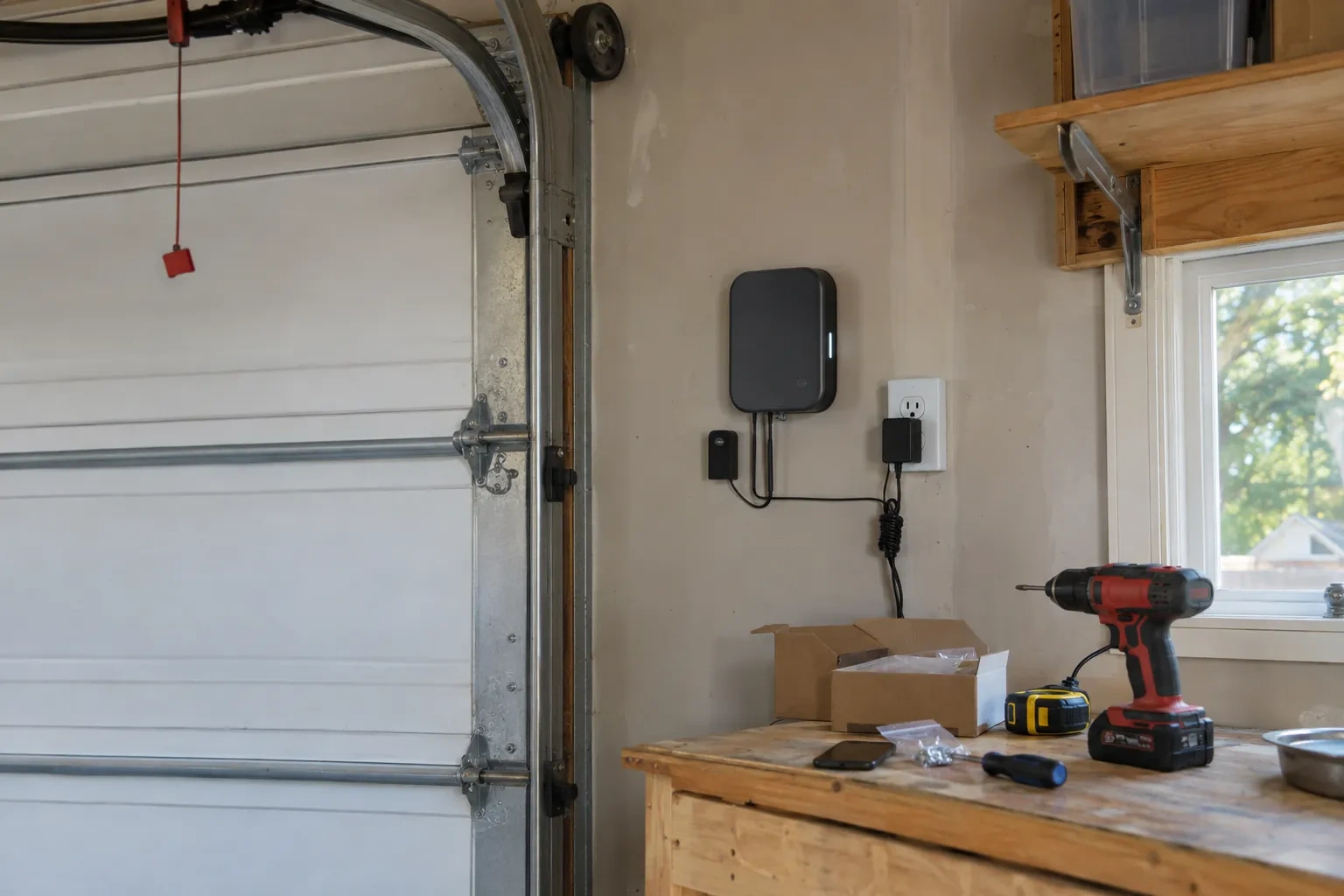
Remotes, the wall keypad, the button by the kitchen door and the app on your phone all need to agree with the opener. For homeowners in Long Point we program them cleanly, erase codes from remotes that went missing years ago, and show you how to add a new one yourself when the time comes. We also come out to Old Cut and The Cottages.
Remotes, the wall keypad, the button by the kitchen door and the app on your phone all need to agree with the opener. For homeowners in Long Point we program them cleanly, erase codes from remotes that went missing years ago, and show you how to add a new one yourself when the time comes. We also come out to Old Cut and The Cottages.
The biggest door in the house, done right.
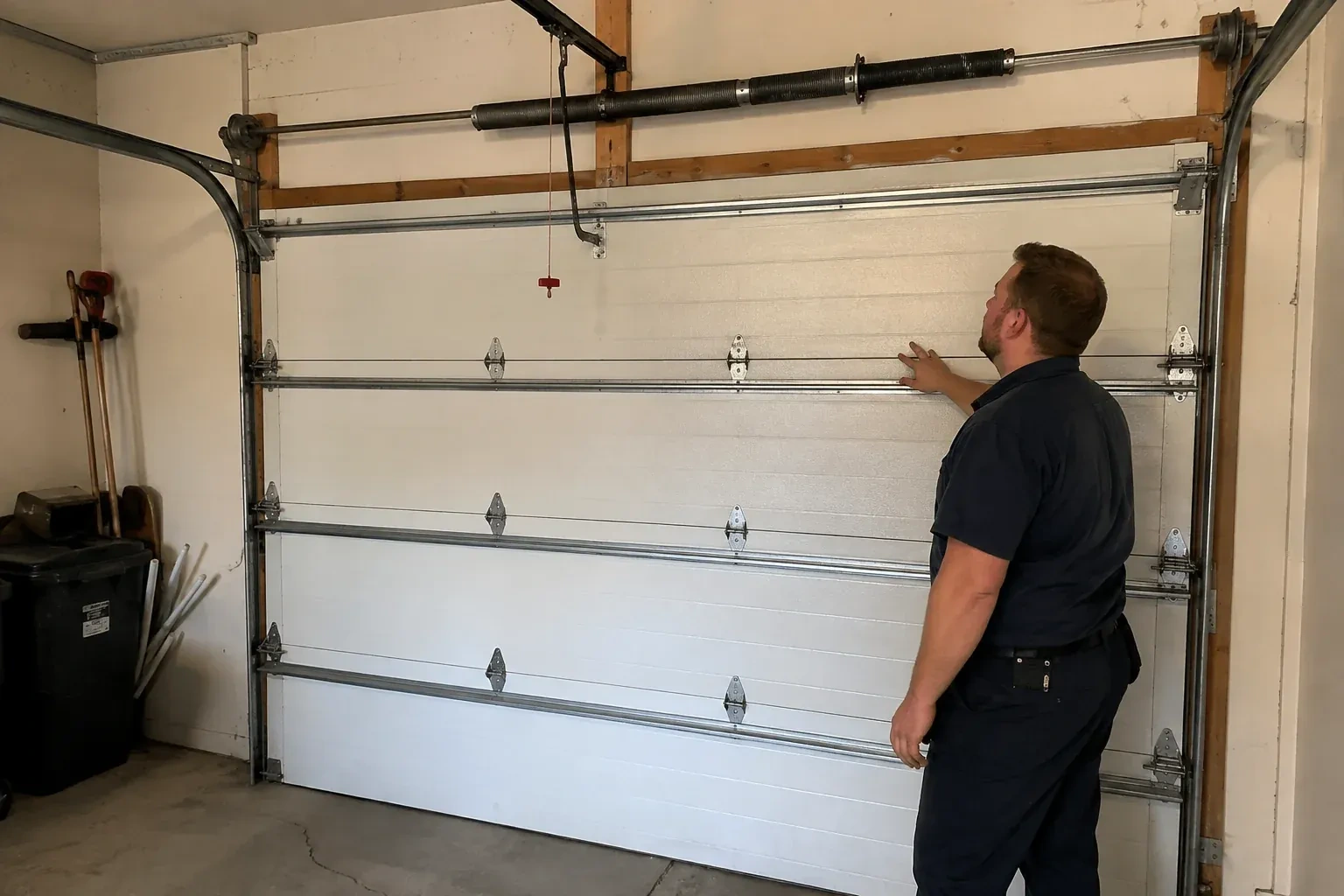
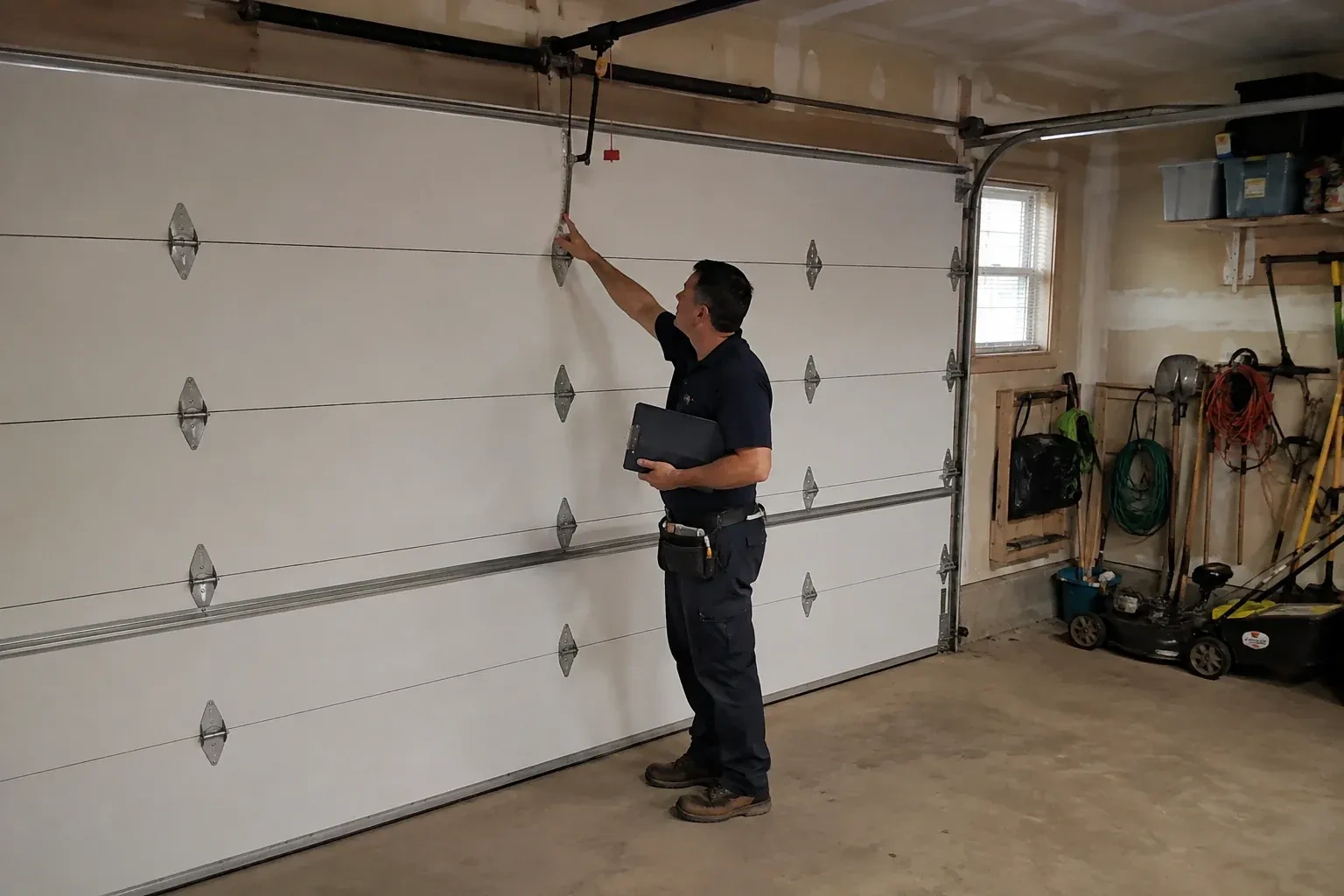
The visit in Long Point starts with the door secured and a walk around every part of it. The technician then shows you the worn part, the sound one beside it and the choice between them. Nothing is replaced for the sake of it, and nothing that is close to failing is quietly left out.
If you live in Long Point and your garage door has let you down, you are in familiar territory for us. Our vans pass through the neighbourhood regularly, so the drive is short and the streets are known. We repair springs, cables, rollers and openers, install new doors, and take the time to explain each step so you understand what was done and why.
18years in business
24/7open every day
Questions welcome. Ask why a spring broke, what a roller does, whether the opener is worth keeping. Clear answers are part of the service.
Leaving it as we found it. Vehicles moved back, packaging removed, floor cleaned. The only change you notice is a door that runs properly.
Decisions made with the facts. We show you the wear, describe the choices and their consequences, and support whichever route you pick.
Our garage door services for Long Point are written up one by one so you can read exactly what happens during the visit. Spring and cable replacement, off-track repair, opener diagnosis, remote programming, weatherstripping, tune-ups, panel replacement and full door installation are all described in plain words.
About 62% of homes in Norfolk County were built in 1980 or earlier, according to the 2021 Census.
Older homes
Wood door frames in an older house settle and swell over the decades, which can leave a door rubbing on one side. Rather than forcing the opener, the technician trues the tracks, adjusts the jamb seals and sets the door so it travels freely again.
Single-detached houses make up about 83% of homes in Norfolk County (2021 Census).
Mostly houses
Detached houses often have a room over the garage, a bedroom or an office, which makes the garage door part of the heated envelope. An insulated door, snug weatherstrip and a fresh bottom seal keep that room comfortable and the furnace from working overtime in winter.
Heavier doors, such as insulated steel or wood, need springs with more capacity, and a door that has been reskinned or insulated since its springs were fitted may be undersprung without anyone knowing. We check the match and correct it.
Halfway up, every single time, the door hesitates and there is a ratcheting sound from the motor head, then it carries on. A closer look shows a stretch of the belt where the teeth are worn almost flat.
The bedroom above the garage shakes every morning at six when the chain drive fires up. Everyone in the house knows the moment someone leaves for work.
After a cold night the door stays open until the garage warms up. There is frost on the sensor lenses and a ridge of salty slush piled against the brackets where the snow blower was parked.
The new car has three buttons in the mirror for garage doors. You held the old remote up to it as the manual said, the light in the car changed, and yet the door ignores it completely.
Halfway up, the door lets go of the opener with a clunk and sinks back to the floor while the trolley carries on to the top alone. It has happened three times this month, and each time the release lever is found half-cocked.
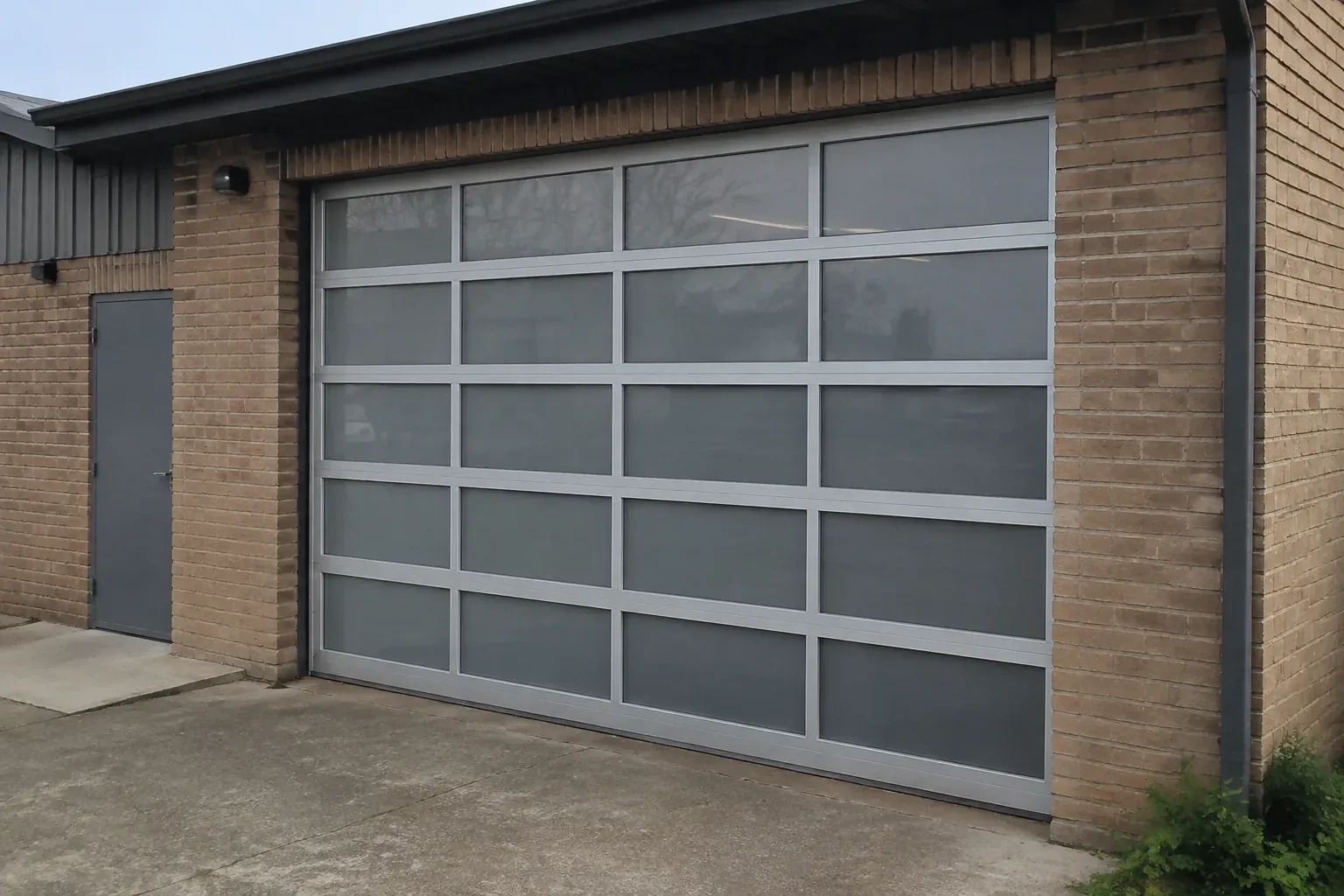
WhyFor a replacement project, the work includes more than lifting the old door out and putting glass in its place.
How a visit goes
Describe the property, the hardware and what has changed, and the visit starts from what you have seen.
01
Your call, your words
There is no wrong way to describe a garage door problem. Tell us what you saw and heard; we ask the follow-up questions.
02
Finding the real cause
A door that stops halfway can be a sensor, a spring or a stripped gear. We test each possibility rather than assuming the obvious one.
03
Putting it right
The technician fits the correct parts, adjusts the opener to the door, and shows you the result running through full cycles.
An entrance. Not an afterthought.
1/10Garage Door Safety Inspection
Your toddler has discovered the wall button. You want to know, from someone who checks these things for a living, that the door will stop and reverse if a small person is under it.
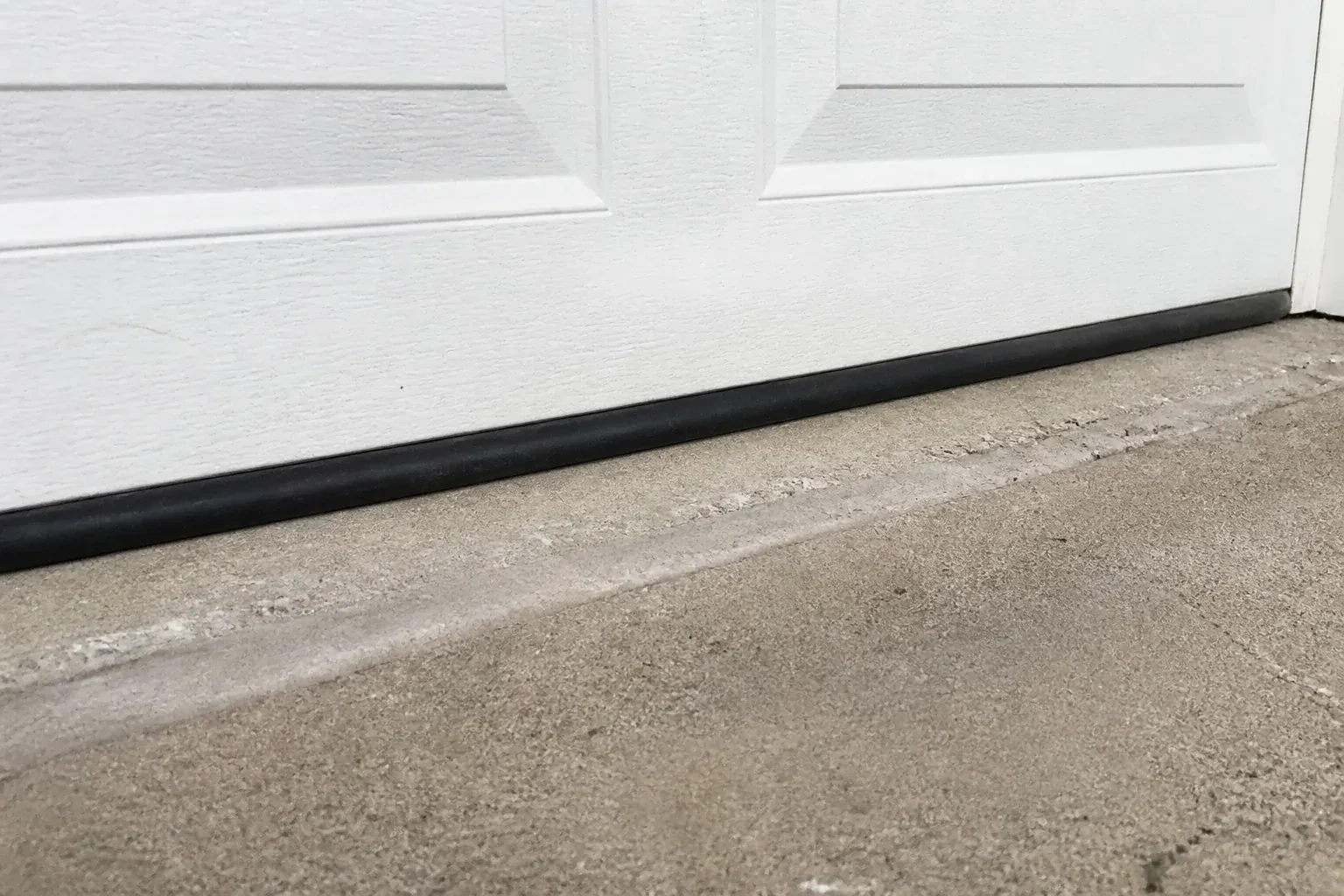
Every mild afternoon the snow melts off the car, runs to the door, and by morning the rubber strip along the bottom is frozen to the concrete. Last week the opener lifted the door and left half the seal on the floor.
The new door went in last year and looks perfect, but the old wooden stop and its tired seal were left in place. Along the top there is a gap you could slide a finger into, and the cold pours through it.
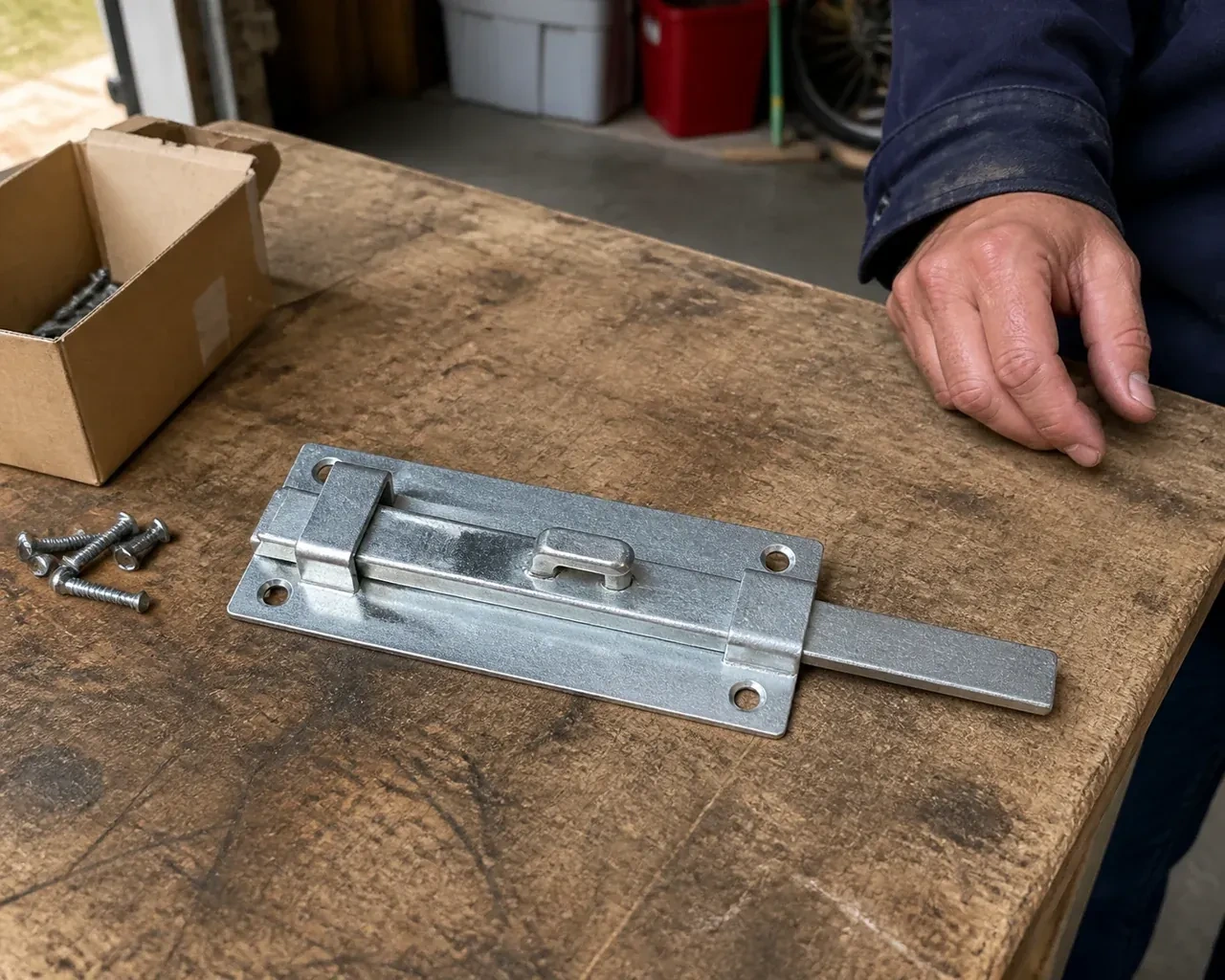
Someone slid the inside lock across before bed, and in the morning someone else pressed the remote. The opener groaned, the door jumped and shuddered, and now the lock bar is bent, the section is creased and the door hangs crooked at the top.
Backing out this morning, the mirror caught the track beside the door. Now there is a crease in the steel at about knee height, and the door stops with a bang every time a roller reaches it.
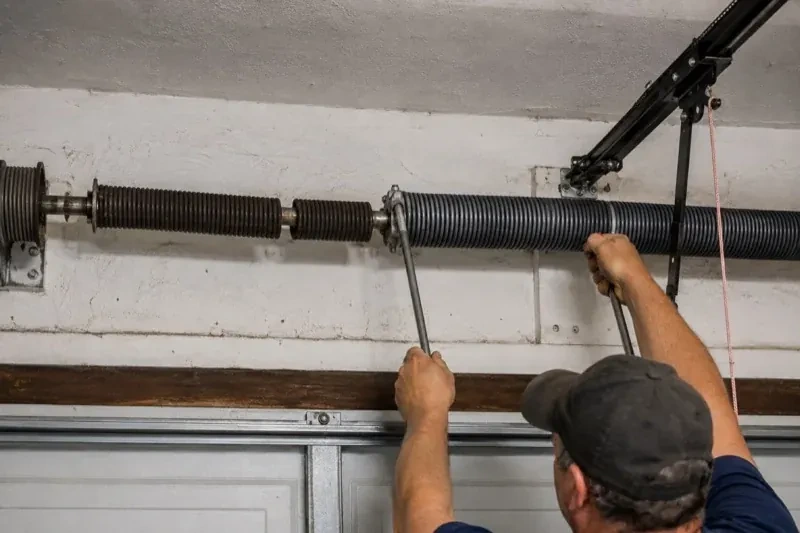
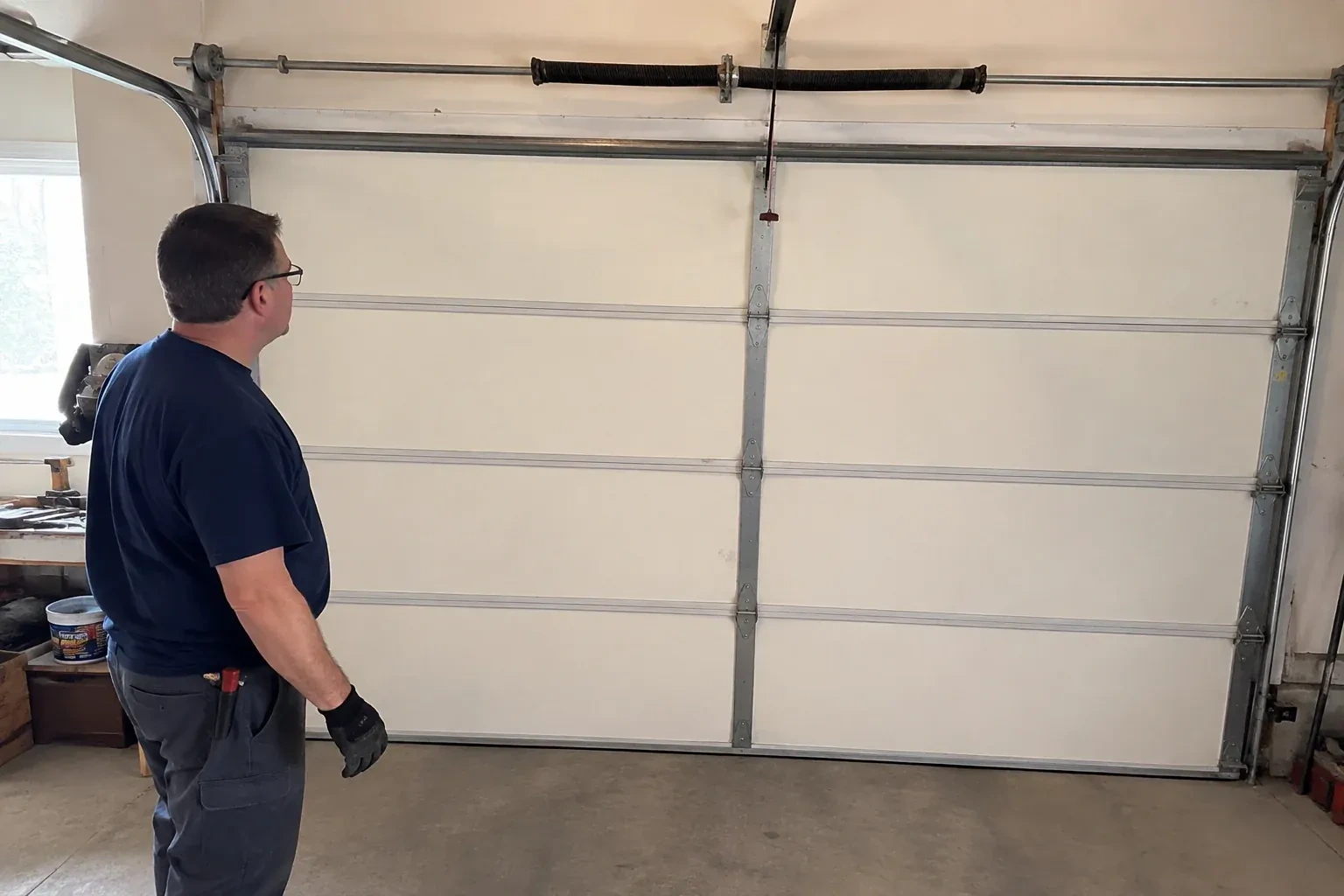
Looking up at the coil above the door, you can see a clean split with a gap of several centimetres between the two halves. The rest of the spring looks fine, but the door has become almost impossible to move by hand.
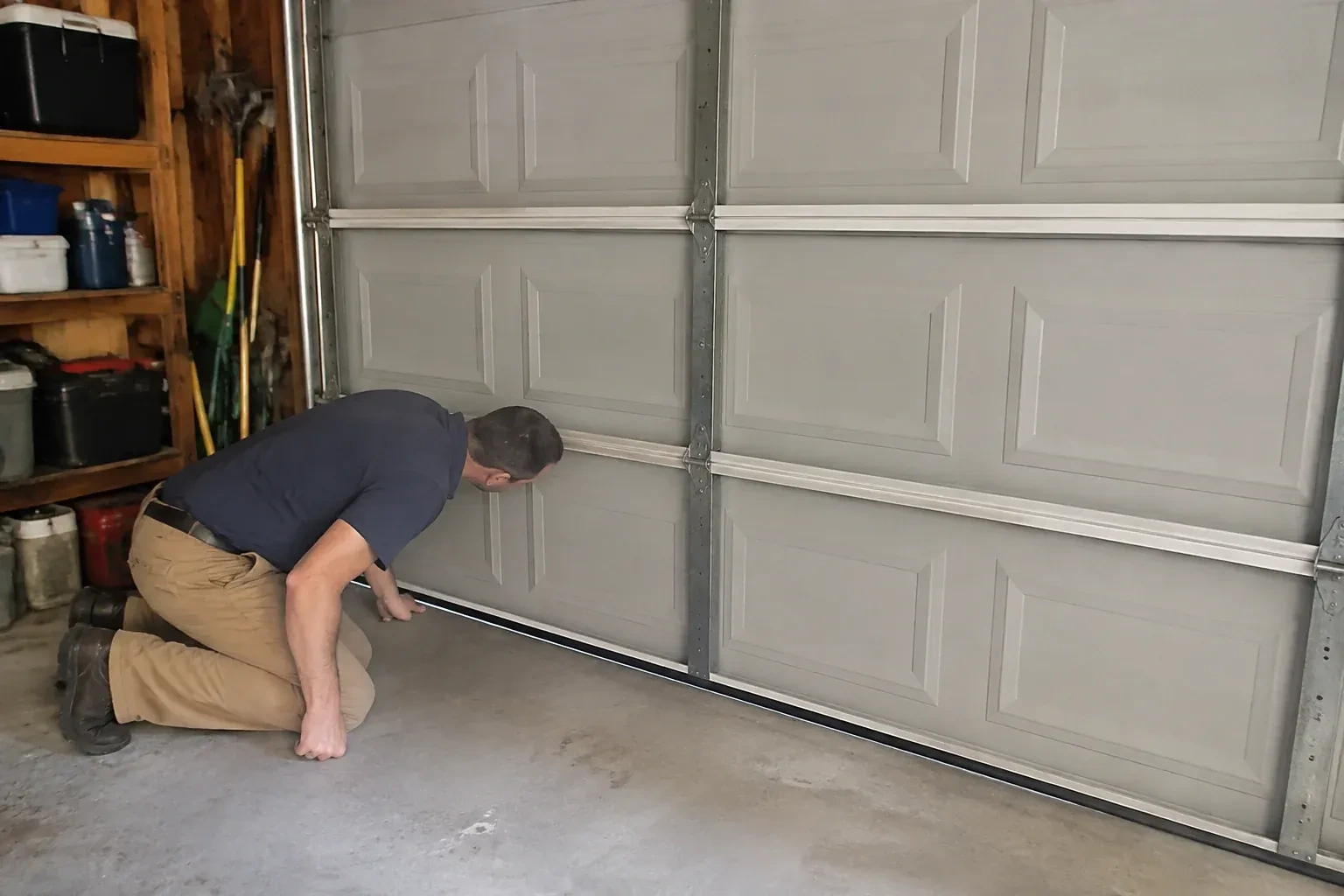
With the door closed, daylight shows under one bottom corner and the seal is squashed flat at the other. As it rises, the left side leads by an inch or two, and the top section twists slightly as it turns into the horizontal track.
It is minus twenty in the detached garage and the door climbs in jerks, the belt stiff as a board. By the afternoon, when the sun has been on the door, it runs almost normally again.
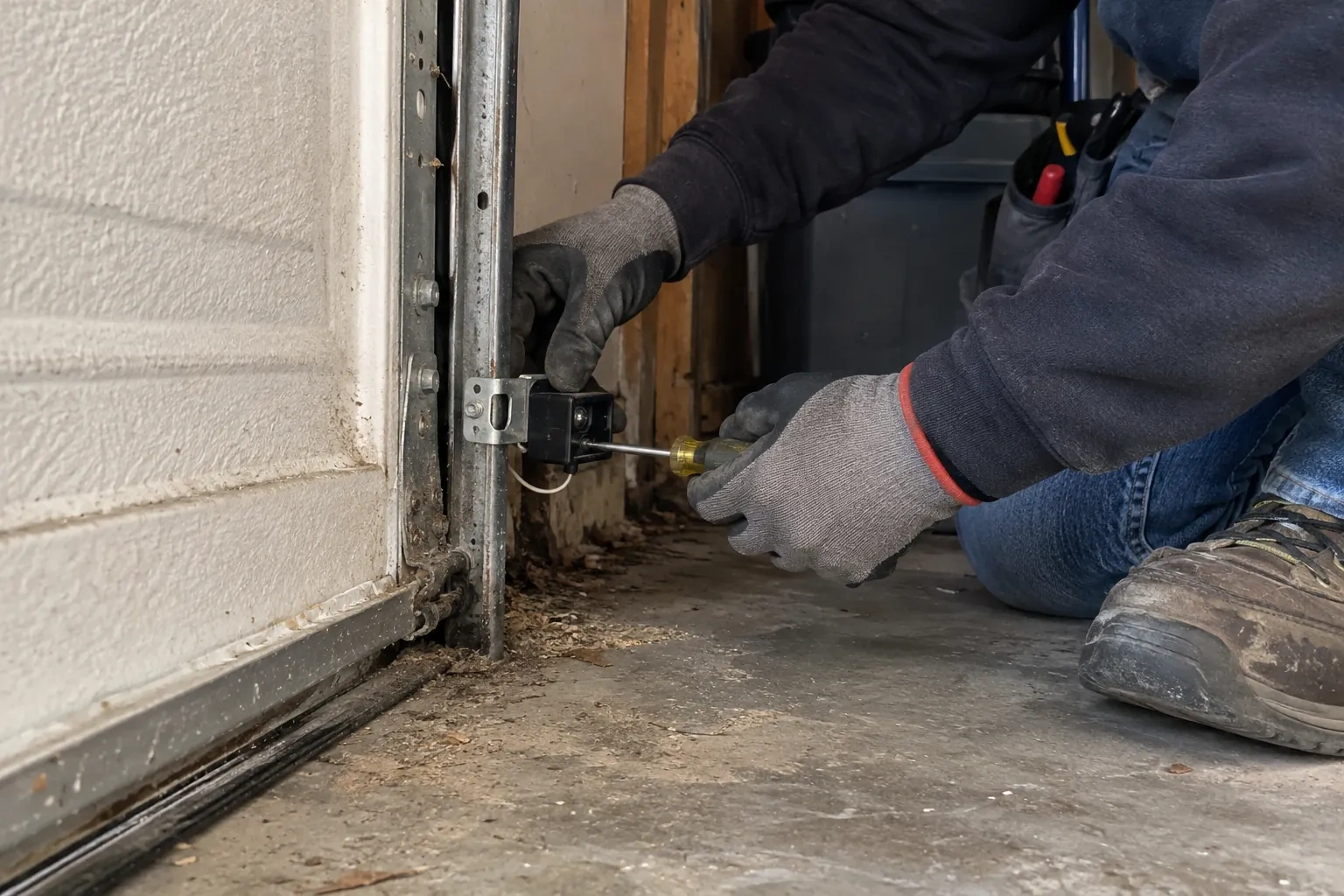
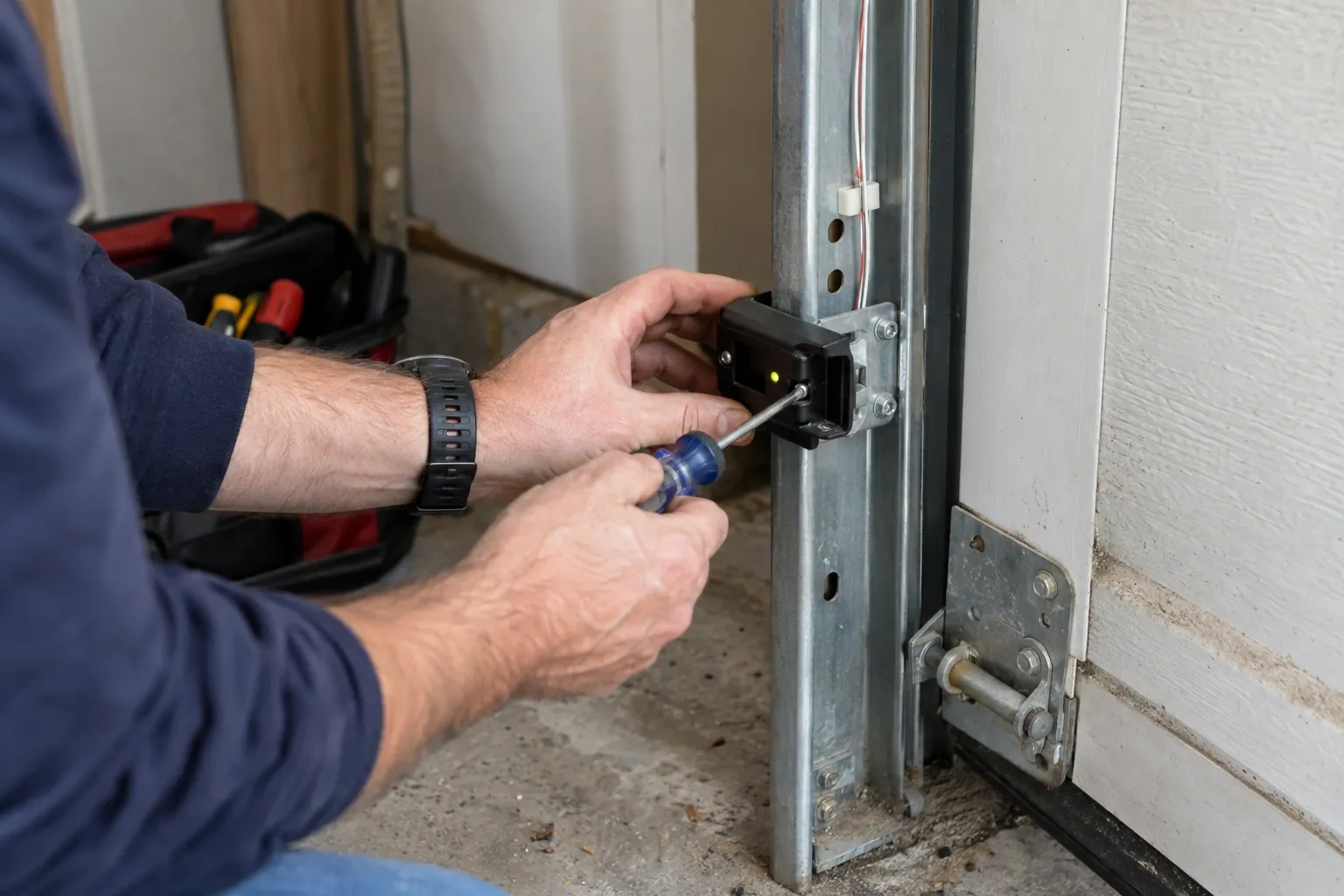
The small light on one of the sensors near the floor has gone dark, or it flickers when someone walks past the track. The other one glows steadily. The door refuses to close from the car.
A heated garage feels cold beside its ageing door each winter. You are considering insulated glazing, improved seals and a frame option suited to the room rather than choosing on appearance alone.
Yes, plainly and at the door. A slack or frayed cable, a gap in a spring coil, a door hanging crooked, a bracket pulling out of the framing or an opener that fails the reversal test are the kinds of findings that put an item in the stop-use group. When that happens you see the reason yourself, the door is left resting in a safe spot with the opener unhooked, and the fix is written up and quoted so it can be booked.
Is this something I can do myself?
Many homeowners do, and a technician's value lies in the parts that go wrong: identifying the exact profile so the seal seats, freeing a strip that has fused into its channel, spotting a retainer or door-level problem behind the gap, and resetting the opener's limit and force so the door lands gently and still reverses on an obstruction. If you would rather have it measured, fitted and tested in one go, that is what the visit is for.
How can I tell the side and top seal needs replacing?
Close the door, turn off the garage lights and look along the edges for daylight. Then press the fin with a thumb: it should be soft and spring back. Hardness, cracks, pieces missing, a strip hanging loose, snow or leaves inside along the edge, or a fin that has folded under and torn are all signs. A rubbing squeal as the door moves is another.
Can the garage handle be keyed to my house key?
Often, yes. The cylinder in a T-handle is a small pin-tumbler lock, and if it shares a keyway with your house locks it can be pinned to the same combination. Where the keyways differ, a compatible cylinder can usually be fitted to the handle so the match is possible. Bring a house key to the visit and the technician will tell you on the spot.
Does a heavy insulated door need heavier track?
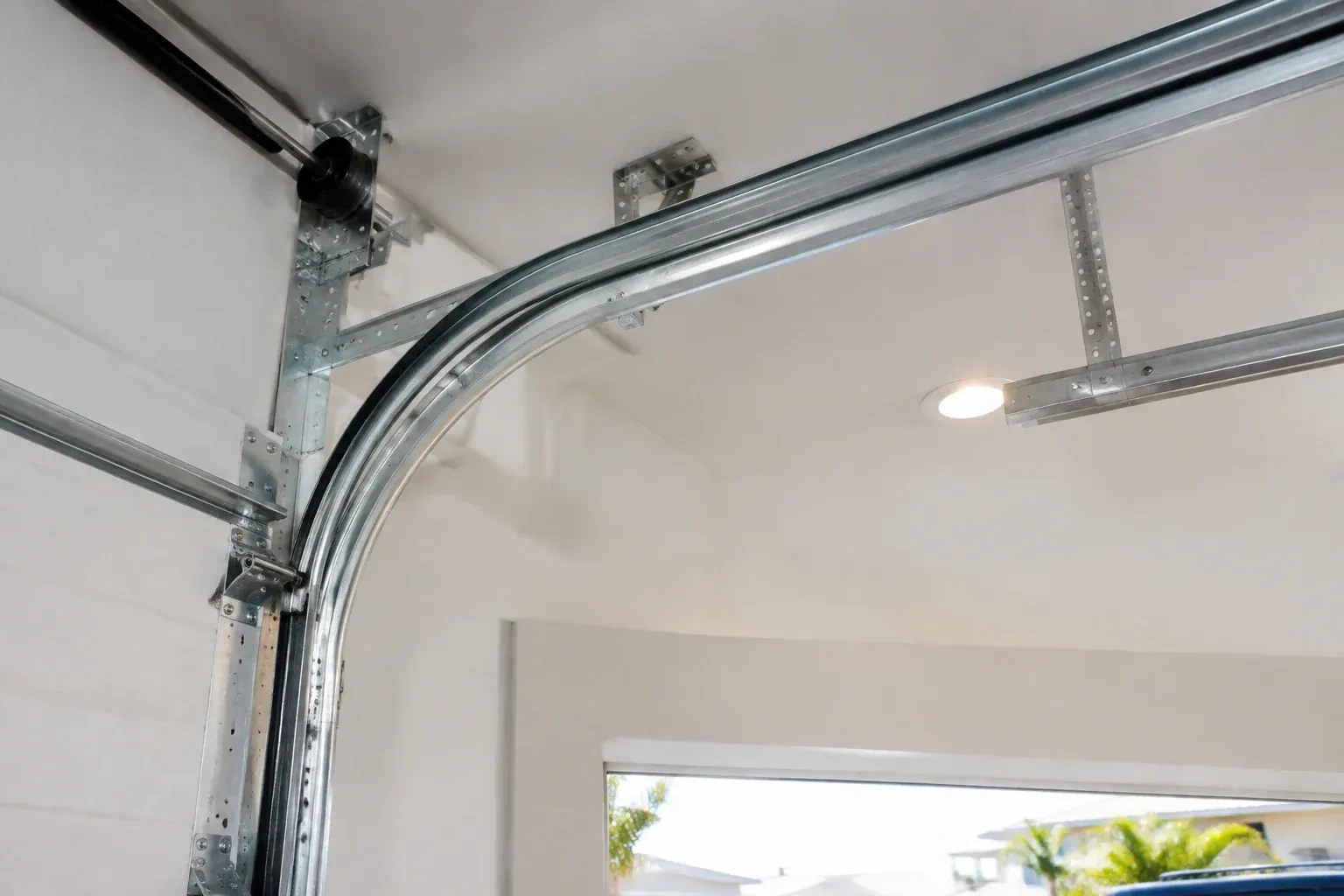
Usually the standard two-inch track handles a residential insulated door well, provided the gauge matches what the door maker specified and the brackets and hangers are properly fixed. Very heavy or oversized doors, and some carriage-style wood doors, are set up on three-inch track or on heavier-gauge two-inch. If a heavier door was hung on the light track from an earlier door, flexing and spreading follow, and the technician will say so.
What should I do before the technician arrives?
Keep the door closed and leave it alone, move any vehicle you can reach out of the way or at least clear the space in front of the door inside the garage, and make sure there is room for a ladder beneath the shaft. Note whether there is one spring or two and whether a cable is loose. A photo of the spring area, the drums and the opener helps the technician bring the right parts.
Will I need new springs, or just an adjustment?
The inspection decides, and looks past appearance alone. A spring can look sound, with tight, evenly spaced coils, no rust pitting and no gap, and still be the wrong specification for the door or nearing the end of its service life. The technician checks the spring's specification against the door's weight and history: a spring that checks out is wound and left in service, while one that is undersized, stretched, corroded or close to its cycle life is better replaced. Either path ends in a balanced door.
The motor runs but the door stays still. What has happened?
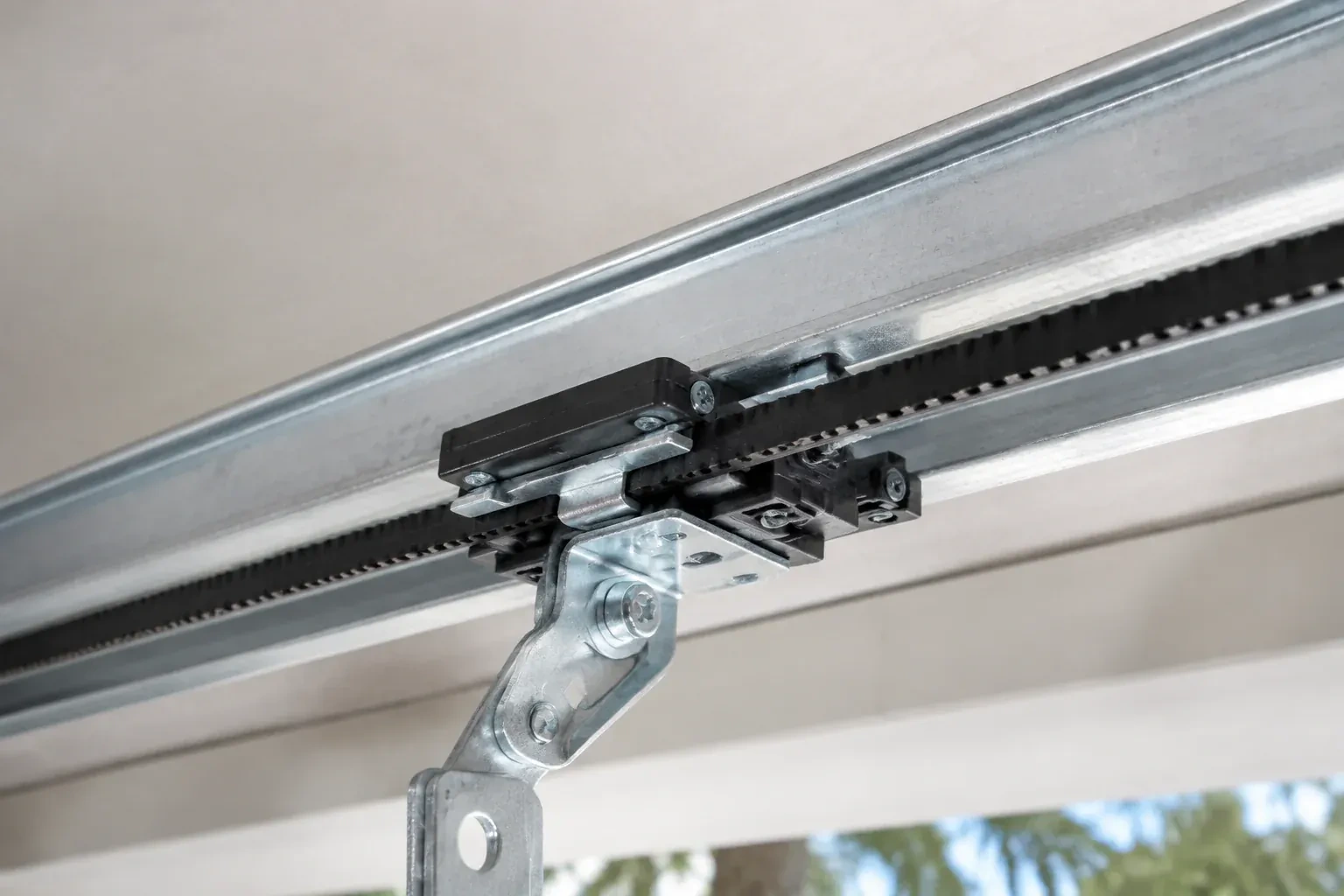
Something between the motor and the door has let go. On a belt drive the usual suspects are a broken clip where the belt joins the trolley, a belt that has jumped off the sprocket or idler pulley, a trolley that failed to re-engage after the red cord was pulled, or a stripped drive gear inside the motor head, which leaves plastic shavings on the housing. Each is a specific repair.
The door closes if I hold the wall button. Is that a fix?
It is a built-in stopgap, not a repair. When the sensor circuit is not satisfied, many openers allow a close from the wall control only while the button is held, on the idea that a person standing there can see the doorway. Newer units drop that behaviour altogether and simply hold the door open. Either way the door is telling you the beam has failed, and a sensor visit puts remote closing back.
What maintenance does a full-view door need?
Routine care combines gentle surface cleaning with observation of the moving system. Watch complete cycles, keep sensor paths clear, inspect seals and glazing gaskets, and note new rubbing or uneven movement. Use the operator manual for reversal checks. Springs, cables, drums and bottom brackets store substantial tension, so trained personnel handle adjustments involving those components.
Request a visit
The visit in Long Point starts with the door secured and a walk around every part of it. The technician then shows you the worn part, the sound one beside it and the choice between them. Nothing is replaced for the sake of it, and nothing that is close to failing is quietly left out.