Repairs · Long Point
Garage Door Safety Inspection in Long Point
Your toddler has discovered the wall button.
In plain words
What you get back is a report with four kinds of entry. Items that are in good order, so you know what is fine. Maintenance items, such as lubrication or a loose hinge bolt, which are often handled during the same visit if you wish. Repairs to plan, such as a worn roller set or a cable showing rust at the bottom loop, quoted separately. And, rarely, a stop-use item, where the door should stay put until a specific part is corrected. That last category is the reason the inspection exists, and the report says plainly which items fall into it.
How the visit goesYour toddler has discovered the wall button. You want to know, from someone who checks these things for a living, that the door will stop and reverse if a small person is under it.
Garage Door Safety Inspection
How the visit goes
A slow walk along the closed door
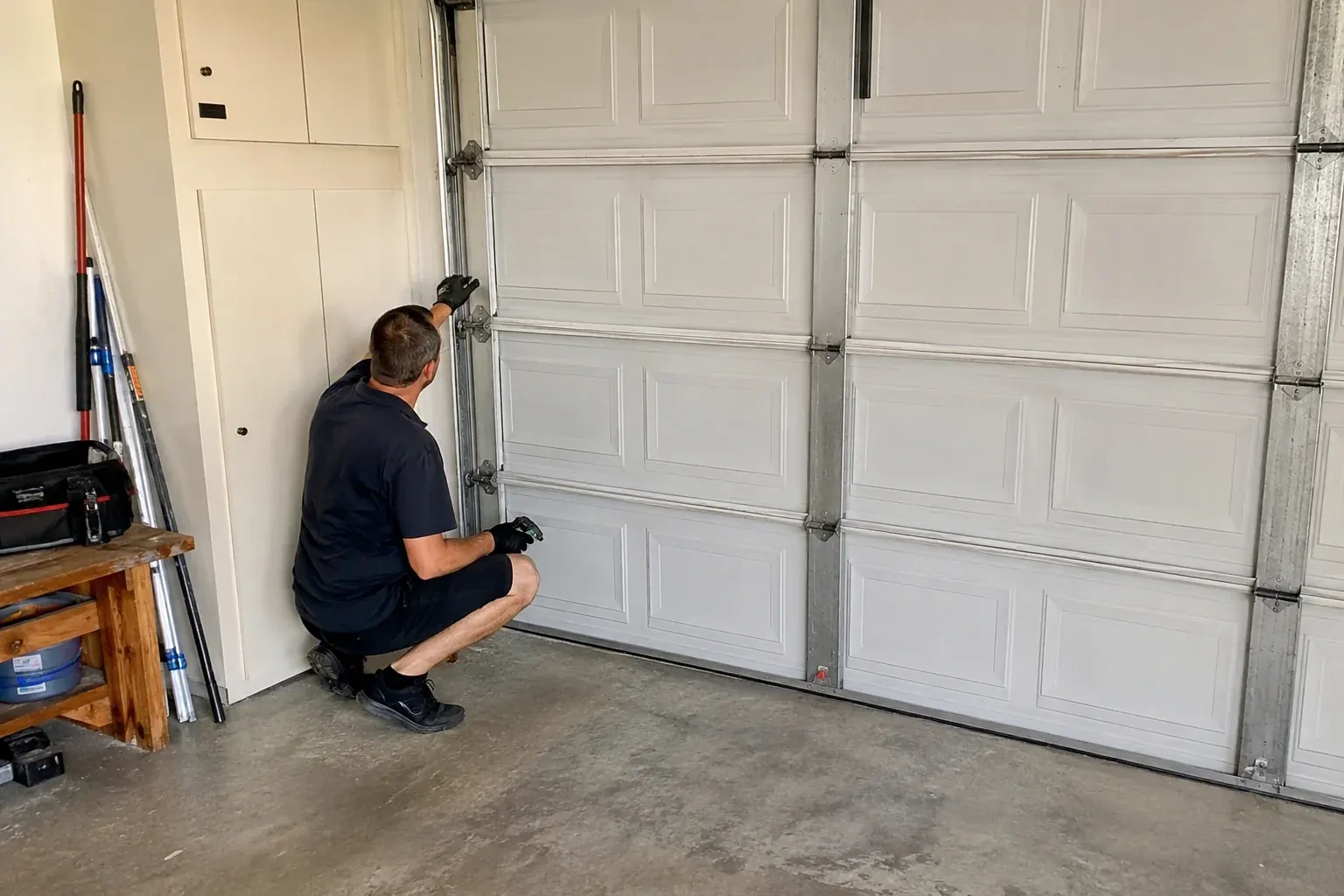
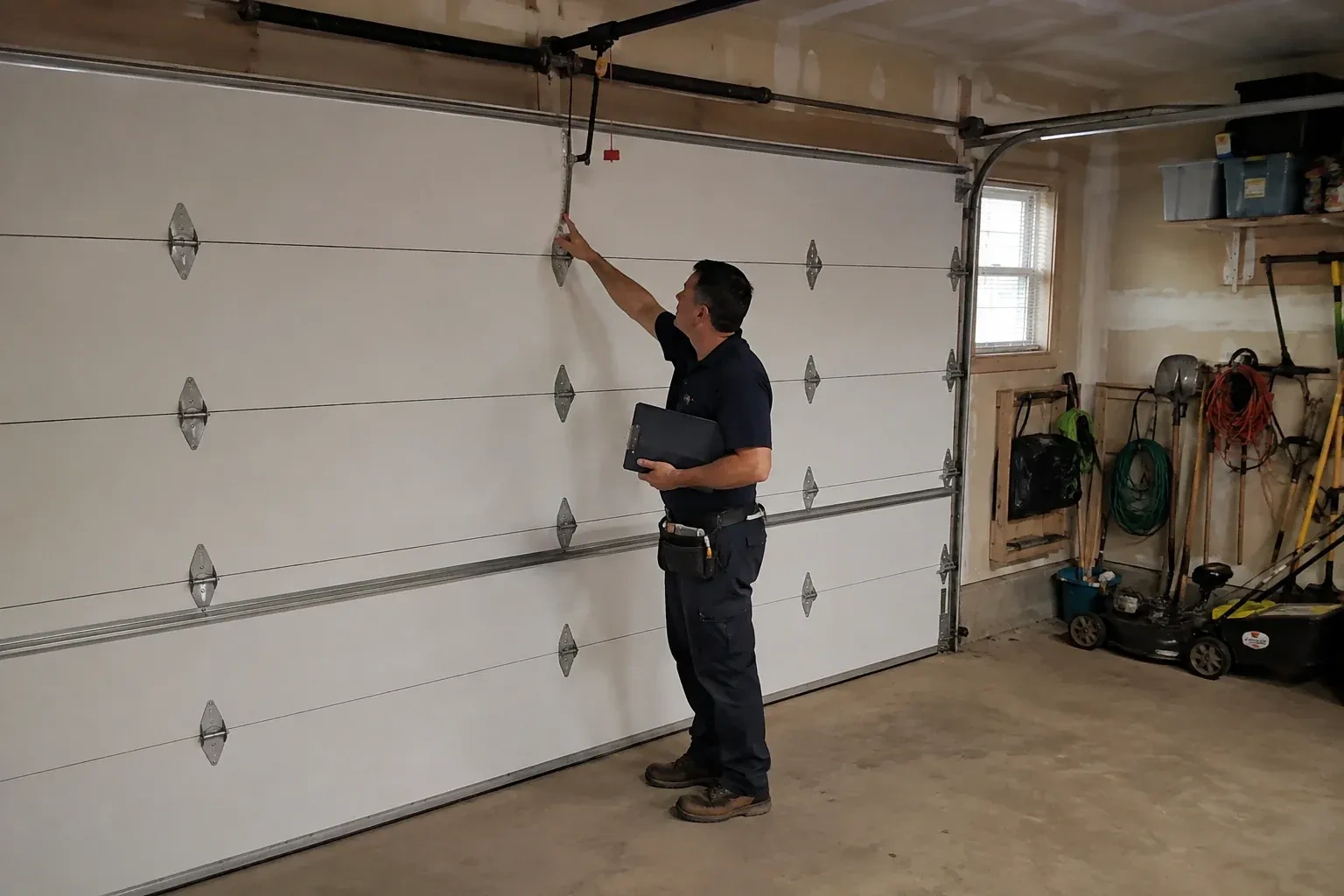
With the door down and the light on, the technician looks at every section from the top down: dents, bowing, cracked stiles, a strut that has come loose. Each hinge is checked for a split leaf or a missing bolt, each roller for a cracked wheel, a bent stem or one that slides instead of turns. The tracks are sighted for plumb and even spacing from the door, and each track bracket and lag into the jamb is checked for tightness. This is unhurried work with a light and a mirror, and it finds the small things, a hinge working loose, a roller stem walking out, that become the big noise next season.
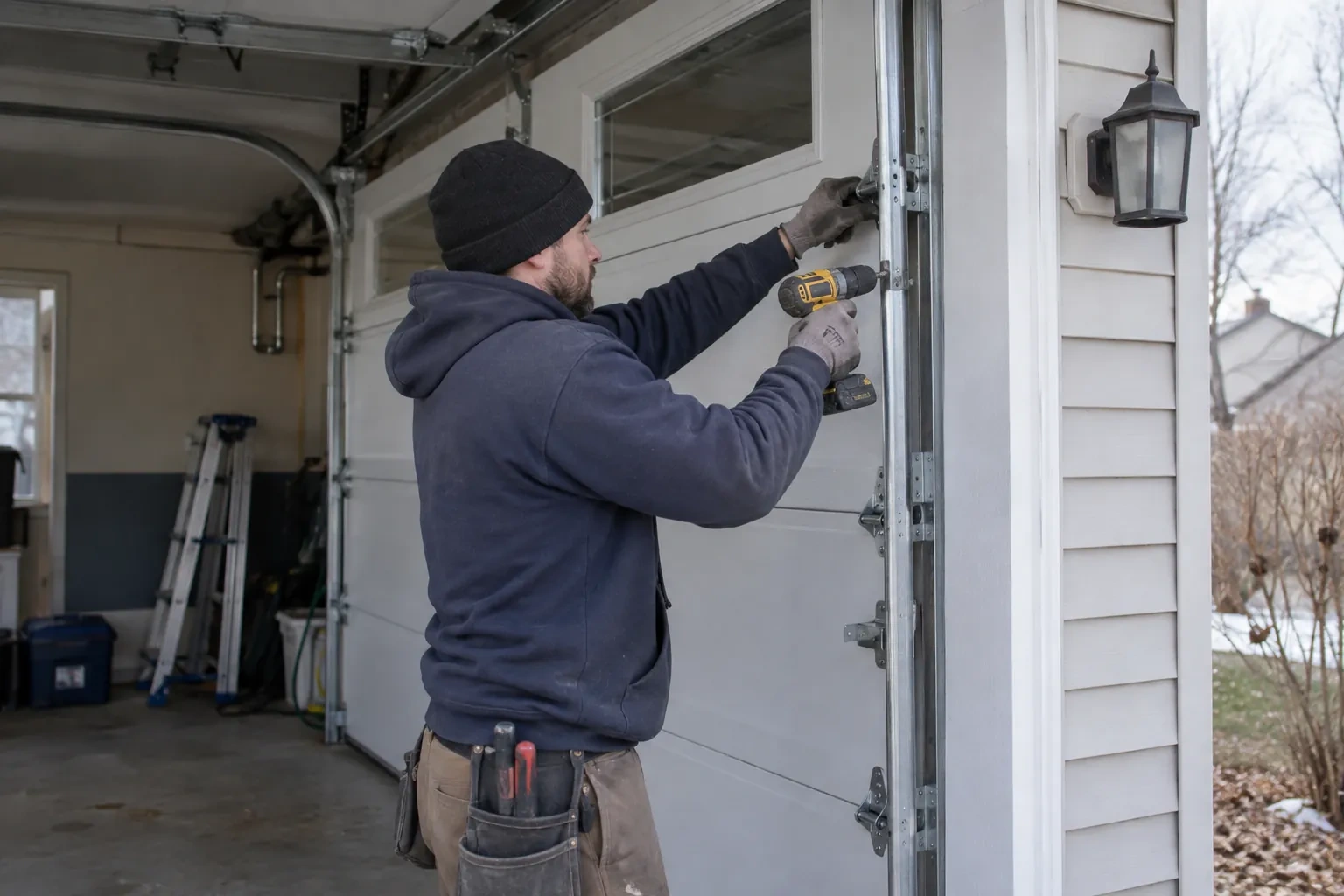
Fasteners, tracks and hinges with tools in hand
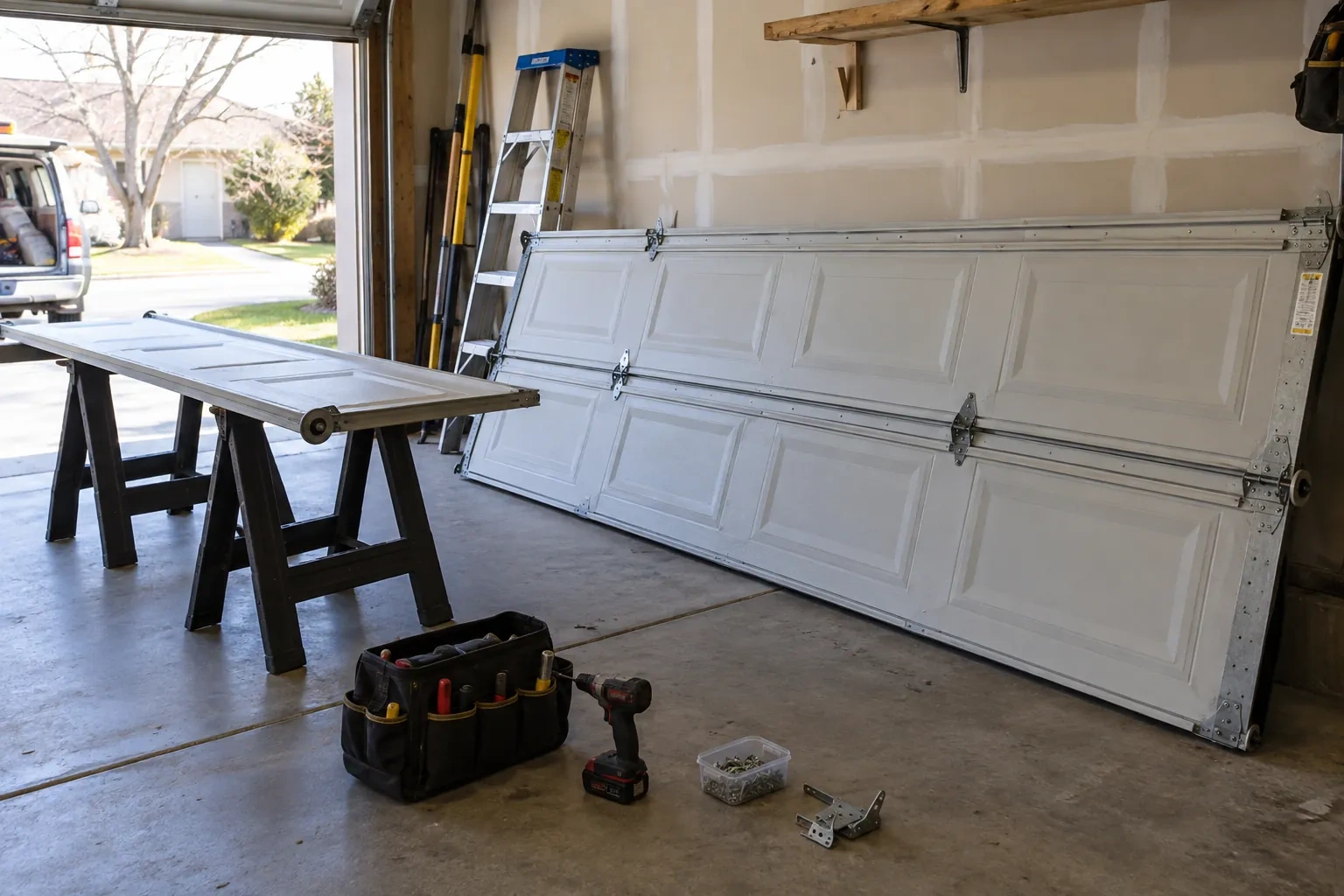
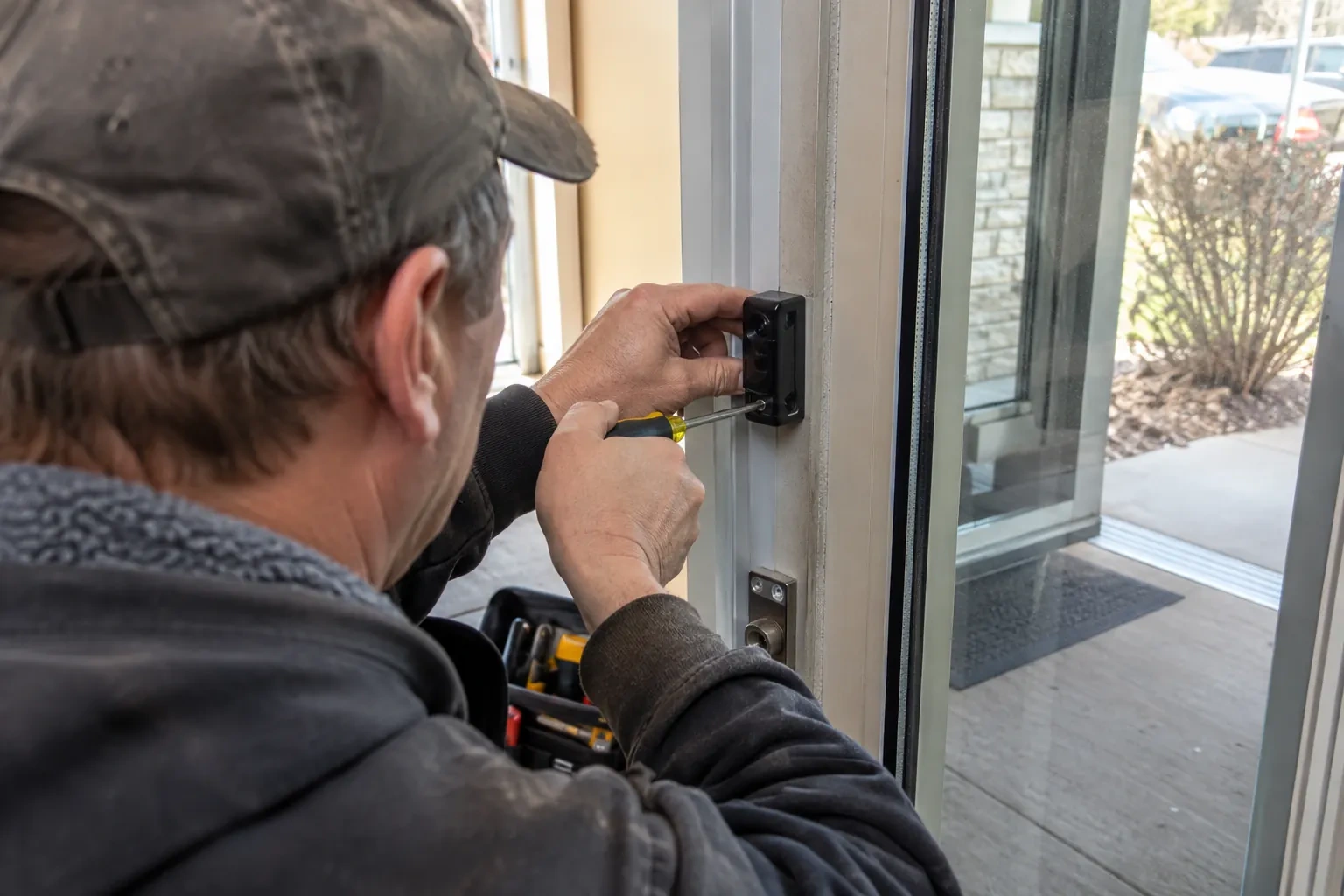
Once the door has been tested, the technician goes back along it with a socket set and a level. Every hinge bolt and track bracket is checked for tightness, and any that has backed out is snugged; the bottom roller brackets are left to the trained, system-specific handling their lift-cable tension calls for, not a routine snug. The vertical tracks are checked for plumb and the horizontals for level, with the door-to-track gap measured and any pinch or flare recorded. Hinges are numbered from the bottom up and a hinge in the wrong position, often left from an earlier repair, is noted. A stripped fastener or a bent bracket becomes a repair item rather than a tightening.
Signs that call for a visit before the next scheduled one
A few things are worth a call the day you notice them: a door that hangs crooked or stops part-way; a cable that looks slack, frayed or wrapped where it should not be; a gap in a torsion spring coil; a door that suddenly feels heavy on the manual release; an opener that reverses for no reason after the photo eyes are wiped; or a deep dent, one from an impact, or one dragging in the track. In each case, leave the door as it is, keep people and vehicles clear, and use another door until it has been looked at. A small cosmetic dent that leaves the door running smoothly can wait for the planned appointment.
Garage Door Safety Inspection
In the van
Remote and keypad batteries
Work light and inspection mirror
Flat 2x4 test board
Silicone garage-door lubricant
Camera for findings
Garage Door Safety Inspection
What affects the quote
Distance to the property
Travel is part of every visit. A property across town and one at the end of a rural road involve different driving time, and the quote reflects the trip.
Small parts replaced on the spot
A missing hinge bolt, a stripped track lag or a remote battery can be replaced from the van. Parts fitted this way are listed individually rather than folded into the inspection.
Opener type and age
A current opener with photo eyes, a keypad and several remotes has more devices to test than an older unit with contact reversal alone, and the test procedures differ by model.
What to have ready
- How many doors need inspecting, and are they all at the same address?
- What prompted the call, and when did you first notice it?
- Is the door a single or a double, and roughly how tall is it?
Garage Door Safety Inspection: questions
QuestionsWhat are photo eyes, and how are they tested?
They are the two small sensors low on each side of the opening, one sending a beam and the other receiving it. The technician confirms both indicator lights hold steady, that the units sit at the height the opener maker specifies, and that the lenses are clean and the wiring secure. Then a close cycle is started and something is passed through the beam; the door should reverse. Misalignment or a grimy lens is corrected on the spot.
Will you tell me if the door should not be used?
Yes, plainly and at the door. A slack or frayed cable, a gap in a spring coil, a door hanging crooked, a bracket pulling out of the framing or an opener that fails the reversal test are the kinds of findings that put an item in the stop-use group. When that happens you see the reason yourself, the door is left resting in a safe spot with the opener unhooked, and the fix is written up and quoted so it can be booked.
Is the inspection a repair visit?
It is a look and a record first. Small maintenance items such as lubrication, cleaning and aligning the photo eyes and tightening fasteners can be done on the spot if you wish. Anything involving spring tension, cables, drums, worn rollers or damaged sections is written up with a clear explanation and quoted as its own job, so you decide with the full picture in front of you.
Related services
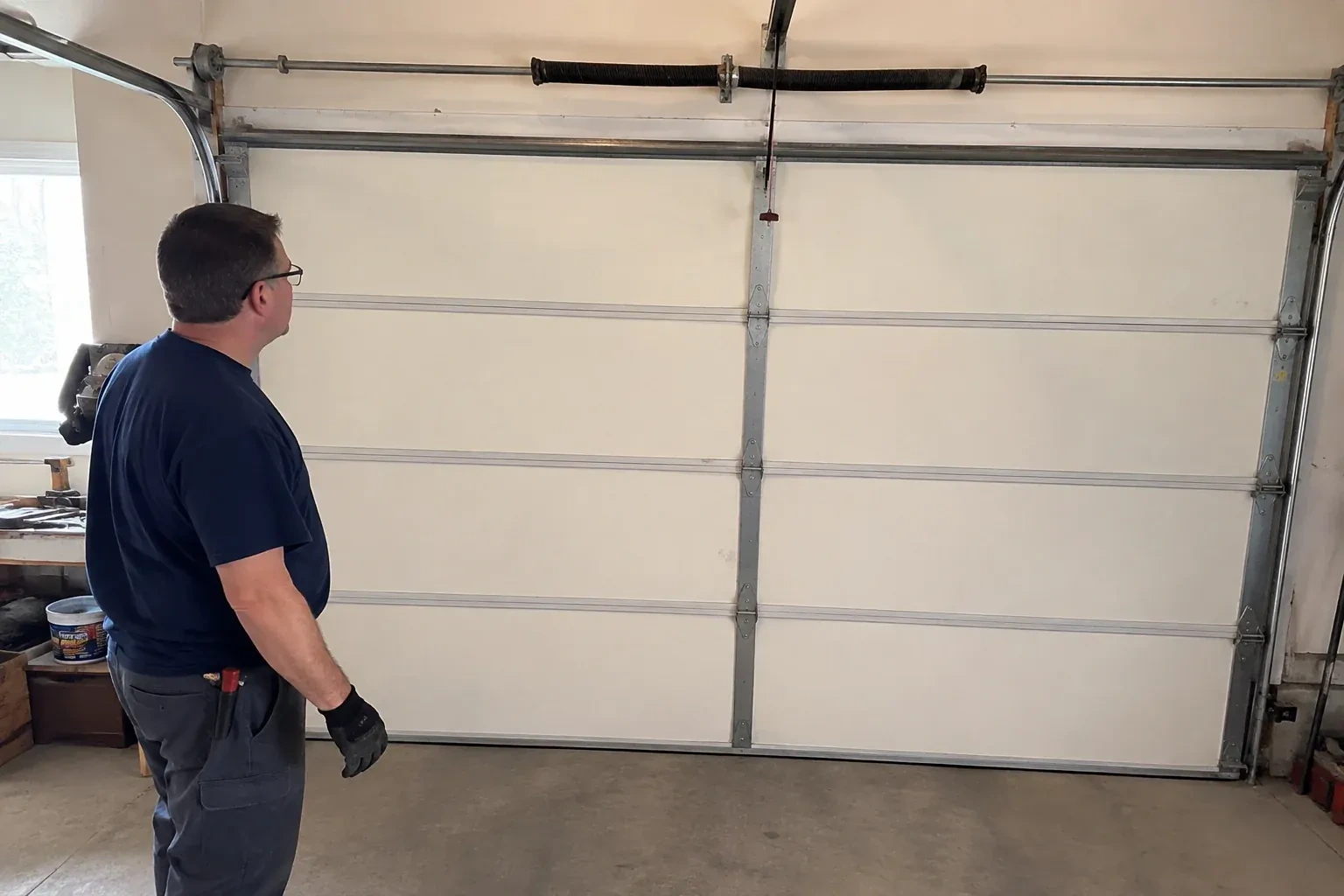
- Off-Track Garage Door ResetThe door came down fine but with a scraping noise, and now the vertical track on one side is bowed away from the wall.
- Garage Door Panel ReplacementYears of slap shots have peppered the lower two sections with dents.
- Garage Door Bottom Seal ReplacementAfter a spring rain there is a puddle inside the door that reaches the tires.