Repairs · Tillsonburg
Garage Door Safety Inspection in Tillsonburg
Your toddler has discovered the wall button.
In plain words
What you get back is a report with four kinds of entry. Items that are in good order, so you know what is fine. Maintenance items, such as lubrication or a loose hinge bolt, which are often handled during the same visit if you wish. Repairs to plan, such as a worn roller set or a cable showing rust at the bottom loop, quoted separately. And, rarely, a stop-use item, where the door should stay put until a specific part is corrected. That last category is the reason the inspection exists, and the report says plainly which items fall into it.
How the visit goesDuring the power outage you pulled the red cord and tried to lift the door by hand. It felt like lifting a piano, and when you let go part-way it sank back toward the floor on its own.
Garage Door Safety Inspection
How the visit goes
Putting a name to the door and the opener
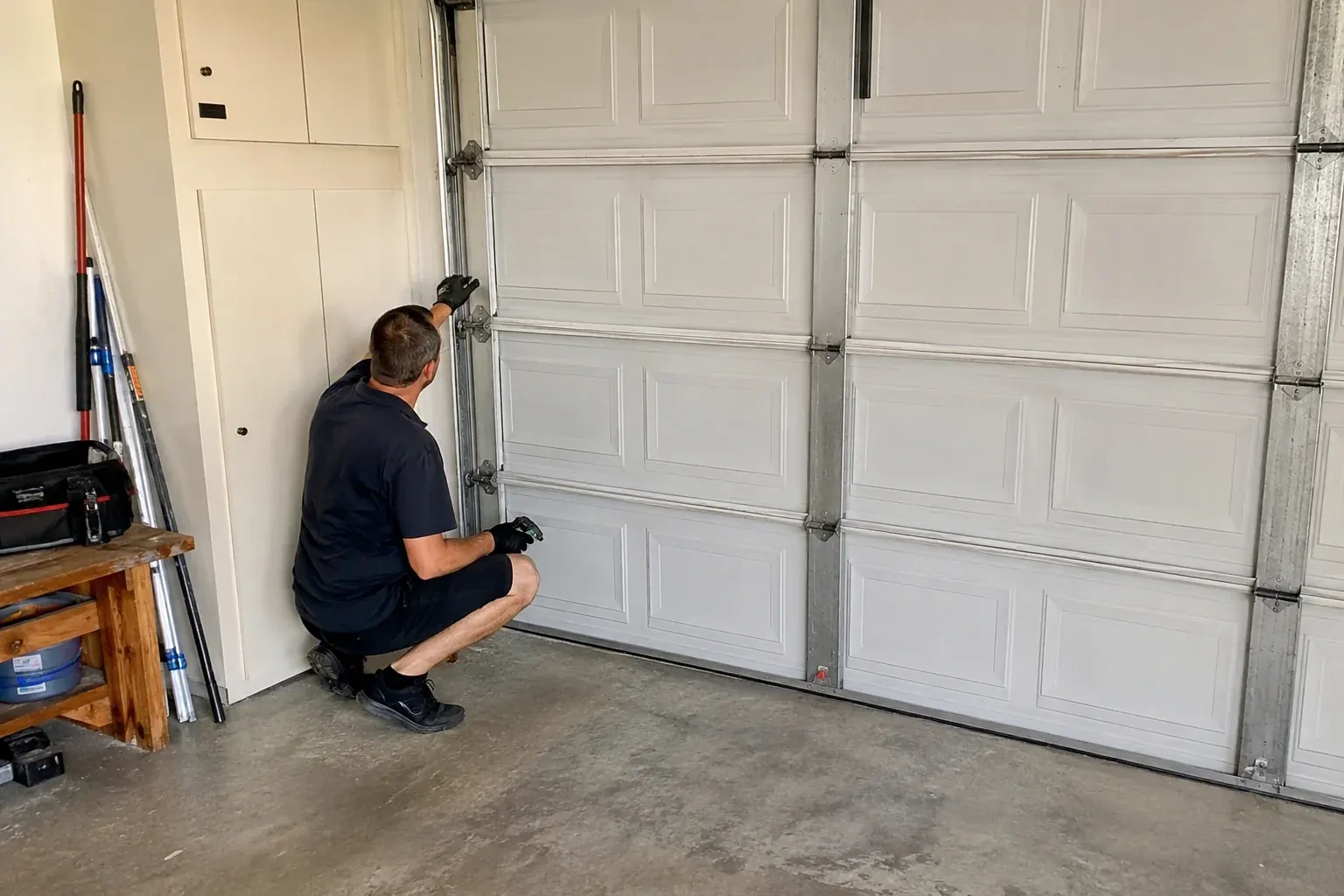
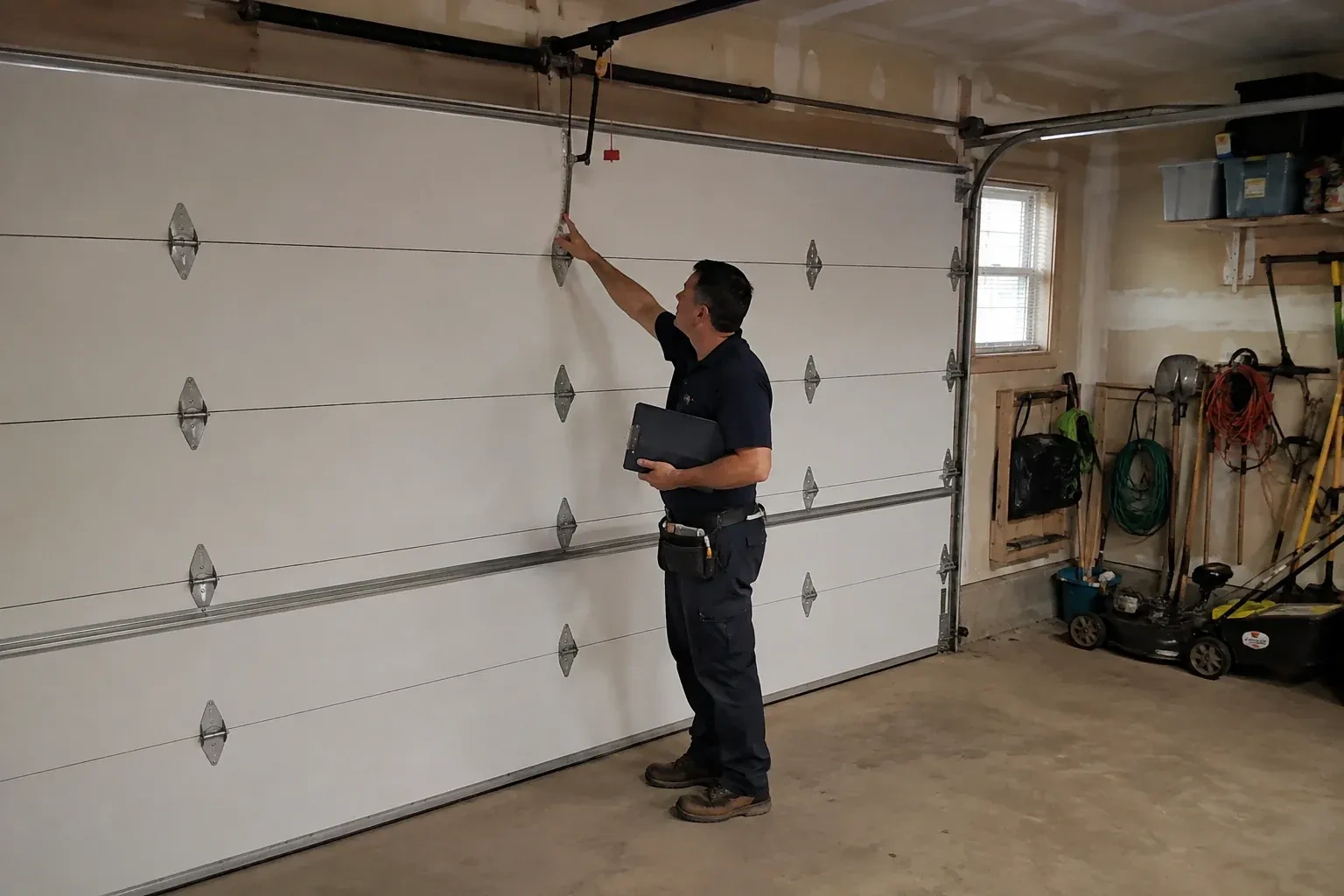
The first thing the technician does is read labels. The door's model tag is usually on the inside of an end stile or the bottom section, and the opener's is on the motor head; between them they tell the technician the door's weight class, the lift hardware it was built with and the exact test procedure the opener maker publishes. That matters because reversal settings, photo-eye mounting heights and force limits differ between models and generations. Writing the model numbers down at the start also means the report is tied to a specific door, so the next person to look at it, years from now, starts from the same page.
Checking the photo eyes
The photo eyes are the pair of small sensors low on each track that watch the opening with an invisible beam. The technician confirms they are mounted at the height the opener maker specifies, aligned so the indicator lights hold steady, clean of grime and frost, and wired securely. Then, with the door closing, the beam is broken with an object; the door should reverse before it reaches anything. A sensor that has been knocked out of line, wired loosely or blinded by low sun explains a great many doors that refuse to close on some afternoons, and the fix is often alignment and a wipe of the lens, done on the spot.
Signs that call for a visit before the next scheduled one
A few things are worth a call the day you notice them: a door that hangs crooked or stops part-way; a cable that looks slack, frayed or wrapped where it should not be; a gap in a torsion spring coil; a door that suddenly feels heavy on the manual release; an opener that reverses for no reason after the photo eyes are wiped; or a deep dent, one from an impact, or one dragging in the track. In each case, leave the door as it is, keep people and vehicles clear, and use another door until it has been looked at. A small cosmetic dent that leaves the door running smoothly can wait for the planned appointment.
Garage Door Safety Inspection
In the van
Remote and keypad batteries
Work light and inspection mirror
Flat 2x4 test board
Silicone garage-door lubricant
Camera for findings
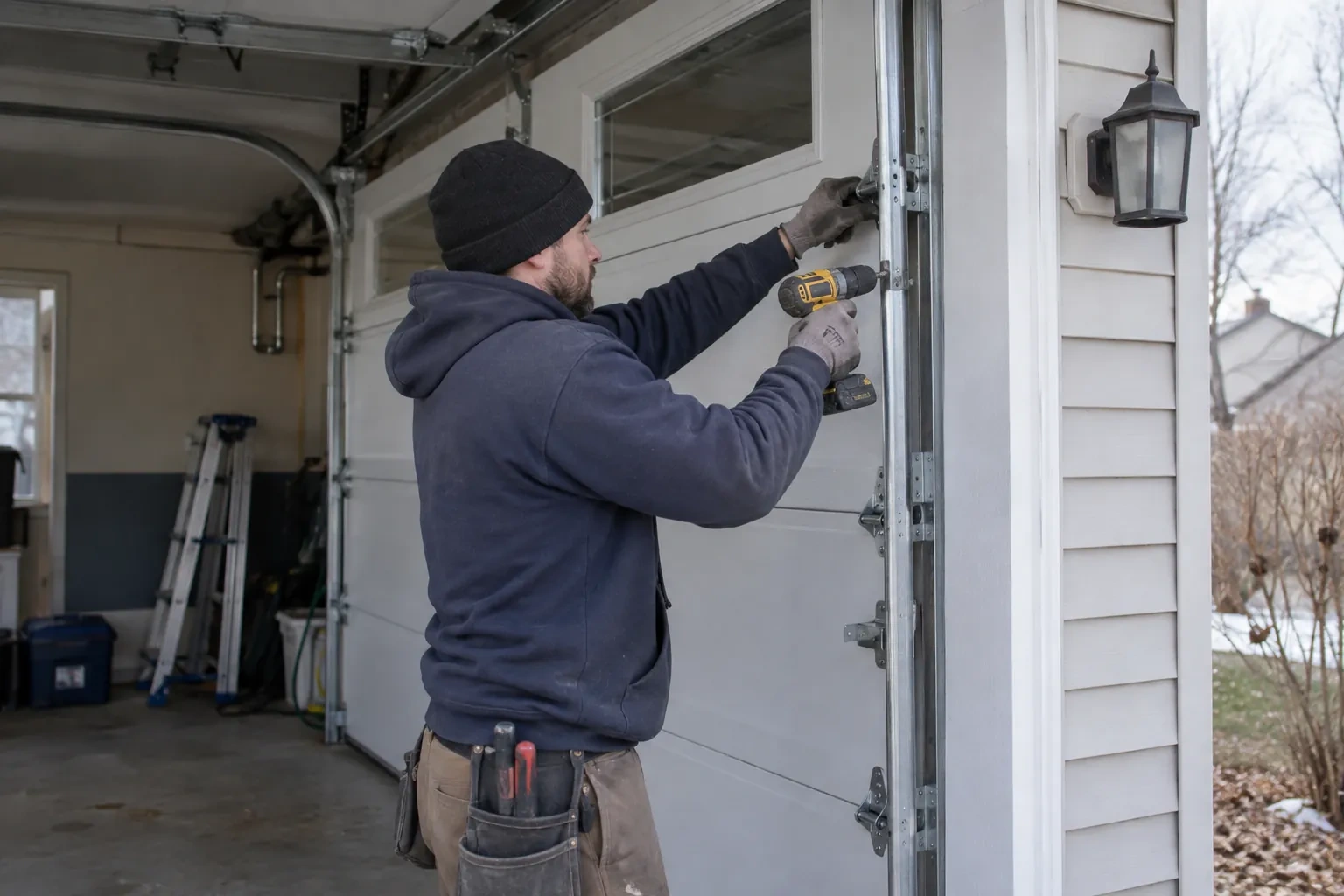
Garage Door Safety Inspection
What affects the quote
How many doors are on the property
Each door and opener gets its own inspection and its own record. Two doors in one visit share the travel, but the checks are done in full on both.
What is stored around the door
Shelving under the spring shaft, bikes along the tracks or a car left inside slow the visual walk. Clearing the area beforehand keeps the inspection to its planned length.
An impact to trace
After a vehicle or object has hit the door, the technician follows the force through the hardware and photographs each point, which is a deeper assessment than a routine check.
What to have ready
- Is the door a single or a double, and roughly how tall is it?
- Does the door sound or move differently going up than coming down?
- How many remotes, keypads and wall buttons operate the door?
Garage Door Safety Inspection: questions
QuestionsWhat are photo eyes, and how are they tested?
They are the two small sensors low on each side of the opening, one sending a beam and the other receiving it. The technician confirms both indicator lights hold steady, that the units sit at the height the opener maker specifies, and that the lenses are clean and the wiring secure. Then a close cycle is started and something is passed through the beam; the door should reverse. Misalignment or a grimy lens is corrected on the spot.
Will you tell me if the door should not be used?
Yes, plainly and at the door. A slack or frayed cable, a gap in a spring coil, a door hanging crooked, a bracket pulling out of the framing or an opener that fails the reversal test are the kinds of findings that put an item in the stop-use group. When that happens you see the reason yourself, the door is left resting in a safe spot with the opener unhooked, and the fix is written up and quoted so it can be booked.
Is the inspection a repair visit?
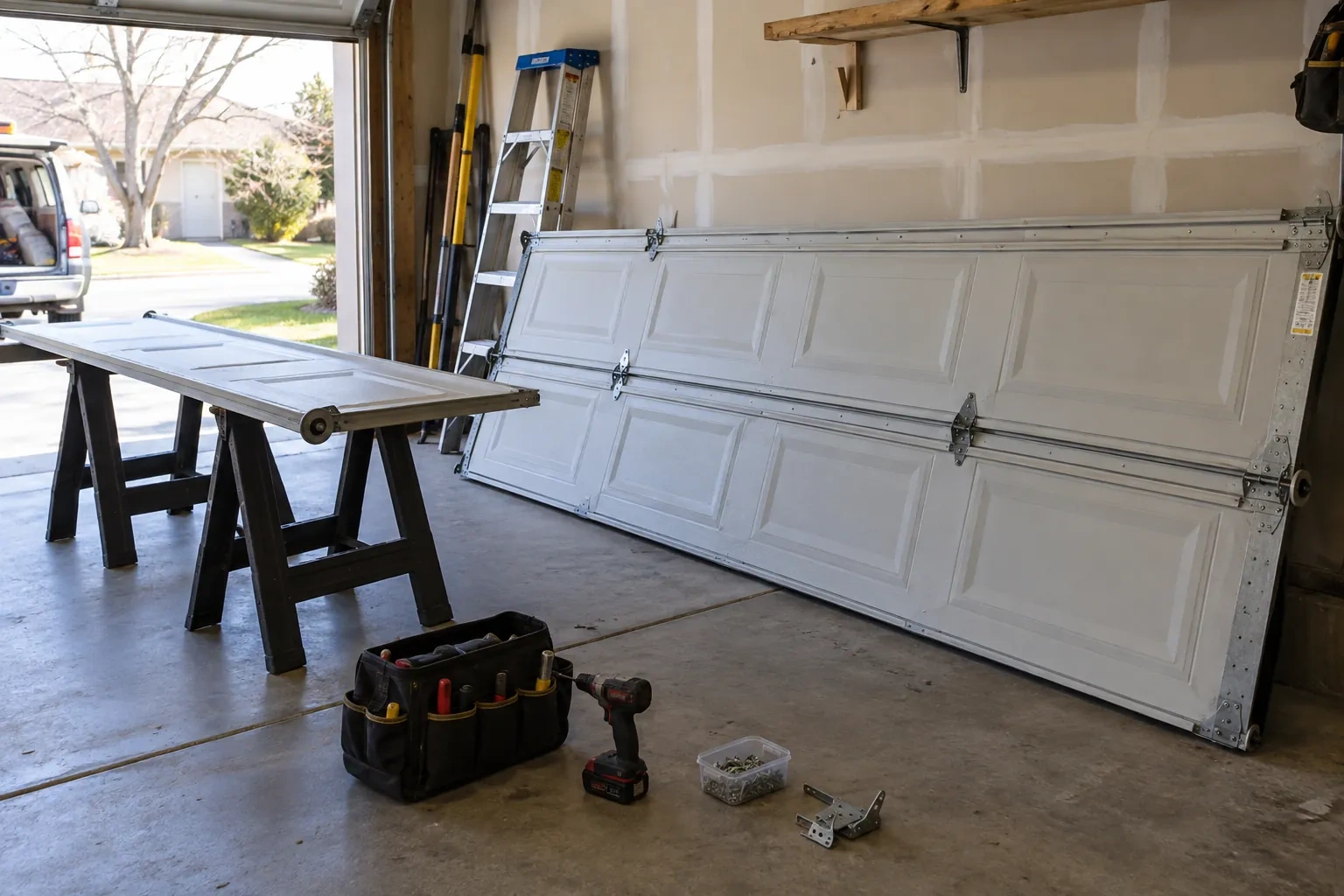
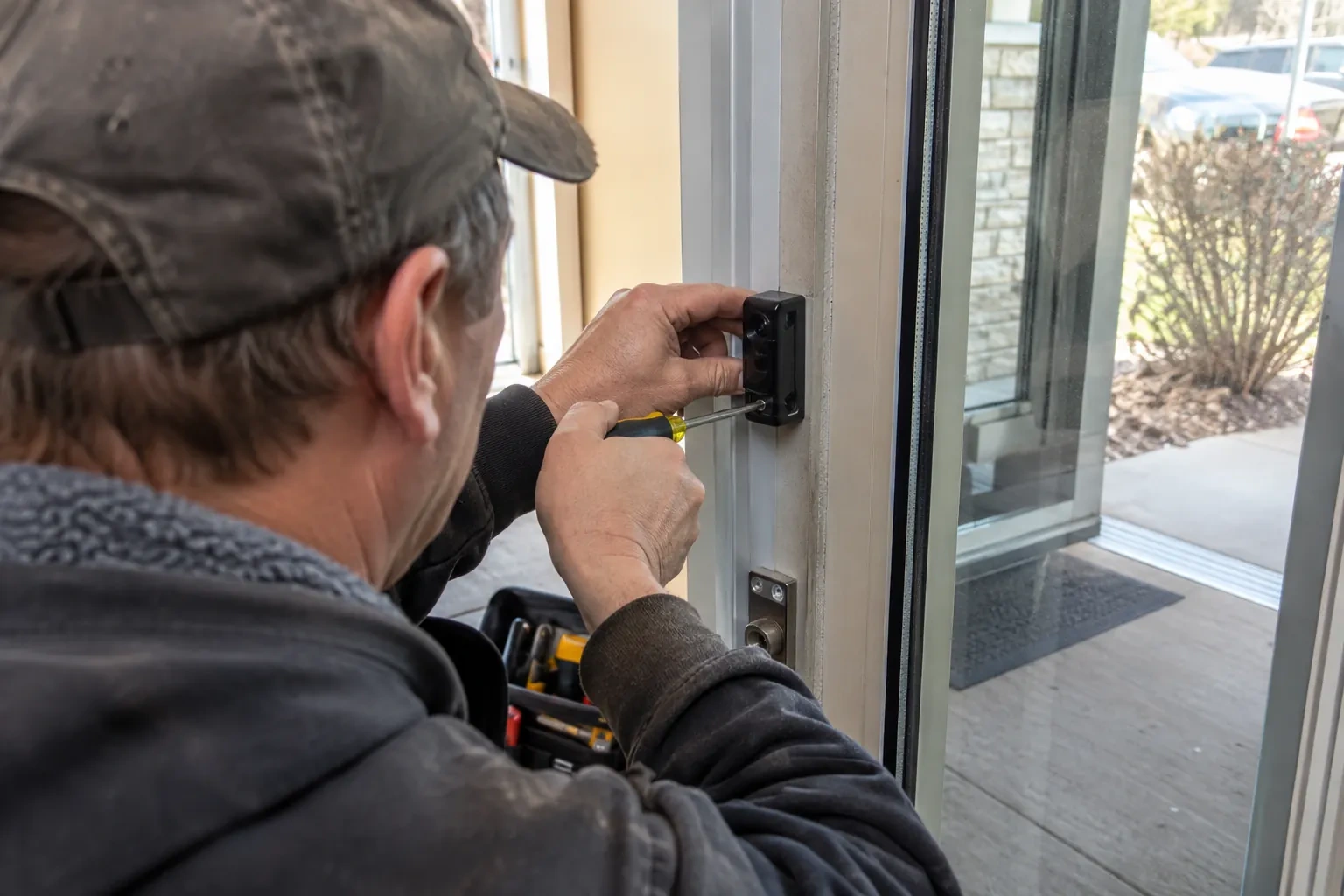
It is a look and a record first. Small maintenance items such as lubrication, cleaning and aligning the photo eyes and tightening fasteners can be done on the spot if you wish. Anything involving spring tension, cables, drums, worn rollers or damaged sections is written up with a clear explanation and quoted as its own job, so you decide with the full picture in front of you.
Related services
- Off-Track Garage Door ResetThe door came down fine but with a scraping noise, and now the vertical track on one side is bowed away from the wall.
- Garage Door Panel ReplacementYears of slap shots have peppered the lower two sections with dents.
- Garage Door Bottom Seal ReplacementAfter a spring rain there is a puddle inside the door that reaches the tires.