Repairs · Walsingham
Garage Door Safety Inspection in Walsingham
Your toddler has discovered the wall button.
In plain words
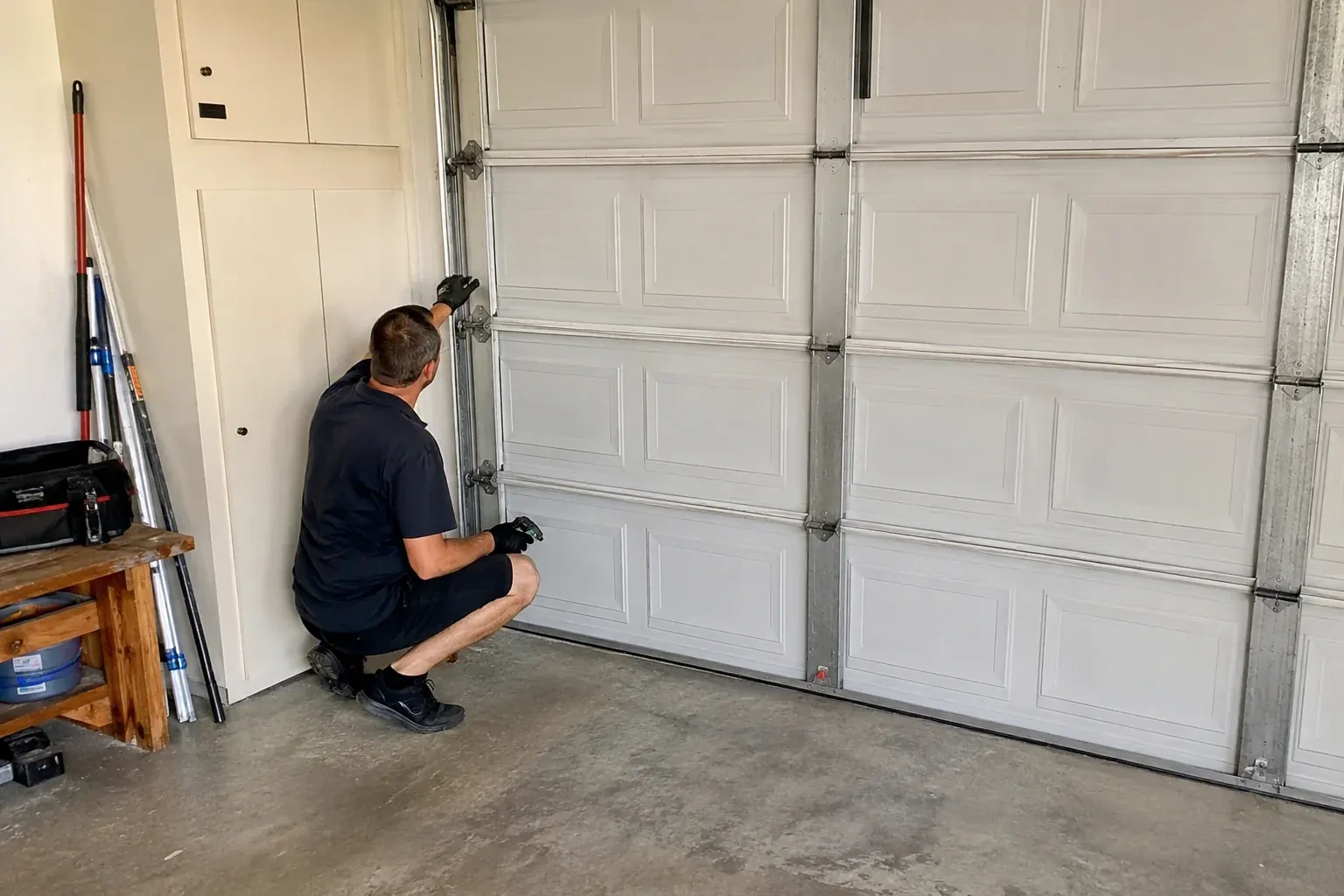
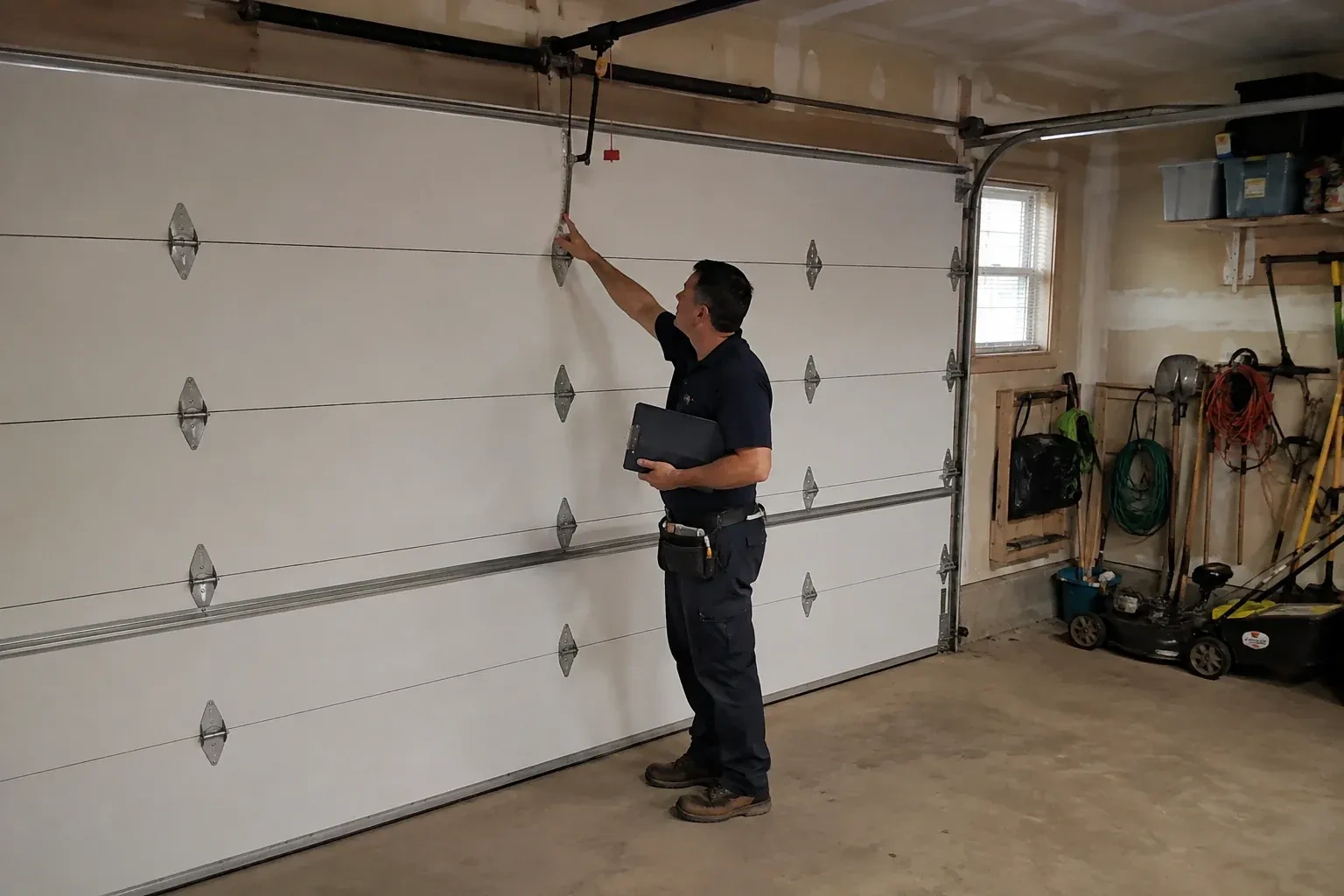
Three tests sit at the heart of the visit. The balance test, done with the opener disconnected, shows whether the springs are still carrying the door's weight or the motor is straining to do it. The contact-reversal test, a flat board laid on the floor, shows whether the door backs off when it meets something solid. The photo-eye test, breaking the beam while the door closes, shows whether the sensors stop it before contact. Each one takes a minute, each answers a different question, and together they tell you the door is doing what it was built to do.
How the visit goesIt has been a hard winter. The bottom seal froze to the slab twice, the opener groaned each morning, and one afternoon you noticed a cable on the left side hanging with a little slack in it.
Garage Door Safety Inspection
How the visit goes
What you have noticed, and when it started
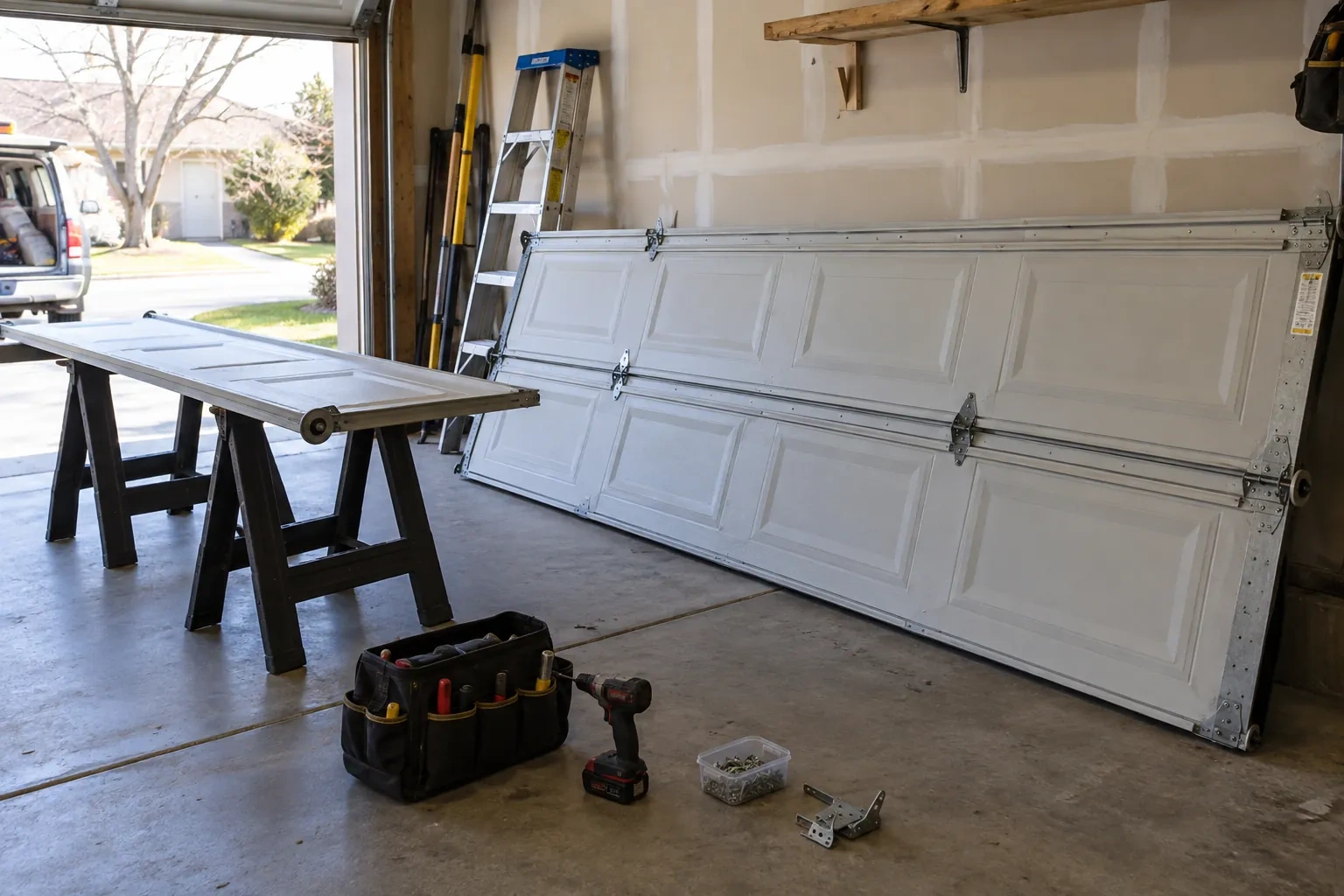
You are part of the assessment. The technician asks when the door last felt normal, what the first change was, whether a sound comes on the way up or the way down, and whether anything happened just before: a bump from the car, a heavy snowfall, a power cut, a new remote. A door that got noisy over a year and a door that changed overnight are different stories, and the second usually has a single cause. Previous repair paperwork, the door's manual and any photos from when the house was bought are all useful. This short conversation tends to shorten the search and adds context to the report that a checklist alone would miss.
Testing contact reversal with a board
The opener is reconnected and a flat 2x4 offcut is laid on the floor across the centre of the opening. The door is sent down from the wall control. On meeting the board it should stop and reverse to fully open on its own. If it stalls on the board, pushes against it, or only reverses after a long pause, the opener's down-force or travel limit needs attention and the finding goes in the report. Older openers without photo eyes are tested this way too, and their behaviour is recorded against the test the maker specifies. The board is used every time; a hand or foot never stands in for it.
Signs that call for a visit before the next scheduled one
A few things are worth a call the day you notice them: a door that hangs crooked or stops part-way; a cable that looks slack, frayed or wrapped where it should not be; a gap in a torsion spring coil; a door that suddenly feels heavy on the manual release; an opener that reverses for no reason after the photo eyes are wiped; or a deep dent, one from an impact, or one dragging in the track. In each case, leave the door as it is, keep people and vehicles clear, and use another door until it has been looked at. A small cosmetic dent that leaves the door running smoothly can wait for the planned appointment.
Garage Door Safety Inspection
In the van
Remote and keypad batteries
Work light and inspection mirror
Flat 2x4 test board
Silicone garage-door lubricant
Camera for findings
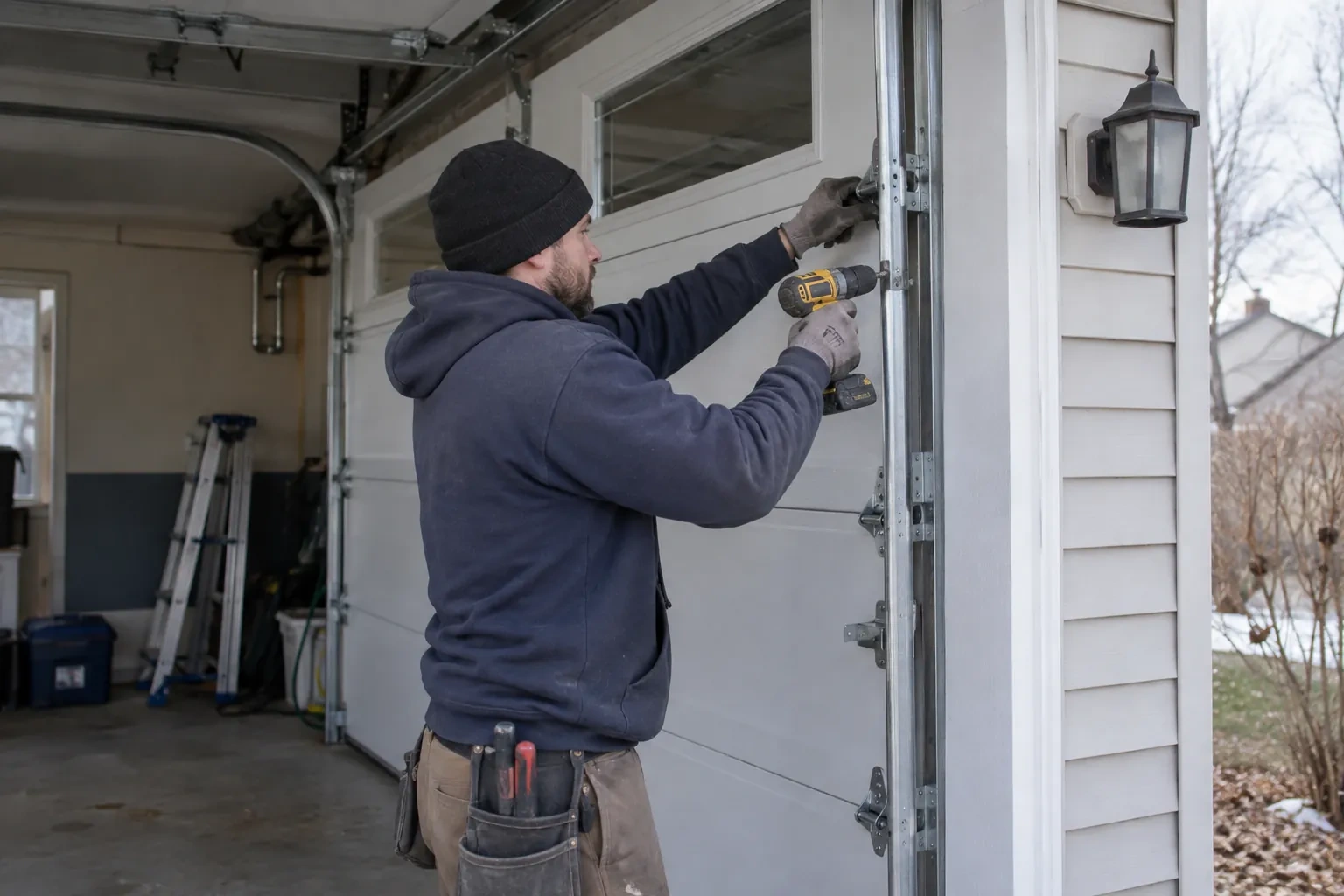
Garage Door Safety Inspection
What affects the quote
How many doors are on the property
Each door and opener gets its own inspection and its own record. Two doors in one visit share the travel, but the checks are done in full on both.
A retest after repairs
When the report lists repairs, a short return visit to rerun the balance, reversal and photo-eye tests once the work is done is quoted as its own item.
Access to overhead track or a locked mechanical room
Some tracks run behind storage or into a locked mechanical room, and reaching every bracket and fixture takes longer when a ladder or a key has to be found first. Clearing a path to the track ahead of the visit lets the inspection move through the whole door without interruption.
What to have ready
- What make is the opener, and does it have sensors near the floor on each side?
- How many doors need inspecting, and are they all at the same address?
- When was the door last serviced, and do you have the paperwork?
Garage Door Safety Inspection: questions
QuestionsWhat are photo eyes, and how are they tested?
They are the two small sensors low on each side of the opening, one sending a beam and the other receiving it. The technician confirms both indicator lights hold steady, that the units sit at the height the opener maker specifies, and that the lenses are clean and the wiring secure. Then a close cycle is started and something is passed through the beam; the door should reverse. Misalignment or a grimy lens is corrected on the spot.
Will you tell me if the door should not be used?
Yes, plainly and at the door. A slack or frayed cable, a gap in a spring coil, a door hanging crooked, a bracket pulling out of the framing or an opener that fails the reversal test are the kinds of findings that put an item in the stop-use group. When that happens you see the reason yourself, the door is left resting in a safe spot with the opener unhooked, and the fix is written up and quoted so it can be booked.
Is the inspection a repair visit?
It is a look and a record first. Small maintenance items such as lubrication, cleaning and aligning the photo eyes and tightening fasteners can be done on the spot if you wish. Anything involving spring tension, cables, drums, worn rollers or damaged sections is written up with a clear explanation and quoted as its own job, so you decide with the full picture in front of you.
Related services
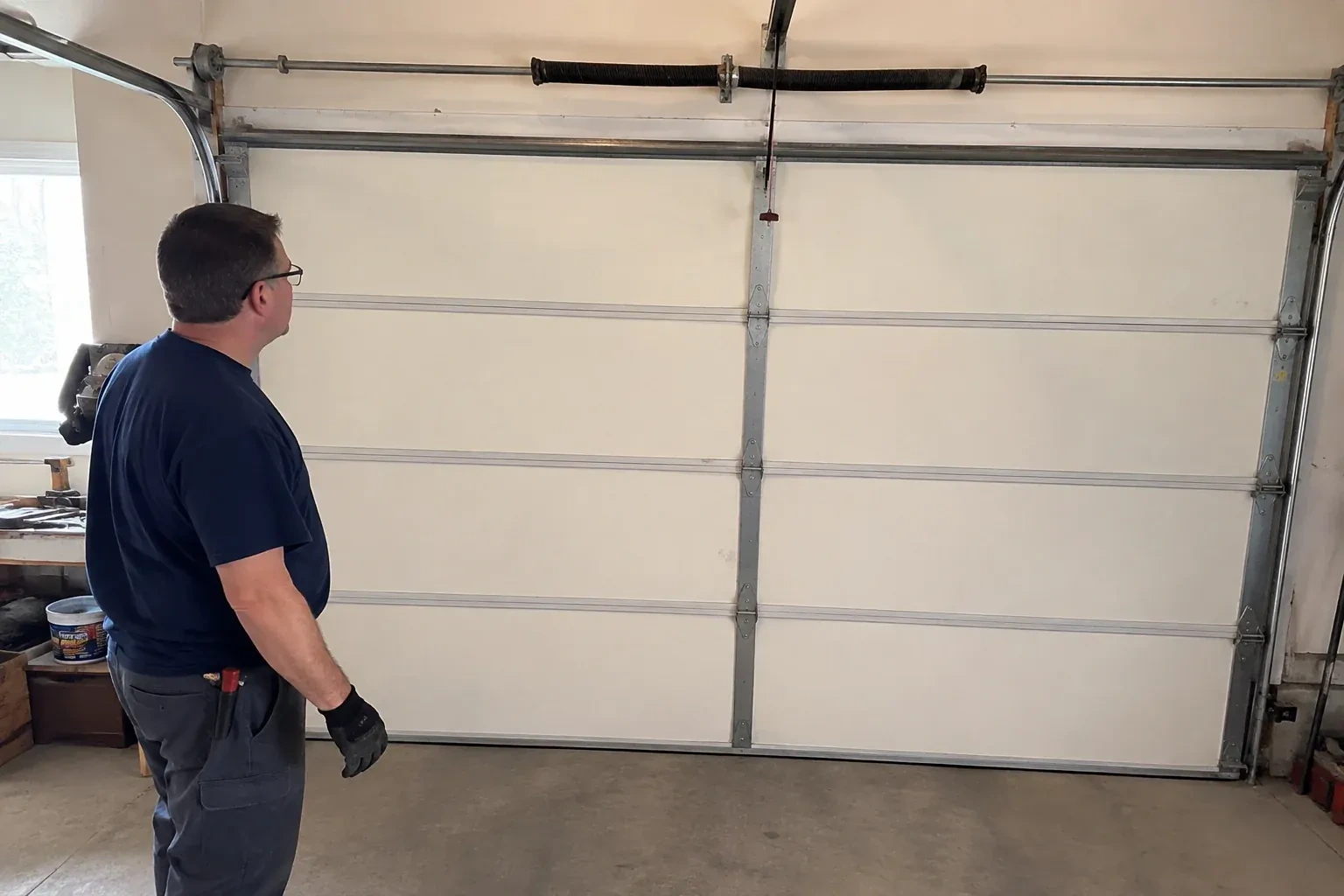
- Off-Track Garage Door ResetThe door came down fine but with a scraping noise, and now the vertical track on one side is bowed away from the wall.
- Garage Door Panel ReplacementYears of slap shots have peppered the lower two sections with dents.
- Garage Door Bottom Seal ReplacementAfter a spring rain there is a puddle inside the door that reaches the tires.