New Doors · Walsingham
New-Construction Garage Door Installation in Walsingham
This garage will be heated and used beyond parking, so the opening needs more than a basic closure.
In plain words
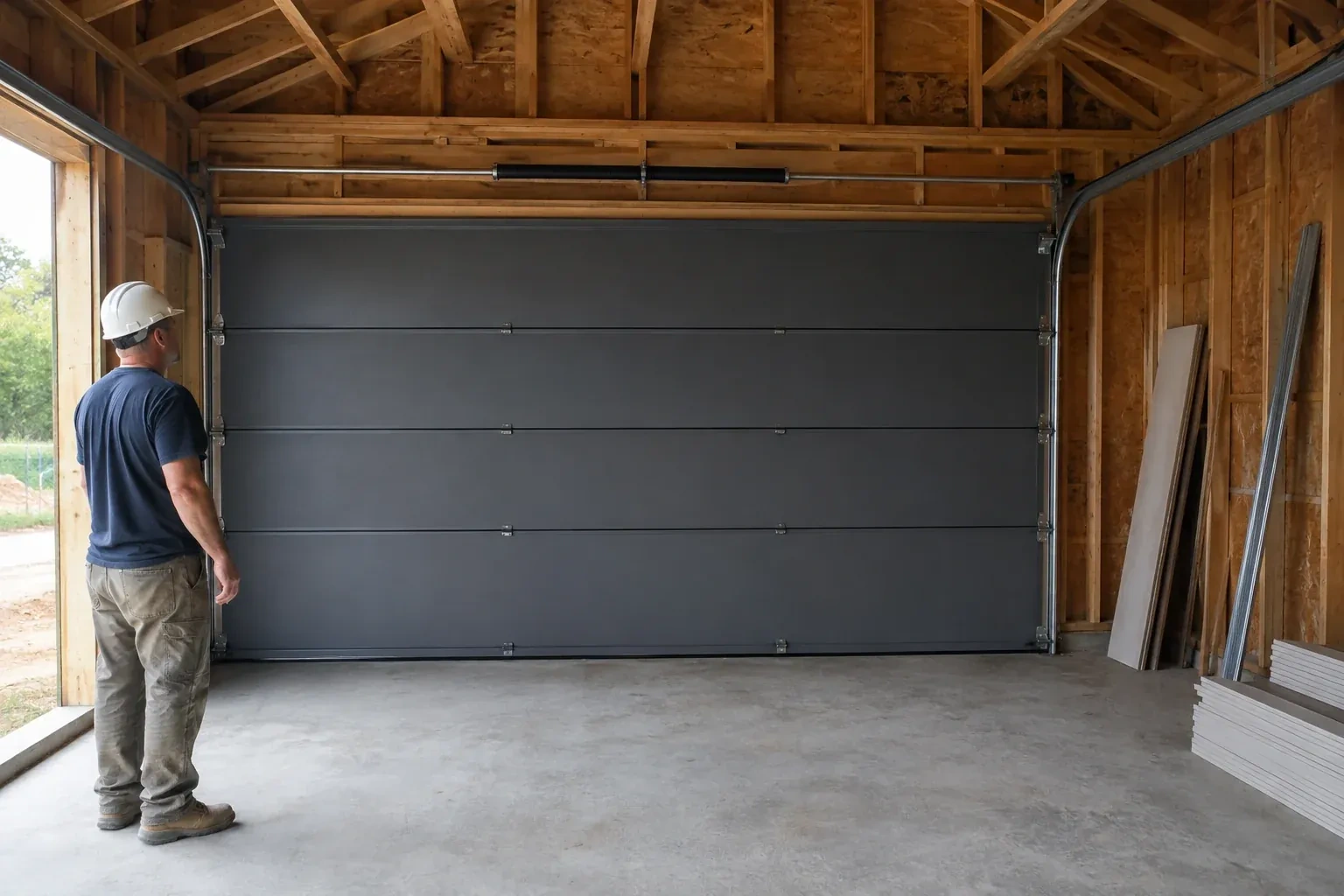
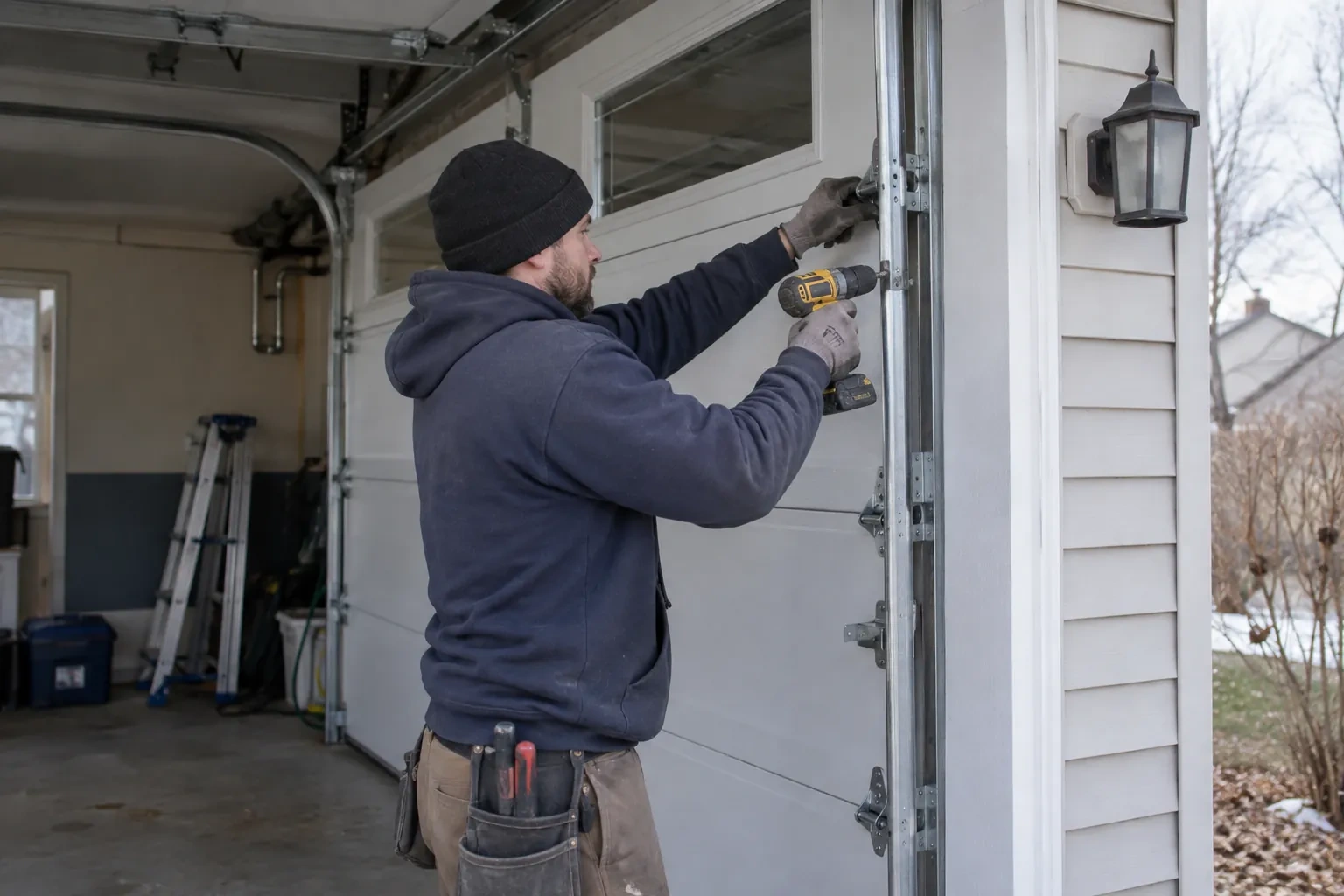
A successful installation begins before the door arrives. Drawings and selections are compared with field measurements, including finished floor elevation, cladding thickness, ceiling obstructions and the support available at the jambs and header. This check keeps the chosen section design, track layout and spring system connected to the building that will carry them. Once the site is ready, the complete assembly is fitted, aligned and balanced, then documented for the owner and other project trades.
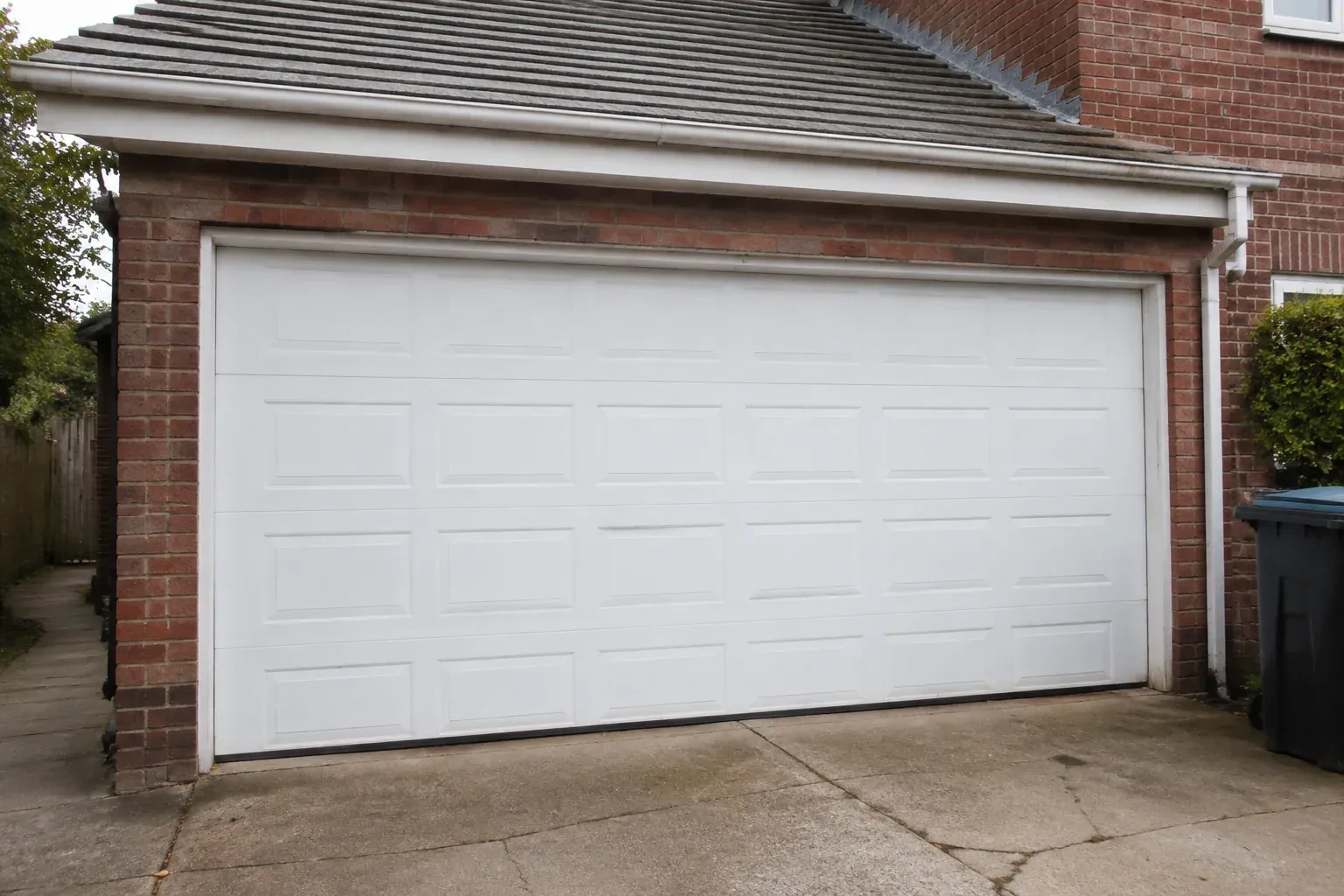
How the visit goesThe front elevation calls for a garage door that belongs with the windows, masonry and trim. Panel design, colour, glazing and hardware all need to come together in one working overhead system.
New-Construction Garage Door Installation
How the visit goes
Reading the floor and driveway transition
The bottom seal can only follow the surface beneath it, so final floor conditions matter. The installer checks whether the slab is complete, where its high and low points sit, and how the interior floor meets the exterior approach. Drainage slope, coatings and planned finishes are discussed if they will change the landing elevation. This establishes the opening height and shows whether the seal can make even contact across the width. It also prevents a temporary construction surface from becoming the permanent reference for door position and travel limits.
Commissioning movement and safety functions
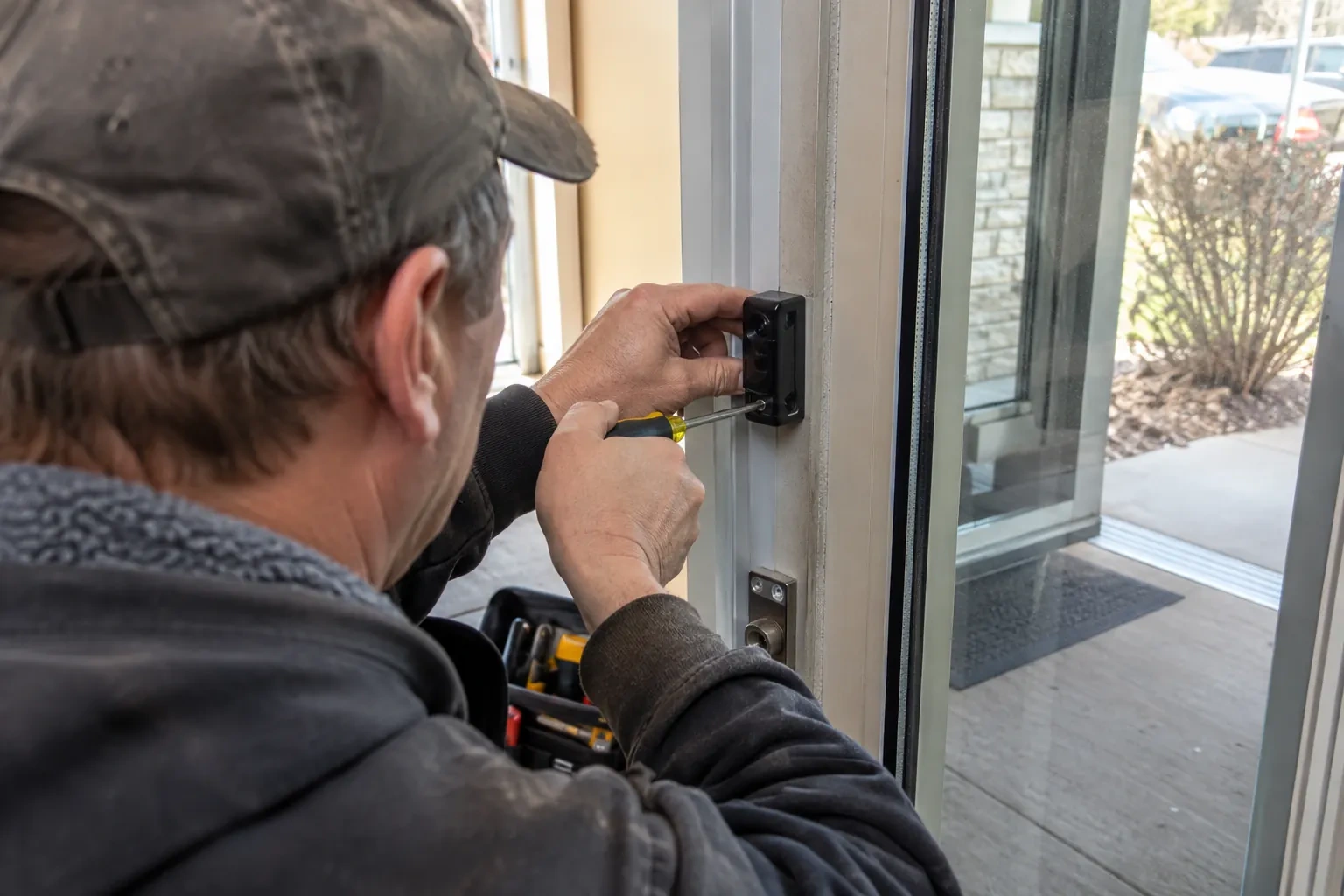
Commissioning begins with the operator disconnected so manual balance and full travel can be observed directly. Rollers should remain guided, cables should track correctly and the door should move without rubbing or drifting out of level. Hardware, hangers and supports receive a final visual and physical check. Powered systems are then cycled through opening and closing, with limits, reversal response and photoelectric controls tested. The installer listens for contact points, confirms the door seats at the floor and verifies that manual release returns control to the user.
Simple observations that support long service
Routine care starts with looking and listening. Owners can keep tracks free of stored items, wipe dirt from photoelectric sensor lenses and watch cables, rollers, hinges and seals from a safe position. A new scrape, uneven gap, frayed cable or change in balance is useful information for a technician. Fasteners, spring tension, lift cables and bottom brackets remain professional service items because they belong to the loaded moving system. Product-specific lubrication and inspection guidance in the manuals provides the maintenance reference for the exact door and operator.
New-Construction Garage Door Installation
In the van
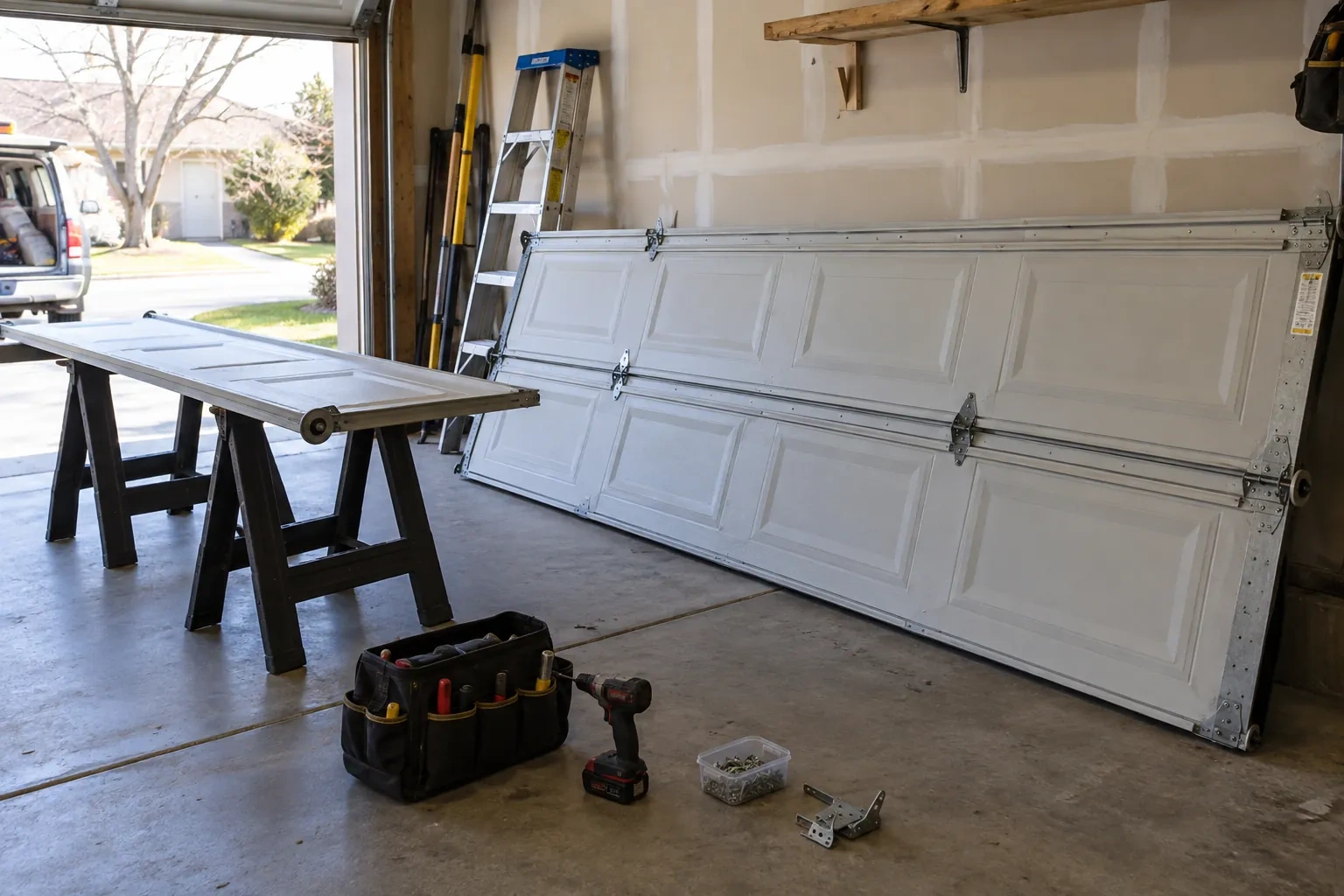
Bottom brackets
Bottom and perimeter seals
Graduated hinges
Sectional door panels
Door reinforcement struts
New-Construction Garage Door Installation
What affects the quote
Delivery and work-area access
Long sections need a suitable route into the garage and protected space for staging. Restricted access, occupied work zones or special lifting needs change the installation plan.
Finish and decorative details
Panel profile, factory colour, texture and applied hardware define the exterior selection. Special finishes or detailed layouts can change ordering, handling and the final assembly scope.
Electrical preparation
The location and readiness of power, control wiring and sensor routes affect coordination. Electrical work outside the door install remains a clearly identified project responsibility.
What to have ready
- How many garage door openings are included in the project?
- Are the jambs, header, spring support and ceiling attachments complete?
- Which trade is completing exterior trim, caulking and final electrical work?
New-Construction Garage Door Installation: questions
QuestionsWhat regular care does a newly installed door need?
Follow the door and operator manuals for inspection and product-specific lubrication. Owners can keep the opening and sensor path clear, clean the section finish gently and watch visible cables, rollers, hinges and seals for change. Tracks are guides, so adding heavy grease can collect dirt. Any shift in balance, smooth movement or cable condition is useful reason to arrange a professional system assessment.
What happens if the opening dimensions change during the build?
The revised finished width, height and surrounding clearances are measured and compared with the selected door package. A small framing change can affect section size, track position, seals or spring specification, so compatibility is confirmed before installation proceeds. The responsible project party decides how the building work is corrected or the selection is revised. Recording the accepted dimensions gives the builder, supplier and installer one shared basis for the next step.
How can the installed door be protected during remaining construction?
Keep masonry, paint, plaster, floor coatings and abrasive dust away from sections, seals, tracks and rollers. Other trades should avoid leaning materials against the door or using horizontal tracks for storage or support. Controls can be managed so the system is operated only by authorized project personnel before handover. If protective covering is used, it should avoid trapping moisture or adhesive against the finished surface.
Related services
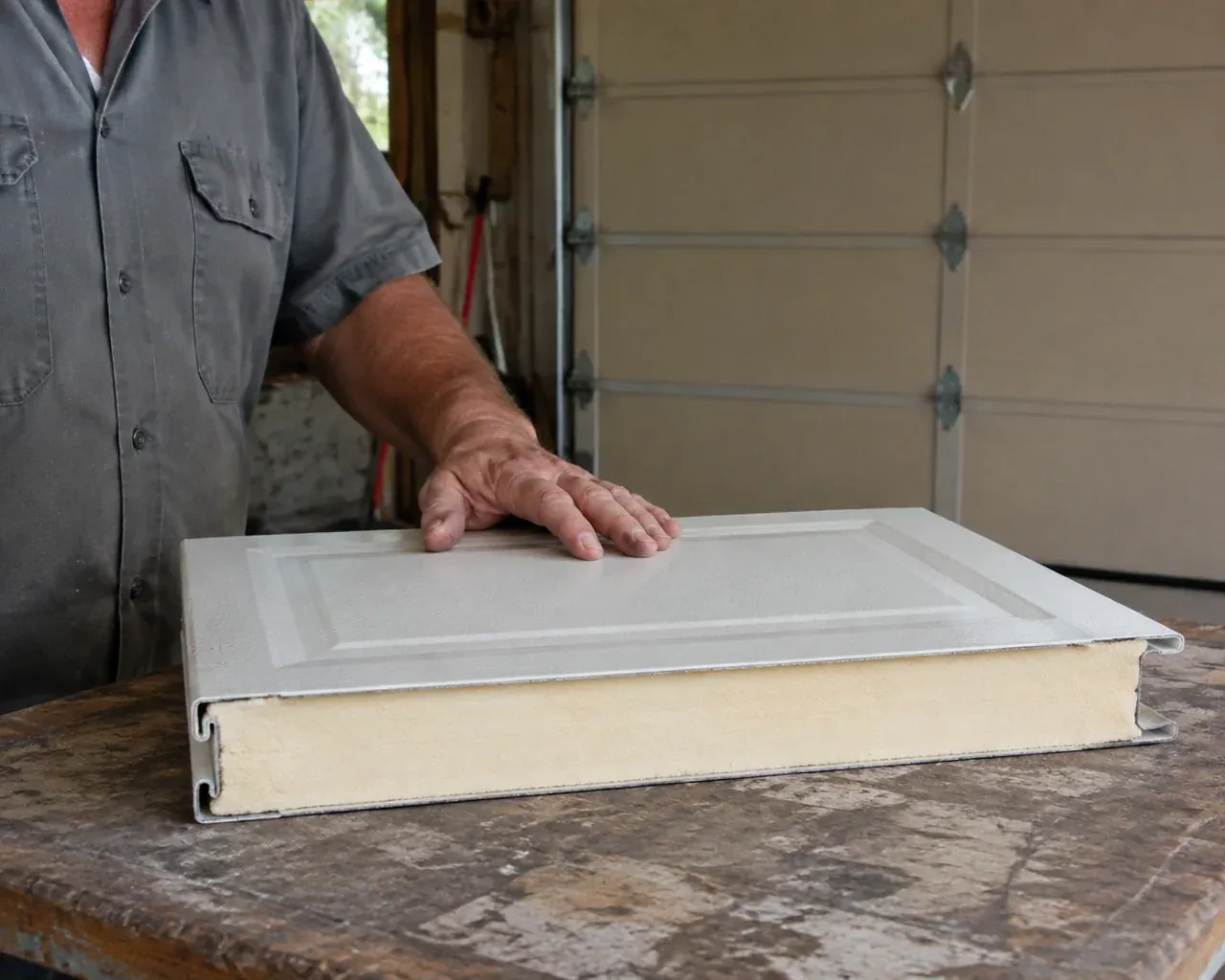
- Insulated Steel Garage Door InstallationSeveral sections are dented and the bottom edge has begun to rust.
- Wind-Rated Garage Door ReplacementNew windows would improve the door's appearance, but they also change the section layout and reinforcement pattern.
- Carriage-House Garage Door InstallationThe existing door has reached the point where panels, rollers and finish all look tired.