New Doors · Norfolk County
Commercial Rolling Door Repair
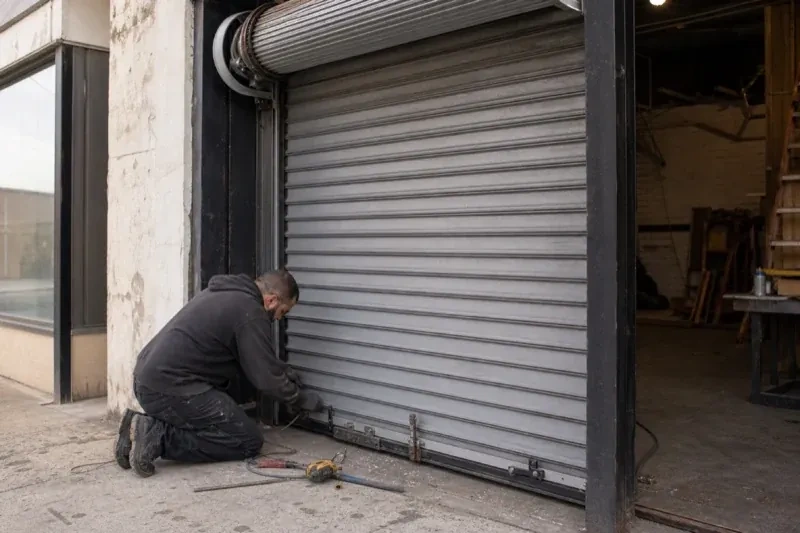
The labelled rolling fire door still moves from its control, yet the release assembly and closing path were disturbed during nearby work.
In plain words
The useful decision is not simply repair versus replacement; it is which path fits the identified curtain, structure, duty and operating system. Localised slat, guide, seal, chain or control faults often support a component repair. Widespread curtain distortion, repeated impacts, worn major assemblies or an operator that no longer suits the door's use may justify a broader plan. Measurements, model information, fire-rating status and the condition of connected parts make that choice concrete. The quote can then separate the current authorised work from optional improvements such as added vehicle detection, guarding or revised controls.
How the visit goesCold-weather moisture has frozen the bottom seal to the sill, and salty grit has collected along the guide entrances. The door chatters during its first cycle and leaves a visible gap after it reaches the closed limit.
Commercial Rolling Door Repair
How the visit goes
Identify labels and special responsibilities
Door, operator and component labels anchor the scope to a known assembly. Model information helps establish suitable slats, endlocks, controls and service instructions, while a fire-protection label changes how substitutions and testing are handled. The technician also notes whether an electrician, structural professional, fire-safety contact or access-control provider owns a connected task. Those boundaries are recorded before work is quoted. Clear identification prevents an ordinary rolling-service repair from absorbing alterations to a fire separation, power supply, building frame or security system without the information and authorisation those areas require.
Realign guides and attachments
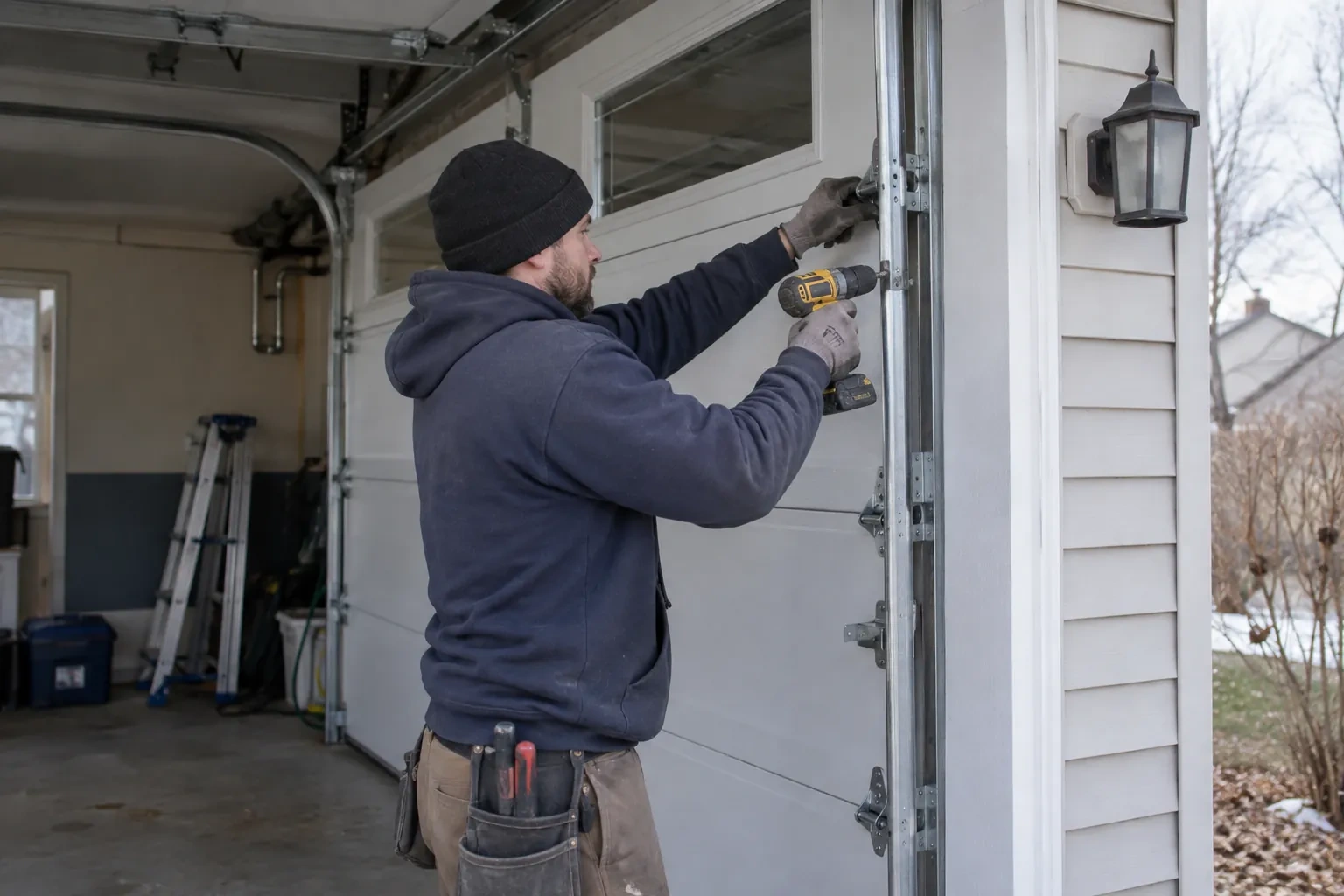
Bent or shifted guides are corrected from measured reference points rather than by forcing the curtain through them. The technician establishes the required gap, plumb and parallel relationship, then straightens or replaces authorised guide components and restores loose wall-angle or bracket fasteners. Bellmouths are shaped to receive the curtain cleanly, and guide stops are secured. If damaged masonry, steel framing or a moved jamb prevents reliable attachment, that condition is separated for the appropriate building work. Once the supports are sound, the curtain is centred and moved gradually to confirm even clearance on both sides.
Manual operation that staff understand
A repaired hand-chain or emergency-hoist system comes with a simple operating walkthrough. Staff learn where the chain is stored, which direction opens or closes, how the keeper is used and how the powered operator changes over to manual mode for that particular assembly. They are also shown the normal effort and stopping behaviour, useful reference points if balance or a bearing changes later. The chain stays gathered and clear of traffic after use. Facility procedures can name the people authorised to operate it, keeping manual movement deliberate during a power interruption or control-service event.
Commercial Rolling Door Repair
In the van
Barrel and headplate brackets
Bearings and tension wheel
Curtain slats and endlocks
Photoelectric sensors
Sensing edge and controls
Commercial Rolling Door Repair
What affects the quote
Bottom bar and sealing needs
A twisted bottom bar, torn astragal, worn retainer, sensing edge and misaligned slide bolts are distinct items. Floor slope and threshold condition also influence the closure-line work.
Manual drive components
Direct push-up operation, a hand-chain hoist or another manual drive has its own chain, wheel, reduction and keeper parts. Wear and accessibility determine the tasks included.
Protective device scope
Photoelectric sensors, sensing edges, light arrays and vehicle-detection accessories serve defined roles. Quantity, mounting, wiring condition and operator requirements determine repair and test work.
What to have ready
- Is the door push-up, hand-chain or motor operated?
- Does winter moisture, ice or salt collect at the sill?
- Is the curtain fully open, closed or stopped between limits?
Commercial Rolling Door Repair: questions
QuestionsCan individual bent slats be replaced?
Many interlocking steel curtains allow a damaged group of slats to be removed and renewed with compatible pieces. The technician also checks neighbouring joints, endlocks, guides and the coil because an impact can spread force beyond the visible dent. Curtain material, profile, gauge, finish and fire-rating status all influence whether sectional repair is suitable.
Why is the bottom bar rising crooked?
An angled bottom bar can point to a shifted curtain, damaged slats, unequal guide friction, a moved barrel, impact at one guide or a counterbalance issue. Measurements at the sill, guides and brackets help separate those causes. Cycling is kept controlled because repeated powered movement can pull a minor tracking problem farther sideways.
What happens to a powered door during a power interruption?
Commercial operators commonly include a manual hoist, hand chain or disconnect arrangement, but the sequence varies by system. Staff are shown the intended changeover and normal manual effort after repair. The door must still move freely and remain balanced; the emergency method is an operating feature, not a substitute for correcting a binding curtain or worn component.
Related services
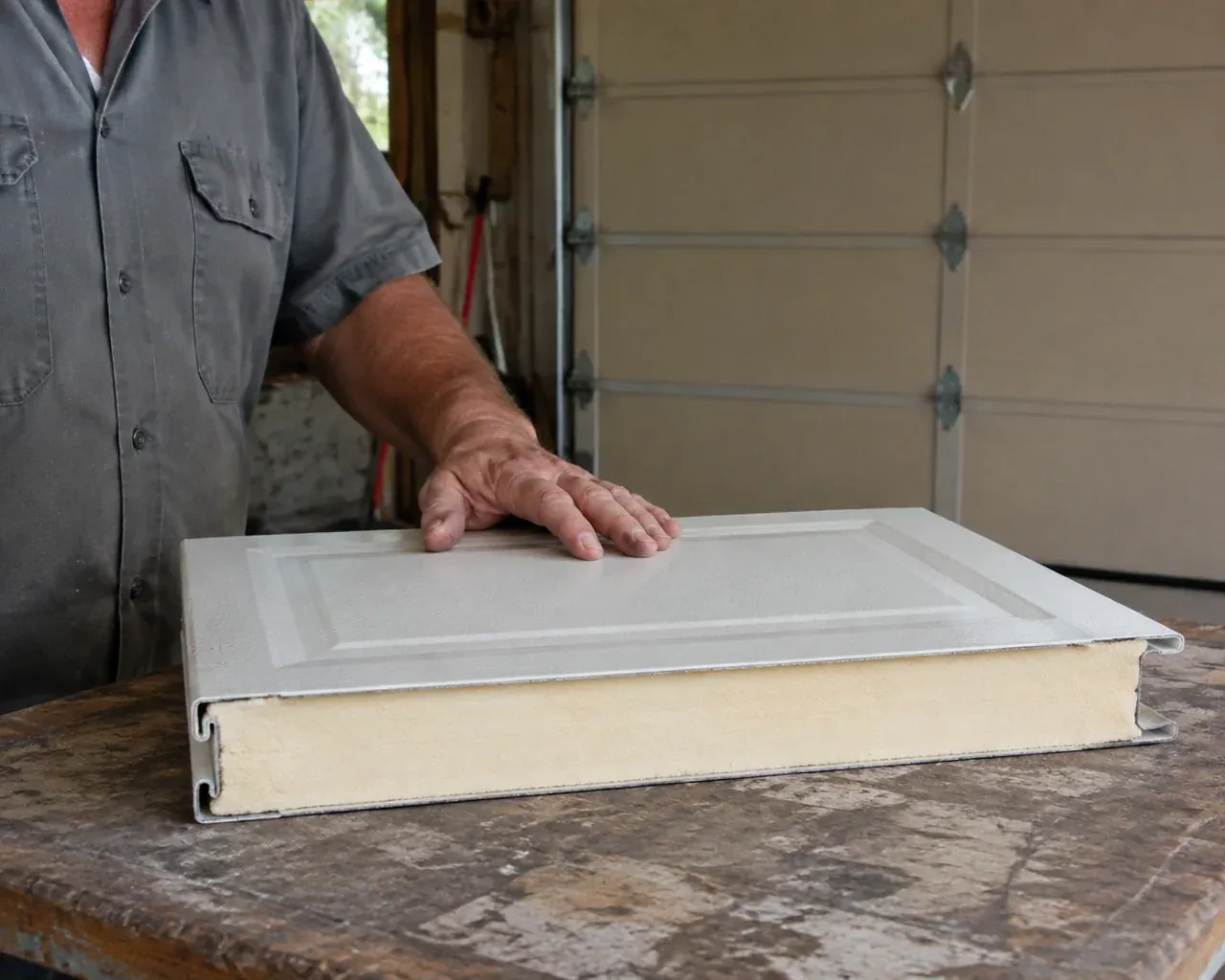
- Insulated Steel Garage Door InstallationSeveral sections are dented and the bottom edge has begun to rust.
- Wind-Rated Garage Door ReplacementNew windows would improve the door's appearance, but they also change the section layout and reinforcement pattern.
- Carriage-House Garage Door InstallationThe existing door has reached the point where panels, rollers and finish all look tired.