Repairs · Norfolk County
Garage Door Perimeter Weatherstrip
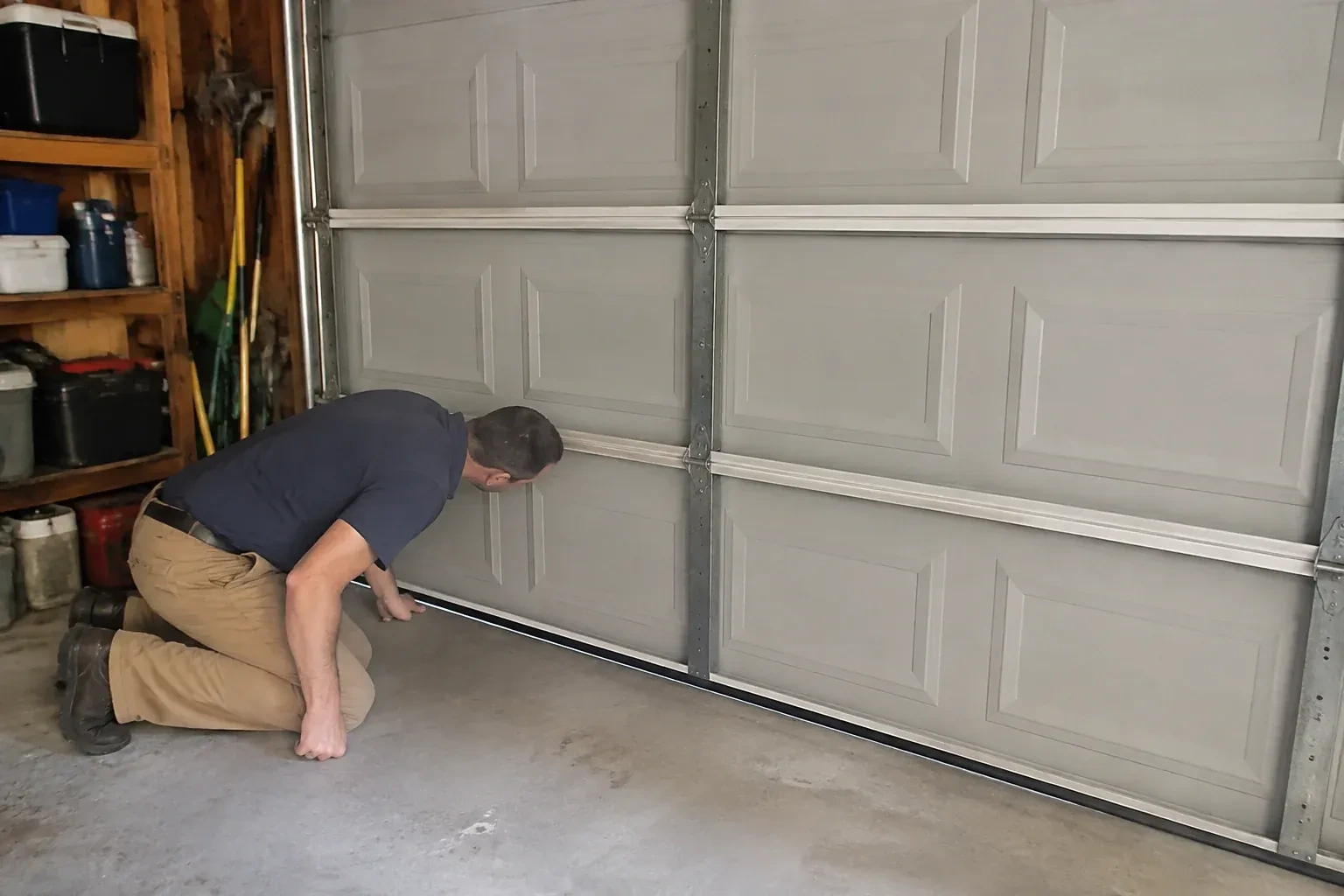
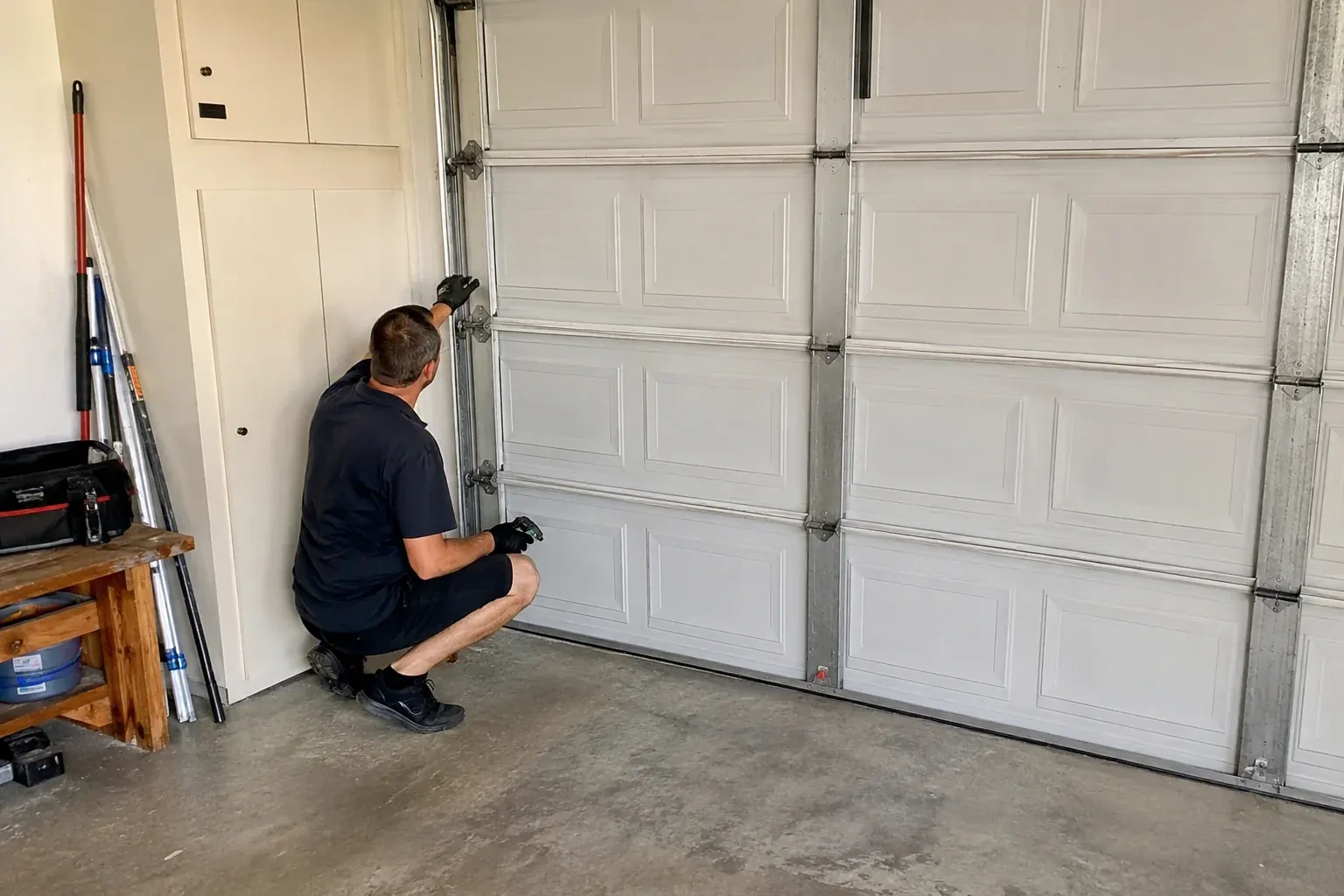
With the door closed and the garage lights off, a thin bright line runs down the whole left side of the opening.
In plain words
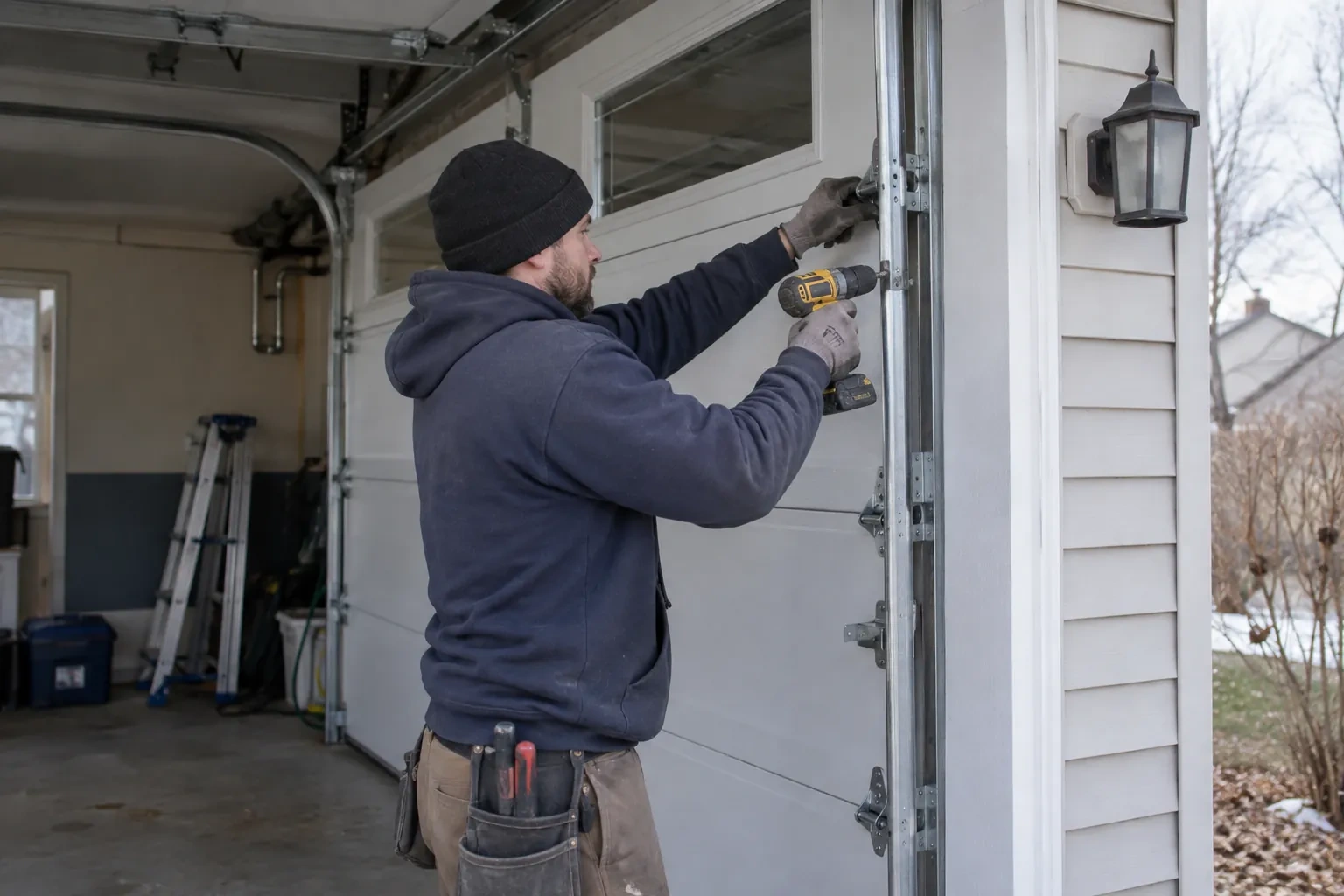
The skill in this job is in the position of the fin. It should touch the door with a small, even deflection, so that it seals when the door is closed and springs clear as the door lifts. Set too far off, it leaves a standing gap; pushed too hard, it drags, folds under and tears within a season. The header piece goes on first, fastened from the centre outward so it stays straight, and the sides are fitted tight beneath it so the fins overlap at the corners. Fasteners are spaced evenly in sound wood, and any joint where water could get behind the stop is caulked.
How the visit goesWith the door closed and the garage lights off, a thin bright line runs down the whole left side of the opening. You can see the neighbour's fence through it. The strip that should close that gap has shrunk back from the door.
Garage Door Perimeter Weatherstrip
How the visit goes
Measuring for the new pieces
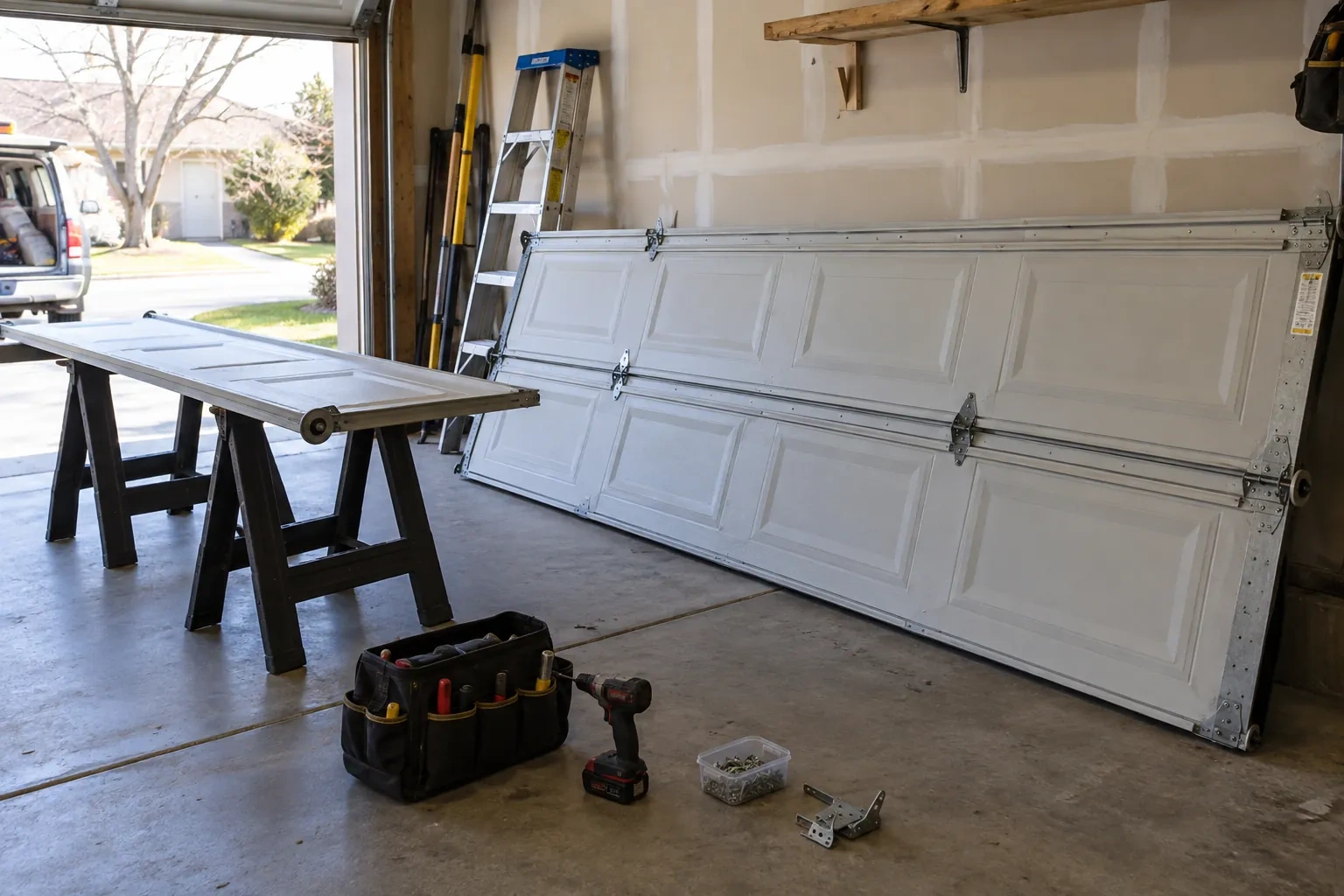
With the door closed, the header is measured across the full width of the opening and each side from header to floor, because openings are rarely the same on both sides. The profile is chosen to match the gap: a wider fin for a door that sits a little back from the stop, a narrower one where the gap is slight, and a one-piece stop where the wood is going. Colour is matched to the trim from a range of standard finishes. The technician also notes whether the existing stop projects far enough to cover the door edge, since a stop set too shallow leaves the fin working alone.
Fastening that lasts through the seasons
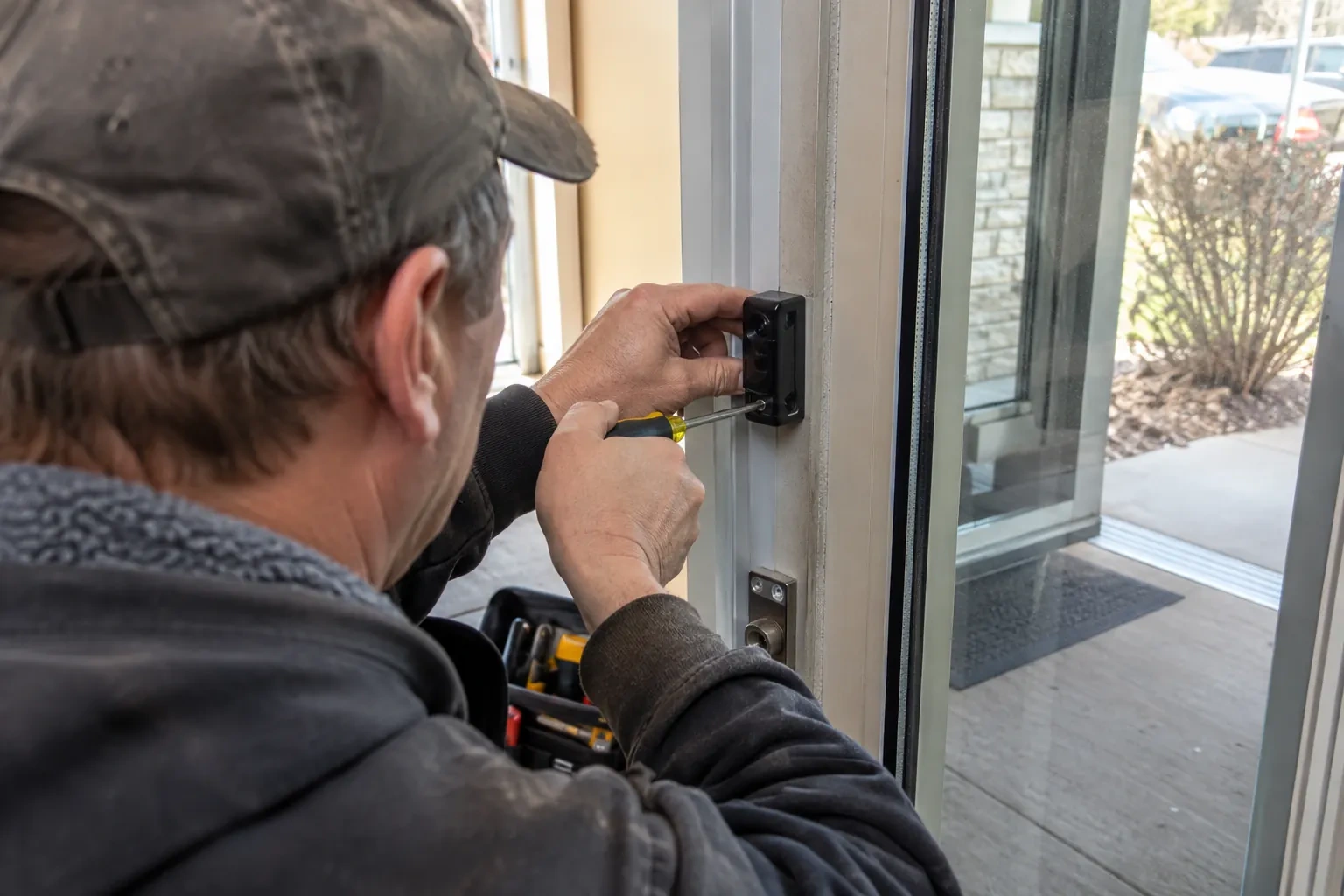
Fasteners are chosen for the weather they will live in: galvanized or stainless trim nails, exterior screws where the stop is heavy or the wood is hard, and weatherproof staples only for a light fin on sound wood. They are spaced evenly so the strip stays straight between them, and a nail set is used so the heads sit flush without crushing the vinyl. In cold weather the lengths are kept warm in the van until the moment they are fitted, because cold vinyl is brittle and splits at the ends. Fasteners near the end of each piece go in a little further back for the same reason.
Corners that stay closed to pests
With the header and side fins overlapped, the small square holes that mice and wasps used are gone. Keep them that way by checking the four corners each autumn, when animals are looking for warmth, and pressing any lifted corner back into place. The point where the side seal meets the bottom seal on the door is worth a look too, since the bottom seal wears on its own schedule. A clear threshold, with leaves swept away from the door, removes the shelter pests use to work at a corner. Sealing the perimeter is one of the simpler parts of keeping a garage pest-free.
Garage Door Perimeter Weatherstrip
In the van
Flat bar, hammer and nail set
Tape measure, level and square
Jamb repair lumber or PVC trim
Epoxy consolidant and exterior primer
Exterior screws and weatherproof staples
Garage Door Perimeter Weatherstrip
What affects the quote
Partial replacement
Replacing one damaged length rather than all three is a smaller job, provided the remaining pieces are still soft and the profile can be matched.
Weather on the day
Cold weather means keeping vinyl warm between the van and the opening and fitting each length with extra care, so a winter visit can run a little longer than one in mild weather.
Working height and access
A tall header, a sloped driveway that makes a ladder awkward, shrubs against the jambs or cars and storage close to the door all affect how long the work takes.
What to have ready
- Has the door recently been replaced or adjusted?
- Is your garage attached to the house, and is it heated?
- Is anything stored against the jambs, or a car parked close to the opening?
Garage Door Perimeter Weatherstrip: questions
QuestionsCan the seal be replaced in winter?
Yes. The technician keeps the lengths warm in the van until the moment they are fitted, because cold vinyl is stiff and can split at a fastener, and works with the door closed so the garage is not open to the weather for long. Jamb repairs can be done in the cold as well. Many households have it done in autumn or winter because that is when the gaps make themselves felt.
How can I tell the side and top seal needs replacing?
Close the door, turn off the garage lights and look along the edges for daylight. Then press the fin with a thumb: it should be soft and spring back. Hardness, cracks, pieces missing, a strip hanging loose, snow or leaves inside along the edge, or a fin that has folded under and torn are all signs. A rubbing squeal as the door moves is another.
What is the difference between perimeter weatherstrip and the bottom seal?
The bottom seal is a rubber or vinyl strip fixed to the lower edge of the door itself and presses against the floor. Perimeter weatherstrip is fixed to the frame, running up both jambs and across the header, and the closed door presses against it from inside. They wear differently and are replaced separately, though it is common to renew both in one visit when each is showing its age.
Related services
- Garage Door Tune-UpThe door lands with a thud you can feel through the kitchen floor, and sometimes it bounces back up a few centimetres before settling.
- Off-Track Garage Door ResetThe door came down fine but with a scraping noise, and now the vertical track on one side is bowed away from the wall.
- Garage Door Panel ReplacementYears of slap shots have peppered the lower two sections with dents.