Openers · Tillsonburg
Belt-Drive Opener Repair in Tillsonburg
Halfway up, every single time, the door hesitates and there is a ratcheting sound from the motor head, then it carries on.
In plain words
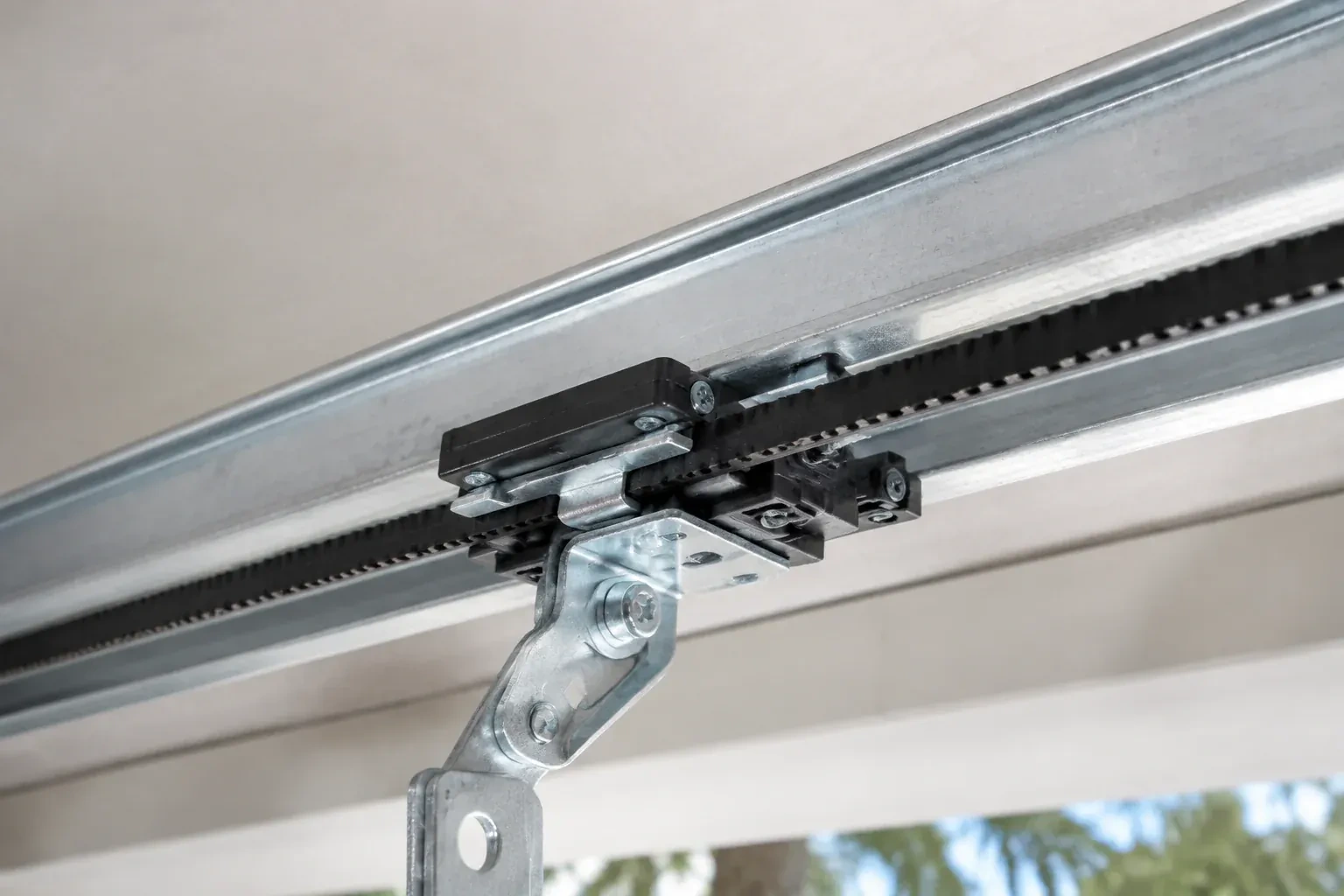
A stalled belt drive is often a trolley problem, not a belt problem. The trolley rides the rail in two halves: an outer part linked to the door arm and an inner part gripped by the belt. Pulling the red cord parts them so the door can be lifted by hand; running the operator, or a second pull, locks them again. When the release lever sticks, the housing cracks or the halves refuse to re-engage, the motor moves the belt and nothing else. Repair means freeing or replacing the trolley, checking the belt for damage from the drag, and confirming the inner half is in step with the motor.
How the visit goesPress the remote and the motor runs its full cycle, lights on, the usual whir, but the door does not move a centimetre. Up at the trolley, the belt is hanging loose where a small plastic clip used to hold it.
Belt-Drive Opener Repair
How the visit goes
Rail, joints and whatever is rubbing
A belt frays for a reason, and the reason is usually somewhere along the rail. The technician sights the rail from the header to the motor head for a bend, a sag where a hanger has loosened, or a joint between rail sections that has stepped out of line and is catching the belt teeth each pass. Marks inside the rail show where the belt has been touching. Storage racks, a bicycle hook or a truck's roof rack lifting the rail are frequent finds. A straight, true rail lets a belt run for years without touching anything, so any of these is corrected as part of the repair rather than left to wear the new belt.
Replacing the trolley
A cracked, worn or stuck trolley is removed by unclipping the belt, unhooking the door arm and sliding the assembly off the end of the rail, which on many models means loosening the rail at the header bracket first. The new trolley slides on, the belt is reconnected with a fresh clip, the tension spring and square nut are set, and the door arm is pinned back to the outer half. The technician works the release lever several times to be sure the halves part and lock as they should, then runs the door by motor. Play between trolley and rail is checked, since a loose trolley rattles and wears the belt edge.
How to check the belt by eye
You leave knowing what a healthy belt looks like from the garage floor. It runs level, just above or inside the rail, with no visible sag between the motor head and the header. Its teeth are even along the whole length and its edges are square, not fuzzy. Every few months, with the door closed, glance up and along the rail; then open the door and look again, since sag shows on the return run. If the belt begins to hang below the rail, slap on the way up or click at the same point each cycle, that is the moment to call, while it is a tension adjustment rather than a stalled door.
Belt-Drive Opener Repair
In the van
2x4 offcut for the reversal test
Reinforced drive belt with clip
Door arm and clevis pins
Belt tension spring and square nut
Idler pulley and bearing
Belt-Drive Opener Repair
What affects the quote
Access to the rail
Shelving, a car lift or a loft beside the rail, or a garage that is full on the day, mean more careful handling along the belt's length, and the technician allows for it once the space is seen.
How far the technician drives
A garage on the edge of town and one down a long rural road take different time to reach, and that trip is a line of the quote.
Trolley condition
A trolley that releases and re-engages cleanly stays. One that is cracked, stuck or loose on the rail is replaced during the same visit and listed as its own part.
What to have ready
- What make and model is printed on the motor head, and roughly how old is it?
- Is the garage heated and attached to the house, or a cold detached one?
- Are there plastic shavings or grease on top of the motor housing?
Belt-Drive Opener Repair: questions
QuestionsCan I adjust the belt tension myself?
The adjustment nut is reachable and some owners do, but there are two things to get right. The operator must be unplugged and the door released first, and the spring must be set to the maker's length rather than tightened until the sag disappears, since an over-tight belt is noisy and hard on the motor. After any change, the reversal tests should be repeated. Many people prefer to have it done during a service.
The motor runs but the door stays still. What has happened?
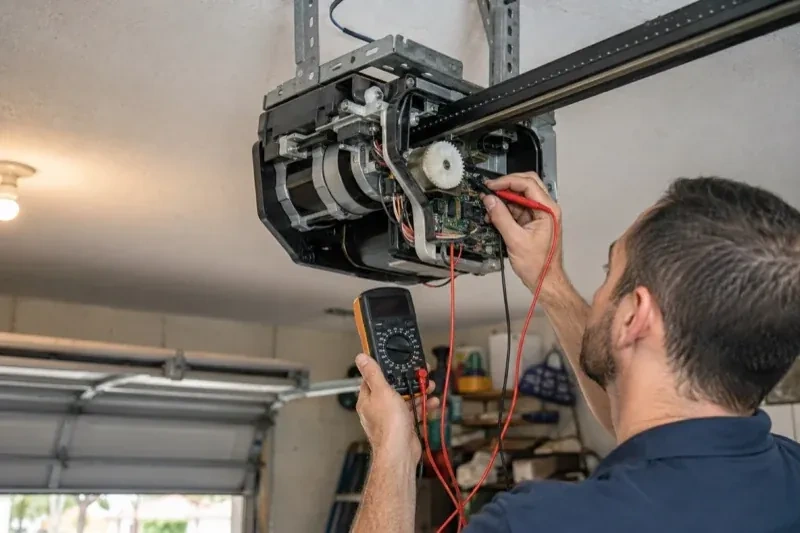
Something between the motor and the door has let go. On a belt drive the usual suspects are a broken clip where the belt joins the trolley, a belt that has jumped off the sprocket or idler pulley, a trolley that failed to re-engage after the red cord was pulled, or a stripped drive gear inside the motor head, which leaves plastic shavings on the housing. Each is a specific repair.
Can the belt just be tightened, or does it need replacing?
Tightening is the first thing tried. Tension is set at the inner trolley by a square nut that compresses a spring to the length the maker specifies. If the belt reaches that setting and runs without sprocket noise, it stays. If the adjuster is wound to its end and the belt still sags, or the rubber is cracked, glazed or missing teeth, a new belt is the right repair.
Related services
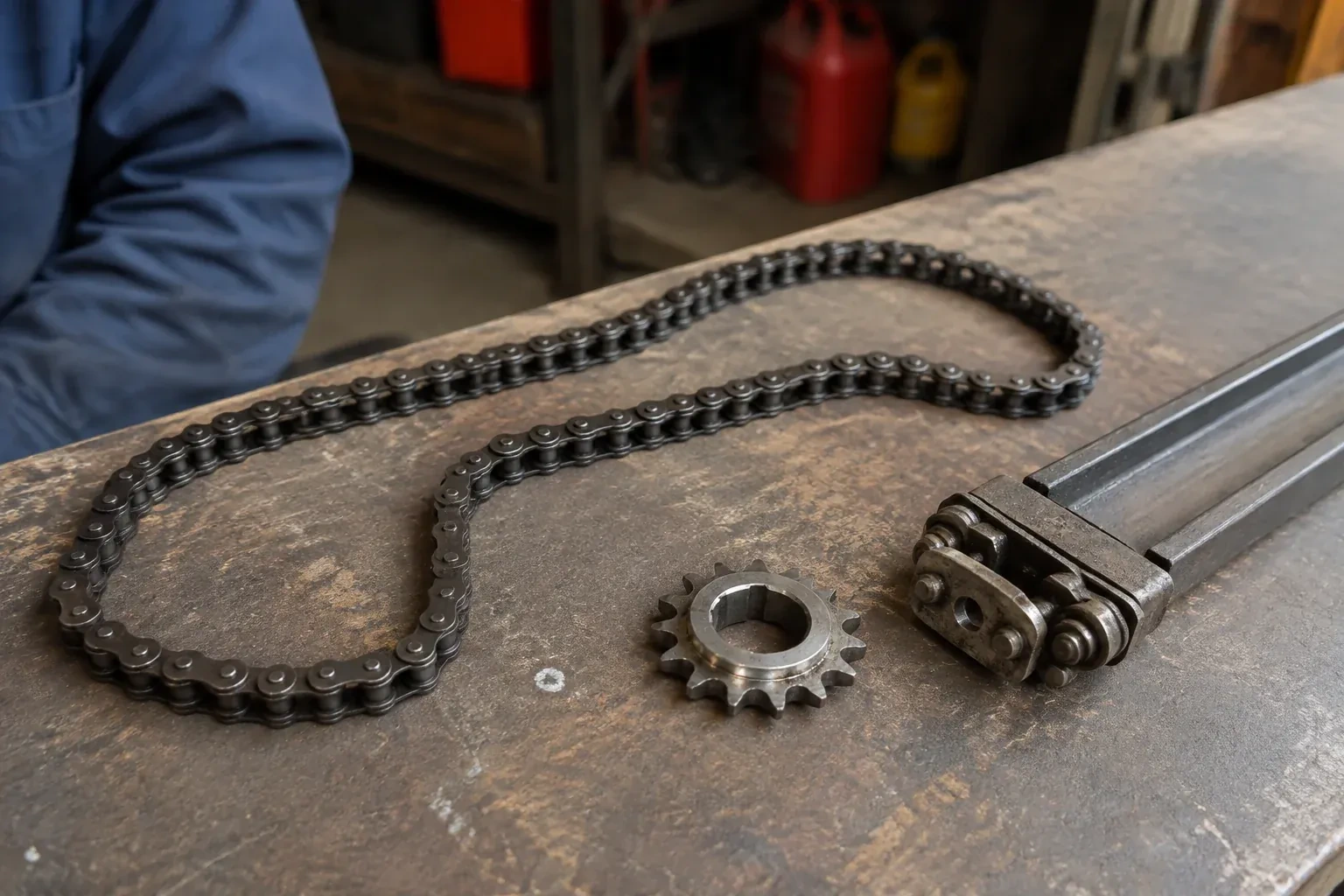
- Chain-Drive Opener RepairThe chain hangs in a loop under the rail and slaps against it on every cycle.
- Garage Door Opener ReplacementThe bedroom above the garage shakes every morning at six when the chain drive fires up.
- Photo-Eye Sensor Alignment or ReplacementAfter a cold night the door stays open until the garage warms up.