Openers · Port Rowan
Belt-Drive Opener Repair in Port Rowan
Halfway up, every single time, the door hesitates and there is a ratcheting sound from the motor head, then it carries on.
In plain words
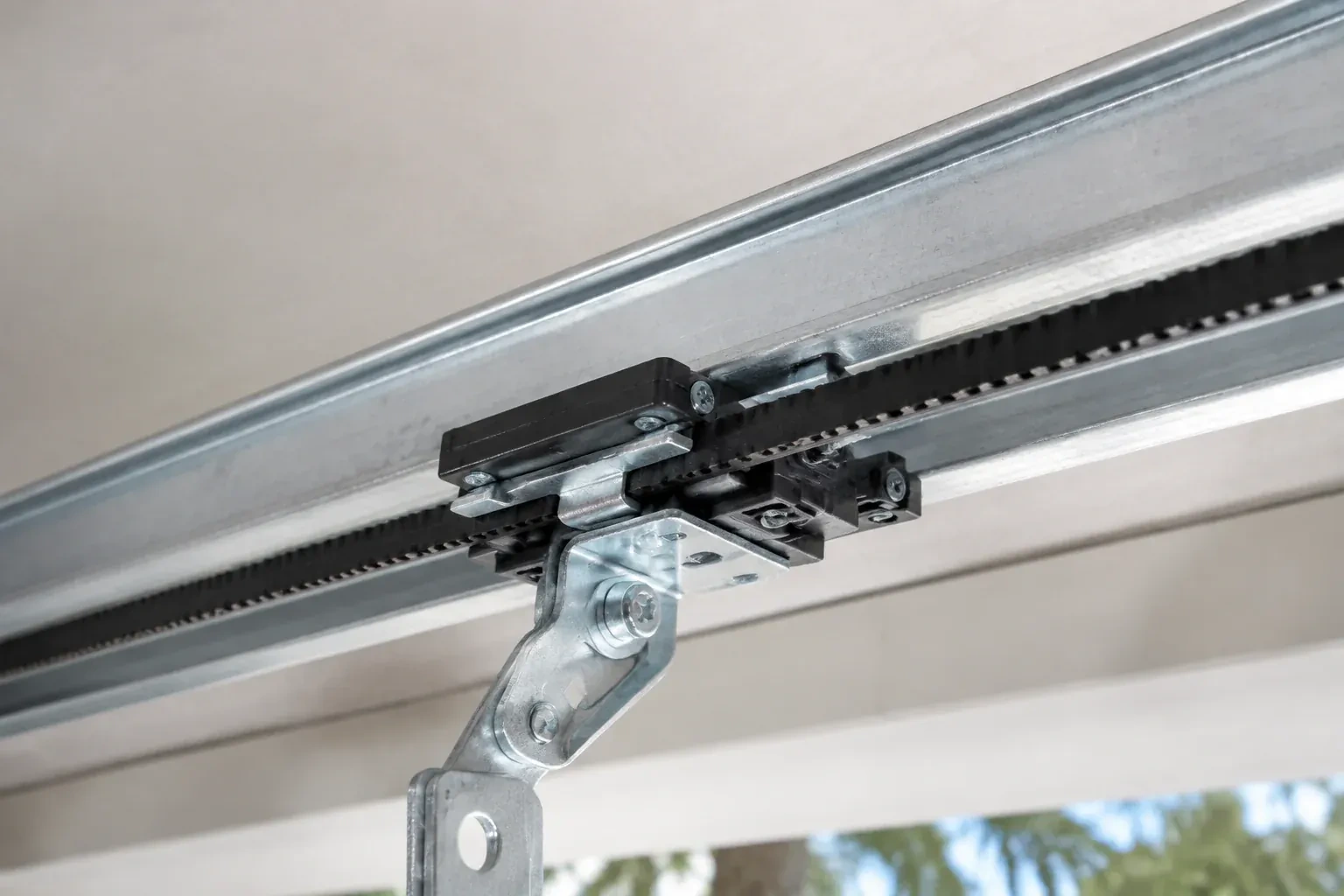
A stalled belt drive is often a trolley problem, not a belt problem. The trolley rides the rail in two halves: an outer part linked to the door arm and an inner part gripped by the belt. Pulling the red cord parts them so the door can be lifted by hand; running the operator, or a second pull, locks them again. When the release lever sticks, the housing cracks or the halves refuse to re-engage, the motor moves the belt and nothing else. Repair means freeing or replacing the trolley, checking the belt for damage from the drag, and confirming the inner half is in step with the motor.
How the visit goesThe door used to glide up with a soft hum. Now there is a sharp clack every second or so, and if you stand underneath you can see the belt sagging below the rail and slapping it on the way up.
Belt-Drive Opener Repair
How the visit goes
How tight is tight enough
Belt tension is measured, not guessed. At the inner trolley a threaded shaft carries a coil spring and a square nut; turning the nut draws the belt tighter and compresses the spring, and the maker states the spring length that means the belt is right, roughly the width of a thumb. The technician checks that length, presses the belt at mid-span for a little give, and watches it run. A belt hanging below the rail is loose and will skip teeth. A belt pulled drum-tight makes sprocket noise, loads the motor bearings and wears the idler pulley. Both are corrected on the spot, and an adjuster wound to its end tells the technician the belt has stretched past saving.
Gear and sprocket at the motor head
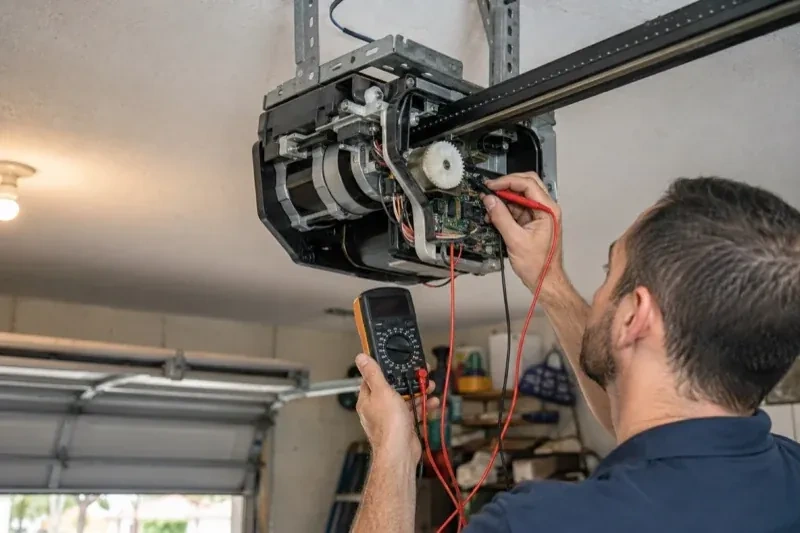
When the shavings on the housing say the drive gear has stripped, the head unit's cover comes off and the gear-and-sprocket kit is replaced as a set. The belt is lifted off the sprocket, the old sprocket shaft and worm gear are withdrawn from the housing, the new gear is greased with the light grease the maker names and fitted with its bushings, and the sprocket is set back on top. The technician checks the motor shaft's end play, since too much play is often why the gear stripped in the first place. The belt is refitted, tensioned and phased, and the operator is run to confirm the sprocket turns true and quiet.
The hush is back
What you notice first is the sound, or the lack of it. A belt drive in good order starts softly, hums along the rail and eases to a stop, and after the repair it should sound the way it did the week it was installed. The clack of a loose belt, the squeal of a dry pulley and the growl of a stripped gear are gone because their causes are gone, not masked. Listen for that baseline over the next few weeks; a new noise arriving is the earliest warning you will get, and a belt drive tends to announce trouble months before it stops. A short call at that stage is a small adjustment.
Belt-Drive Opener Repair
In the van
2x4 offcut for the reversal test
Reinforced drive belt with clip
Door arm and clevis pins
Belt tension spring and square nut
Idler pulley and bearing

Belt-Drive Opener Repair
What affects the quote
How far the technician drives
A garage on the edge of town and one down a long rural road take different time to reach, and that trip is a line of the quote.
Trolley condition
A trolley that releases and re-engages cleanly stays. One that is cracked, stuck or loose on the rail is replaced during the same visit and listed as its own part.
Door size and weight
A wide double door or a heavy insulated one asks more of the belt and trolley, and the inspection may point to a suitably rated opener or a top-section strut for that door, alongside the belt matched to the rail and sprocket.
What to have ready
- When did the trouble start, and did it follow a power cut or a pulled red cord?
- What make and model is printed on the motor head, and roughly how old is it?
- Is there a new noise, and where along the rail does it come from?
Belt-Drive Opener Repair: questions
QuestionsCan I adjust the belt tension myself?
The adjustment nut is reachable and some owners do, but there are two things to get right. The operator must be unplugged and the door released first, and the spring must be set to the maker's length rather than tightened until the sag disappears, since an over-tight belt is noisy and hard on the motor. After any change, the reversal tests should be repeated. Many people prefer to have it done during a service.
The motor runs but the door stays still. What has happened?
Something between the motor and the door has let go. On a belt drive the usual suspects are a broken clip where the belt joins the trolley, a belt that has jumped off the sprocket or idler pulley, a trolley that failed to re-engage after the red cord was pulled, or a stripped drive gear inside the motor head, which leaves plastic shavings on the housing. Each is a specific repair.
Can the belt just be tightened, or does it need replacing?
Tightening is the first thing tried. Tension is set at the inner trolley by a square nut that compresses a spring to the length the maker specifies. If the belt reaches that setting and runs without sprocket noise, it stays. If the adjuster is wound to its end and the belt still sags, or the rubber is cracked, glazed or missing teeth, a new belt is the right repair.
Related services
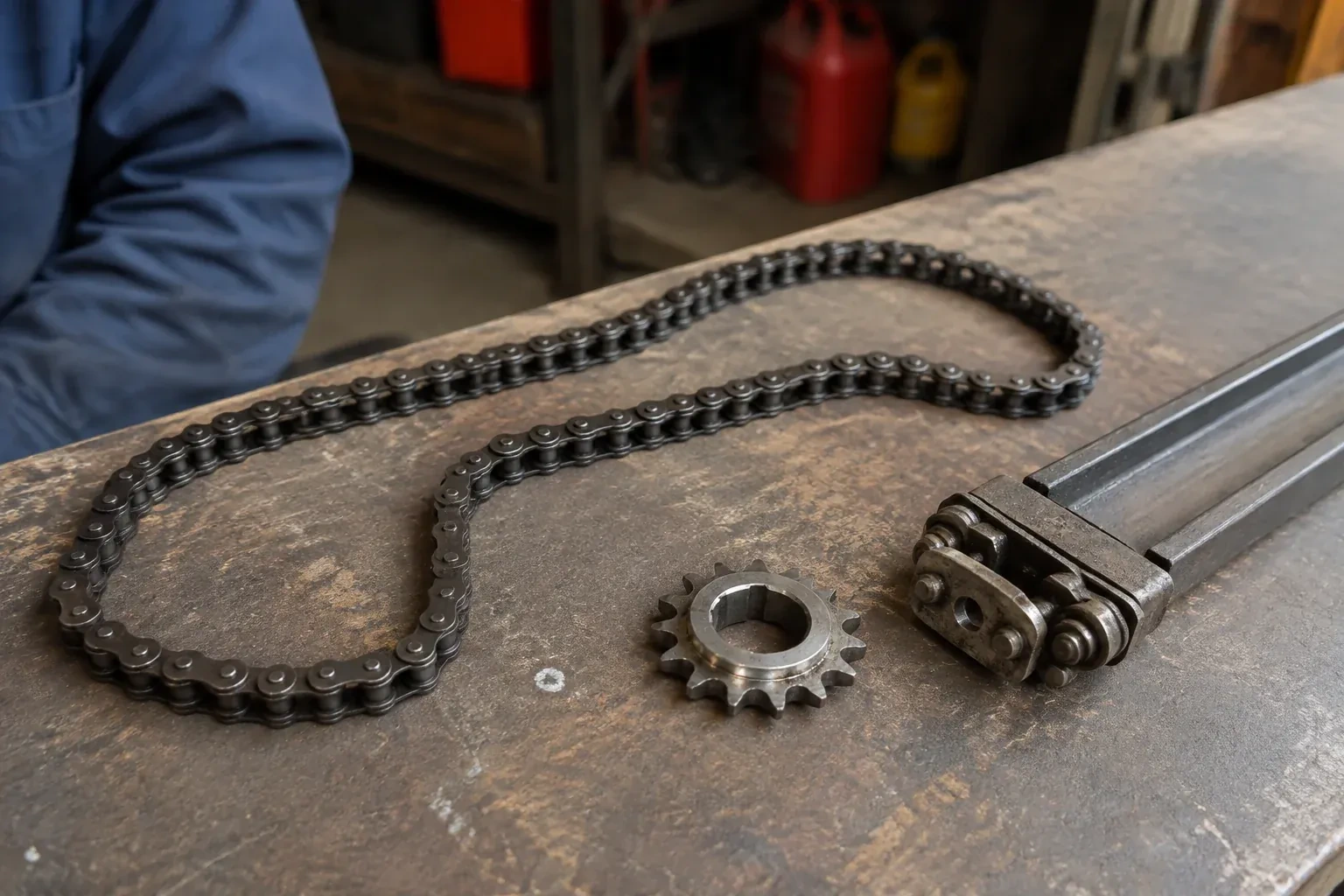
- Chain-Drive Opener RepairThe chain hangs in a loop under the rail and slaps against it on every cycle.
- Garage Door Opener ReplacementThe bedroom above the garage shakes every morning at six when the chain drive fires up.
- Photo-Eye Sensor Alignment or ReplacementAfter a cold night the door stays open until the garage warms up.