Openers · Long Point
Belt-Drive Opener Repair in Long Point
Halfway up, every single time, the door hesitates and there is a ratcheting sound from the motor head, then it carries on.
In plain words
After a belt has been off the sprocket, the operator can end up out of phase: the motor thinks the door is somewhere the trolley is not. The symptom is a door that stops short at the top or the bottom no matter how the limits are adjusted, or a trolley that bangs into its stop bolt. The correction is part of every belt repair. With the belt lifted off the sprocket, the operator is run until the sprocket settles at its closed position; the belt is refitted with the trolley at the closed end; then travel and force are relearned so motor and trolley agree again.
How the visit goesIt is minus twenty in the detached garage and the door climbs in jerks, the belt stiff as a board. By the afternoon, when the sun has been on the door, it runs almost normally again.
Belt-Drive Opener Repair
How the visit goes
Sprocket, pulley and the shavings that give them away
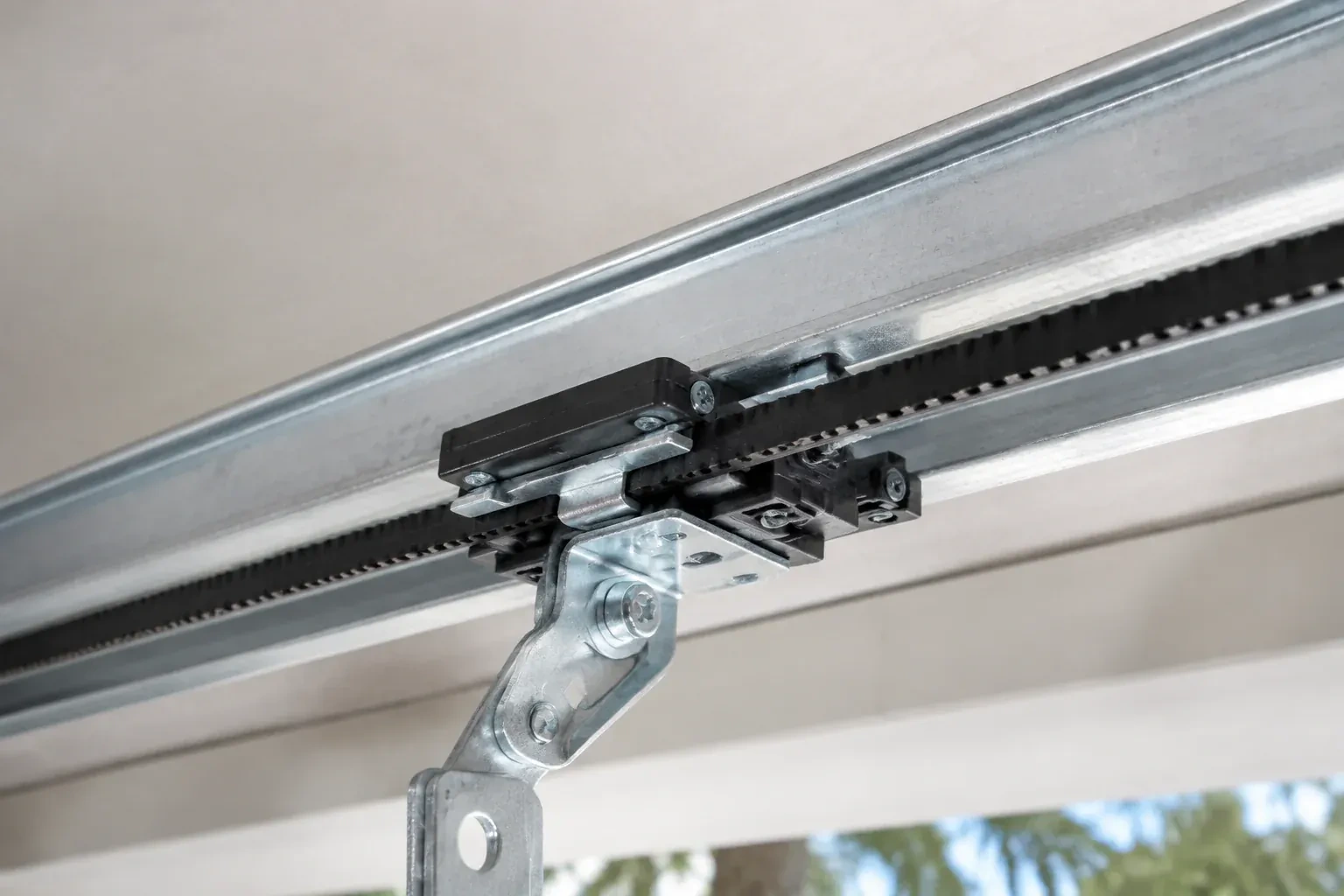
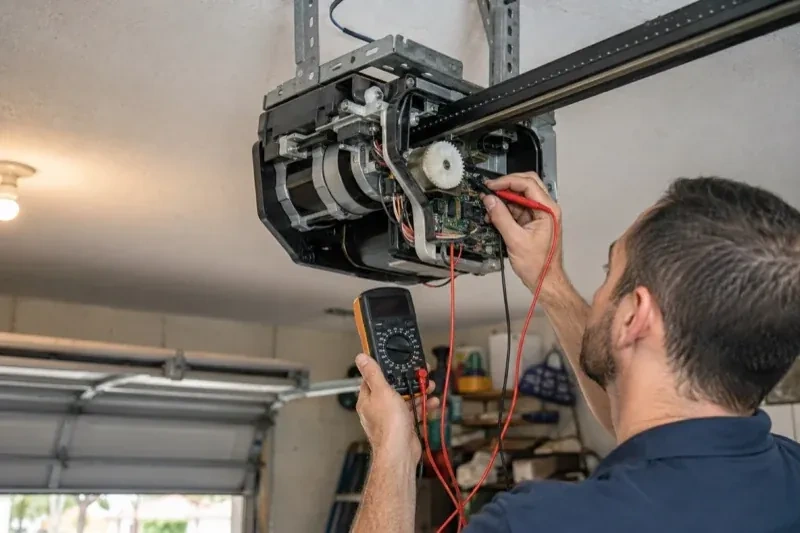
The belt runs over two wheels: a drive sprocket on top of the motor head and an idler pulley at the far end of the rail. The technician looks at the sprocket's teeth for hooking and wear, feels for wobble on its shaft, and checks the housing below it for the plastic shavings that mean the drive gear inside is stripping. At the front, the idler pulley is spun by hand for roughness or a dry bearing and sighted along the rail to see whether it is letting the belt track off to one side. A worn sprocket chews a new belt within months, so this check decides whether the gear-and-sprocket kit belongs in the repair.
Fitting a new belt
A replacement belt is matched to the rail length and to the tooth pitch of the sprocket, so a belt for a 7 ft door rail differs from one for an 8 ft rail. The old belt is unclipped from the trolley, lifted off the drive sprocket and drawn back around the idler pulley. The new belt is threaded the same way in reverse, teeth toward the sprocket, its ends joined to the trolley shaft with a fresh clip or master link. The technician confirms the belt sits centred on the pulley and in the rail, then tensions the spring to specification. Because the sprocket was bare, the motor and trolley are phased before the door is reconnected.
Ready for the cold
If the garage is detached or unheated, the belt has still been tensioned to the opener maker's specified measurement, and the door hardware carries a cold-rated lubricant for the season. Expect the operator to sound a little different at minus twenty; rubber stiffens and the hum deepens, which is normal. If the door reverses on a bitter morning before it has moved, the bottom seal is frozen to the slab and the force setting is protecting the belt and the door. Free the seal by breaking the ice along the threshold, then press the button again. Wiping the seal with silicone before winter stops it bonding to the concrete in the first place.
Belt-Drive Opener Repair
In the van
2x4 offcut for the reversal test
Reinforced drive belt with clip
Door arm and clevis pins
Belt tension spring and square nut
Idler pulley and bearing

Belt-Drive Opener Repair
What affects the quote
Height of the ceiling
Where the operator hangs under a tall or vaulted ceiling, the sprocket and idler are reached from taller ladders and the work at the head takes longer.
Trolley condition
A trolley that releases and re-engages cleanly stays. One that is cracked, stuck or loose on the rail is replaced during the same visit and listed as its own part.
Access to the rail
Shelving, a car lift or a loft beside the rail, or a garage that is full on the day, mean more careful handling along the belt's length, and the technician allows for it once the space is seen.
What to have ready
- Does the motor run while the door stays still, or does the door stop partway?
- Can you send a photograph along the rail showing the belt, and one of the label?
- When did the trouble start, and did it follow a power cut or a pulled red cord?
Belt-Drive Opener Repair: questions
QuestionsCan I adjust the belt tension myself?
The adjustment nut is reachable and some owners do, but there are two things to get right. The operator must be unplugged and the door released first, and the spring must be set to the maker's length rather than tightened until the sag disappears, since an over-tight belt is noisy and hard on the motor. After any change, the reversal tests should be repeated. Many people prefer to have it done during a service.
The motor runs but the door stays still. What has happened?
Something between the motor and the door has let go. On a belt drive the usual suspects are a broken clip where the belt joins the trolley, a belt that has jumped off the sprocket or idler pulley, a trolley that failed to re-engage after the red cord was pulled, or a stripped drive gear inside the motor head, which leaves plastic shavings on the housing. Each is a specific repair.
Can the belt just be tightened, or does it need replacing?
Tightening is the first thing tried. Tension is set at the inner trolley by a square nut that compresses a spring to the length the maker specifies. If the belt reaches that setting and runs without sprocket noise, it stays. If the adjuster is wound to its end and the belt still sags, or the rubber is cracked, glazed or missing teeth, a new belt is the right repair.
Related services
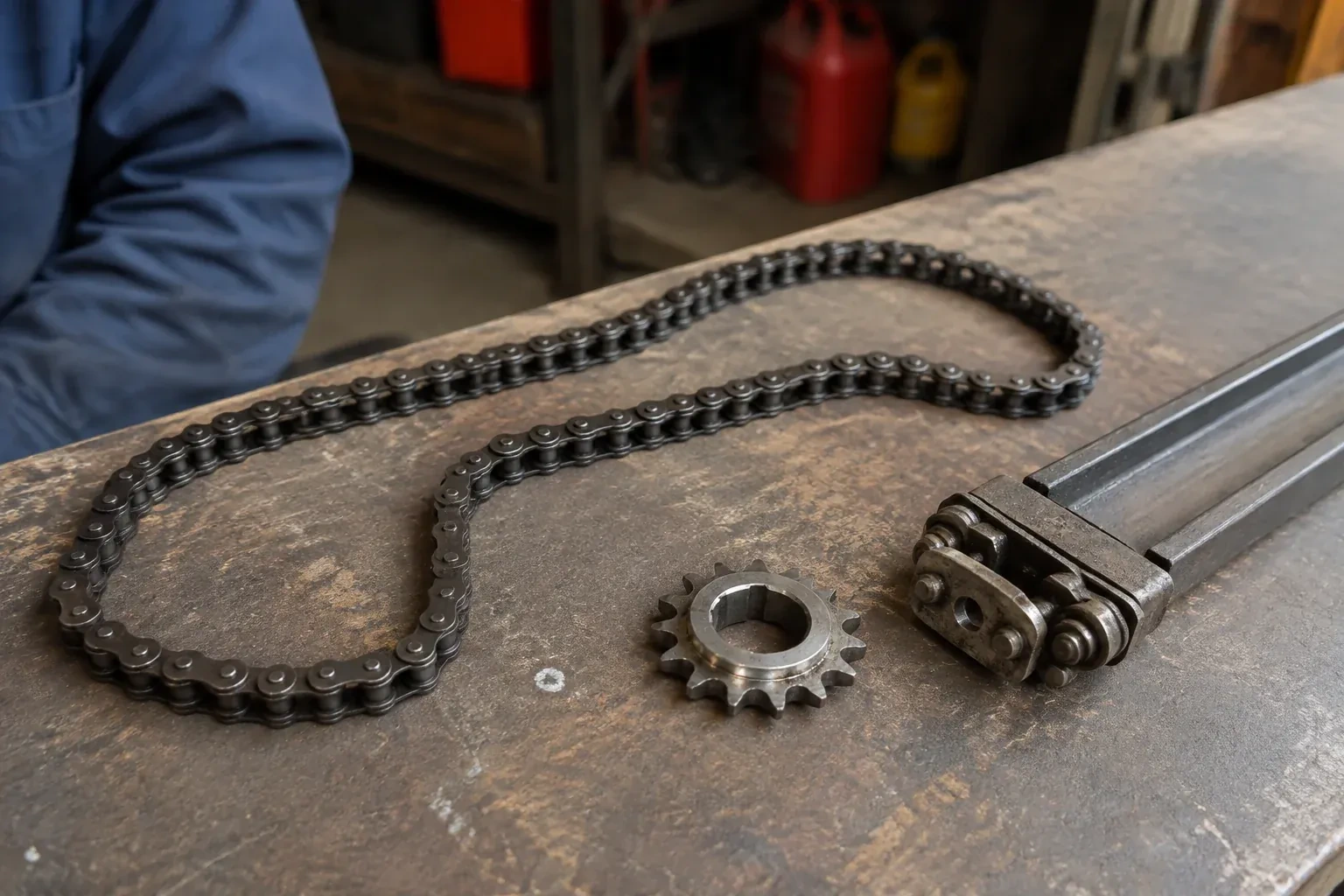
- Chain-Drive Opener RepairThe chain hangs in a loop under the rail and slaps against it on every cycle.
- Garage Door Opener ReplacementThe bedroom above the garage shakes every morning at six when the chain drive fires up.
- Photo-Eye Sensor Alignment or ReplacementAfter a cold night the door stays open until the garage warms up.