Springs · Long Point
Torsion Spring Replacement in Long Point
After pulling the red release cord, you tried lifting the door yourself and it would barely leave the floor.
In plain words
On a door with two springs, replacement usually starts with a conversation about scope. Both springs have completed the same number of cycles, so when one breaks the other is typically close behind, and replacing the pair together gives the door two matched springs sharing the load evenly. The technician explains what the installed system is, how each spring is loaded and what the door's weight calls for, then fits and winds the springs as a set. The result is a balanced door with a fresh cycle life on both sides rather than a repair that may be repeated soon.
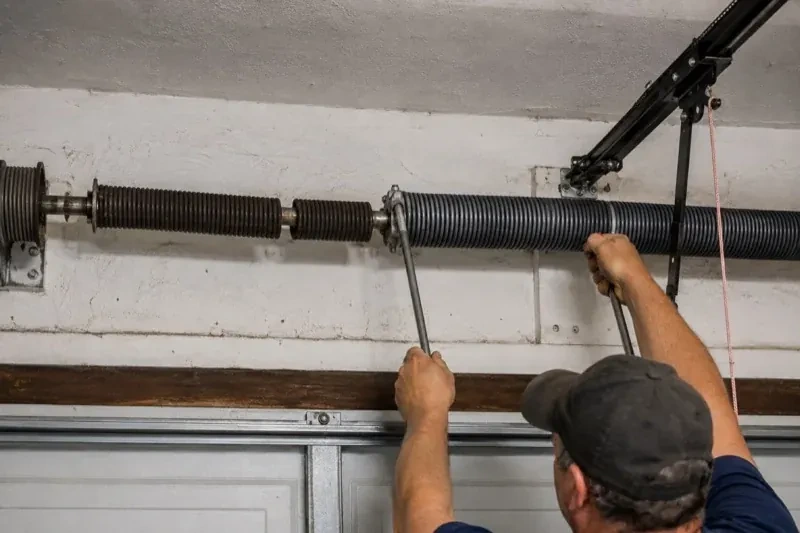
How the visit goesLooking up at the coil above the door, you can see a clean split with a gap of several centimetres between the two halves. The rest of the spring looks fine, but the door has become almost impossible to move by hand.
Torsion Spring Replacement
How the visit goes
Understanding how the door is used
How the household uses the door shapes the spring that suits it. The technician asks how many times a day it typically opens, whether it is the main entrance to the home, and when springs were last replaced, if ever. A door cycled eight times a day accumulates use far sooner than a weekend garage. Age of the door and any previous partial repairs are also relevant, especially a single spring changed on a paired system. This conversation lets the customer choose between a standard-cycle spring and a higher-cycle option with a clear picture of what each means for them.
Balancing the door by hand
Once the clamps are off, the technician lifts the door by hand to about waist height and lets go. A balanced door stays where it is, or drifts only slightly. If it rises on its own, the spring has a little too much tension and is eased a quarter turn; if it drops, a quarter turn is added. The door is then run through its full travel, watching that both sides move together and the sections stay flat in the tracks. This is repeated until the door feels light and stops cleanly at several heights, which is the standard the whole job is measured against.
Keeping the spring in good shape
A little care keeps the new spring running smoothly for its full life. Once or twice a year, spray the coils with a garage-door lubricant so the steel moves without rubbing, and do the same for the hinges, roller bearings and the end bearings at each side of the shaft. Autumn is a good time, since cold thickens grease and stiffens hardware. Leave the track dry, because lubricant there collects grit. Over the years, glance at the spring for gaps or rust streaks, and if the door starts to feel heavier by hand, book a balance check before a spring reaches its limit.
Torsion Spring Replacement
In the van
Stationary cone bolts and nuts
Centre bearing bracket and bearing
Torsion shaft and coupler
Socket set and wrenches
Wire gauge and tape measure
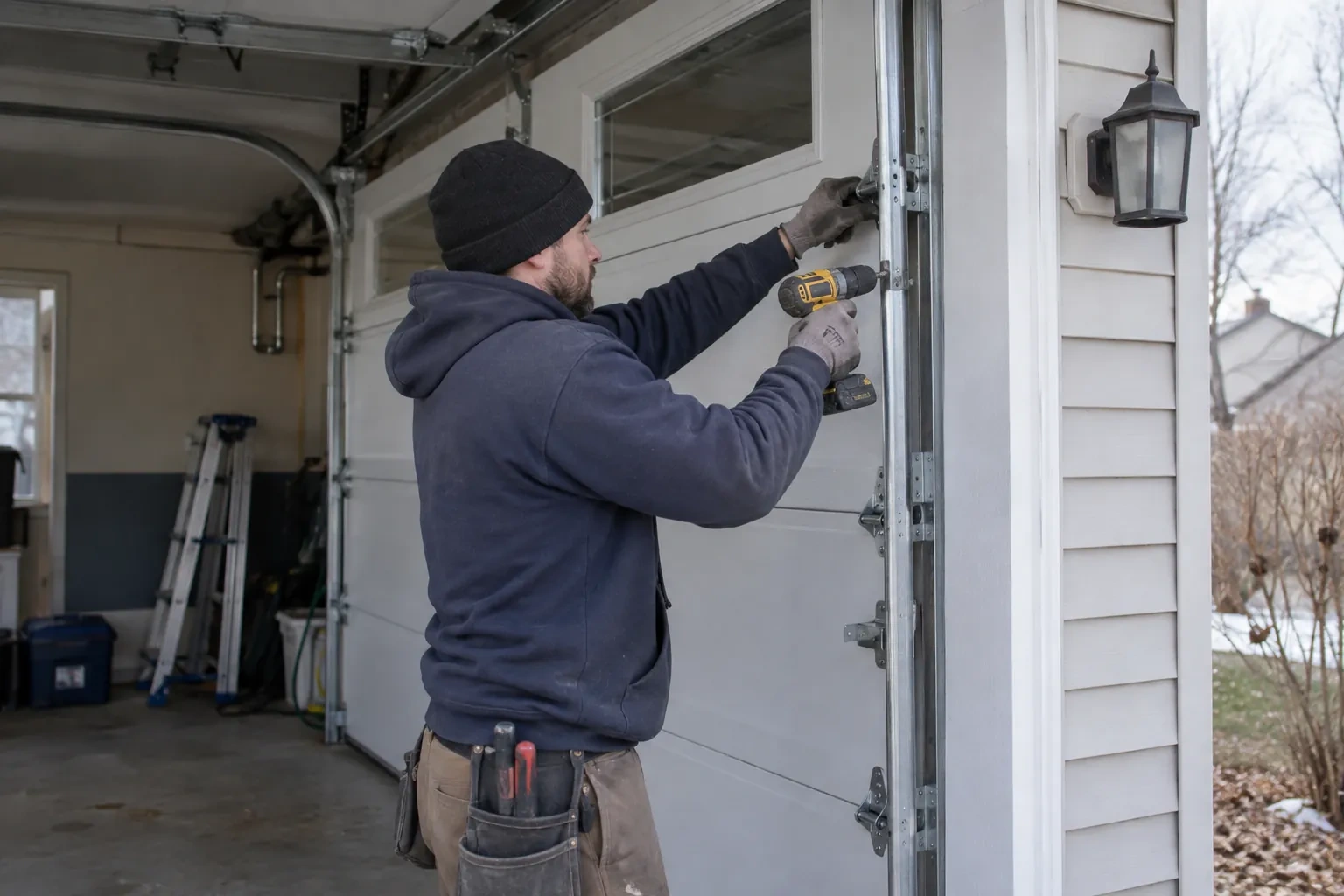
Torsion Spring Replacement
What affects the quote
Centre and end bearings
With the shaft out, bearings that grind, wobble or have seized are renewed. Smooth bearings reduce the load on the spring and opener, and their condition is confirmed by hand during the check.
Converting from extension springs
Moving a door from extension springs to a torsion system adds a shaft, bearings, drums and brackets, and removes the old pulleys, which is a broader job than replacing an existing torsion spring.
One spring or two
A single-spring door needs one spring; a paired system is usually replaced as a matched set of left- and right-wound springs. The number of springs and whether both are replaced is the largest single influence on the scope.
What to have ready
- Did you hear a loud bang before the door stopped working?
- Do you know the door's age or when the springs were last replaced?
- About how many times a day does the door open and close?
Torsion Spring Replacement: questions
QuestionsWhat about a garage with very little space above the door?
Low-headroom garages use a different arrangement: the spring assembly may be mounted at the rear of the horizontal tracks, or special low-headroom drums and track bring the door up with less clearance. Replacement follows the same principles, but the drums, cable routing and turn count differ. The technician identifies the system on arrival and brings hardware that suits it, so the door balances correctly in the space available.
What should I do before the technician arrives?
Keep the door closed and leave it alone, move any vehicle you can reach out of the way or at least clear the space in front of the door inside the garage, and make sure there is room for a ladder beneath the shaft. Note whether there is one spring or two and whether a cable is loose. A photo of the spring area, the drums and the opener helps the technician bring the right parts.
What other parts are often replaced with the spring?
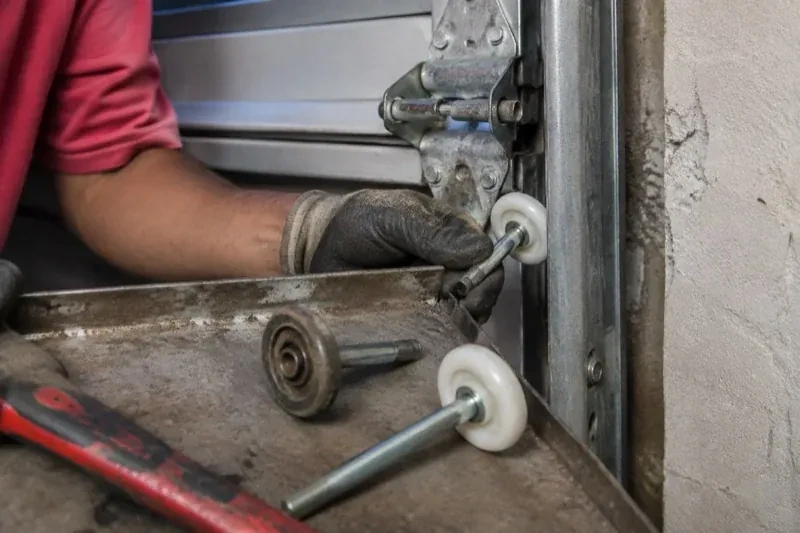
The shaft is free during a spring change, which makes it the natural time to renew the centre bearing and end bearings if they grind or wobble. Lift cables that show fraying or rust at the bottom brackets are replaced so the new spring pulls on sound steel, and cracked or worn drums are swapped. On older doors, a corroded centre bracket or loose lag bolts may also be addressed. Each item is shown and explained before it is added.
Related services
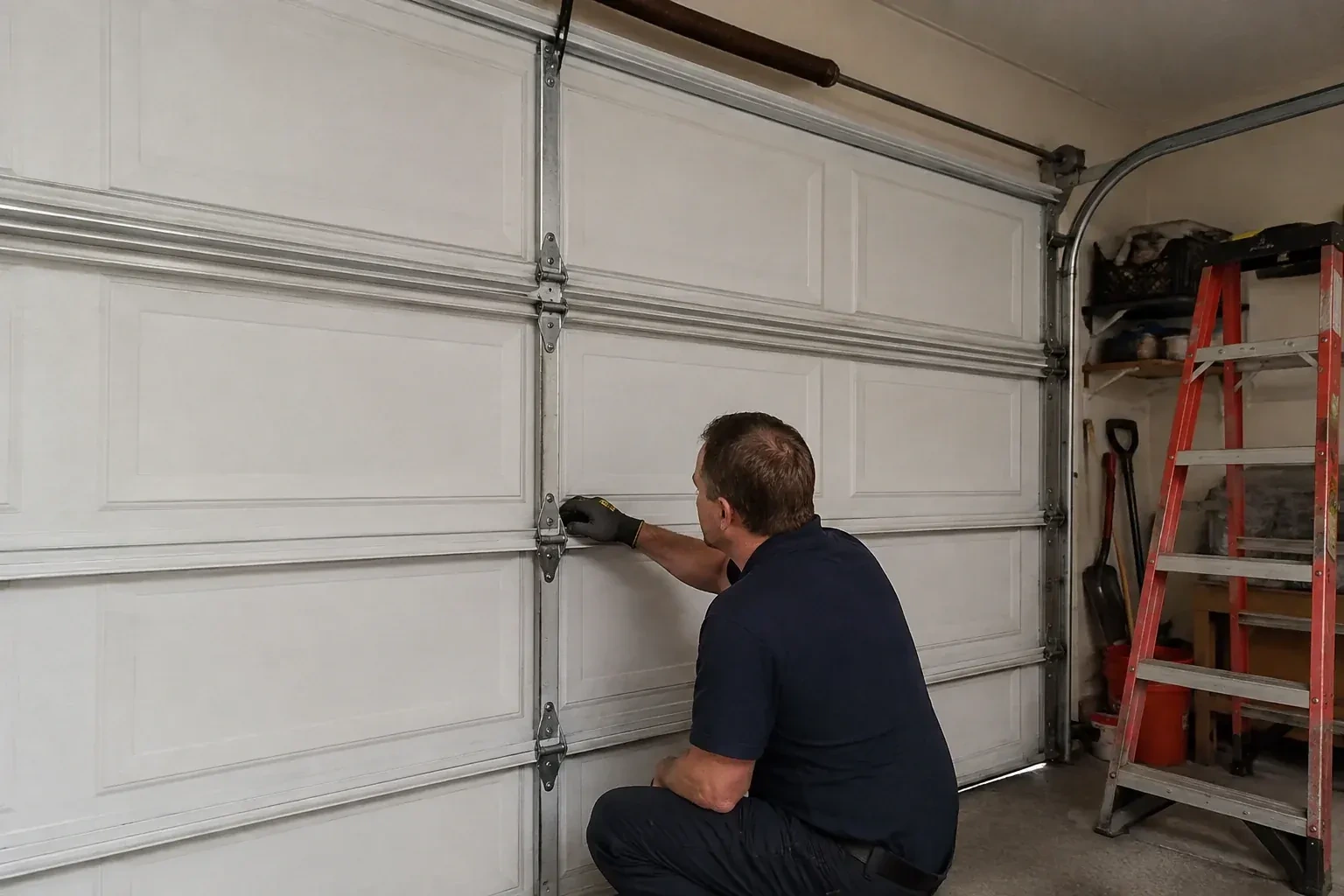
- Garage Door Hinge ReplacementPressing a hand against one of the middle hinges makes it rock on the panel.
- Garage Door Track Repair or ReplacementThe garage floor has settled at one corner, and the door now scrapes the concrete on that side while daylight shows at the other.
- Garage Door Cable ReplacementStanding inside with the door closed, you notice the cable on the right side near the floor has gone fuzzy.