Repairs · Long Point
Garage Door Bottom Seal Replacement in Long Point
After a spring rain there is a puddle inside the door that reaches the tires.
In plain words
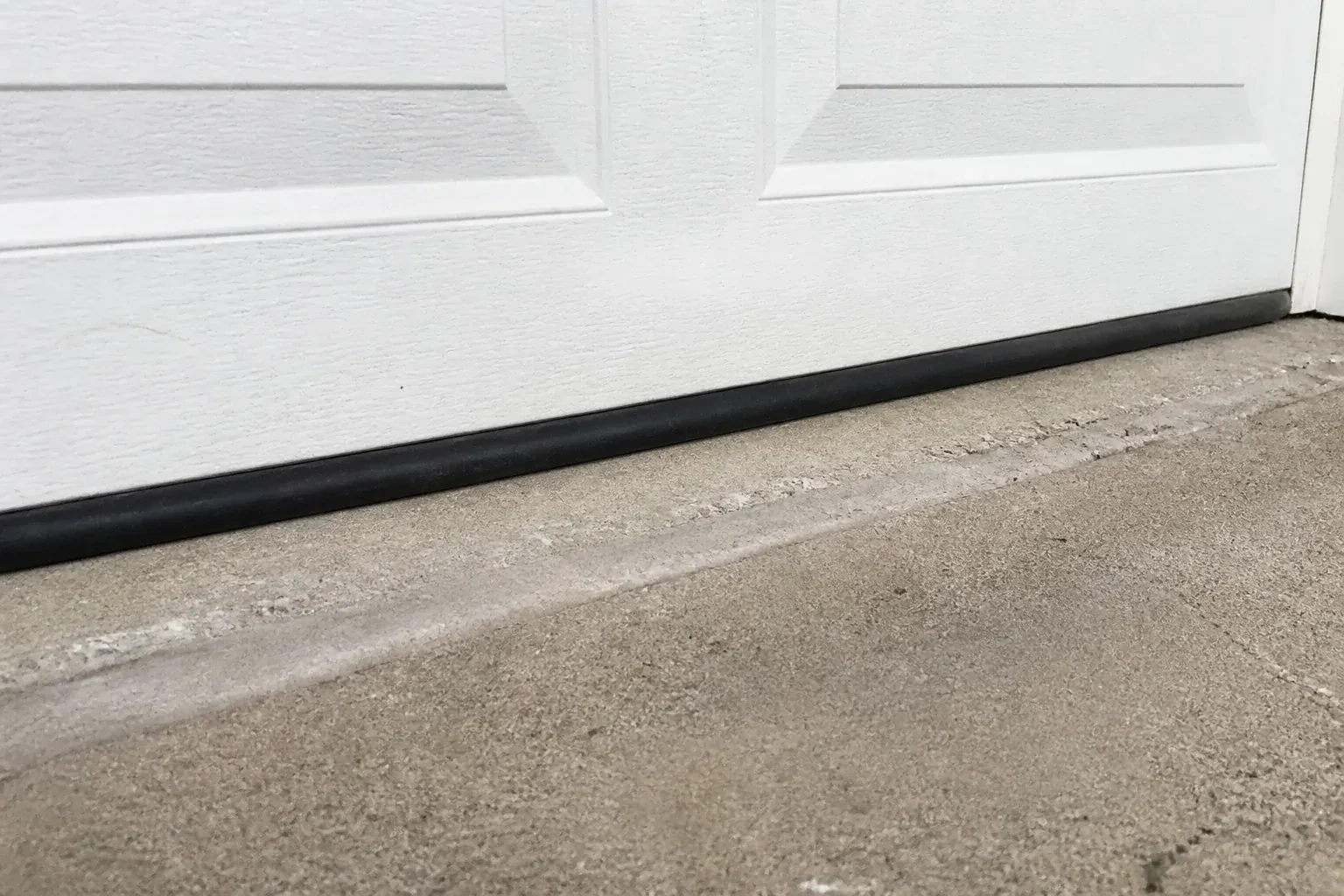
In this climate the bottom seal lives a hard life. Meltwater from the car pools at the threshold and freezes the seal to the slab, and the next press of the remote tears it or drags it out of its channel. Road salt stiffens the vinyl and eats the aluminum retainer; deep cold turns a supple strip rigid. Replacement puts a cold-rated profile on a sound retainer, sized to meet the floor without over-compressing, and the technician shows how a wipe of silicone each autumn and a clear threshold keep the new strip from bonding to the ice. The door closes softly onto rubber again, not onto a frozen ridge.
How the visit goesEvery mild afternoon the snow melts off the car, runs to the door, and by morning the rubber strip along the bottom is frozen to the concrete. Last week the opener lifted the door and left half the seal on the floor.
Garage Door Bottom Seal Replacement
How the visit goes
Reading the gap with the door closed
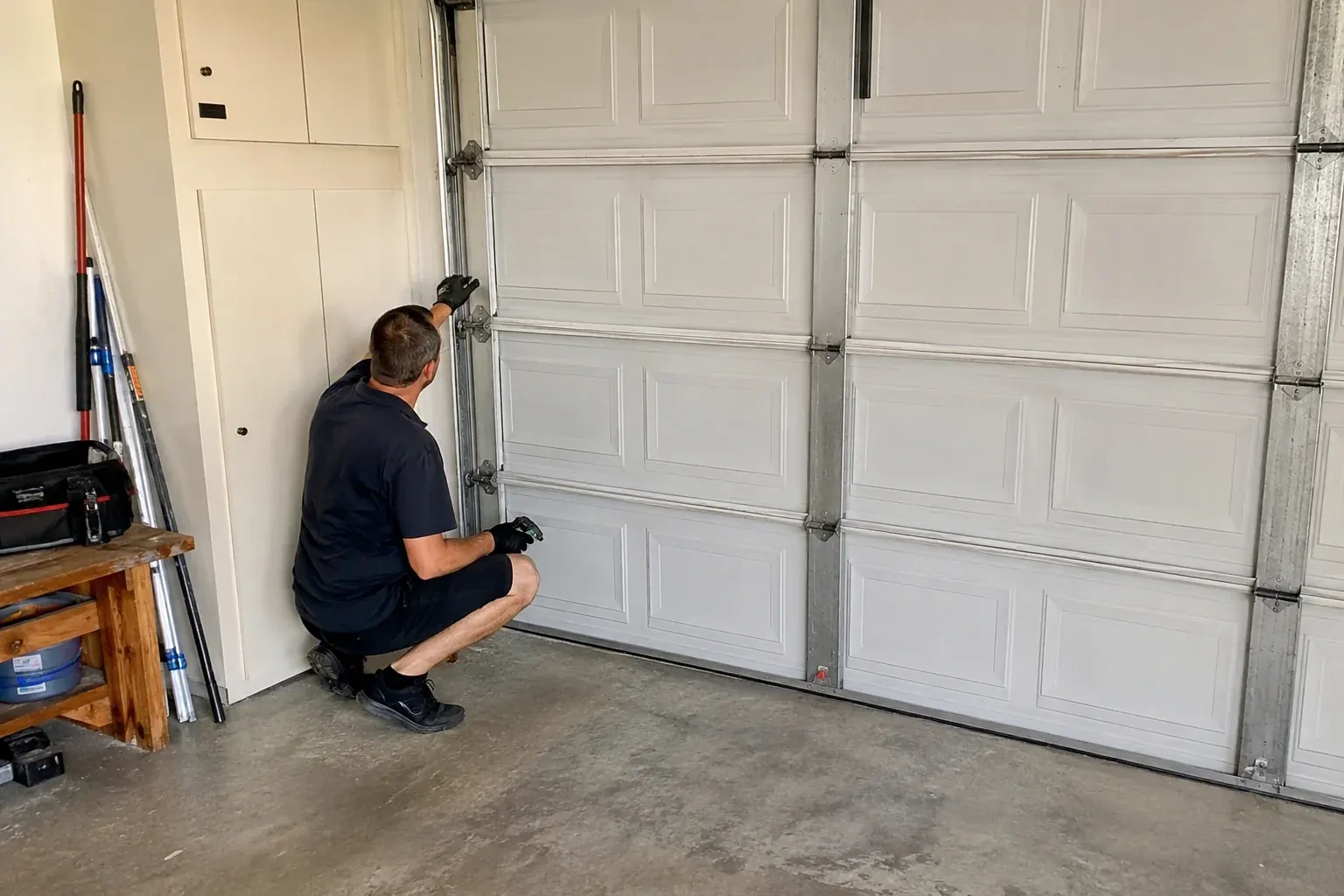
The assessment starts with the lights off and the door down. From inside, the technician looks along the floor line for daylight and notes where it shows: a thin line the full width, a wedge at one corner, or a patch in the middle. A straightedge laid across the threshold shows whether the slab is flat or dished, and a hand run along the seal feels where it touches and where it hovers. Photographs of the worst spots are taken so you can see what is being fixed. This map of the gap tells the technician how tall the new seal needs to be and whether anything other than the seal is contributing.
Adding a threshold seal on a difficult floor
Where the slab slopes toward the garage or has a dished edge, a threshold seal glued to the floor follows the existing contour and gives the bottom strip a raised, consistent edge to meet, rather than levelling the floor itself. The floor line is marked with the door closed, the concrete is swept and cleaned for the adhesive, and the threshold is dry-fitted and trimmed against each jamb. Adhesive is laid along the underside, the threshold pressed down, and the door lowered onto it while it sets. The result is a small raised lip on the outside that turns water back to the driveway and a bottom seal that lands on a consistent edge along its length.
What to look for each season
Once a season, close the door, turn off the lights and look along the floor. You are checking for a line of daylight, a corner where the seal hovers, an end that has slipped from its channel, and cracks along the fold of the bulb. Run a hand along the strip for stiff or brittle patches. Then watch the door close under power once and notice how it lands. A change in any of these is worth a call while the fix is a seal or an adjustment rather than a torn strip dragged through a winter. The check takes less time than reading this paragraph.
Garage Door Bottom Seal Replacement
In the van
T-style bottom seal
Aluminum bottom seal retainer
Straightedge and tape measure
Bead-style bottom seal
Seal end caps
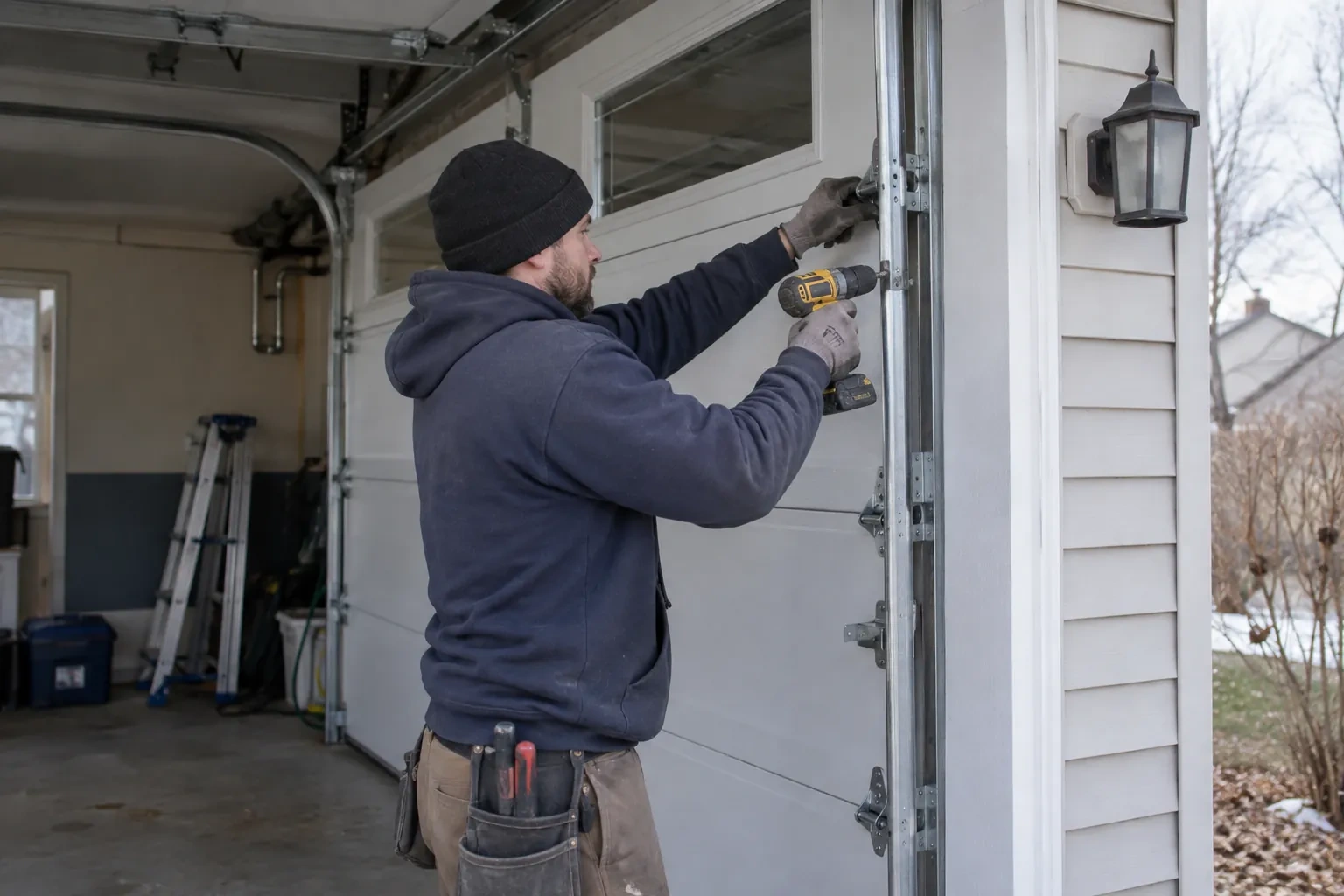
Garage Door Bottom Seal Replacement
What affects the quote
Access and clearance
Storage, a vehicle that must stay inside, or shelving against the bottom of the door slows the work. A clear metre inside the door makes the visit shorter.
Floor and threshold shape
A dished, sloped or heaved slab may call for a taller bulb profile or a threshold seal on the floor, each of which is quoted as a separate choice you can accept or leave.
Rodent-resistant seal
A profile with embedded stainless mesh for a garage that has had repeated chewing costs more per length than plain vinyl and is offered where the history calls for it.
What to have ready
- Does the driveway slope toward the garage, or does water pool at the door?
- Have you seen mice or droppings in the garage?
- Can you send a photo of the end of the bottom section showing the retainer?
Garage Door Bottom Seal Replacement: questions
QuestionsWhy does the seal freeze to the floor, and what should I do when it does?
Snow melts off the car, runs to the low point at the door and refreezes overnight around the seal. When that happens, leave the remote alone, since the opener will tear the strip or pull the door out of level. Free the seal by hand with gentle warmth along the line or by working a plastic scraper under it, then run the door. A film of silicone on the seal each autumn largely prevents it.
Is this something I can do myself?
Many homeowners do, and a technician's value lies in the parts that go wrong: identifying the exact profile so the seal seats, freeing a strip that has fused into its channel, spotting a retainer or door-level problem behind the gap, and resetting the opener's limit and force so the door lands gently and still reverses on an obstruction. If you would rather have it measured, fitted and tested in one go, that is what the visit is for.
Will I need a new retainer as well as a seal?
Only if the existing one is damaged, and most are reused. A retainer that is straight, tight to the rail and free of heavy corrosion stays. One that has been kinked by a bumper or shovel, spread open so the seal slips out, or eaten by salt is replaced with a matching aluminum extrusion so the new seal seats properly. The inspection at the start of the visit settles which applies.
Related services
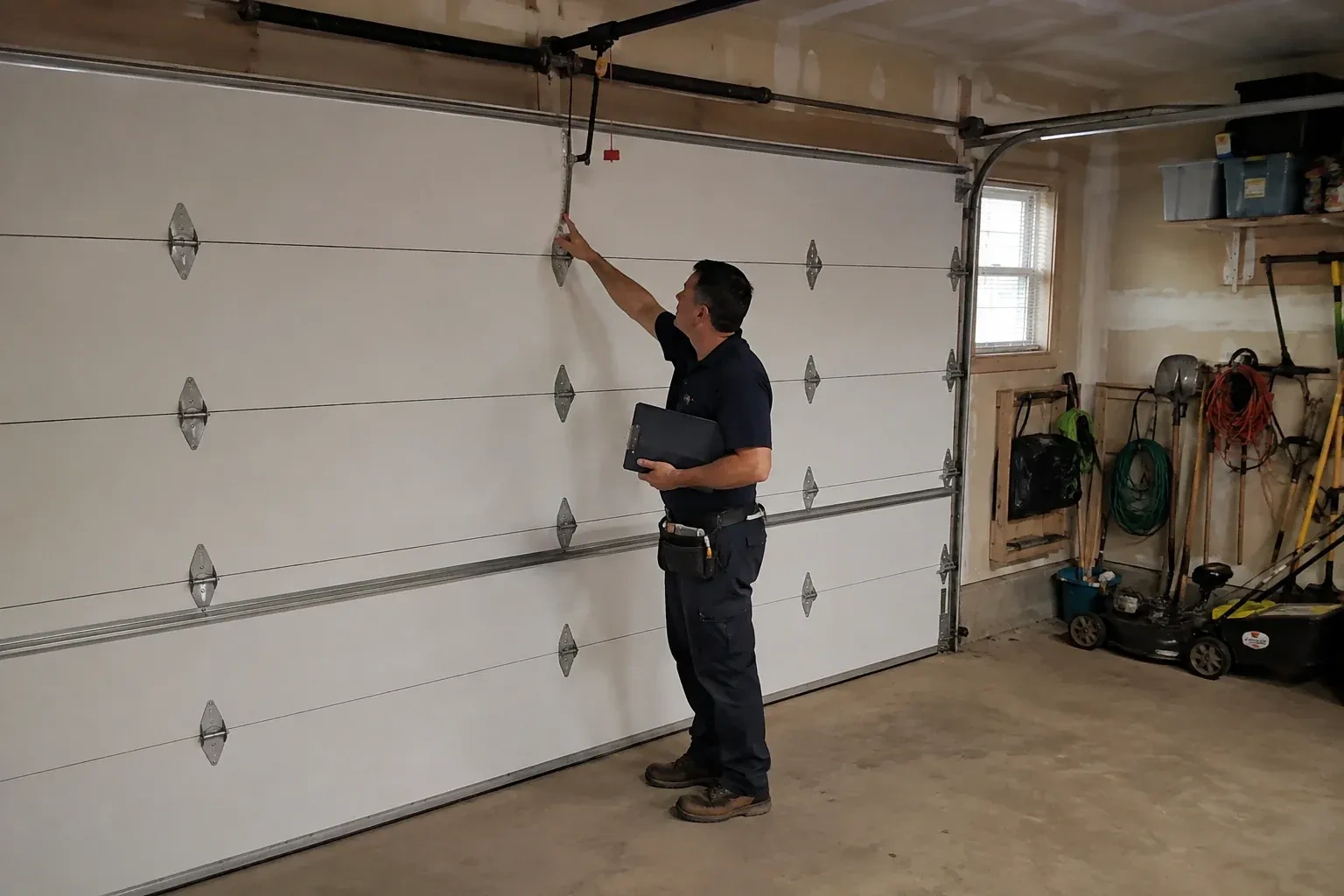
- Garage Door Tune-UpThe door lands with a thud you can feel through the kitchen floor, and sometimes it bounces back up a few centimetres before settling.
- Off-Track Garage Door ResetThe door came down fine but with a scraping noise, and now the vertical track on one side is bowed away from the wall.
- Garage Door Panel ReplacementYears of slap shots have peppered the lower two sections with dents.