Openers · Normandale
Emergency Release Repair in Normandale
Halfway up, the door lets go of the opener with a clunk and sinks back to the floor while the trolley carries on to the top alone.
In plain words
The operator standard for residential openers in this country asks for a manual release that is coloured red, easy to tell apart from the rest of the mechanism, and reachable from the floor, with the handle no more than about 1.8 metres up. The reason is plain: in an outage or emergency, someone who has never touched the opener must be able to find and use it. Emergency release repair brings an opener back to that standard when the handle has gone missing, been tied out of reach, or was left too high after a door change, and leaves the household knowing what the red handle is for.
How the visit goesYour garage is detached and has no side door. The remote is dead, the keypad is dead, and the small round lock in the top panel is meant to be your way in. The key goes in and turns, but nothing on the other side lets go.
Emergency Release Repair
How the visit goes
Where the handle hangs
Height and position are measured, not guessed. The handle should hang no more than about 1.8 metres above the floor so a person standing on the slab can reach it, and it should clear the roof and antenna of the vehicle parked beneath. The technician also looks at what surrounds it: shelving, bikes on hooks, a storage loft, a cord tied up around the rail by a previous owner. A handle nobody can find in the dark is as good as no handle at all, so obstructions and a cord that was shortened after a door change are recorded as part of the fault, not as clutter.
Replacing the trolley or carriage
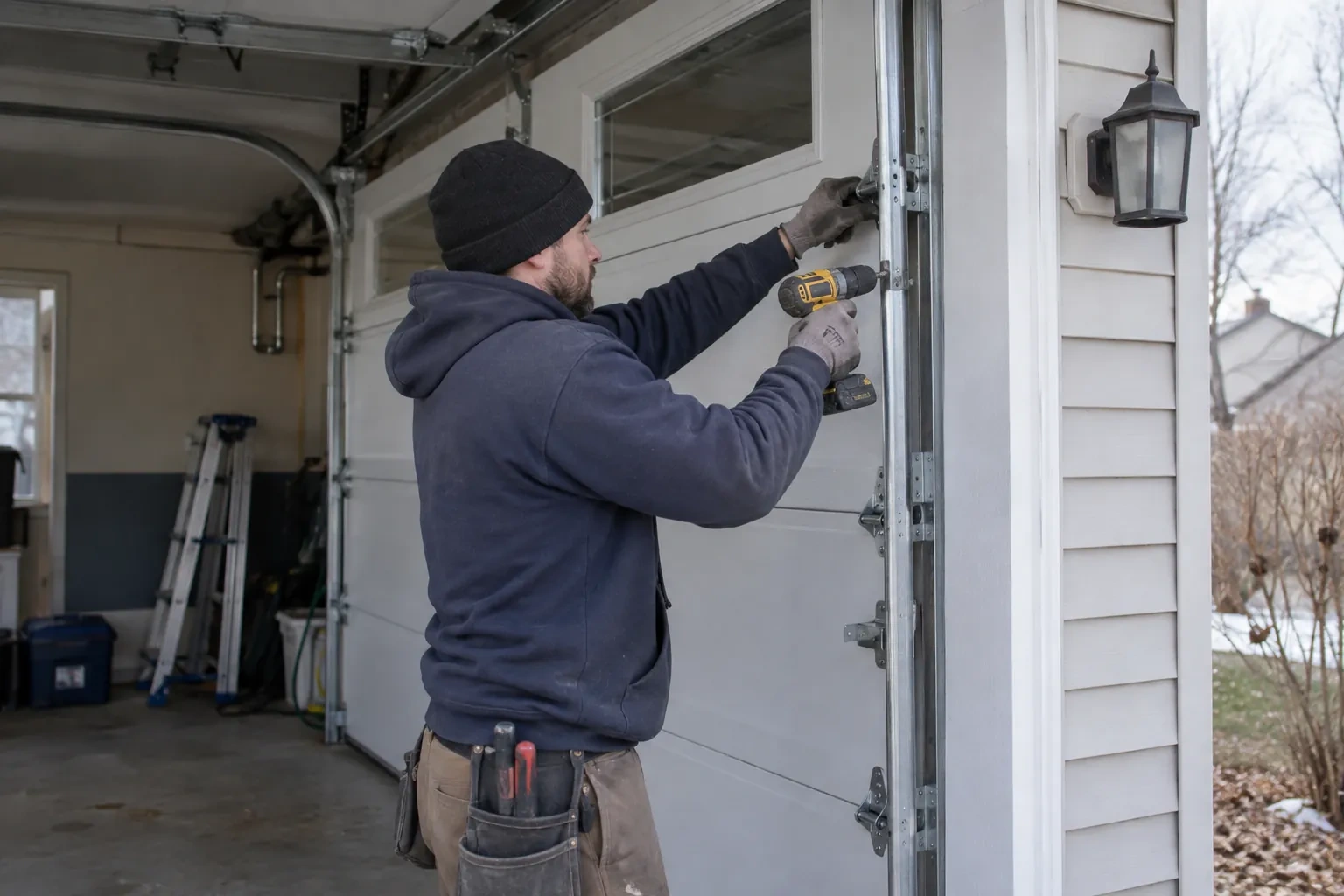
Latch teeth that have worn round, a cracked trolley body or a carriage bent when a door dropped onto it call for a new assembly. The technician slackens the drive, disconnects the arm from the door, slides the old trolley off the rail and fits the replacement that matches the opener's model and rail type, then reattaches the arm with new clevis pins and clips. The chain or belt is set to the correct tension, the trolley is run to the door and latched, and the opener is cycled until the technician is satisfied the connection is solid at both ends of travel. Old parts are shown to you before they leave.
A monthly minute of checking
The industry advice is to look over the door and opener about once a month, and the release fits into that habit. With the door closed, pull the handle and raise the door by hand to about halfway to feel that it moves freely and holds where you leave it; then lower it and reconnect. Follow with the reversal checks: the door should back off a length of 2x4 laid flat on the floor and reverse when something passes through the sensor beam. If the door ever feels heavier than it did today, or the trolley stops clicking home, that is the moment to call rather than to keep using it.
Emergency Release Repair
In the van
Hole saw for the top section
Chain or belt tension hardware
Trolley and carriage assembly
Door arm, clevis pins and clips
Release lever and spring
Emergency Release Repair
What affects the quote
Travel and tension reset
Where the trolley was freed or swapped, the chain or belt is re-tensioned and the travel limits are reset, then the reversal tests repeated. That setup time is part of the job and shown as such.
Age and parts availability
Trolleys, levers and rope kits for openers from the last two decades are stocked. An older model may need a part sourced, and the quote says whether that is a wait or a reason to consider replacement.
Damage from a door that dropped
A release pulled on an unbalanced open door can bend the arm, the carriage, a bracket or a panel. Anything that took the impact is listed on its own once it has been seen.
What to have ready
- Is anything stored under the rail or tied around the cord?
- Is your opener a chain, belt or screw unit on a rail, or mounted on the wall beside the door?
- Does the garage have a side door or a door into the house?
Emergency Release Repair: questions
QuestionsCan I replace the cord and handle myself?
A rope and handle kit is a simple part, and many homeowners fit one. The details matter, though: the knot at the lever has to hold under a hard pull, the handle has to end up at the right height, and the lever should be checked for wear while you are up there. If the cord failed because the lever or trolley is worn, a new rope alone leaves the real fault in place. Have it done as part of a release check and both get looked at.
I pulled the release and the door was very heavy. Is the release broken?
The release did its job; the weight is the door telling you its springs are no longer carrying it. A balanced door lifts with modest effort and holds still at about a metre. A heavy one needs the counterbalance looked at, which is work with winding bars for a technician trained for tensioned hardware. During the visit the door side is corrected first, then the release is put back into use on a door that lifts as it should.
How high should the release handle hang?
No more than about 1.8 metres above the floor, so an adult standing on the slab can reach it, and high enough to clear the roof of the car parked beneath it. It should also be plainly visible and red. If a new door or a rail change left the cord short, or a previous owner tied it up around the rail, the technician cuts a fresh rope to the right length and moves any obstruction out of the way.
Related services
- Chain-Drive Opener RepairThe chain hangs in a loop under the rail and slaps against it on every cycle.
- Belt-Drive Opener RepairHalfway up, every single time, the door hesitates and there is a ratcheting sound from the motor head, then it carries on.
- Garage Door Opener ReplacementThe bedroom above the garage shakes every morning at six when the chain drive fires up.