Springs · Westmount
Garage Door Balance Adjustment in Westmount
The door has grown heavy so gradually you stopped noticing, until a visitor tried to lift it and could not.
In plain words
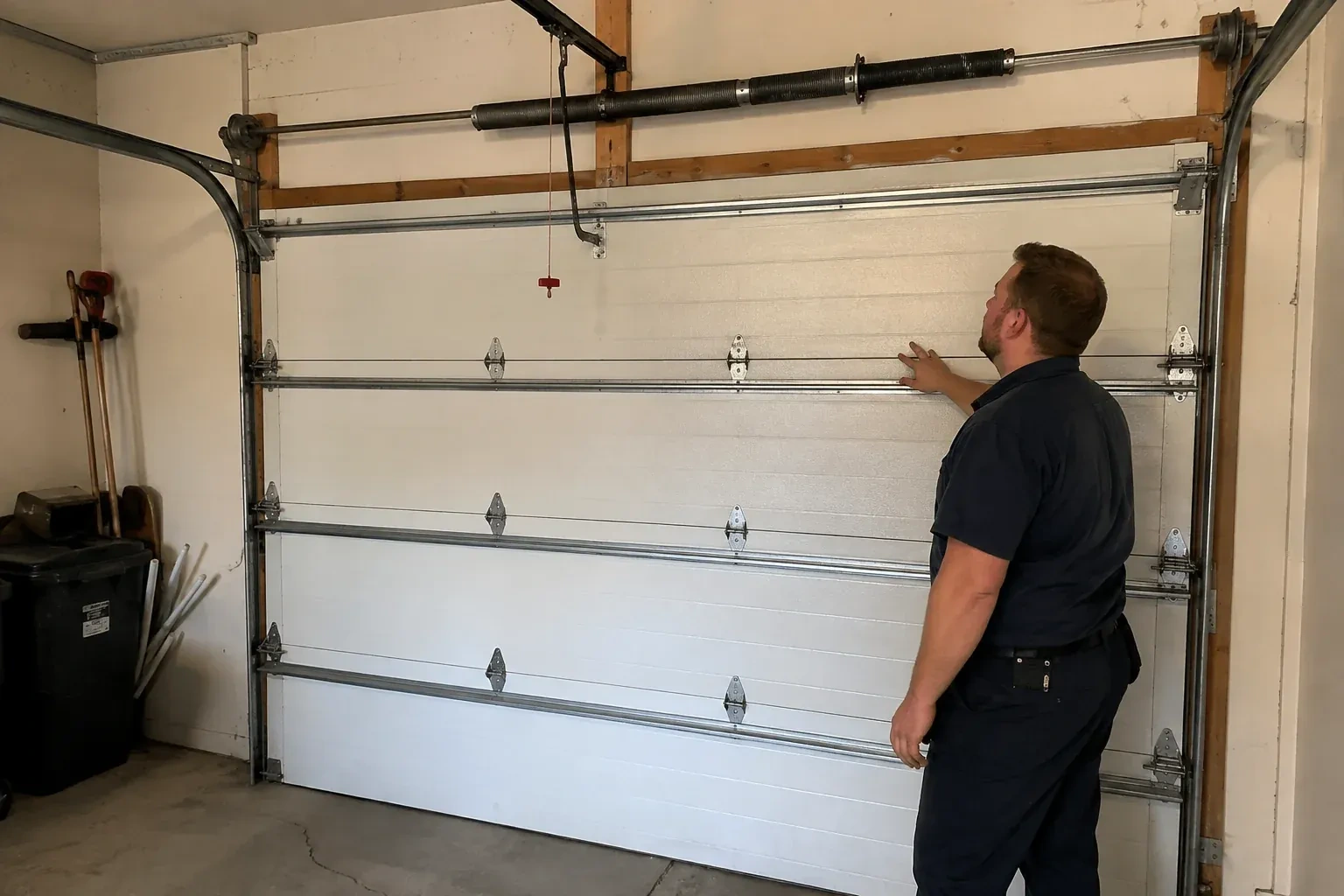
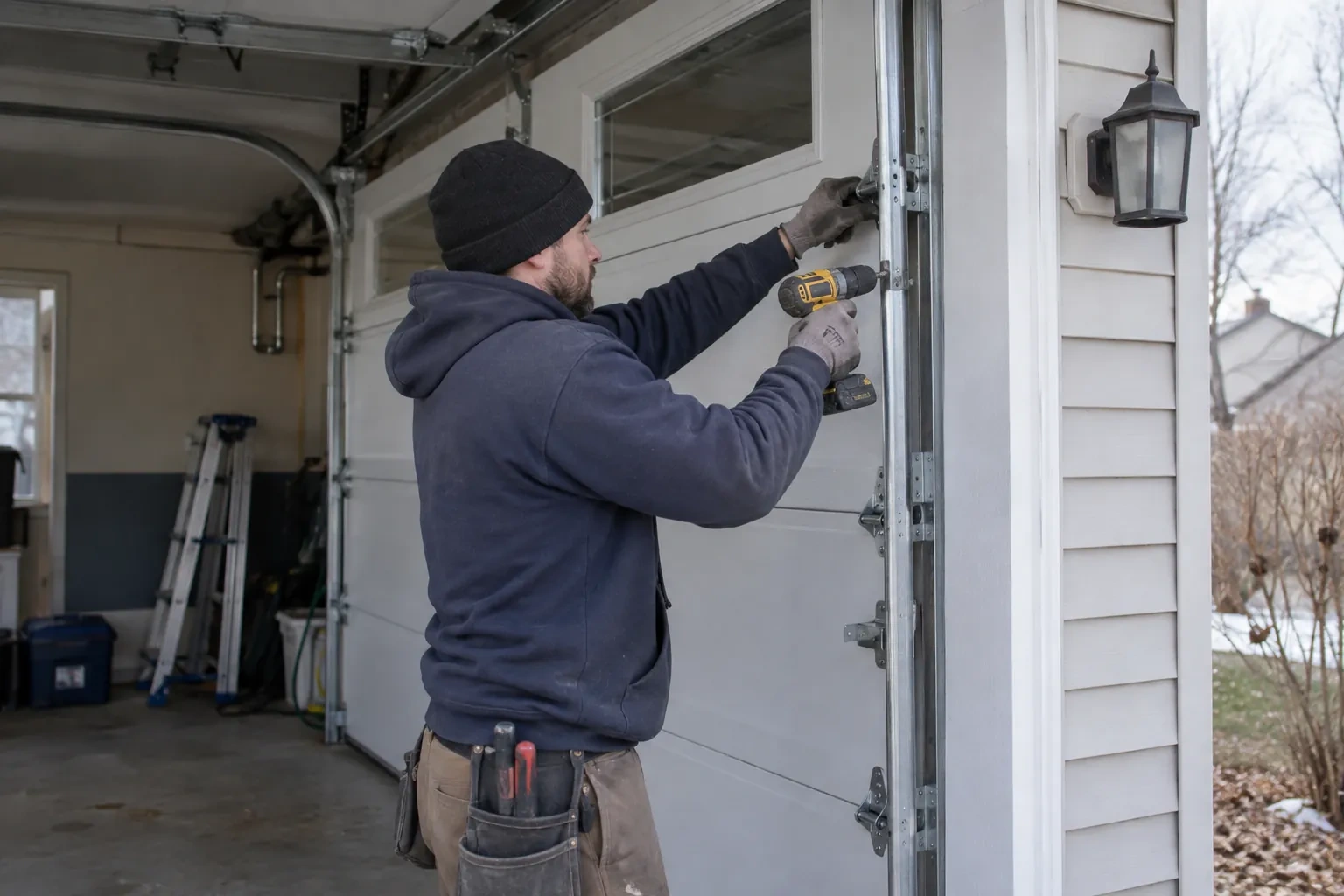
On a torsion door the springs sit on a shaft above the opening, and balance is set by how many turns of wind they carry. A seven-foot door typically needs a little over seven full turns; a quarter turn either way changes how the door feels. The technician clamps the door, fits winding bars into the cone, loosens the set screws, and adds or releases tension one quarter turn at a time, locking the cone again before each test. Both springs on a two-spring door are set alike so the shaft carries the load evenly. That precision is what makes the door hold wherever it is stopped.
How the visit goesWith the door closed, daylight shows under one bottom corner and the seal is squashed flat at the other. As it rises, the left side leads by an inch or two, and the top section twists slightly as it turns into the horizontal track.
Garage Door Balance Adjustment
How the visit goes
Looking at the opener's settings without touching them yet
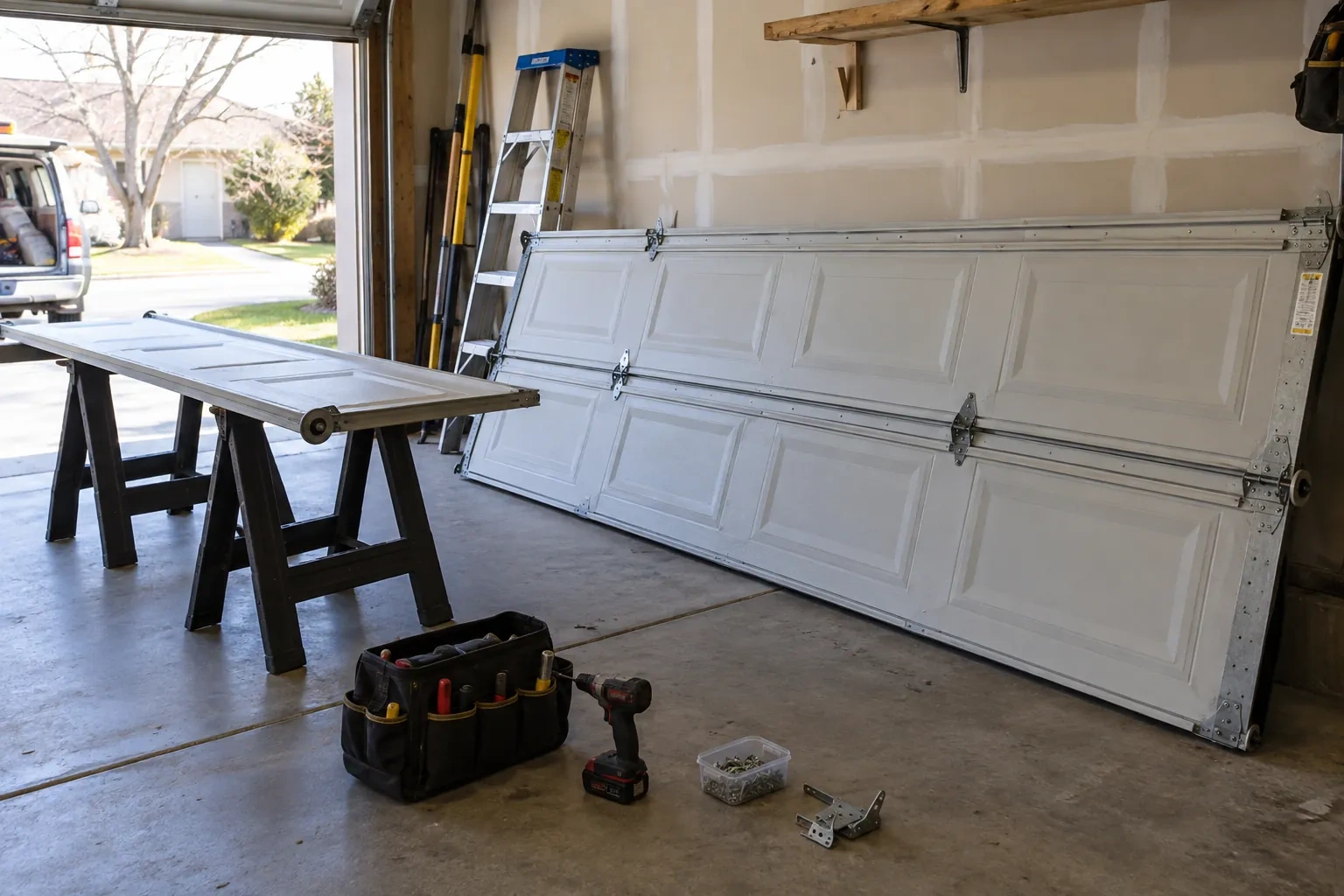
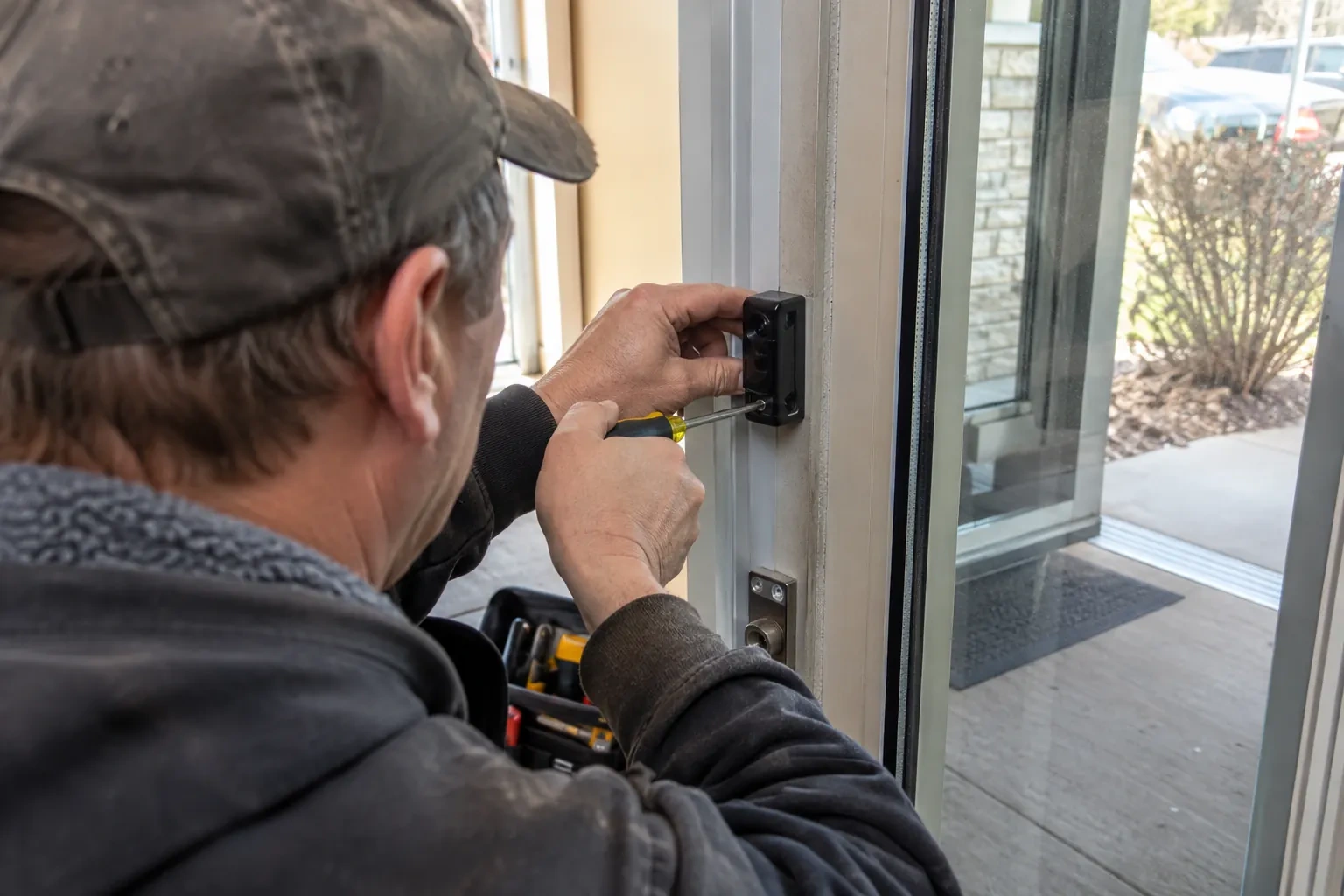
The opener is inspected as a witness rather than a cure. The technician checks its force and travel settings, listens for strain during a powered cycle, and notes whether it reverses near the floor or stalls part way up. A force setting that has been turned up over the years is a strong hint that someone has been compensating for a door that grew heavy. Those settings are left alone for now, because the right order is to balance the door first and then fit the opener to it. Any change made to the opener before the door is corrected would only mask what the door is asking for.
Fitting the opener to the balanced door
Once the door holds at every height by hand, the opener is reconnected and treated as its own step. Its travel limits are checked so the door closes fully onto the floor and opens to the correct height without straining against the stops. The force settings are reviewed, and where they had been raised to cope with a heavy door they are brought back to a sensible level, because the door no longer needs the help. The photo eyes are cleaned and aligned. The technician then runs several powered cycles and listens for the motor working lightly and evenly through the whole travel.
A door that is nearly weightless again
The difference is obvious the first time you lift the door by hand. It rises with light effort, pauses when you stop it, and stays fully open without drifting down. Closing it, the bottom seal meets the slab evenly along its length instead of thudding at one corner. Under power, the opener runs quieter because it is guiding a balanced door rather than hauling one, and it stops reversing near the floor for no reason. The door also moves at the speed of your hand, neither racing ahead nor dragging, which is exactly what the industry checklist describes as correct operation.
Garage Door Balance Adjustment
In the van
Extension springs and S-hooks
Garage-door lubricant
Nylon or steel rollers
Containment cables
Cable drums
Garage Door Balance Adjustment
What affects the quote
Rollers, hinges and friction repairs
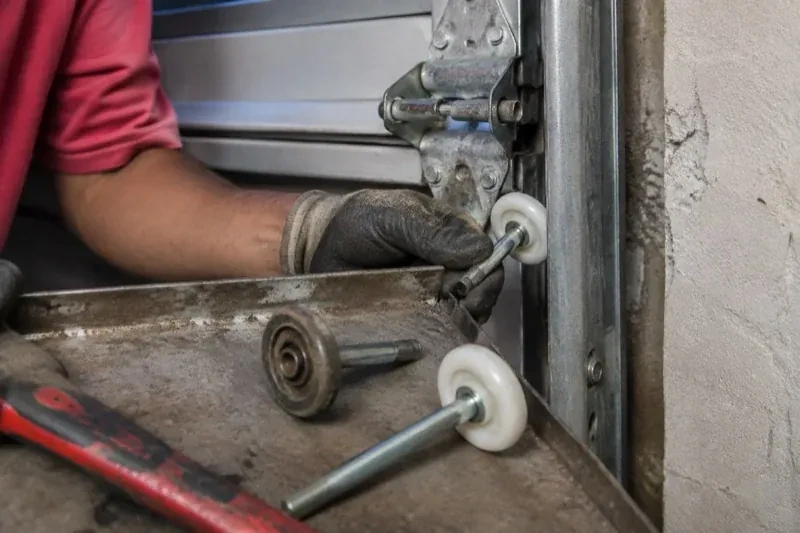
Seized rollers or worn hinges that made the door heavy are pointed out and offered as optional items, since replacing them while the technician is at the door is efficient.
Corroded or seized fasteners
Set screws and cone screws that have rusted solid take time to free, and badly corroded hardware is replaced rather than reused, which shows in the parts list.
Door out of level
A door with one corner high needs its cables reset on the drums before the tension is set, which adds a step to the visit and is listed as its own item.
What to have ready
- Is it a single or a double door, and roughly how tall?
- When were the springs last replaced or adjusted, if you know?
- Do you have the door or opener manual, or a label with the model?
Garage Door Balance Adjustment: questions
QuestionsCan the opener's force setting be turned up instead of adjusting the springs?
The opener is built to move a balanced door, and its force limit is what makes it stop and reverse on contact. Raising that limit to lift a heavy door pushes the safety behaviour out of its intended range and works the motor and gears hard. The sound order is to balance the door first, then set the opener to suit it. Both are done in the same visit.
Will I need new springs, or just an adjustment?
The inspection decides, and looks past appearance alone. A spring can look sound, with tight, evenly spaced coils, no rust pitting and no gap, and still be the wrong specification for the door or nearing the end of its service life. The technician checks the spring's specification against the door's weight and history: a spring that checks out is wound and left in service, while one that is undersized, stretched, corroded or close to its cycle life is better replaced. Either path ends in a balanced door.
What does it mean for a garage door to be balanced?
It means the springs carry nearly all of the door's weight, so the door itself feels close to weightless. Balanced, it will stay put at any partly open position when moved by hand, stay fully open on its own, and close without slamming. The opener then only has to guide the door rather than lift it, which is how it was designed to work.
Related services
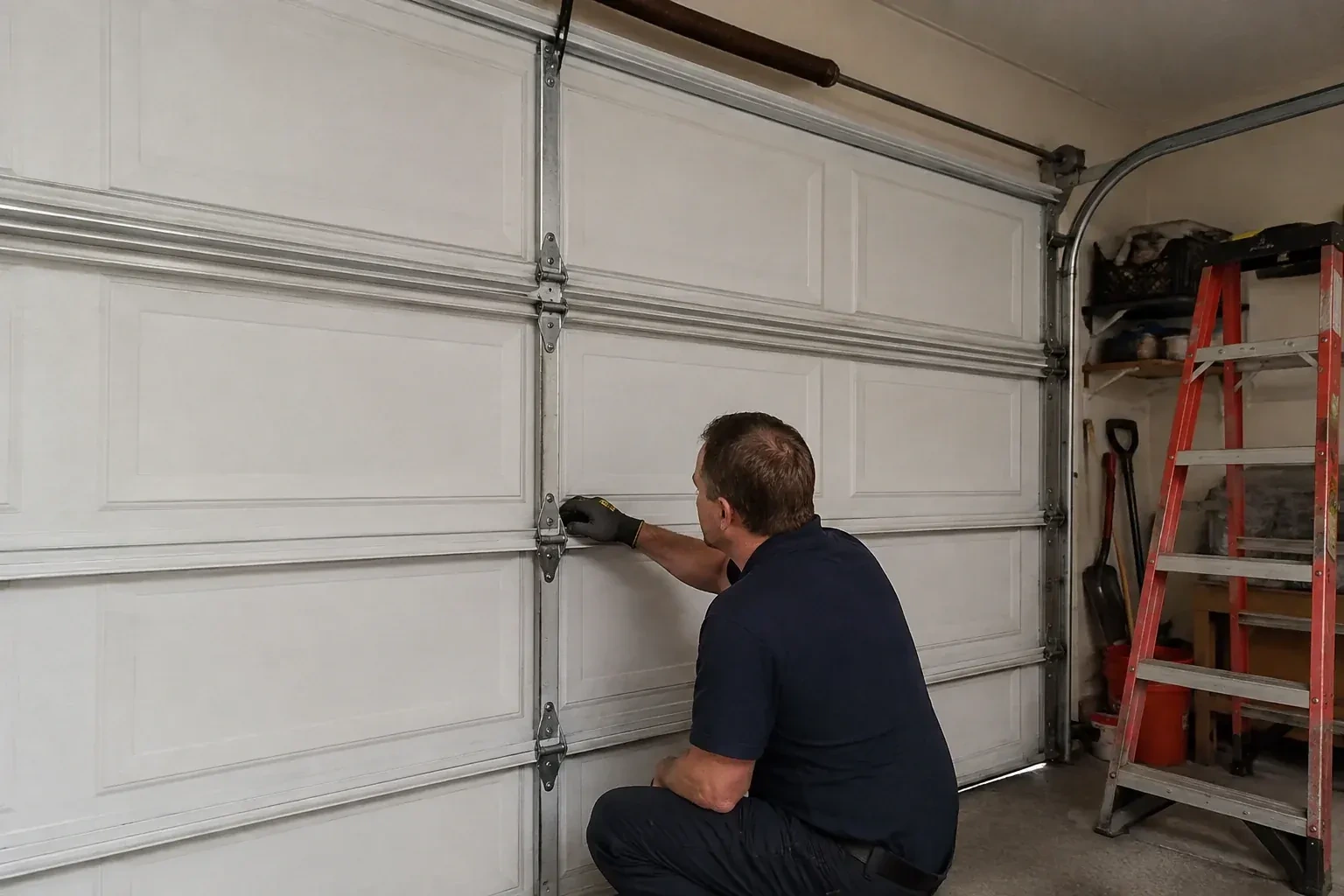
- Garage Door Hinge ReplacementPressing a hand against one of the middle hinges makes it rock on the panel.
- Garage Door Track Repair or ReplacementThe garage floor has settled at one corner, and the door now scrapes the concrete on that side while daylight shows at the other.
- Garage Door Cable ReplacementStanding inside with the door closed, you notice the cable on the right side near the floor has gone fuzzy.