Repairs · Westmount
Garage Door Tune-Up in Westmount
The door lands with a thud you can feel through the kitchen floor, and sometimes it bounces back up a few centimetres before settling.
In plain words
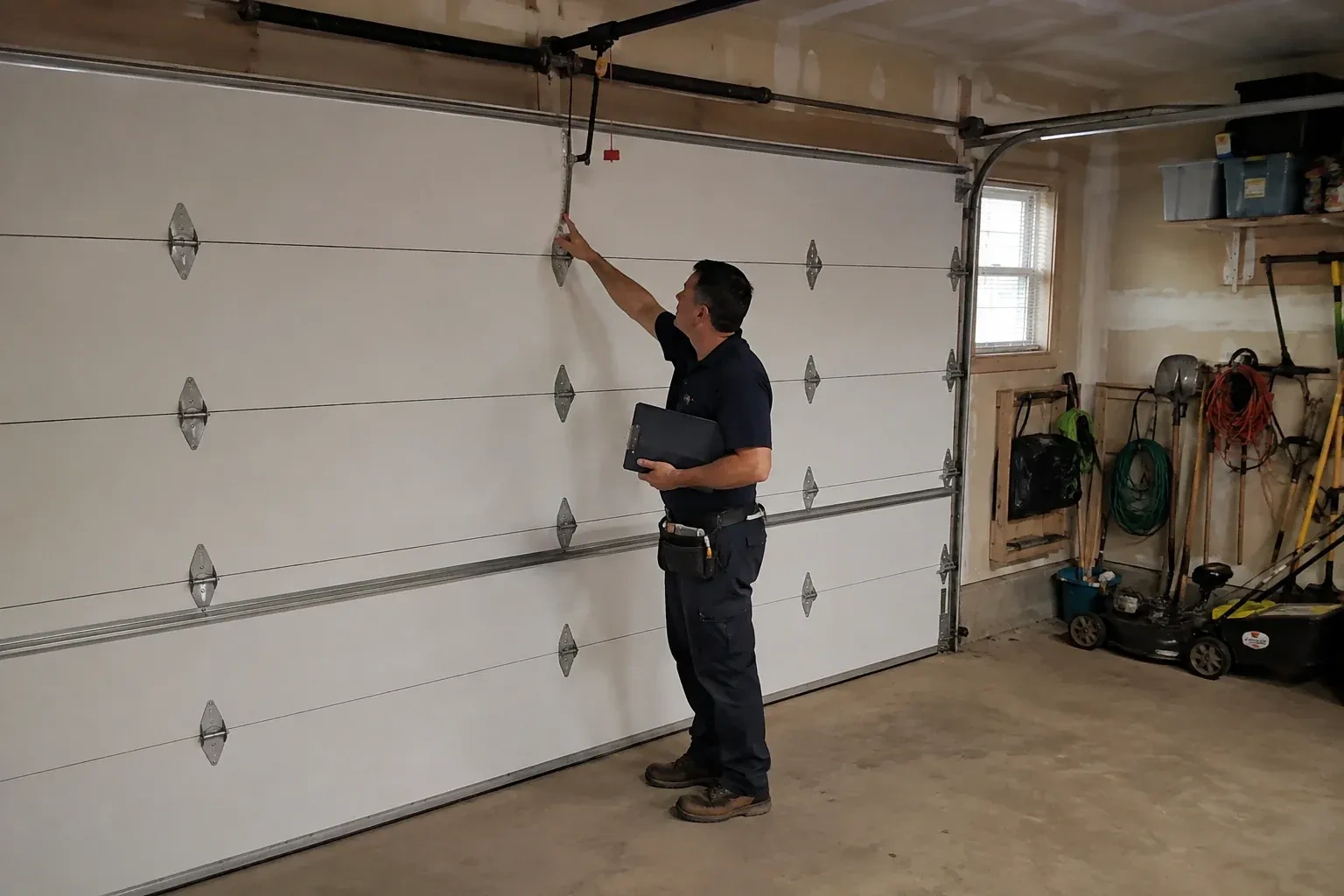
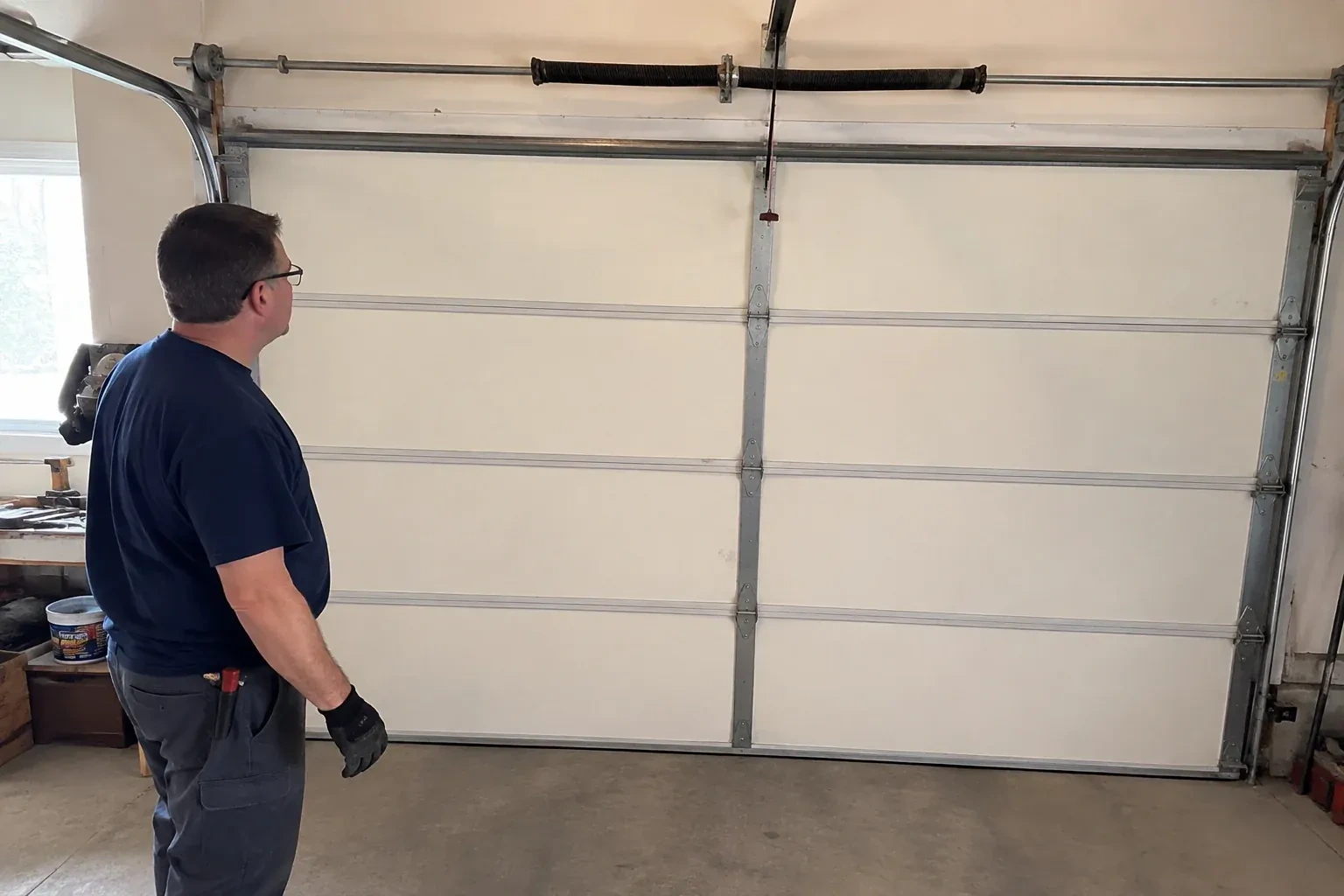
The heart of a tune-up is the balance check. Your springs are meant to carry nearly the whole weight of the door so the opener only has to guide it. When the door is disconnected from the opener and lifted by hand, it should rise without effort, stay open on its own and hold still partway. A door that sinks or feels heavy is telling you the springs have lost tension, and an opener made to move a balanced door is straining. The tune-up identifies this and treats spring adjustment as its own carefully done job, with the door clamped and proper winding bars.
How the visit goesSince the first cold snap the door has been sluggish. It climbs slowly, hesitates near the top and the opener motor sounds strained. On the coldest mornings it opens a hand's width, thinks about it, and comes back down.
Garage Door Tune-Up
How the visit goes
Feeling the balance by hand
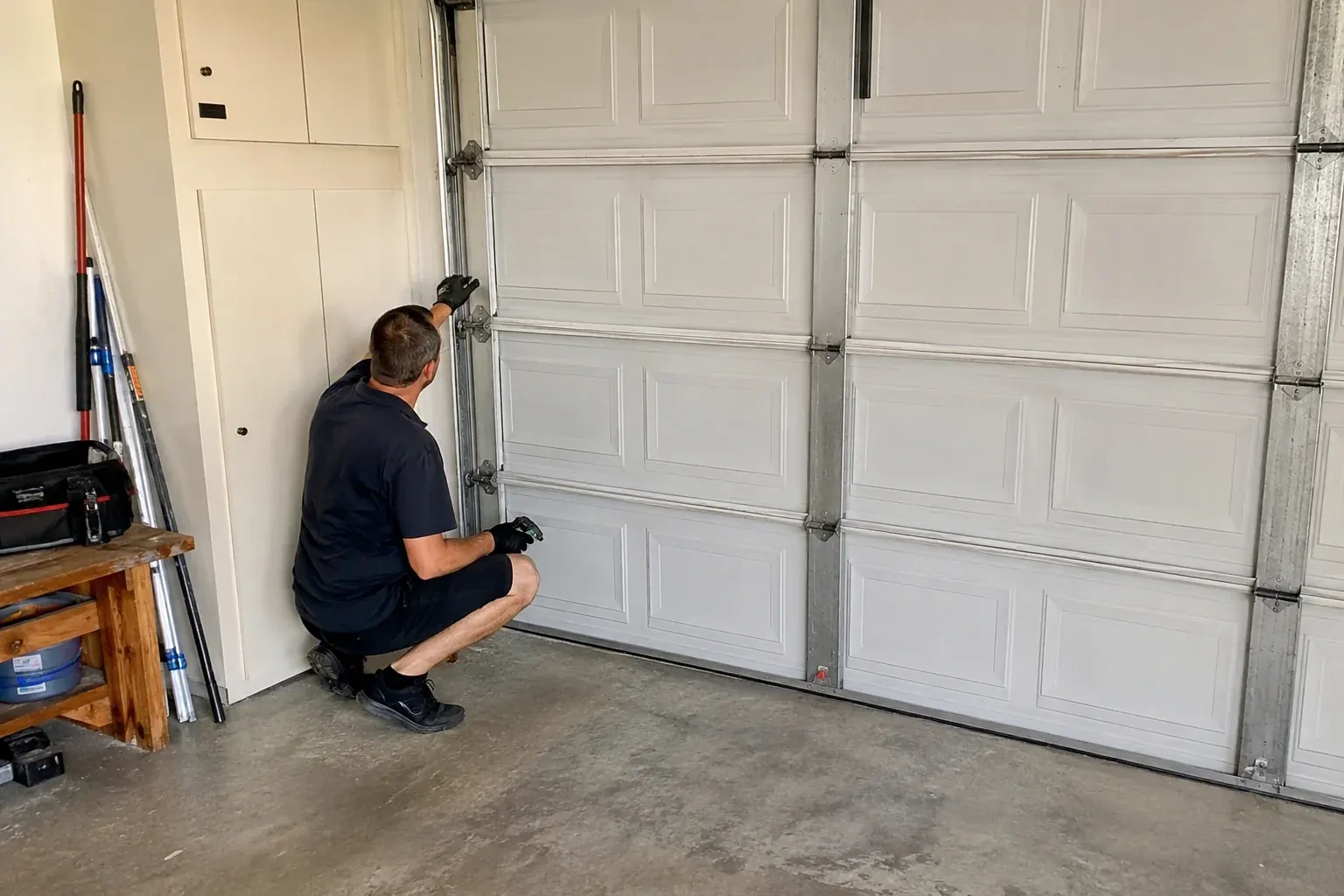
The door is disconnected from the opener with the red release handle, and the technician lifts it by hand, gripping only the handles or a safe edge. A properly balanced door rises with modest effort, stays fully open on its own and holds still when left about a metre off the floor. A door that sinks back down, or that takes real strength to raise, has springs that have lost tension and an opener that has been carrying weight it was not designed for. This check takes a minute and decides more than any other: it tells the technician whether the tune-up can proceed as maintenance or whether spring work needs to be quoted first.
Small adjustments with a big effect
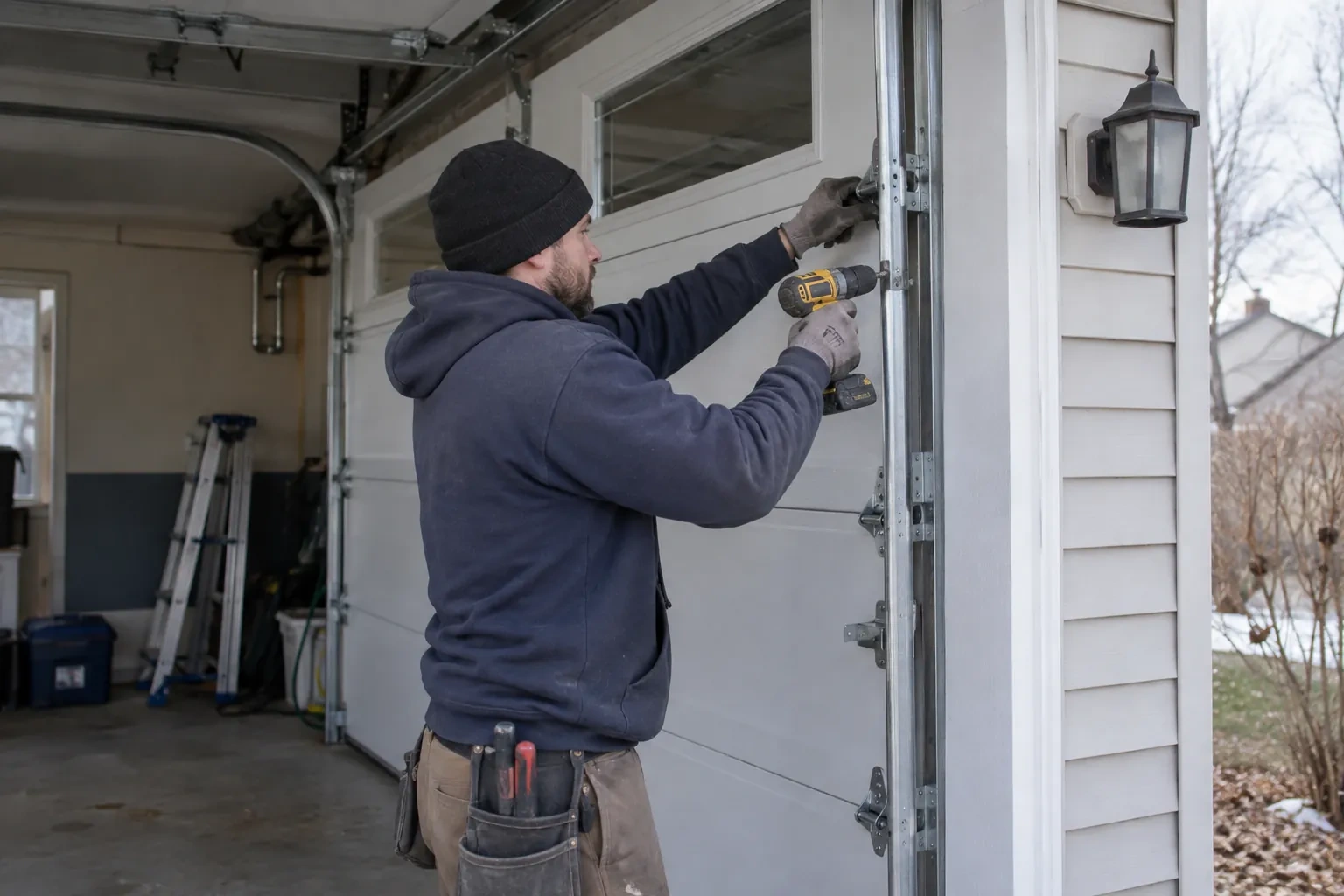
A few minutes of fine adjustment often change the character of a door. A vertical track that has crept inward is eased back so the rollers run in the centre of the channel. A horizontal track that has sagged on its hanger is brought level so the door does not drop into the curve. A strut on a wide top section is checked and tightened so the panel stops flexing when the opener pulls on it. The lock bar is aligned with its slot, or disabled on an opener-driven door so it can never be engaged against the motor. None of these are repairs; they are corrections that let the existing parts work as designed.
When to book the next one
How soon the door wants another visit depends on how hard it works. A door that cycles a few times a day, in an attached garage that sees salt, snow and meltwater every winter, does well with a tune-up once a year, usually in the fall before the cold arrives. A lightly used door in a detached garage can often go longer, with the monthly reversal tests and a little lubricant from you in between. The written record is your guide: if it lists parts to watch, the next visit checks those first; if everything was healthy, the interval can stretch. The technician will suggest a timing that fits your door rather than a blanket schedule.
Garage Door Tune-Up
In the van
Socket set and drivers
Photo-eye brackets and wire
Hinge screws and track bolts
Jamb and header weatherstrip
Replacement steel or nylon rollers
Garage Door Tune-Up
What affects the quote
Season and weather
A winter visit can include freeing a seal frozen to the slab and working with thickened lubricant before the tune-up proper can begin, which adds time to the visit.
Written record and follow-up
A basic handover note is part of every visit. A detailed condition report with photographs for a landlord, a strata or a home sale is available as an added item.
Door construction and weight
A heavy wood or insulated steel door works its hardware harder than a light aluminum one, and the balance check and fastener work take a little longer on the heavier door.
What to have ready
- Can you lift the door by hand with the opener disconnected, and does it stay up?
- Are the remotes, wall button and keypad all working as expected?
- Can vehicles and stored items be moved clear of the door and tracks before the visit?
Garage Door Tune-Up: questions
QuestionsWhich lubricant is right for a garage door?
A silicone-based or white lithium garage door lubricant, sold for the purpose. Penetrating oils and general sprays are thin, attract dust and are gone in weeks; heavy grease traps grit. For the rubber bottom seal and weatherstrip, use only a silicone spray, since petroleum products attack rubber and make it brittle. Nylon rollers with sealed bearings need no lubricant, while ones with an exposed bearing can need a touch where their own maker calls for it. A small amount on each point, worked in by moving the door, is enough.
What should I do if the bottom seal freezes to the floor?
Do not keep pressing the button; the opener can tear the seal or pull the top section out of shape. Free the seal by clearing the ice along the threshold, with warm water poured on the concrete rather than the door, or by working a plastic scraper along the seal. Then treat the seal with a silicone spray. Keeping snow and meltwater cleared from the threshold and keeping the seal flexible with silicone prevents most repeats.
How often should a garage door be tuned up?
Once a year suits most attached garages here, ideally in the fall before cold weather thickens lubricant and stiffens seals. Door and opener makers suggest lubrication every three to six months and a homeowner balance check and reversal test every month, so an annual professional visit sits on top of that light routine. A lightly used door in a detached garage may go longer; a heavily used one, or one exposed to salt spray, benefits from a spring check too.
Related services
- Off-Track Garage Door ResetThe door came down fine but with a scraping noise, and now the vertical track on one side is bowed away from the wall.
- Garage Door Panel ReplacementYears of slap shots have peppered the lower two sections with dents.
- Garage Door Bottom Seal ReplacementAfter a spring rain there is a puddle inside the door that reaches the tires.